Ancient DNA Reveals Central European Origins and Spread of Celtic Languages
– 7 min read


Tracing Celtic Voices Through Ancient DNA: From Bronze Age Europe to the Atlantic Edge
This comprehensive study explores one of European prehistory's most enduring mysteries: how Celtic languages, now confined to the Atlantic edges of Europe in places like Ireland, Wales, and Brittany, once resonated across vast territories from the Atlantic to Central Europe. Rather than relying solely on archaeological artifacts and linguistic analysis, researchers have employed cutting-edge ancient DNA technology to trace population movements through some of the most significant burial grounds and settlements of the Late Bronze and Iron Ages.
The investigation challenges long-held assumptions about Celtic origins, using genetic evidence from cremated remains and skeletal burials to map the spread of peoples who likely carried Celtic languages across the continent. Each ancient genome represents a window into a pivotal moment in European history, when new technologies, burial practices, and ways of life transformed entire regions.
At the heart of this genetic detective story lie the vast cemeteries of the Urnfield Culture, spanning Central Europe approximately 4,000 to 3,200 years ago. These communities practiced a distinctive burial ritual: cremating their dead and placing the ashes in pottery urns arranged in orderly cemetery fields. These burial grounds, scattered across river valleys and hilltops, contain thousands of urns accompanied by bronze swords, pins, razors, and ornamental jewelry.
The Knovíz subgroup, centered in the Carpathian Basin around modern-day Hungary and neighboring regions, emerges as a crucial player in this narrative. Their burial sites reveal sophisticated metalworking traditions and extensive trade networks. Ancient DNA extracted from these cremated remains shows a distinctive genetic signature that formed between 4,000 and 3,200 years before present. This genetic profile becomes the foundation for tracking subsequent population movements across Europe.
Archaeological evidence from Knovíz settlements reveals fortified hilltop sites and riverside trading centers where metal, salt, amber, and other valuable goods changed hands. The careful arrangement of burial urns, often protected by upturned bowls or flat stones, demonstrates the reverence these communities held for their dead. Bronze artifacts found in graves include elegantly crafted leaf-shaped sword blades, tanged daggers, ribbed arm rings, spiral finger rings, and horse gear, indicating a society that valued both martial prowess and skilled craftsmanship.
Between 3,200 and 2,800 years ago, the genetic signature associated with the Knovíz people begins appearing across vast stretches of Western Europe. This expansion coincides with the peak period of Urnfield Culture influence, when cremation cemeteries and associated material culture spread throughout Central and Western European regions.
The ancient DNA evidence reveals this was not merely cultural diffusion but genuine population movement. Substantial portions of local populations in regions far from the Carpathian homeland show genetic ancestry traceable back to these Central European communities. The demographic impact was significant enough to leave lasting genetic imprints that persist through subsequent cultural periods.
Archaeological sites across this expanded territory show consistent patterns: fields of burial urns containing cremated remains, fortified hilltop settlements, bronze weaponry and ornaments, and evidence of sophisticated metalworking traditions. The genetic data confirms that many individuals buried in these distant cemeteries shared common ancestry with the original Knovíz population, suggesting coordinated movements of related family groups and communities.
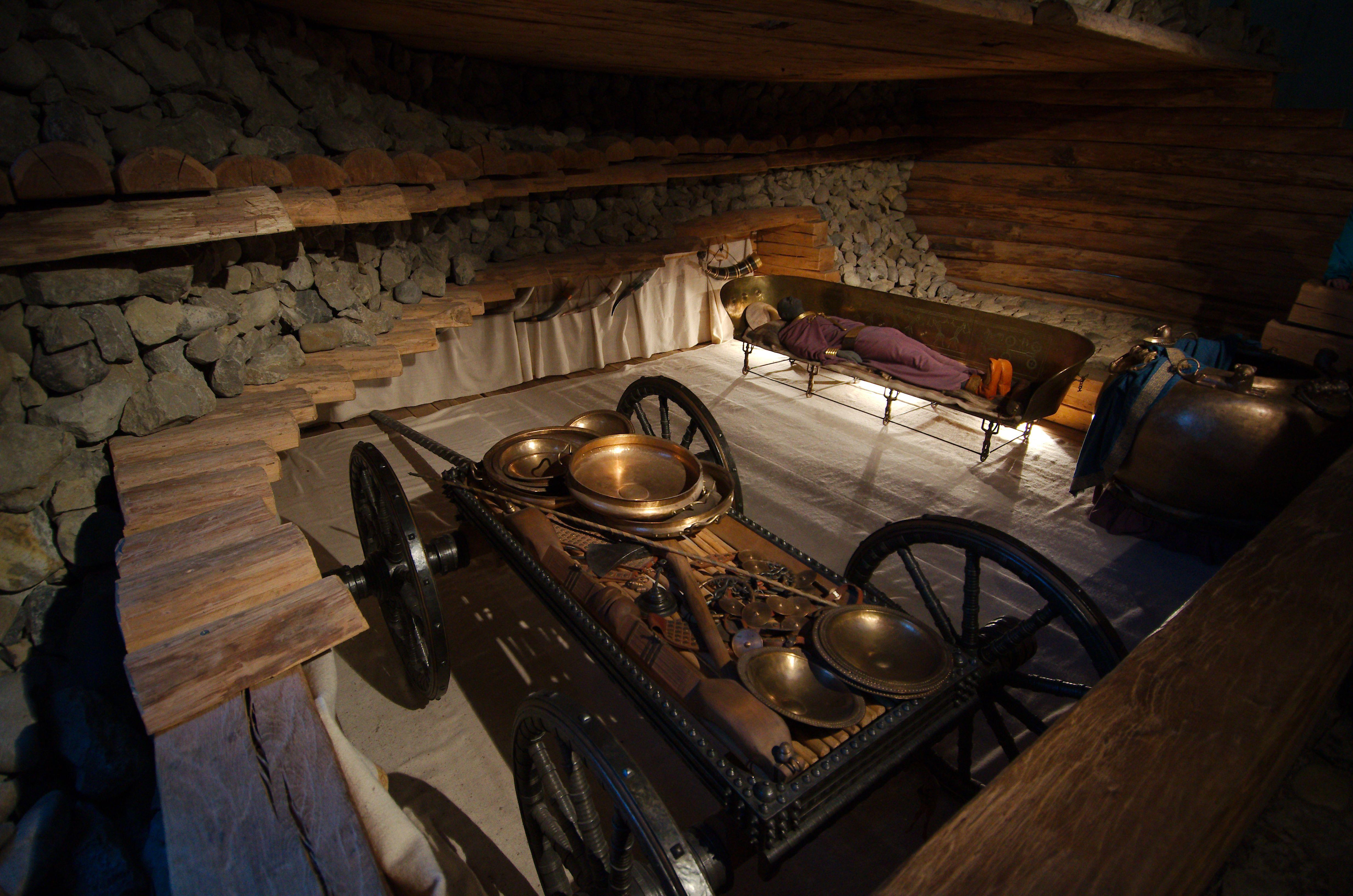
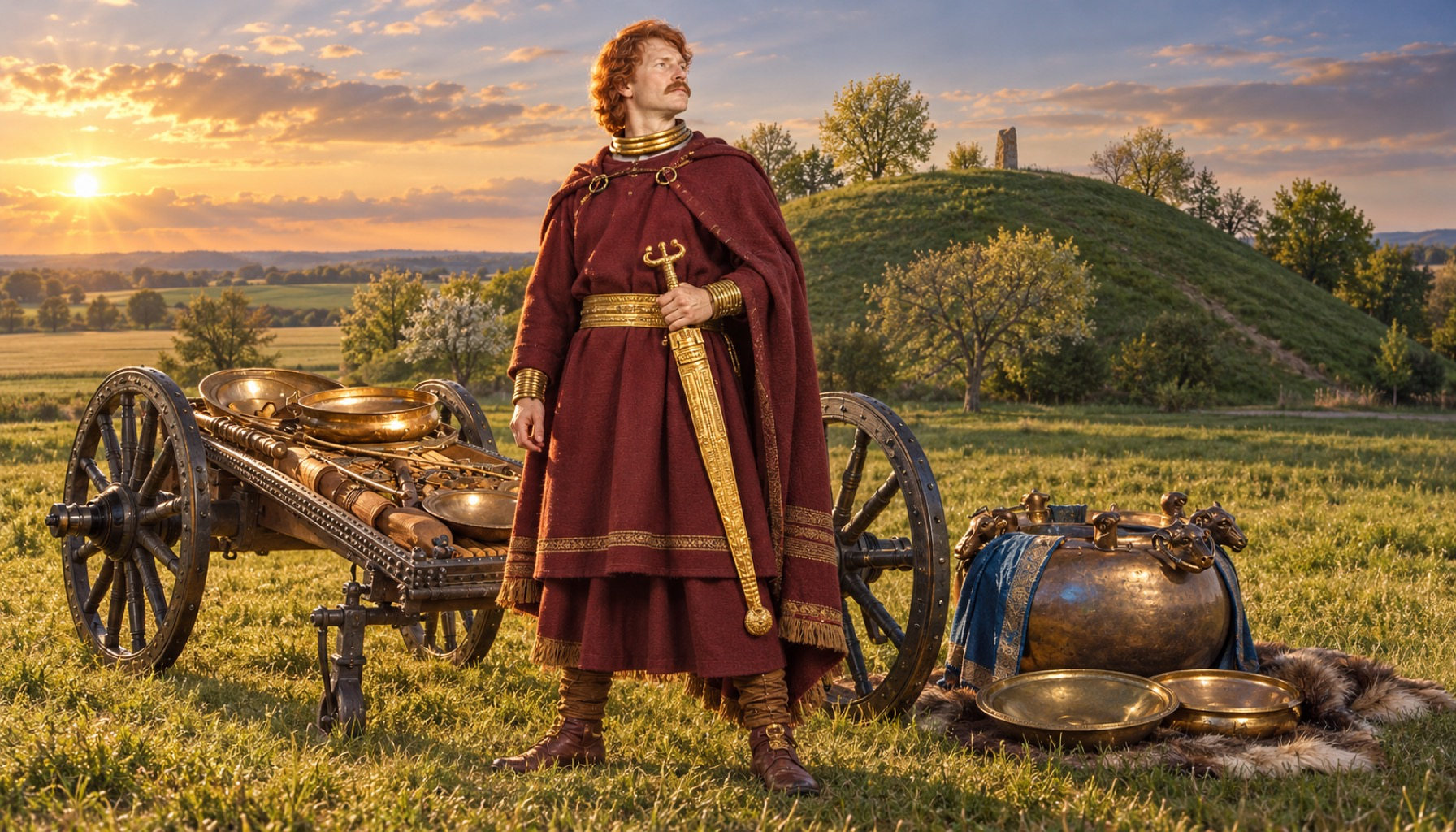
Moving forward in time, the same Central European ancestry persists into the renowned Hallstatt Culture of the Early Iron Age, covering regions of modern France, Germany, and Austria. Hallstatt sites are famous for their imposing hillforts, salt-mining operations, and spectacularly furnished elite burials containing iron swords, four-wheeled wagons, bronze cauldrons, horse trappings, and imported Mediterranean luxury goods.
The genetic continuity between earlier Urnfield populations and later Hallstatt communities strengthens the argument for cultural and demographic continuity. Warriors buried with decorated iron weapons, nobles interred with elaborate feasting equipment, and craftspeople laid to rest with their tools all carry the genetic legacy of the earlier Central European expansion.
Hallstatt cemeteries reveal a hierarchical society where elite burials dominate prominent positions while more modest graves cluster around them. The richest graves contain evidence of long-distance trade connections: Greek pottery, Etruscan bronze vessels, amber from the Baltic, and silk possibly originating from Asia. Despite these exotic influences, the genetic foundations of these communities remain rooted in the earlier Urnfield traditions.
By approximately 2,800 years ago, the distinctive Central European genetic signature appears in British burial sites. This period corresponds with the late Bronze and early Iron Ages in Britain, marked by the construction of hillforts, the deposition of metalwork hoards, and new burial practices. The archaeological landscape shows farmsteads surrounded by defensive ditches, hilltop fortifications commanding strategic positions, and small cemeteries containing both cremated and inhumed remains.
British graves from this period often contain iron swords, spears, spiral brooches, and occasionally chariot fittings. While generally less elaborate than contemporary Continental burials, these finds demonstrate clear connections to Central European traditions. The genetic evidence confirms these were not merely imported objects but accompanied by people carrying the ancestral signature of the original Urnfield populations.
The arrival of this ancestry in Britain represents a pivotal moment in the island's prehistory. Local Bronze Age populations mixed with incoming groups, creating new cultural syntheses that would characterize British Iron Age society. Settlement patterns shifted toward defended hilltop sites, metalworking techniques evolved, and new artistic styles emerged combining insular and Continental influences.
Around 2,500 years ago, the same genetic ancestry appears in Iberian Peninsula burials, particularly in regions of modern Spain and Portugal. This arrival coincides with the emergence of fortified hilltop settlements, complex burial traditions, and distinctive metalworking styles that blend local Iberian customs with Central European influences.
Iberian sites from this period yield graves containing regionally distinctive pottery alongside metalwork showing clear connections to northern European traditions. Warrior burials include iron weapons, shield fittings, and elaborate ornamental sets. Some cemeteries contain stone stelae decorated with weapons and geometric patterns, representing a fusion of local commemorative traditions with incoming burial customs.
Classical authors later described Celtic and Celtiberian peoples inhabiting these regions, speaking languages clearly related to those found elsewhere in the Celtic world. The genetic evidence now provides a biological foundation for these historical accounts, linking the documented Celtic-speakers of Iberia to the same population movements that had earlier transformed Central Europe and reached Britain.
The archaeological record enriches our understanding of these ancient populations beyond their genetic signatures. Across Britain and Iberia during this transformative period, excavations reveal iron swords with distinctive hilts and scabbards, elaborate brooches and pins used to fasten clothing, bronze and iron torcs worn around the neck, decorative horse gear indicating the importance of mounted warfare, imported pottery and luxury goods demonstrating long-distance trade connections, and fortified settlements positioned to control territory and trade routes.
For decades, scholars debated whether Celtic languages originated in Western Europe along the Atlantic coasts or emerged from deeper within the continental interior. The genetic evidence strongly supports an Eastern Central European origin, with the earliest appearances of the key ancestry occurring in the Carpathian Basin before spreading westward to reach Hallstatt territories, Britain, and eventually Iberia.
This eastward shift in focus repositions our understanding of Celtic ethnogenesis. Rather than emerging from Atlantic maritime communities, Celtic identity appears rooted in the Bronze Age agricultural and metalworking societies of Central Europe. The great urnfield cemeteries of the Carpathian Basin, the wealthy Hallstatt burials of Austria and southern Germany, and the later warrior graves of Britain and Iberia form connected chapters in a single narrative of population movement and cultural transmission.
The genetic evidence demonstrates that these geographically dispersed communities shared not only similar material culture and burial practices but also biological ancestry traceable to common Central European origins. This finding has profound implications for understanding how Celtic languages spread, suggesting they were carried by migrating populations rather than adopted through cultural contact alone.
Behind the broad patterns of population movement lie individual human stories. Each ancient genome represents a person who lived, worked, loved, and died in these transformative times. A young warrior buried with his iron sword in a British hillfort cemetery; a woman interred with elaborate jewelry in an Iberian grave; an elder laid to rest with craftsman's tools in a Central European urnfield – all carry genetic markers linking them to this great population movement.
These individuals witnessed the development of iron technology, the rise of fortified settlements, the emergence of warrior elites, and the establishment of long-distance trade networks. Their lives spanned the transition from Bronze Age villages to Iron Age proto-urban centers, from simple cremation burials to elaborate furnished graves, from regional isolation to continental connectivity.
The genetic data transforms these archaeological sites from collections of artifacts into remnants of lived communities. Cemetery layouts reveal family relationships and social hierarchies. Grave goods indicate personal identity and social roles. Settlement patterns demonstrate economic strategies and defensive concerns. Together, these lines of evidence create a rich picture of European Iron Age society in formation.
While languages themselves leave no direct traces in the archaeological record, the movement of people provides the most plausible mechanism for linguistic spread in prehistoric periods. The genetic evidence shows that populations ancestrally linked to Central European communities reached all the major regions where Celtic languages later flourished: the Hallstatt heartland, Britain, Ireland, and Iberia.
This biological foundation supports models of Celtic linguistic expansion that emphasize population movement over cultural diffusion. The timing of genetic arrivals correlates with archaeological evidence for cultural change, suggesting that new people brought new languages along with new technologies and social practices.
The persistence of Central European ancestry through multiple cultural periods indicates demographic continuity underlying apparent cultural transitions. Hallstatt elites, British hillforts dwellers, and Iberian warriors all shared genetic heritage traceable to the earlier Urnfield expansion, suggesting their communities may have retained linguistic connections despite geographical separation and cultural evolution.
This groundbreaking research demonstrates the power of ancient DNA to illuminate prehistoric population movements and their relationship to cultural and linguistic change. By extracting genetic information from cremated bones and ancient skeletons, scientists have traced the spread of peoples who likely carried the earliest Celtic languages from their Central European homeland to the edges of the Atlantic world.
The story that emerges challenges simple models of Celtic origins while providing new insights into the complex processes of prehistoric cultural change. Celtic identity appears to have deep roots in Central European Bronze Age communities whose descendants carried their languages, technologies, and traditions across vast distances over many centuries.
Each ancient burial site now represents more than a local archaeological curiosity. These cemeteries form links in a chain connecting the urnfields of the Carpathian Basin to the warrior graves of Hallstatt, the hillforts of Britain, and the fortified settlements of Iberia. Through the lens of ancient genomics, scattered archaeological sites become chapters in a unified narrative of human movement, cultural transmission, and linguistic spread that shaped the Celtic world of later antiquity and echoes in the surviving Celtic languages of today.

Comments