The Royal House of al-Hashim
– 3 min read


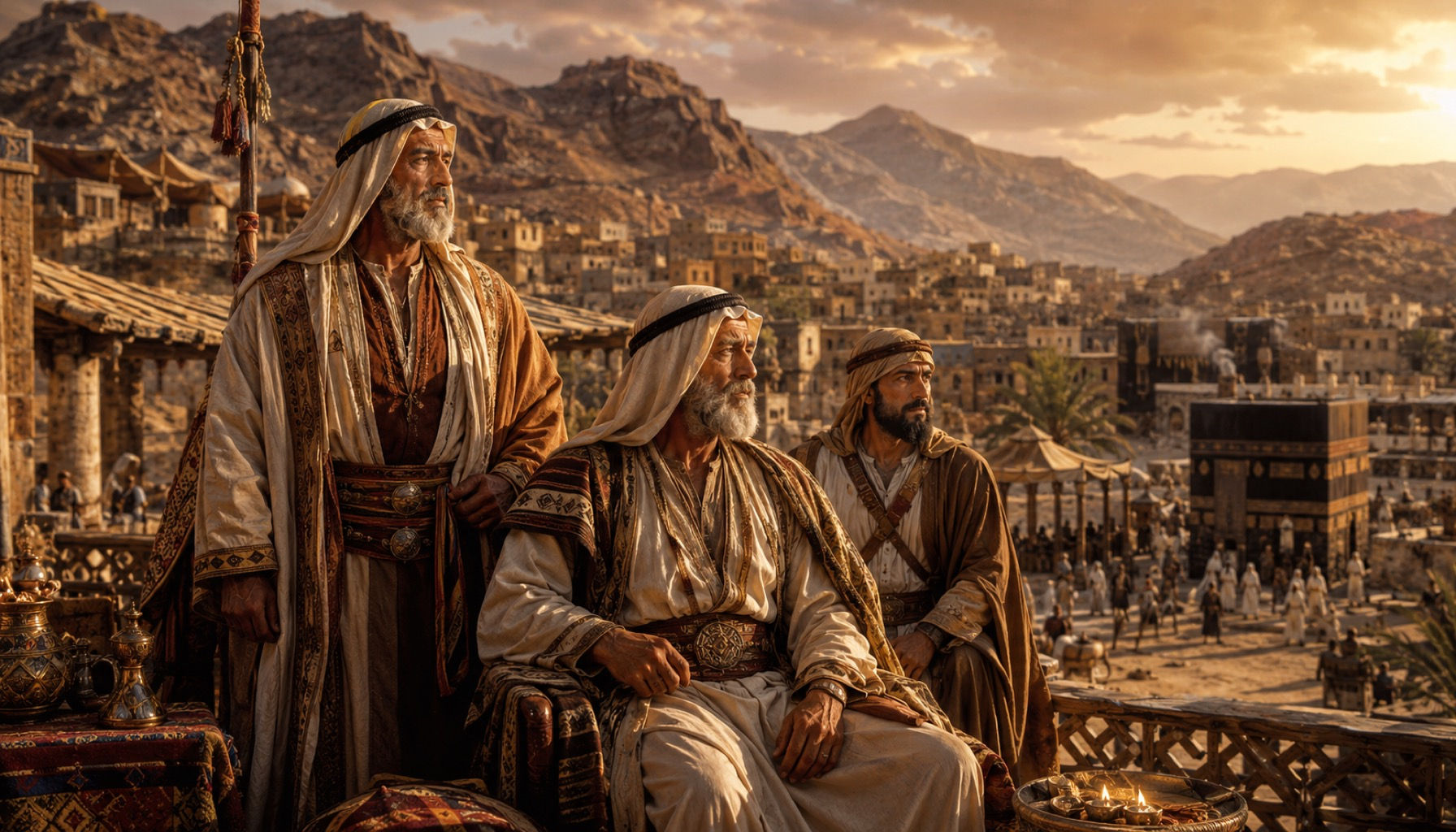
The House of al-Hashim, better known in English as the Hashemites, is one of the most resonant lineages in Islamic history. Traditionally associated with descent from Hashim ibn Abd Manaf and with the family of the Prophet Muhammad, the dynasty emerged from the sacred and political landscape of western Arabia, above all Mecca and the Hijaz. In historical memory, this was not simply a family with a pedigree, but a house whose ancestry carried religious prestige, tribal authority, and a long-standing claim to leadership. In haplogroup terms, the primary family line here is tagged as J1a2a1a2d2b2b2c4d2a2a1a, a branch strongly associated with Arabian paternal heritage.
What makes the Hashemites so compelling is that they sit at the meeting point of sanctity and statecraft. For centuries, sharifian families tied to Mecca held custodial and political roles in one of the most important religious centers in the world. In the modern era, that older prestige did not vanish; it was repurposed in a dramatically changing Middle East. Figures such as Sharif Hussein bin Ali (1854-1931), leader of the Arab Revolt, King Abdullah I of Jordan (1882-1951), and King Faisal I of Iraq (1885-1933) carried the family from the Hijaz into the age of mandates, kingdoms, and modern borders. The Hashemite story is therefore not just a genealogy, but a classic Islamic dynastic pattern: sacred descent, Arabian roots, sharifian rank, kingship, and legitimacy grounded in ancestry.
Read more about the Royal House of Al Falasi
If you want a place that helps anchor the later Hashemite story in the landscape, the Amman Citadel is hard to beat. Rising on one of Amman's highest hills, this great archaeological mound has seen an astonishing succession of cultures: Bronze Age settlement, Iron Age fortification, Hellenistic and Roman building, Byzantine churches, and the great Umayyad complex that still gives the site much of its visual character today. It is, in other words, one of those places where history refuses to stay in one period. You walk through a city of layers, where the stones themselves seem to mutter about changing empires and shifting identities across millennia.
For the Hashemites, Amman became more than an ancient ruin nearby; it became part of the symbolic heart of the modern Jordanian state founded under their rule. The Citadel overlooks the capital that grew into the political center of the Hashemite Kingdom of Jordan, linking deep antiquity with modern monarchy in a particularly vivid way. Visitors today can still explore the site, including the Temple of Hercules, Byzantine remains, and the Umayyad palace complex, along with the Jordan Archaeological Museum. It is one of those rare places where royal history, Islamic heritage, and the archaeology of the long Levantine past all meet in one very visitable hilltop setting.
Explore Ancient DNA and the Rise of Archaeogenetics
Ancient DNA cannot prove a direct line from any excavated individual to the House of al-Hashim without specific tested remains and documented continuity, so it is important not to overclaim. What it can do is show us a broader paternal landscape linked to the same haplogroup branch, J1a2a1a2d2b2b2c4d2a2a1a, across time and space. Related or linked samples include Imperial Roman Era Mursa, Croatia (I26749), Medieval Syria under the Umayyad Caliphate at Tell Qarassa (syr005), Early Avar period Hungary at Szeged-Fehert (SZF-26), Bronze Age Baqah in Jordan (I3705), and Ancient Alalakh (ALA026). That is a fascinating spread: the Levant, Jordan, Syria, Anatolia's orbit, the Balkans, and even the Carpathian Basin. Not a dynastic family tree, certainly, but a reminder that Arabian and Near Eastern paternal lineages moved through trade, empire, migration, and frontier service long before the modern royal houses took shape.
The Hashemites show how ancestry can become history in action: a lineage rooted in Mecca and the Hijaz, transformed into royal power in Amman, Baghdad, and the wider Arab world. If you have results to upload, you can explore whether your DNA matches the House of al-Hashim or related ancient DNA samples linked to haplogroup J1a2a1a2d2b2b2c4d2a2a1a, and place your own story within that much bigger human past.






Comments