Haplogroup I2a1a1
– 4 min read


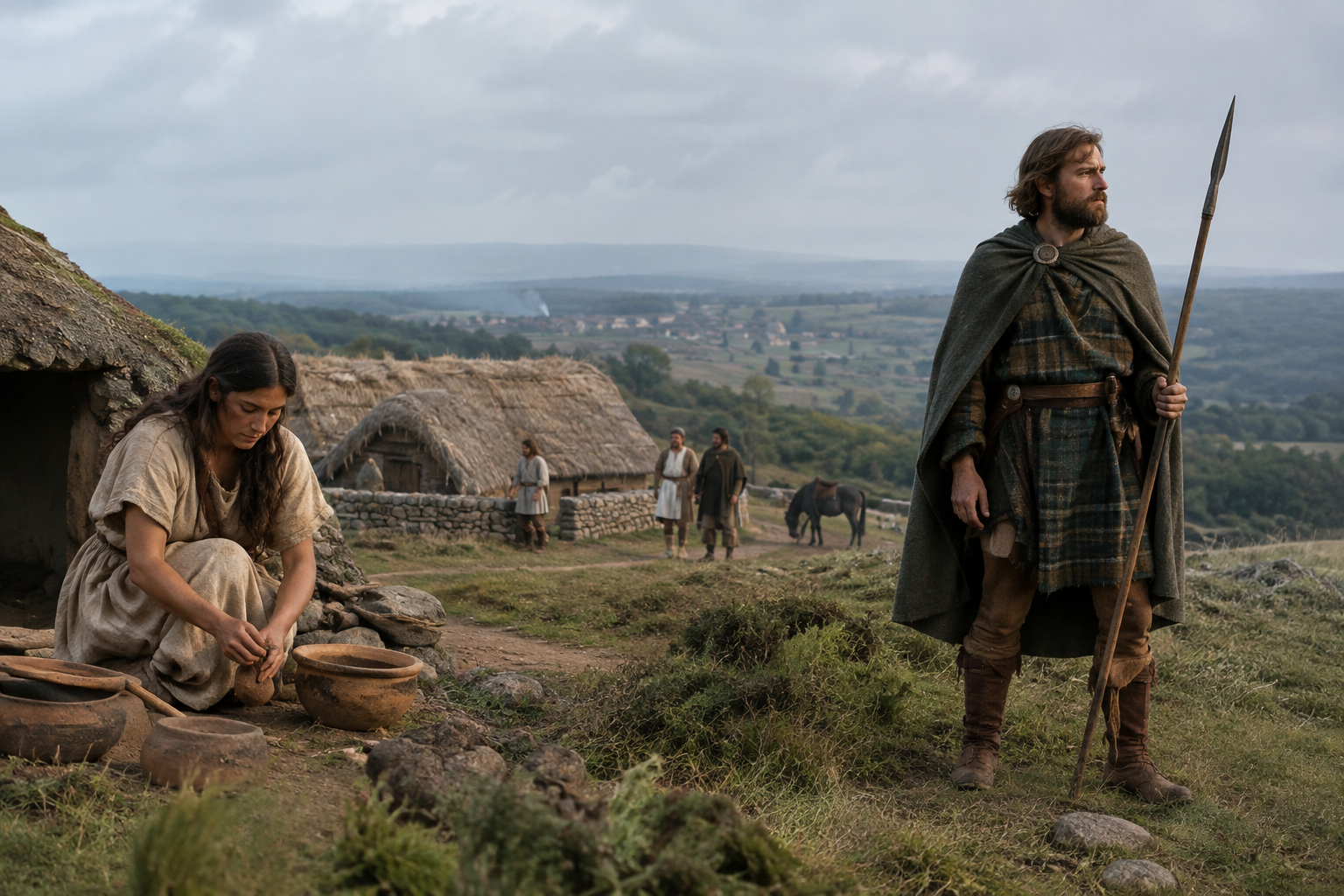
At Winterborne Kingston in Dorset, archaeologists uncovered the remains of a man identified as WBK03, dated to around AD 125 and associated with the Durotriges, the Iron Age people of this part of southern Britain. Finds like this are compelling because they sit right on a historical fault line: a community with deep local roots living under Roman rule, yet not simply dissolved into "Roman Britain" as though old identities vanished overnight. In this case, the paternal line reported for the individual connects to Y-DNA haplogroup I2a1a1.
That matters because I2a1a1 is not a label for an ethnicity, a tribe, or a whole population. It traces one direct male line only - father to son, over many generations. But when that line appears in both a Roman-period man from Dorset and a much earlier Neolithic individual from Iberia, it gives us something archaeologists treasure: a small but tangible thread linking very different worlds across time.
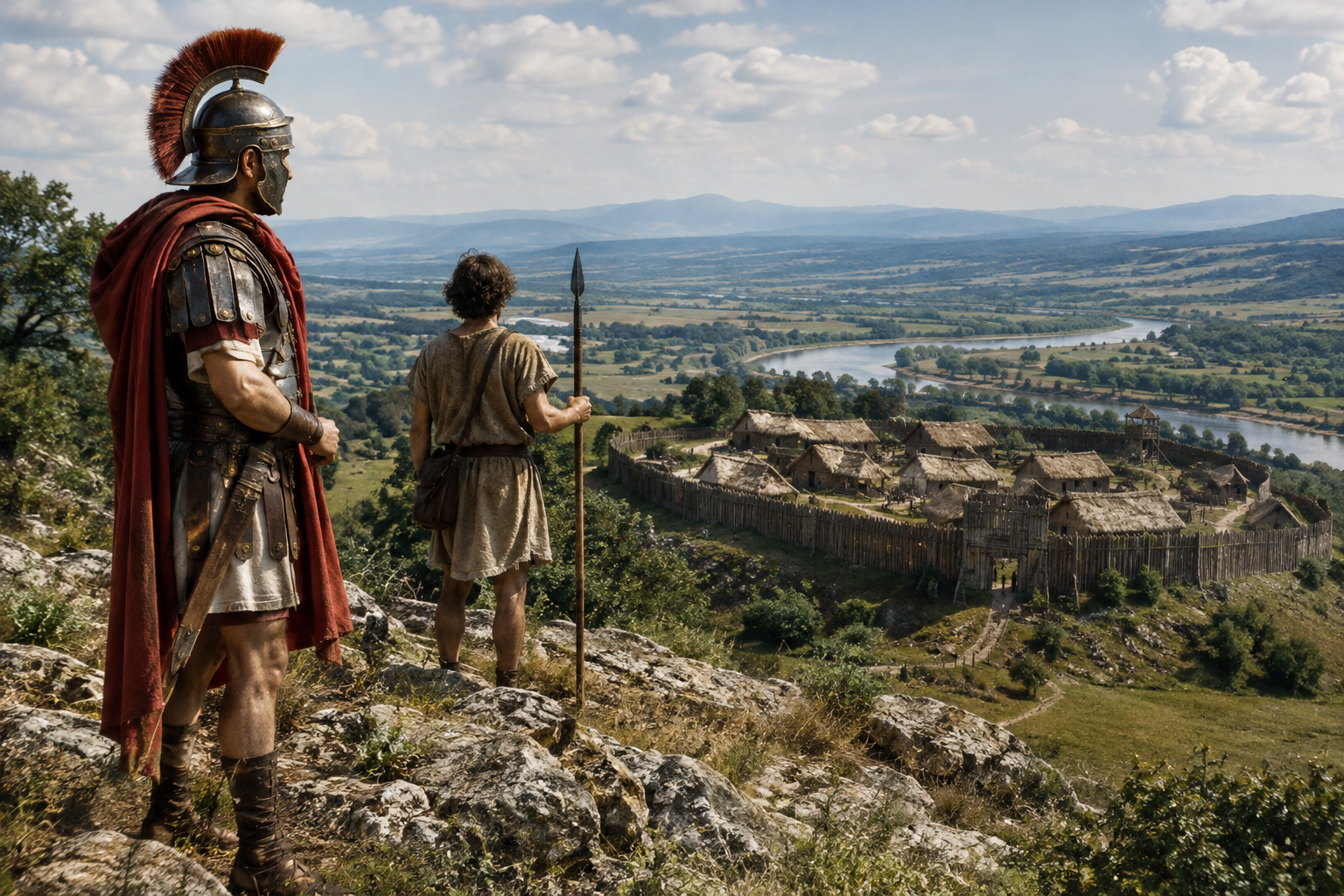
The Dorset burial is interesting not because it proves some grand uninterrupted dynasty, but because it shows how local paternal lines could persist through political change. The Durotriges are well known from late Iron Age hillforts, settlements, and coinage in southern Britain. By the early 2nd century AD, when WBK03 lived, their territory had long been inside the Roman Empire, yet the region still retained a strongly local character.
A report on the Dorset discovery describes the unearthing of roughly 2,000-year-old human remains in the county, placing this burial in a very real archaeological landscape rather than in an abstract genetic chart. The important point for haplogroup I2a1a1 is that it appears here not in some remote prehistoric horizon, but in a man living in a provincial Roman setting, where older British communities and imperial structures overlapped.
A report on the Dorset remains helps anchor the find in that local context. The wider lesson is straightforward: Roman rule changed administration, economy, and material life, but it did not erase every older family line.
To understand why this Dorset sample is so suggestive, it helps to place I2a1a1 within the broader history of haplogroup I. The wider I haplogroup is one of the old European Y-chromosome families, present in multiple branches across the continent long before the historical periods of Celts, Romans, or medieval kingdoms. That does not mean every branch behaved the same way, nor that one modern map can be projected neatly into the past.
What can be said more safely is that branches of I2 are regularly found in ancient European remains, especially in contexts connected to early farmers and earlier forager-farmer mixtures. So when I2a1a1 turns up in later Britain, it fits a broader picture in which some paternal lines had been circulating in western and southern Europe for a very long time before written history began.
The older of the two supplied ancient examples is I0405 from La Mina in Spain, dated to around 3600 BC. This is a very different world from Roman Dorset: not provinces and roads, but the Neolithic landscapes of Iberia, where farming communities had already been established for millennia and were living among the legacies of earlier hunter-gatherer populations.
Research published in Nature transformed how we understand exactly such populations by showing that Europe's first farmers did not remain genetically static. Over time, they mixed with local hunter-gatherers in varying degrees, producing regional populations that were neither simple arrivals from Anatolia nor untouched descendants of Europe's Mesolithic peoples. A paternal lineage such as I2a1a1 in Neolithic Iberia fits into that larger and well-established story of mixture, survival, and local variation.
La Mina, then, gives I2a1a1 depth. It places this branch in prehistoric Iberia more than three thousand years before the Durotrigan man from Dorset. That does not make WBK03 a descendant of I0405 in any direct genealogical sense we can demonstrate. But it does show that the branch belonged to a set of male lines already present in western Europe long before the Roman Empire, and long before "Celtic" identities entered the historical record.
The real fascination of I2a1a1 lies in that span. One sample comes from Neolithic Spain, the other from Roman-period England. They are separated by geography, by several thousand years, and by entirely different archaeological settings. Yet both point toward the long endurance of certain paternal lines in western Europe.
It is worth being careful here. A haplogroup is not a people. It does not tell us that the men of La Mina and Winterborne Kingston spoke related languages, shared customs, or would have recognised one another as belonging to the same community. Archaeology and history are full of such false shortcuts. Still, Y-DNA can show that political and cultural upheavals often happened on top of older biological continuities rather than replacing them wholesale.
That is particularly relevant in Britain. Discussions of the island's past often lurch between dramatic migration stories - Celts, Romans, Anglo-Saxons, Vikings, Normans - as though each period swept the board clean. Ancient DNA has steadily complicated that picture. Some incoming groups did have major impact, but local lines also persisted, sometimes quietly, through these transformations.
On their own, WBK03 and I0405 are just two points. Together, they suggest the sort of pattern archaeogenetics often reveals best: not a straight line of descent we can map person by person, but a durable regional presence of related paternal ancestry across very different eras. The Neolithic sample shows that this branch, or at least its reported association, was present in prehistoric Iberia. The Dorset sample shows that a related paternal signal also appears in later Britain within a community shaped by both Iron Age inheritance and Roman imperial life.
This is also why restraint matters. We do not need to claim that I2a1a1 was "the" lineage of the Durotriges, or "the" lineage of Iberian farmers, to see its importance. Ancient DNA works best when many modest findings accumulate into a credible historical picture. In this case, that picture is of a western European paternal branch with real time depth and archaeological range.
If your Y-DNA belongs to I2a1a1, the strongest lesson from the ancient evidence here is not a promise of one famous tribe or one named ancestor. It is something subtler and, in its way, more interesting: your direct paternal line belongs to a branch with credible roots in the deep prehistory of western Europe, and one that appears in both Neolithic Iberia and Roman-period southern Britain. That is a lineage old enough to have passed through the making of farming Europe, the rise of regional Iron Age societies, and the reordering of life under Rome.
Comments