Haplogroup T1a2b

– 5 min read


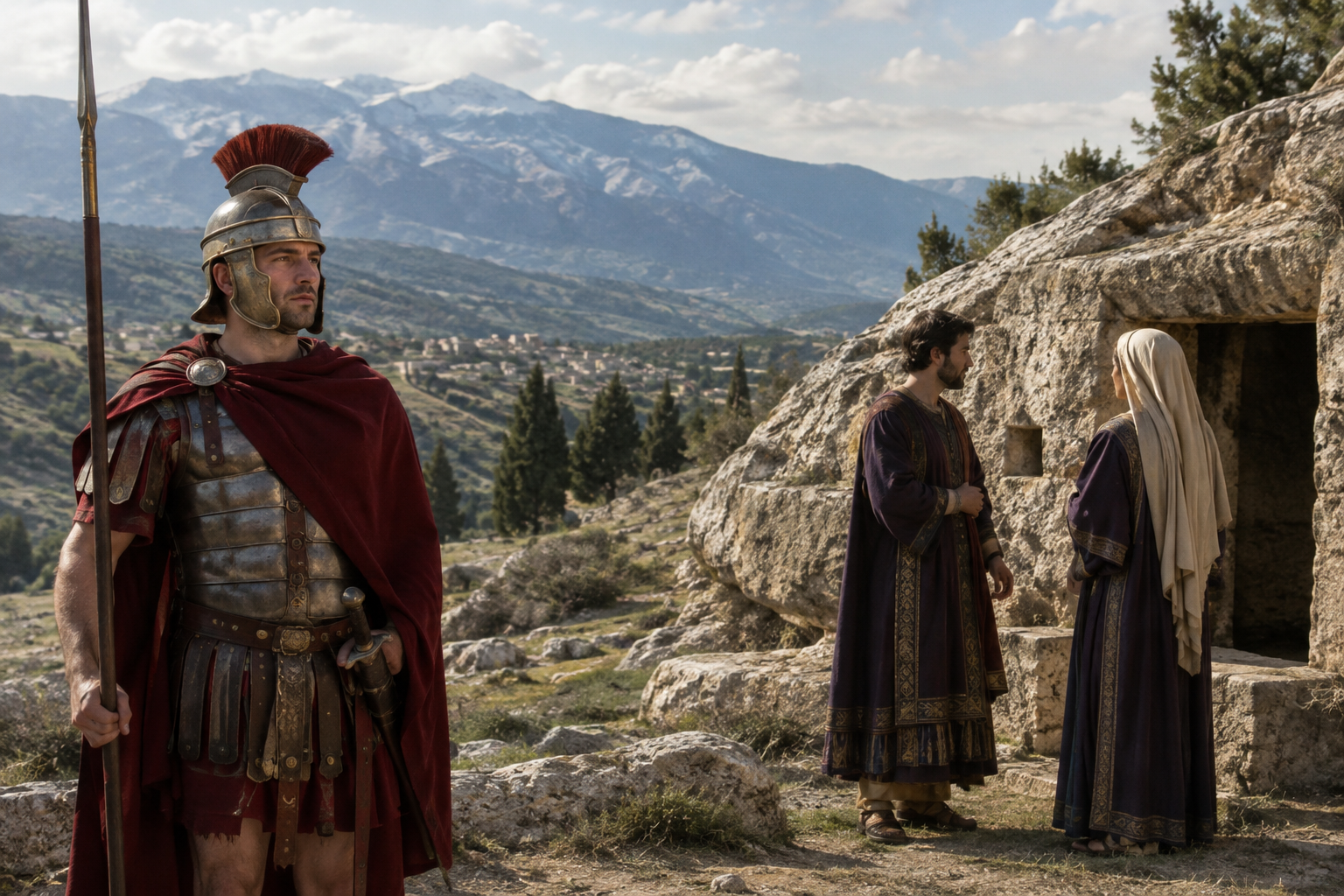
At Vranas near Marathon in Greece, one ancient man dated to around AD 252 has been reported with the Y-DNA haplogroup T1a2b. He appears in the record as sample I7833, from an Imperial Roman setting in a landscape already thick with history: Marathon, of course, had long since become famous for an Athenian victory, but by the 3rd century AD it belonged to a very different world, that of the Roman eastern Mediterranean. That is what makes this sample so interesting. T1a2b is not one of the paternal lineages people usually imagine when they think of "classical" Greece, and its presence here is a useful reminder that Roman-period Greece was part of a connected and mobile imperial system.
A second reported example comes from the eastern Mediterranean again, this time R12229 from the Ej-Jaouze Tombs in Mount Lebanon, dated around AD 488 in the Early Byzantine period. Taken together, these two finds do not create a dynasty or a migration map on their own. But they do place this paternal branch, or an assignment associated with it, in two closely linked provinces of the late antique world: Greece and Lebanon. For anyone exploring T1a2b today, that is a more historically grounded starting point than grand theories.
T1a2b is a specific branch within the broader Y-DNA haplogroup T, a paternal lineage that has a long and scattered history across parts of western Asia, northeast Africa, and the Mediterranean. Y-DNA follows one direct male line only: father to son to son. So it tells us something precise about paternal descent, but not the whole ancestry, language, or identity of a person.
That distinction matters here. The ancient individuals from Marathon and Mount Lebanon were real people embedded in Roman and Byzantine societies, not walking embodiments of a haplogroup. Their Y-chromosome result is one thread among many: archaeology, local history, imperial politics, burial custom, and the larger population mix of the eastern Mediterranean all matter too.
Sample I7833, dated to about AD 252, comes from Imperial Roman Greece at Vranas, Marathon. By this stage, Marathon was no isolated relic of the classical past. It sat within an empire whose roads, ports, armies, markets, and tax systems bound together Italy, the Aegean, Anatolia, the Levant, and Egypt. A paternal lineage turning up there need not represent some dramatic one-time arrival; it may simply reflect the ordinary, cumulative mobility of the Roman world.
This is where archaeology and genetics work best together when they are modest. A single Y-line at Marathon does not prove a family origin in any one province. But it fits comfortably with a broader picture in which Roman Greece was neither genetically sealed nor culturally static. Recent ancient DNA work on the Roman world has repeatedly shown movement and mixture across imperial regions, especially in the eastern Mediterranean, and that larger context makes I7833 more legible than any attempt to force him into a heroic ethnic label.
A genetic study of ancient populations across the Roman and post-Roman Mediterranean, published in Cell, has helped underline just how interconnected these regions were over time. Even without leaning too heavily on any one paper for one individual assignment, that is the world in which a lineage like T1a2b becomes historically plausible at Marathon: not as an anomaly, but as part of a mobile imperial society.
The second sample, R12229, comes from the Ej-Jaouze Tombs in Mount Lebanon and is dated to around AD 488, in the Early Byzantine period. This was an age when the eastern Roman Empire still governed the Levant, but the political language, religious institutions, and settlement patterns of the region were changing. Christianity had become central to public life, and burial landscapes increasingly reflected late antique and early Byzantine communities rather than the civic worlds of the high Roman Empire.
What matters for T1a2b is not that Lebanon "explains" Greece, or vice versa, but that both samples sit inside the same broad eastern Mediterranean zone. The Levant, after all, was not peripheral to Roman history; it was one of its great demographic and cultural engines. Trade, military service, administration, pilgrimage, family movement, and urban life linked places like coastal Lebanon and mainland Greece for centuries.
Research published in Nature on ancient DNA from the eastern Mediterranean and surrounding regions has reinforced this point: late antique populations were often locally rooted yet also connected through wider regional networks. That is the useful historical frame for R12229. The sample does not need to be made more dramatic than it is. Its significance lies in showing this paternal branch present in a documented Byzantine-era burial context in Mount Lebanon.
Greek Worlds in the Mediterranean
Two samples are not a population, but two samples in two different eastern Mediterranean settings can still be historically suggestive. Here the pattern is less about rarity for its own sake and more about placement. I7833 appears in Roman Greece; R12229 appears in Byzantine Lebanon. That spread suits a lineage carried through the dense human traffic of the Mediterranean rather better than any narrow national story.
It is also worth noticing the dates. These are not Bronze Age or early Iron Age individuals, but men living in the 3rd and late 5th centuries AD, periods when the eastern Roman world remained highly urban, literate, and connected despite political strain. In other words, T1a2b here is visible not at the supposed margins of history, but in the lived fabric of late classical and late antique society.
For family historians, this can be surprisingly helpful. Many people expect Y-DNA to hand them a single ancient homeland. Ancient evidence often does something subtler and, in truth, more interesting: it places a paternal branch inside real historical systems. In this case, the system is the Greek-Levantine eastern Mediterranean of Roman and Byzantine times.
Marathon and Mount Lebanon may sound like separate stories, but in late antiquity they belonged to overlapping circuits of empire. Grain, wine, oil, textiles, taxes, letters, soldiers, monks, merchants, and officials all moved through these worlds. Greek was widely used across much of the east; Roman administration bound the provinces together; and Christian institutions increasingly added another layer of long-distance connection.
That does not mean every bearer of T1a2b moved personally between these places. It means the lineage was present in populations that did. Ancient DNA is often most illuminating when it confirms the ordinary cosmopolitanism of the past. The Roman and Byzantine Mediterranean was full of local communities, but those communities were not sealed containers.
What makes T1a2b distinctive in the current ancient evidence is not a grand royal claim or a single spectacular tomb, but its appearance in two credible eastern Mediterranean contexts: Imperial Roman Greece and Early Byzantine Lebanon. That is enough to say something meaningful. If you belong to this paternal branch, your line fits comfortably into the human landscape of the Roman-Byzantine east, where ancestry, language, and identity were shaped by long-lived regional ties as much as by movement across the sea.

Comments