Haplogroup R1b1a1b1a1a2c1a5c2

– 5 min read



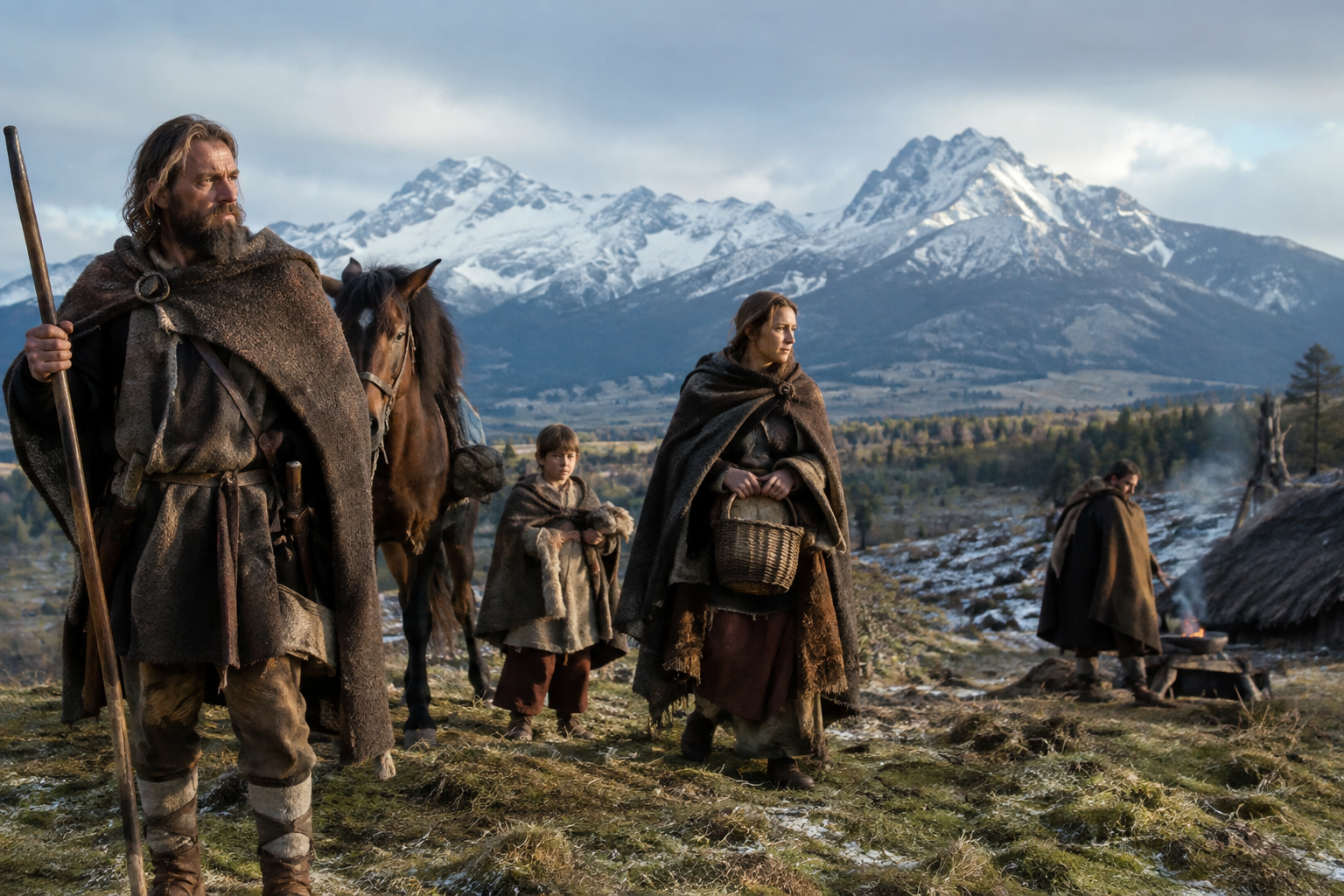
At Pocklington in East Yorkshire, archaeologists and geneticists have begun to illuminate one of the most intriguing corners of Iron Age Britain: the world of the Arras culture and the people often associated with the Celtic Parisi. Among the ancient individuals from this landscape is sample I21647, dated to around 225 BC. He matters here because his paternal line has been reported in connection with the very specific Y-DNA branch R1b1a1b1a1a2c1a5c2.
That is a mouthful, of course, but the point is not the syllables. The point is that a narrow paternal branch, found in an Iron Age burial in eastern England, turns up again in another pre-Roman English context: sample I11153 from Trumpington, Cambridgeshire, dated to around 300 BC. Two men, two sites, both in Iron Age eastern England: not enough to define a whole people, but certainly enough to suggest that this paternal line belonged to the social and biological landscape of Britain before Rome.
Pocklington has become one of the most discussed Iron Age sites in Britain because it offers something rare: graves, chronology, and now ancient DNA that can be compared with archaeology. The individual labelled I21647 comes from East Yorkshire, a region long associated by archaeologists with the Arras culture, known especially for its distinctive burial traditions in the later Iron Age.
We should be careful here. A Y-DNA lineage does not tell us a man's language, tribe, or political allegiance, and it certainly does not make every carrier of that lineage a "Parisi" in any simple sense. But when a branch like R1b1a1b1a1a2c1a5c2 appears in an Iron Age burial from this exact regional setting, it becomes part of a larger historical puzzle: who lived in East Yorkshire before the Roman conquest, how stable local paternal lines were, and how these communities related to the wider Celtic-speaking world of Britain and the continent.
Research on ancient populations in Britain has increasingly shown that the Iron Age was not a blank genetic preface to Roman or Anglo-Saxon history. It was a substantial, regionally varied period in its own right. A recent ancient DNA study on Iron Age Britain and related populations can be found here: https://www.biorxiv.org/content/10.64898/2026.08.03.742615v2.
The second ancient pointer comes from Trumpington in Cambridgeshire. Sample I11153, dated to about 300 BC, shows that this same reported paternal branch was not confined to Yorkshire. Trumpington sits in a different local landscape, in the eastern lowlands rather than the Yorkshire Wolds, and that matters. It suggests that this lineage was present across more than one Iron Age community in pre-Roman England.
Again, caution is essential. Two occurrences do not map an entire migration, and they do not prove close kinship between the men. But they do show that this branch belonged to the human reality of Iron Age eastern Britain. If you carry R1b1a1b1a1a2c1a5c2 today, these samples place your direct paternal line, or a very near ancestral branch of it, in England several centuries before the arrival of Roman administration.
That is historically important because eastern Britain in the centuries around 300-200 BC was hardly isolated. It was a zone of exchange, changing burial practices, and contact with continental Europe, yet also one with strong local continuity. A paternal lineage found in both Cambridgeshire and East Yorkshire fits neatly into that picture of connection without requiring us to imagine mass replacement or a single ruling clan.
The wider parent haplogroup behind this article's branch belongs within the large and complex R1b family, a major Y-chromosome lineage in western Europe. But the exact subclade here, R1b1a1b1a1a2c1a5c2, is much narrower. It would be a mistake to take every broad statement ever made about R1b and simply paste it onto this much more specific line.
What the current evidence does support is modest but useful. This branch, or a reported assignment closely tied to it, appears in at least two Iron Age males from England before the Roman conquest. That gives it a documented place in British prehistory. It does not, by itself, prove that the branch originated in Britain, nor that all modern carriers descend from a single famous tribe, nor that it was especially elite.
Y-DNA tracks only one line of descent: father to son to son. So although these ancient men may speak directly to a paternal ancestry question, they represent just one strand in the far broader ancestry of any real person, ancient or modern.
One reason these Iron Age finds are so valuable is that they sit after the great Bronze Age upheavals that transformed much of Europe's paternal landscape, yet before the later historical layers added by Rome, migration-period mobility, and medieval population shifts. In other words, they belong to a period when local communities in Britain were already fully formed, but not yet overlaid by imperial rule.
That gives the lineage a particularly interesting chronological position. If a present-day tester matches this branch, the ancient evidence points not to a vague "Celtic" past in the abstract, but to a specifically documented presence in southern and eastern England in the mid- to late first millennium BC.
For the longer background to how ancient genomes are changing our picture of these periods, MyTrueAncestry readers may also find this overview helpful.
The Trumpington individual also sits in the shadow of an earlier breakthrough in ancient DNA from Britain. One of the landmark studies in the field, published in Nature, helped establish how later prehistoric populations in Britain were reshaped after the Beaker period and how continental ancestry spread into the islands. That paper is here: https://www.nature.com/articles/nature25738.
It would be wrong to pretend that the paper was written about this exact subclade alone. Still, its broader importance is obvious. Without that kind of genomic framework, isolated Iron Age Y-line assignments would be much harder to interpret. The value of I11153 and I21647 lies precisely in placing a fine-grained paternal branch inside a much larger, better-documented population history of Britain.
This is also why eastern England matters so much. Cambridgeshire and East Yorkshire were not marginal zones. They were regions where long-term settlement, exchange networks, and regional identities were already well established before written history begins to describe Britain in any detail.
Roman and early medieval Britain
The most distinctive thing about R1b1a1b1a1a2c1a5c2, on the evidence currently in view, is not a royal claim or a dramatic migration legend. It is something more solid: this paternal line is documented in Iron Age England, at Trumpington and Pocklington, before Rome. For anyone researching a direct male line, that is a meaningful anchor point. It suggests that this branch belonged to the living fabric of pre-Roman Britain, in communities that were local, connected, and already historically distinctive long before later conquests rewrote the map.





Comments