Genetic History of Grecìa Salentina’s Greek-Speaking Community

– 6 min read


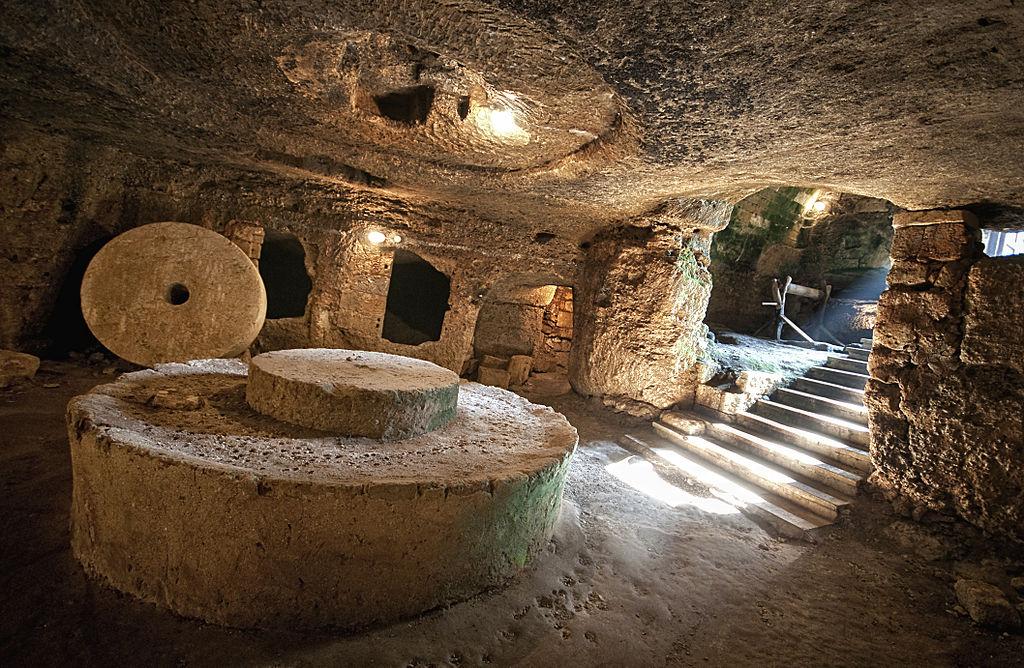
At the far southeastern tip of Italy, tucked into the Salento peninsula, a form of Greek has survived for centuries among a cluster of towns with an unusually long memory. The villages sit across mostly flat countryside, not far from sea routes linking southern Italy to the eastern Mediterranean. Why did Greek endure here when Romance speech dominated almost everywhere else?
The setting matters. This is no mountain refuge cut off from the world. Nearby Otranto and Brindisi were great doorways between Italy and the east, carrying merchants, pilgrims, monks, soldiers and sailors. The region was never still — and that is precisely what makes Greek's survival so fascinating.
The historical debate has long revolved around two possibilities: local Greek as a direct heir of classical antiquity's earliest settlers, or as a medieval arrival carried by Byzantine influence. The most compelling picture is more exciting than either. Rather than one decisive origin, Greek likely persisted over a very long time while being periodically refreshed by newcomers from other Greek-speaking lands.
Languages can outlast political systems, trade patterns and family lines. In Grecia Salentina, speech survived because it remained socially valuable, ritually important and useful in long-distance ties. The Greek-speaking enclave was not a fossil. It was alive — sustained not by isolation but by continuous contact with a wider Mediterranean world.
Long before anyone spoke of Greek villages in Salento, southern Italy had already been layered many times over. Farming spread from Anatolia in the Neolithic, reshaping daily life through fields, herds and permanent settlements. Bronze Age movements added further layers. Southern Italy was never an isolated endpoint but part of a broad zone of exchange where metals, pottery styles and ideas crossed water and land through accumulation rather than replacement.
Greek colonies arrived in the first millennium before Christ into this already-crowded arena, where Messapians and other indigenous peoples had their own identities and power structures. Roman rule then created another profound reordering, connecting Italy to Greece, the Levant, Egypt and Anatolia on an unprecedented scale. Soldiers, traders, families and religious cults travelled vast distances. Eastern Mediterranean languages and ancestry seeped in through countless ordinary journeys.
After the western empire fragmented, Byzantine ties and shifting frontiers added yet more layers. Old structures survived under new names; identities were refreshed rather than replaced. The heel of Italy became what it was through repeated contact, and the Greek-speaking communities of Salento inherited all of that depth.
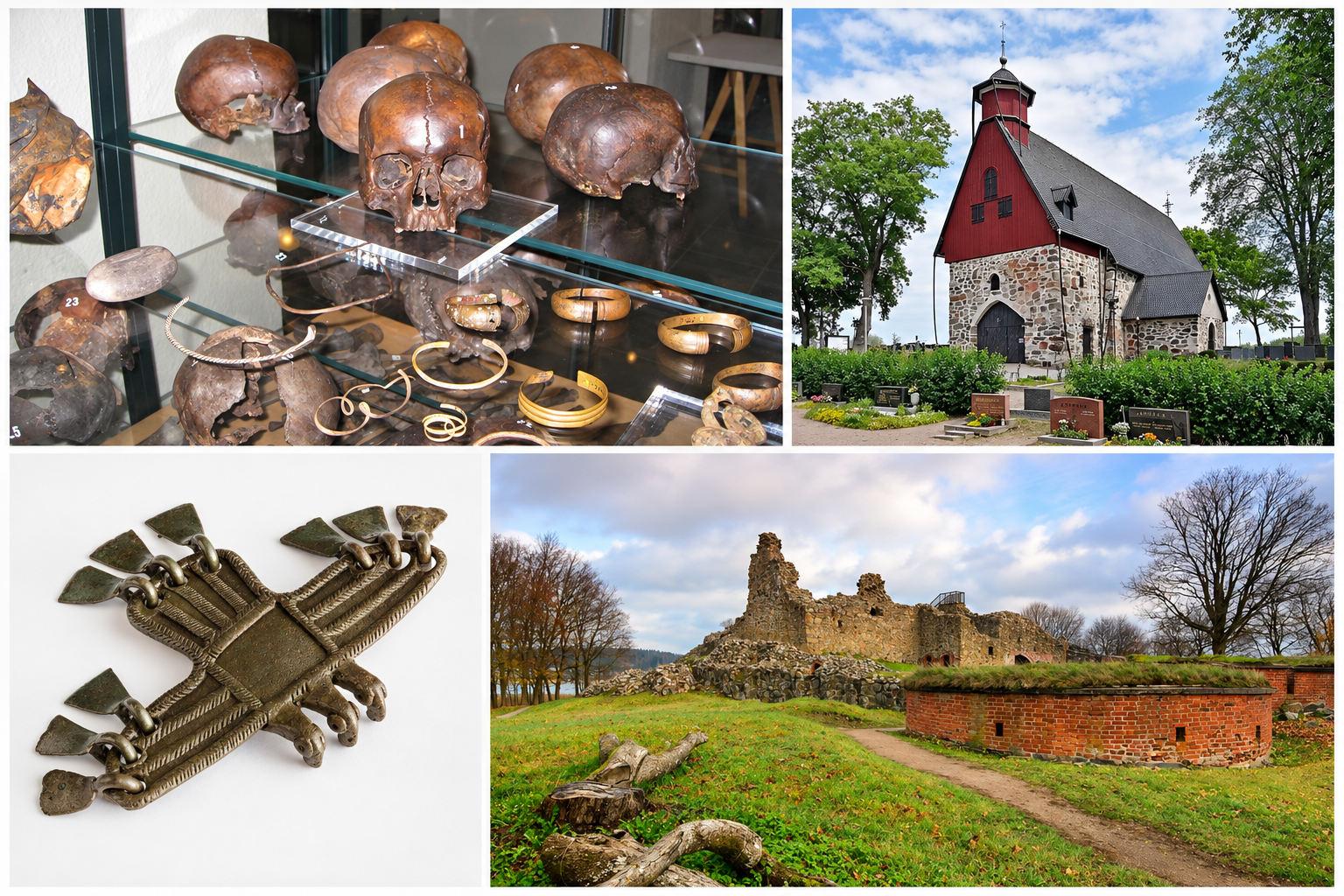
Iron Age Daunian cemeteries of northern Apulia reveal a society deeply embedded in the wider Mediterranean yet distinctly local — and they do not line up neatly with the later Greek-speaking enclave, warning against easy assumptions about geographic proximity implying historical sameness.
The Roman imperial period appears as a key turning point. People from the eastern Mediterranean arrived in Italy in significant numbers through the empire's traffic system. Greek was no dead relic in Roman times; it was a major language of trade, education and religion. This makes the cultural landscape in which Greek could survive or be renewed far easier to imagine.
Byzantine western Anatolia proves especially relevant, with specific ancient individuals from that region overlapping closely with later southern Italian population profiles. This regional specificity is a gift: it tells us to think in terms of coasts, provinces and corridors rather than giant civilisational blocks. A trader from an Anatolian port, a monk from a Greek-speaking monastery, a sailor from the Aegean — all belong to the broad Greek world yet are not interchangeable. The ancient dead reveal not a tidy origin myth but a moving frontier of connection stretching from prehistoric Apulia to imperial Italy and Byzantine Anatolia.
There is a romantic image often attached to minority-speaking communities: a secluded enclave marrying inward, guarding its speech from outsiders. In Grecia Salentina, this picture appears to be wrong. The twelve municipalities sit close together across a gently undulating plain, encouraging constant exchange. People married across towns, traded in neighbouring markets and attended religious events in adjacent villages.
Evidence for close in-marriage over recent centuries is notably absent. Instead of demographic isolation, the picture is one of healthy connection — fitting perfectly with what historians know of southern Italian rural life, where seasonal labour, ecclesiastical networks and short-distance marriage exchange tied communities together.
There is something rather moving in this. The inhabitants of Grecia Salentina did not merely inherit Greek passively. They cultivated it through households, songs and rituals, making countless small decisions that it still mattered. A language can survive because a community keeps choosing to keep it alive — and that choice may actually be sharpened by living among neighbours who speak differently. Grecia Salentina lasted not because it stood outside history, but because it learned to live within history without giving itself away.
The most compelling conclusion is this: the Greek character of Grecia Salentina was not born in a single moment. It was sustained over a very long time by a mixture of persistence and renewal. Greek stayed because it survived locally, and it survived locally because new connections to the Greek-speaking world kept strengthening it.
Byzantine rule looks less like an absolute beginning and more like a great phase of consolidation. Monks, clergy or settlers from eastern Mediterranean regions arriving in troubled times would have found in Salento a place where Greek was already meaningful. A modest number of newcomers can have an outsized cultural impact when they bring prestige, liturgy or connections to powerful institutions. Picture a monk crossing the sea with manuscripts; a priest serving a village where Greek still flourished in ritual; a family arriving from an eastern province, bringing names and devotions that subtly refreshed what was already there.
The wider eastern Mediterranean offered a vast reservoir of Greek-speaking people over many centuries — from the Aegean islands to western Anatolia, from the Balkans to older Roman provinces. There was no single homeland from which reinforcement had to come. A series of small inputs from different places could all nourish the same local tradition: plural, maritime and cumulative.
In the end, Grecia Salentina endured because generation after generation found reasons to keep Greek alive, while history kept sending reinforcements — sometimes tiny, sometimes barely visible, but enough. The result is not a relic preserved under glass. It is a living palimpsest, written over many times yet still carrying older words beneath the newer strokes: messy, layered, improbable, and magnificently alive.
 View ORCID Profile
Comments