Ancient Iranian mtDNA and skeletal identification

– 4 min read


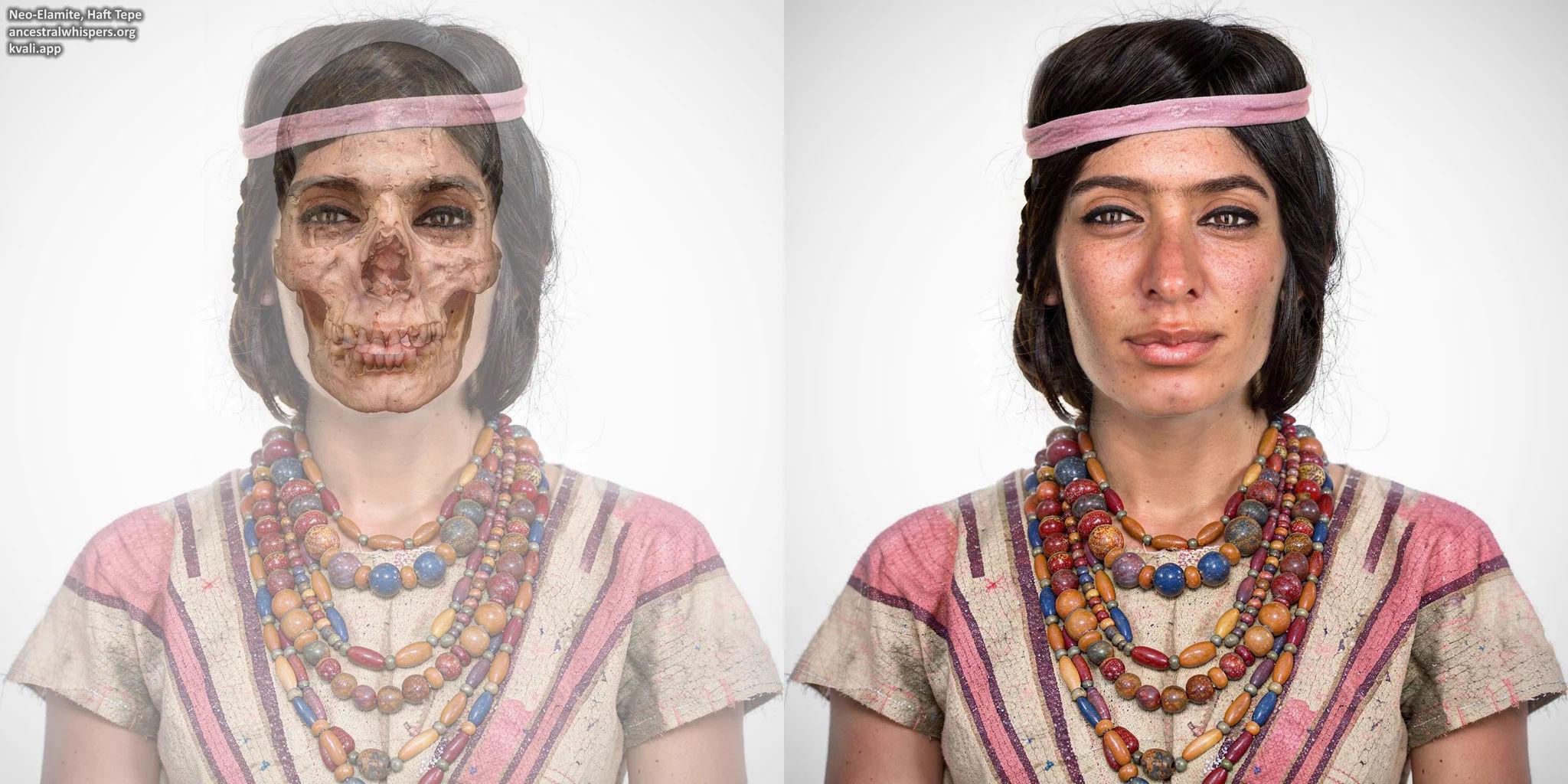
In southwestern Iran, on the hot plains of Khuzestan, one of the oldest great civilizations of the ancient Near East once thrived: Elam. Though often overshadowed by Mesopotamia, Elam commanded trade routes, labour, and ideas across the Iranian Plateau. Its territory stretched from Khuzestan into neighbouring regions, sitting at a crossroads between Mesopotamia, Baluchistan, and the Indus world. This was not isolation but strategic connectivity — a civilization that remained distinctly itself while participating in larger worlds.
What makes Elam especially compelling is its human depth. Even after Achaemenid conquest, Elamite identity persisted through families, language, and memory. The burials of Khuzestan reflect this richness. Conditions there preserved bones unusually well, allowing researchers to study real people from the Elamite period, not just their pottery or walls. Every skeleton represents someone who moved through towns, formed households, suffered illness, and was mourned. The low mounds of Khuzestan conceal an astonishing depth of time.
Explore genetic continuity on the Iranian plateau
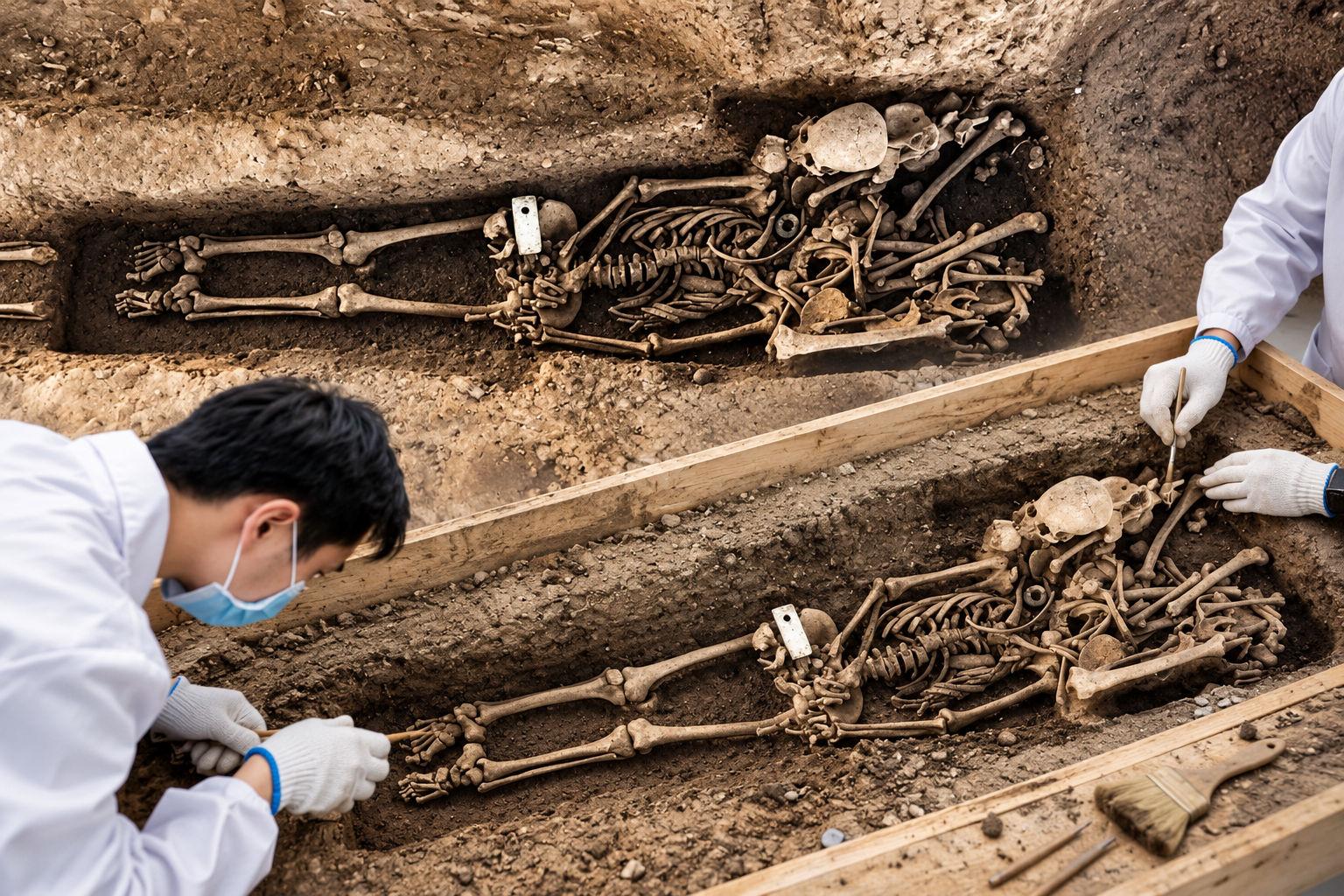
About ten kilometres southeast of Shush lies Haft-Tepe — "the seven hills" — an Elamite settlement linked to the ancient town of Kabnak, flourishing around the second millennium before Christ. Excavations revealed collection area C, where trench 298 yielded something extraordinary: a large commingled burial containing numerous skeletons from the Middle Elamite period.
The preservation was remarkable. Working almost like detectives, analysts distinguished individuals by bone side, age, and anatomy — a left femur here, an adolescent tibia there — recovering a genuine human population from apparent chaos. The sampled individuals ranged from around twelve years old to their thirties, suggesting a varied group rather than a single demographic. Teeth and dense long bones proved especially informative.
Haft-Tepe itself was no lonely tomb site but a complex urban landscape of buildings and courtyards. The dead of trench 298 once moved through that living world. Their collective grave combines individual intimacy with social scale, making it one of ancient Iran's most gripping burial contexts — not because it offers easy answers, but because it preserves a profoundly human funerary scene.
Ancient bones can carry inherited signals passed through the maternal line, placing individuals within family branches stretching back thousands of years. The people of Haft-Tepe revealed two such lineages: R2 and R5a. R2 has deep roots in Iran, appearing in sites like Ganj Dareh far older than the Elamite period, suggesting that some of the dead carried maternal ancestry stretching back to some of Iran's earliest communities.
R5a tells a different story. More commonly associated with South Asia, its presence hints that the Elamite world was open to eastern connections — not merely through traded objects, but through people themselves: spouses, migrants, or craft specialists. This human dimension complements archaeology's long-standing evidence of Iran–Indus contact.
Together, these lineages reveal a braided past. Ancient local ancestry persisted alongside broader regional ties. The dead of Haft-Tepe embodied both continuity and contact — exactly the complexity one would expect from a civilization at one of the ancient world's great crossroads. Behind every lineage label stands a chain of mothers and children stretching through forgotten households, reminding us that history is lived through bodies and families.
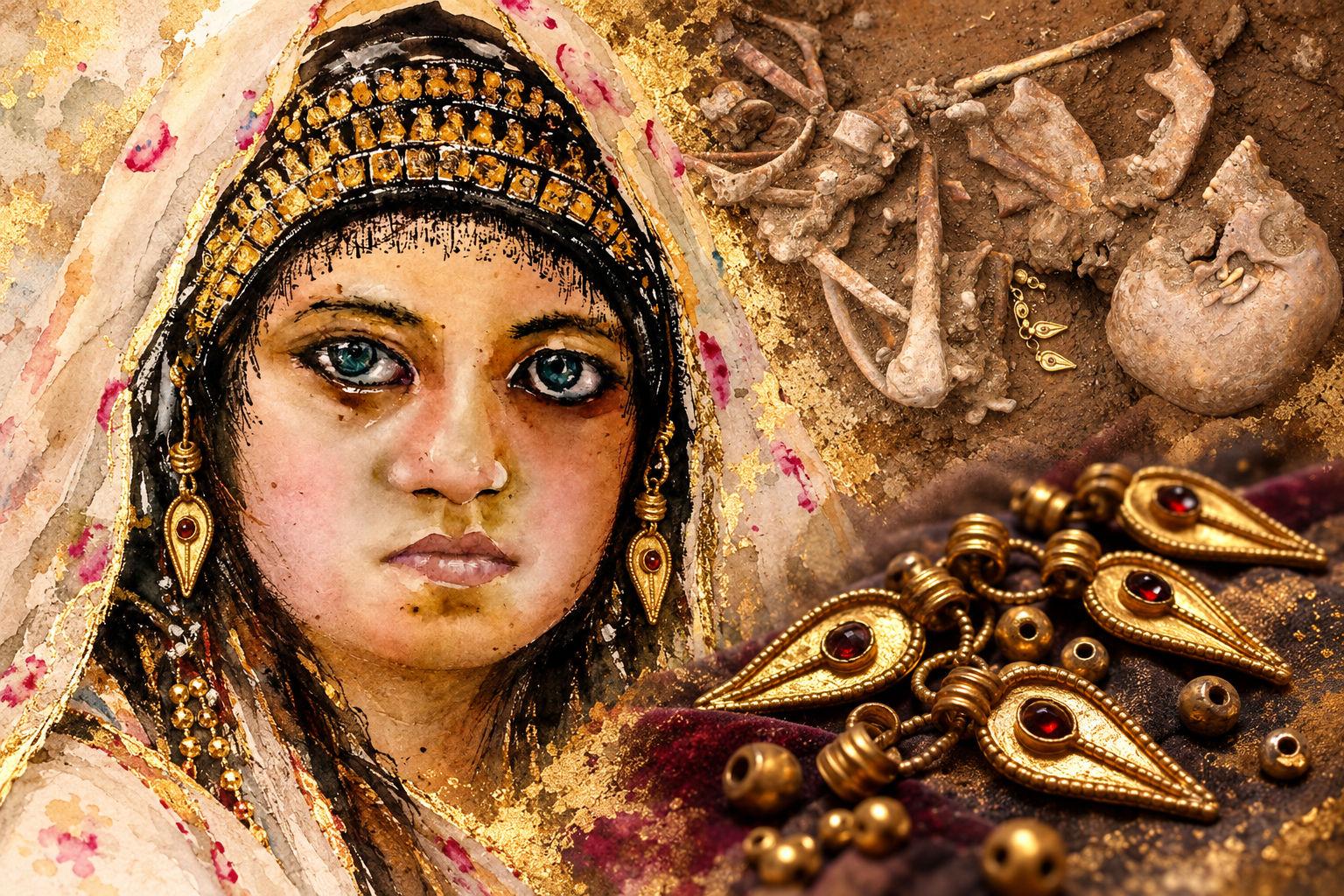
In the Sistan plain of southeastern Iran lies Shahr-e Sukhteh — the "Burnt City" — once a vast 250-hectare urban centre flourishing between the late fourth and early third millennia before Christ. Its cemetery has yielded many remarkable graves, but one stands above all: grave 6705, containing a woman around thirty years old, tall, long-skulled, buried on her right side with seals, a leather bag, a metal mirror, and ornaments. What made her famous was the object in her left eye socket: what may be the oldest known artificial eyeball in human history.
The prosthesis was crafted from bitumen mixed with animal fat, with tiny gold wires imitating eye vessels and a marked pupil. Side holes likely secured it within the socket. This was not a crude plug; it was designed for appearance, combining medicine, craft, and social performance. Traces of infection beneath her brow confirm she wore it in life, not merely in burial. Someone with severe eye damage was given back a face.
She stood an estimated 175–181 centimetres tall — impressively tall by ancient standards — with a distinctively elongated skull and projecting upper jaw. Her grave goods suggest status and participation in urban exchange. The mirror beside her is especially evocative alongside the prosthesis, inviting the thought that self-presentation mattered deeply in her daily life. Her maternal lineage was identified as J, confirming that she was a biologically real individual whose ancestry can be studied alongside her remarkable burial.
Shahr-e Sukhteh was no desert outpost. Connected to Mesopotamia and the Indus sphere through the Helmand River system, it was a city of sophisticated trade and craft. This woman lived at its heart. Her grave compresses into a single context urban life, medical ingenuity, bodily suffering, beauty, and mourning — turning a prehistoric cemetery into a place of genuine human encounter across nearly five millennia.
Read more on Bronze and Iron Age Mesopotamia
A skeleton is one thing; a face is another. The reconstruction of the woman from burial 6705 began with careful study of her skull — its long cranium, sloping forehead, elongated face, projecting jaw — before her remains were scanned in Rome to create a precise digital replica. Sculptors then worked on that replica, placing tissue-depth markers at key points and building the face layer by layer in clay: cheeks over cheekbones, lips over teeth, flesh over jaw. A custom acrylic eye, modelled on the ancient prosthesis, was fitted, restoring her most distinctive feature rather than erasing it.
Final details drew directly from site evidence. Her hairstyle echoed figures found at Shahr-e Sukhteh; her necklace reflected beads from her own grave; her clothing aimed to match materials known from the site. The result is disciplined historical imagination: not fantasy portraiture, but a plausible embodiment grounded in bone, burial, and cultural context.
The reconstructed face achieves something technical reports rarely can. It restores individuality, transforming "burial 6705" into a woman with a long face, a prominent jaw, arranged hair, and one handmade eye. Viewers encounter her rather than merely reading about her. From earth, skull, measurement, and craft, a city's forgotten woman returns. The distance of five thousand years suddenly feels very small.
https://papers.ssrn.com/sol3/papers.cfm?abstract_id=7642665
Explore 5,000 years of genetic history in the South Caucasus
Upload your DNA to MyTrueAncestry to see whether you match this family or related ancient DNA samples, and explore how your own ancestry connects with the deep human history of Iran and the ancient Near East.
Comments