Haplogroup G2a2b2b2

– 5 min read


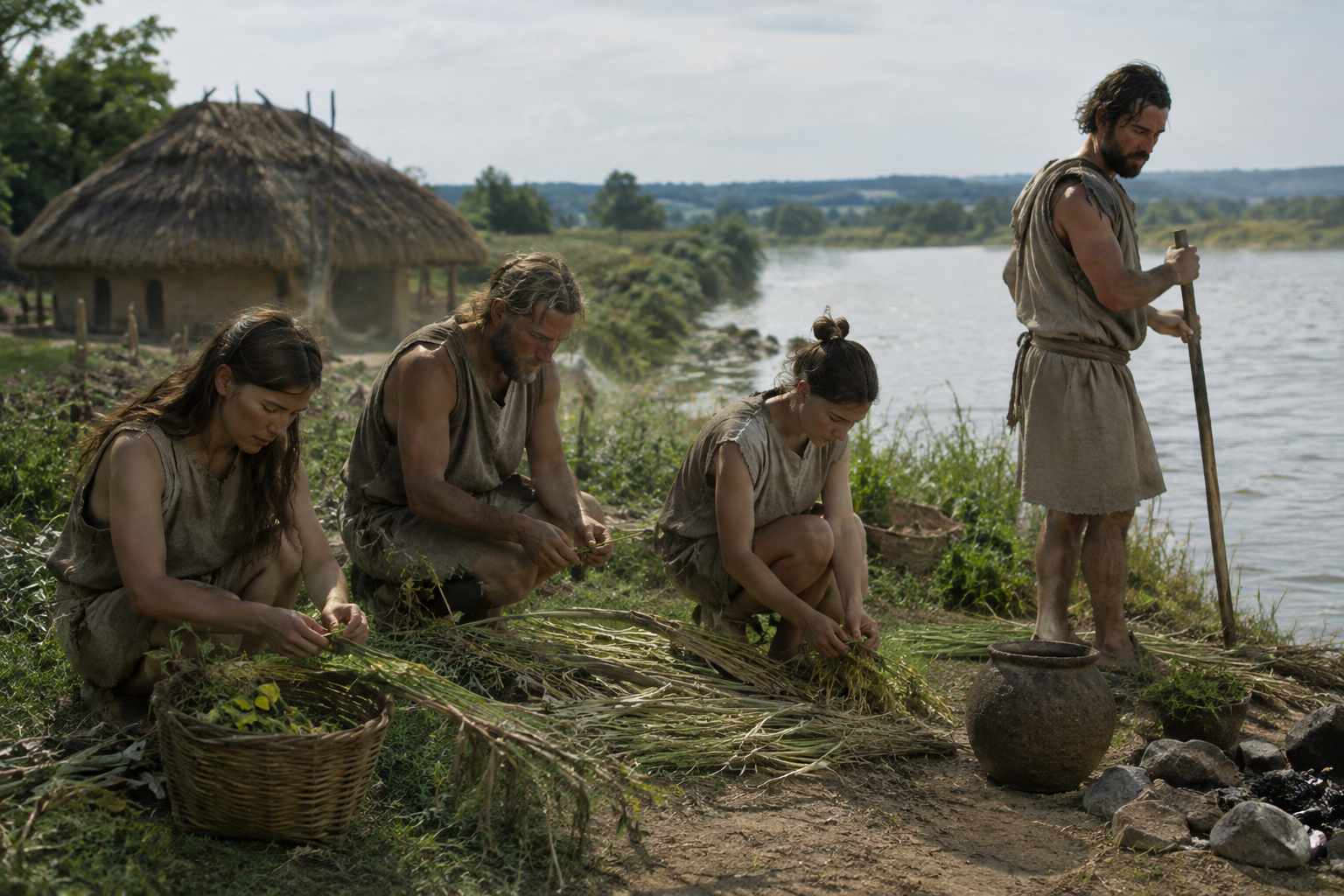
At Derenburg-Meerenstieg II in what is now Germany, three men buried around 6000 BC - DER002, DER006, and DER013 - have been associated with the Y-DNA haplogroup G2a2b2b2. That is already interesting before we add anything else. One site, one early farming community, and not just a stray paternal signal but a repeated one. In archaeogenetics, repeated finds at a place like this matter because they hint at how the first generations of settled farmers organized family life, land, and community.
Derenburg belongs to the world of early Neolithic Europe, when farming was still a relatively new way of life north of the Alps. A Y-chromosome lineage like G2a2b2b2 traces only a direct paternal line - father to son to son - not a person's whole ancestry. Even so, when a branch of haplogroup G turns up again and again among early European farmers, it becomes part of a much bigger historical question: who were these first farming communities, and how did they establish themselves so successfully across central and southeastern Europe?
The Derenburg-Meerenstieg II burials sit in a region closely tied to the Linearbandkeramik, or LBK, horizon: the earliest large farming tradition across much of central Europe. The archaeology of this world is familiar enough now - longhouses, cultivated cereals, livestock, formal cemeteries - but the genetics still have the power to surprise. What the Derenburg cluster shows is not merely that early farmers reached central Germany, but that some of their male lines were persistent enough to appear multiple times within the same burial community.
That does not mean DER002, DER006, and DER013 were all close relatives, nor does it turn the cemetery into a little dynastic chart. But it does suggest that haplogroup G lineages were not marginal here. They were part of the settled social fabric of the earliest farming populations in the region, exactly the sort of evidence that helps move us beyond vague talk of "Neolithic expansion" and toward actual communities with recurring paternal ancestry.
An ancient DNA study examining early European populations, including the first farmers of central Europe, is part of the wider research framework behind this picture, and one major study of Neolithic and later genomic change in Europe has helped place such early farmer lineages into their broader continental context.
If your paternal line falls under G2a2b2b2, the important backdrop is the wider story of haplogroup G in Neolithic Europe. Broadly speaking, branches of G are among the most characteristic Y-chromosome signatures of Europe's earliest farmers. They appear again and again in early agricultural contexts from the Balkans through the Carpathian Basin and into central and western Europe.
That does not mean every branch of G followed the exact same route, nor that G2a2b2b2 can simply be equated with all Neolithic farmers. Subclades matter. Still, the repeated appearance of this lineage in early central and southeastern European contexts strongly fits the larger pattern in which incoming farming populations carried paternal lines quite different from many Mesolithic hunter-gatherers already living in Europe.
In plain English: this is the sort of lineage that turns up near the front line of one of the biggest social revolutions in European prehistory. Farming was not just a new subsistence strategy. It changed settlement, kinship, diet, disease, mobility, and the scale on which communities reproduced themselves. A paternal lineage found in those communities is therefore attached, however narrowly, to a genuinely transformative age.
The other notable sample here is I6663 from Garlesti in Romania, dated to around 4300 BC. This is a very different setting from early LBK-era Germany. We are now in the Chalcolithic, or Copper Age, of southeastern Europe - a period of large settlements, developing social complexity, and long regional traditions that had already been farming for millennia.
What makes I6663 valuable is not that it proves a straight family line from Derenburg to Garlesti. It does not. What it does show is that a paternal branch associated here with G2a2b2b2 appears in both early Neolithic central Europe and later prehistoric southeastern Europe. That gives the haplogroup a broader archaeological footprint than a single cemetery or a single farming horizon.
Romania matters enormously in this story because southeastern Europe was one of the great heartlands of early farming on the continent. By the fifth millennium BC, communities there were not pioneers in the same sense as the first LBK settlers farther northwest. They were heirs to long-established agricultural traditions, with their own local trajectories. A lineage found in that world may reflect continuity, regional persistence, or the survival of older male lines through changing social landscapes.
Research published on prehistoric Romania and neighboring regions has helped sharpen this picture, and a genetic study focused on ancient individuals from the area is relevant to the wider southeastern European setting in which Garlesti belongs.
Ancient DNA in the 5th Millennium Carpathian Basin
There is a temptation with Y-DNA to jump straight from a branch name to a grand migration map. Better to resist that. The strongest point here is narrower and more useful: G2a2b2b2 is linked, through these ancient individuals, to real prehistoric communities in central and southeastern Europe, especially in farming contexts.
The three Derenburg individuals show repetition within a single early Neolithic site. I6663 extends the picture into Chalcolithic Romania. Together they suggest that this paternal line, or a very closely related one reported under this label, belonged to the demographic world created by Europe's first and early-established farmers.
That is especially helpful for members of the MyTrueAncestry community because ancient DNA often works best through accumulation. One isolated sample can be a curiosity. Several samples across related periods and regions start to look like a pattern. In this case, the pattern points toward the agricultural societies that spread through Europe long before the Bronze Age transformations more familiar to many readers.
Mesolithic-Neolithic Transition
There is also a quiet historical point worth making. The best-known later chapters of European genetic history - steppe migrations, Iron Age chiefdoms, Roman mobility, medieval dynasties - can easily overshadow the older Neolithic substrate. Yet for some paternal lines, including branches within haplogroup G, the deeper and more distinctive signal lies much earlier. It lies with the communities that built the first durable farming landscapes of Europe.
That early layer can persist even when later ancestry arrives in force. A modern man carrying G2a2b2b2 is not a pure relic of the Neolithic - nobody is. But his direct paternal line may still preserve a connection to those first settled agricultural societies, whose cemeteries now yield the Y-chromosome clues.
The clearest supported insight for G2a2b2b2 is not a royal legend or a heroic migration tale. It is something more archaeologically solid: this paternal lineage is associated here with Europe's early and middle farming worlds, from the cemetery of Derenburg-Meerenstieg II in Neolithic Germany to Chalcolithic Garlesti in Romania. For anyone researching this haplogroup today, that is a meaningful clue. Your direct male line may belong to one of the paternal strands that were already established among the continent's first long-settled agricultural communities.
Comments