Haplogroup E1b1

– 5 min read


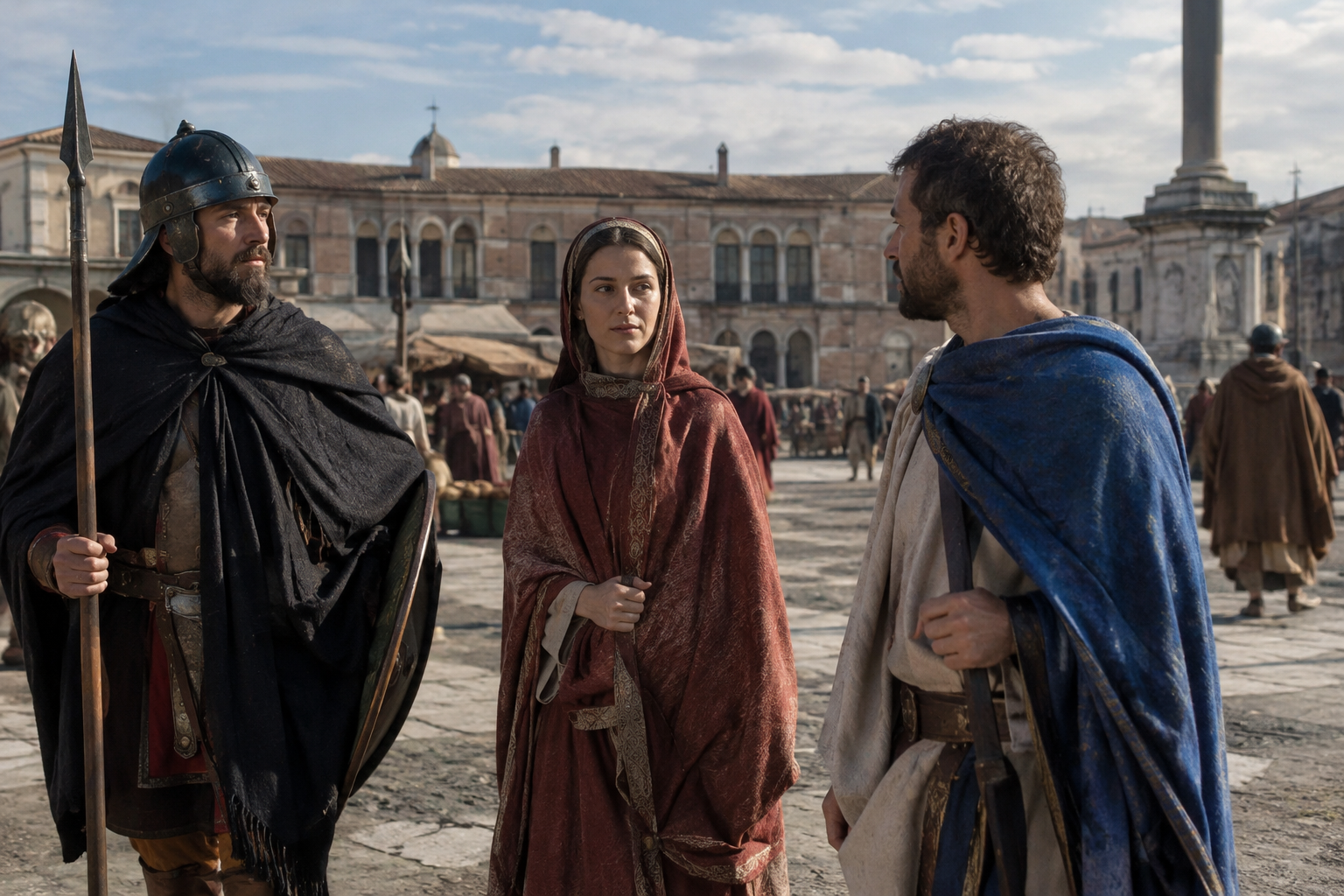
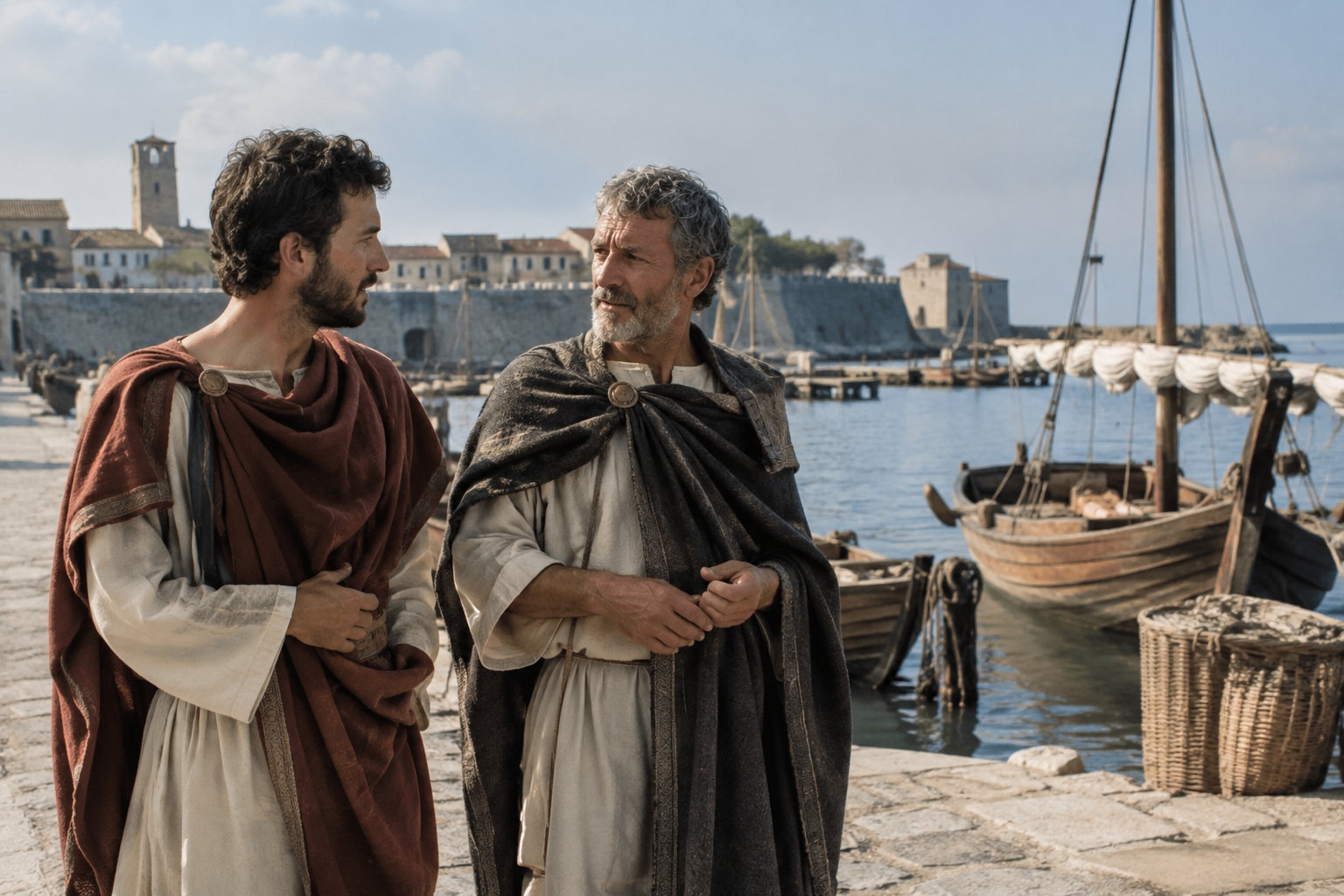
At Collegno, near Turin in northern Italy, one sixth-century burial has become a small but telling piece of a much larger story. The individual identified as COL_130, dated to around AD 580, belonged to a community usually discussed under the label "Lombard" - one of the post-Roman groups that moved through and settled in parts of Italy after the collapse of western imperial rule. What makes this man especially interesting for paternal ancestry is that he is associated with Y-DNA haplogroup E1b1, a lineage with a deep history well beyond the usual central and northern European stereotypes attached to Migration Period burials.
That matters because E1b1 is not a cultural badge. It is a paternal line, traced from father to son, and it tells only one narrow part of a person's ancestry. But when E1b1 appears in Late Antique and early medieval contexts in Hungary and Italy, it helps show something archaeologists have been arguing for years: these communities were not biologically uniform tribes marching neatly across a map. They were mixed, mobile, and historically entangled.
Collegno has become one of the best-known cemeteries for exploring the social world of early medieval northern Italy. Ancient DNA studies of burials from sites like this have shown that the people buried under a broadly Lombard archaeological label did not all share the same ancestry profile, nor did they all come from a single recent homeland. Some carried stronger signals associated with central or northern Europe, while others fit more comfortably within southern or southeastern European and Mediterranean patterns.
Within that setting, COL_130 stands out because the E1b1 assignment places his direct paternal line in a branch whose wider history reaches far beyond the Alps. The important point is not to turn him into an exotic exception, but to see him as evidence of the kind of diversity that written sources often flatten. A burial ground can look culturally coherent while still containing men whose paternal lines had very different older histories.
A genetic study of these early medieval movements, published in Science, has helped reinforce exactly that broader picture for post-Roman Europe: identity, migration, and community formation were more complicated than older one-people-one-origin models allowed.
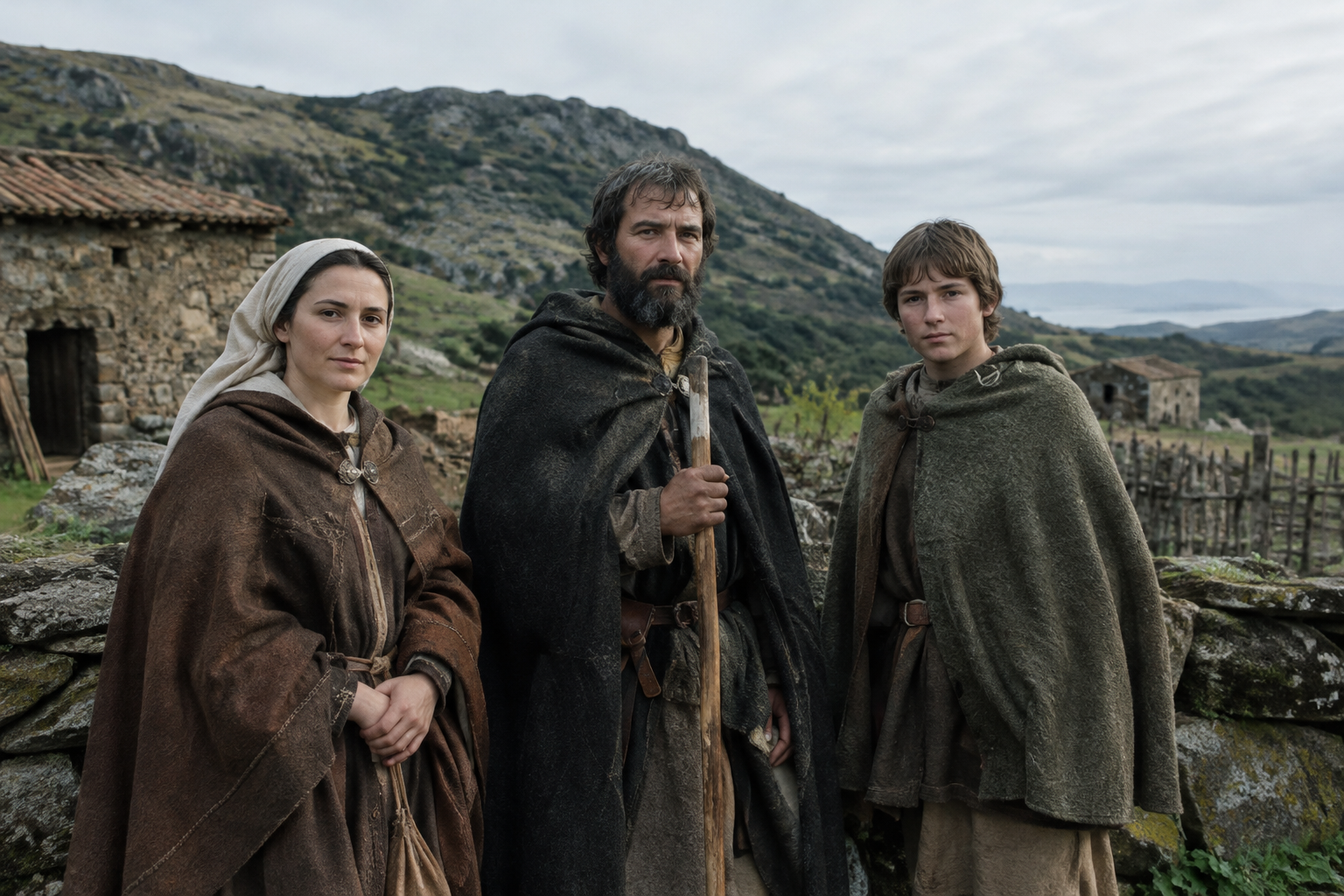
If Collegno gives us one northern Italian case, Arrabona offers a pattern. At Szechenyi Square in modern Gyor, ancient Arrabona in Pannonia, two Late Antique individuals dated to about AD 425 - GYS014 and GYS039 - are also associated with E1b1. Now we are not looking at a lone burial in Italy, but at repeated evidence in the Carpathian Basin during the turbulent decades when Roman authority was weakening and new political formations were taking shape.
This is precisely the sort of evidence that rewards careful handling. Two men from one site do not prove a local dynasty, a mass migration, or a single ethnic identity. But they do show that E1b1 was present in a Late Antique population zone that sat at one of Europe's great historical crossroads. Pannonia was never an isolated frontier. It was a military, commercial, and demographic contact zone linking the Balkans, the Danube, the Roman world, and peoples moving through central Europe.
That setting makes the Arrabona samples especially valuable. E1b1 here is not some late medieval curiosity or a modern back-projection. It is visible in the very centuries when Roman provincial society was being reworked into the patchwork world of post-Roman kingdoms, military retinues, and mixed local communities.
E1b1 is a broad haplogroup label, and that breadth matters. It includes multiple downstream branches with different histories and present-day distributions. For these ancient men, the evidence provided here supports discussion at the E1b1 level; it would be wrong to invent a more precise terminal subclade or to assign them a detailed migration route that the current information does not securely document.
Still, even at this broader level, the lineage is historically suggestive. Across Europe and the Mediterranean, branches within E1b1 are often linked to long processes of movement and mixture involving the Balkans, the eastern Mediterranean, and North Africa, as well as later expansions within Europe itself. That does not mean every E1b1 carrier followed the same road, nor that a sixth-century man in Italy can be reduced to a single distant origin story. It means his paternal line belonged to a family of lineages that had already been part of Mediterranean and southeastern European history for a very long time.
For MyTrueAncestry users, that is often the most useful way to think about it. A Y-DNA haplogroup can connect you to a paternal thread, but archaeology shows the cloth was woven from many threads at once.
The three samples together - GYS014, GYS039, and COL_130 - sketch a historically meaningful corridor. In AD 425, E1b1 appears at Arrabona in Pannonia, a region deeply shaped by the late Roman frontier system. Around a century and a half later, the same broad paternal haplogroup appears in Collegno in a cemetery tied to the Lombard world of northern Italy. That is not proof of direct descent from one excavated man to another. But it does place E1b1 within the human landscape of the Danube-to-Italy transition that defined so much of early medieval Europe.
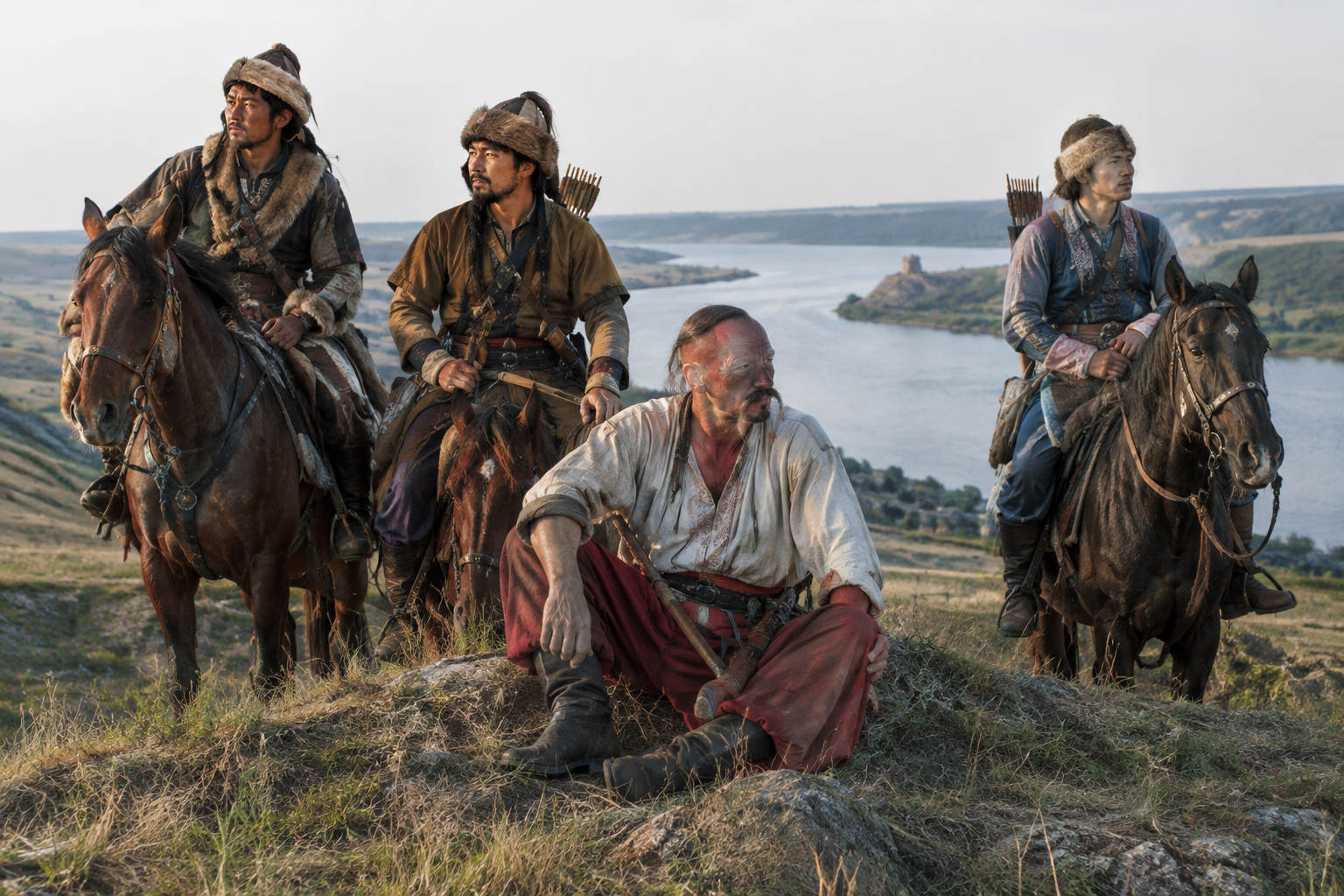
This is where archaeology becomes more interesting than tidy ethnic labels. The old habit was to imagine "Romans," "barbarians," and "migrants" as sharply bounded populations. Ancient DNA keeps muddying those distinctions, and rightly so. Men with different paternal histories could end up in the same burial community; people buried with recognizably "foreign" cultural practices might be locally rooted; and populations on the move often absorbed older provincial inhabitants as they went.
Research published in PNAS has also emphasized how genetically varied Late Antique and early medieval populations could be in central and southern Europe. For a haplogroup such as E1b1, that wider context is crucial: its appearance in these cemeteries fits a world of contact and recombination, not one of sealed-off ancestral blocks.
One E1b1 sample might be easy to dismiss as an outlier. Three samples from two important regions and two connected centuries are harder to ignore. They suggest that this paternal lineage was part of the real demographic mix in the worlds created by Rome's transformation and the rise of successor societies.
That is especially important because E1b1 is often discussed today through modern frequency maps, which can tempt people into thinking in static blocks: this lineage belongs here, another belongs there. Ancient evidence is messier and better. It shows lineages turning up in places where only a text-book view of Europe would find them surprising.
Readers interested in the broader Mediterranean side of this story may also want to compare other cases from the peninsula and nearby islands, where ancient DNA keeps revealing just how varied Italian populations were across time.
What the current evidence suggests for E1b1 is not a single heroic migration, but a durable paternal lineage present in the mixed societies of Late Antique Pannonia and early medieval northern Italy. The men identified as GYS014, GYS039, and COL_130 belong to worlds shaped by empire, frontier service, resettlement, and cultural blending. If you carry E1b1 today, these finds do not assign you an ethnicity or a guaranteed historical people. They do, however, place your direct paternal line inside the complicated human history of the late Roman and post-Roman Mediterranean borderlands.
Comments