Haplogroup C2b

– 5 min read


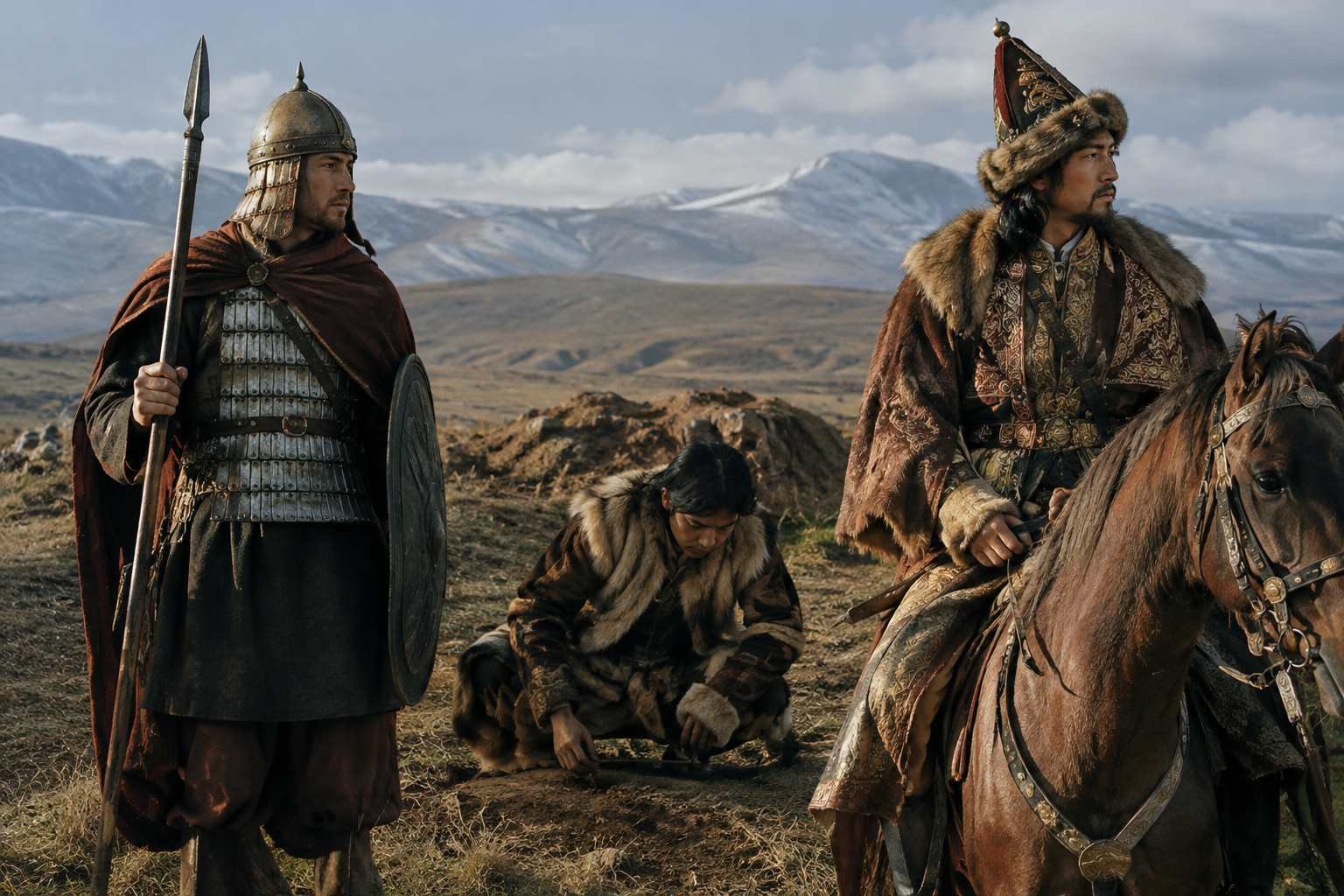
At Leobersdorf in Lower Austria, an early medieval grave dated to around AD 720 produced an unexpected paternal signal: sample LEO016a, identified with Y-DNA haplogroup C2b. That matters because C2b is not the sort of lineage most readers expect to meet first in an Avar-period burial west of the Hungarian Plain. Yet that is exactly why this sample is so useful. It pulls us away from tidy maps and simple ethnic labels, and back toward the lived complexity of the steppe world that reached deep into central Europe.
C2b is a Y-chromosome lineage, so it follows one direct paternal line only: father to son across many generations. It is not a person's whole ancestry, nor a shortcut to language or identity. But when C2b appears in burials stretching from prehistoric Siberia to Iron Age Kazakhstan and then into an early medieval Avar context in Austria, it becomes a very good clue for thinking about mobility, frontier societies, and the persistence of steppe-connected male lines across enormous distances.
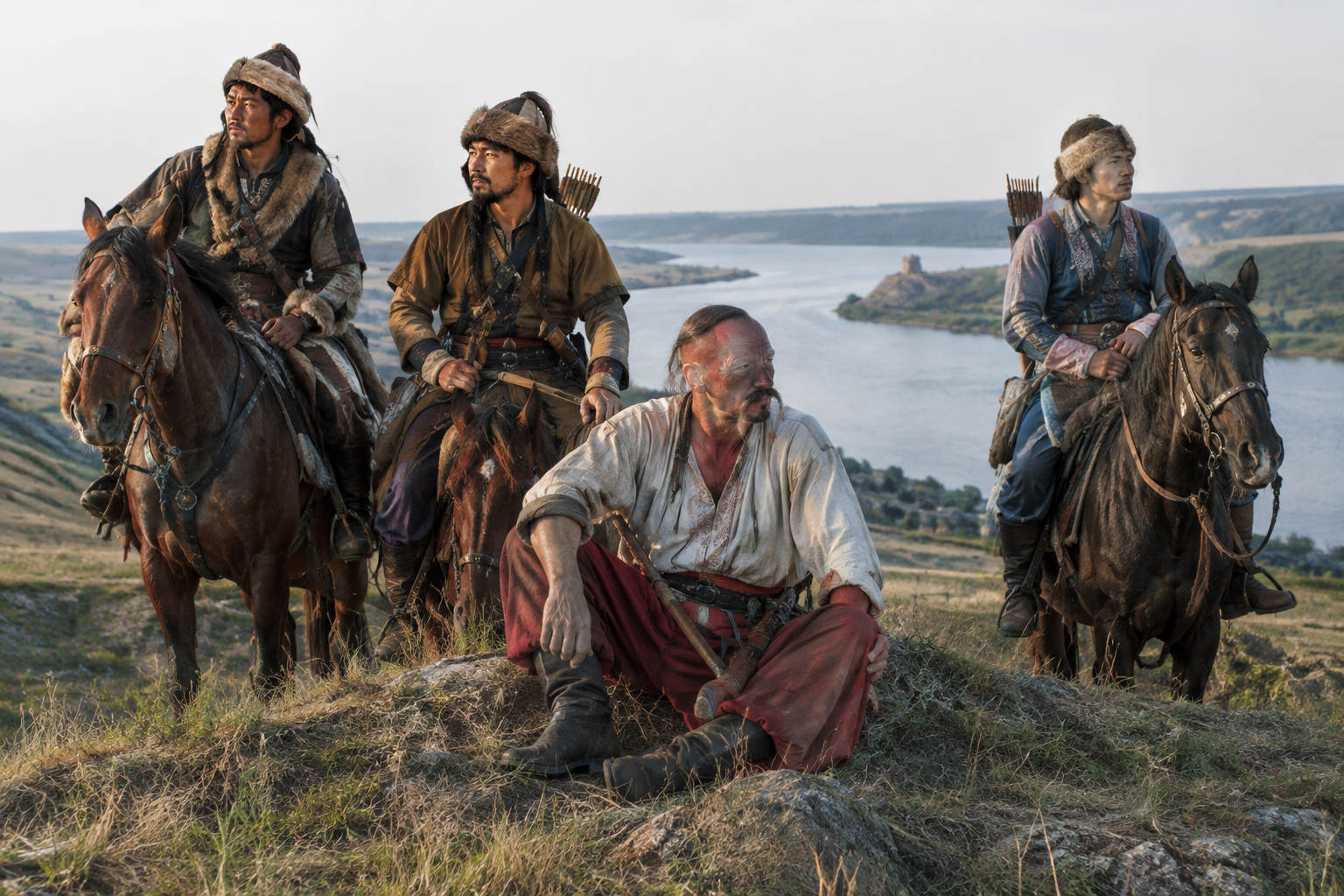
The Leobersdorf sample is the most arresting place to begin because it sits at the western edge of a political world built by movement. The Avar Khaganate, established in the Carpathian Basin in the late sixth century, was never a sealed ethnic block. It was a confederation, a military power, and a social system that drew in people of varied backgrounds. A burial in Austria dated to the early eighth century belongs to that wide frontier zone where imperial, local, and steppe traditions overlapped.
In that setting, C2b is significant not because it proves one neat origin story, but because it fits a broader picture of eastern steppe-linked paternal ancestry appearing in Avar-period elites and communities. Research on Avar and related burials has shown that some male lines in the Carpathian Basin had strong eastern connections, even when the surrounding population history was more mixed and locally varied. A useful overview of this wider genetic background can be found in a major ancient DNA study of the region, which explored the complex formation of populations tied to the Avar period.
That does not mean LEO016a was an immigrant fresh from Inner Asia, nor that every Avar-period grave with eastern genetic signals belonged to the same social group. What it does mean is that a direct paternal line now associated with eastern Eurasian populations had reached, and endured within, an early medieval community in Austria. Archaeology has long told us that the Avar world was connected; this kind of Y-DNA evidence helps show how deep some of those connections could run through male descent.
The second key sample is TAL005, from a high-ranking Saka or Scythian grave at Taldy in Kazakhstan, dated to around 650 BC. This is a very different context from early medieval Austria, and that contrast is exactly the point. Here C2b appears not on the western fringe of a steppe empire, but in the heartland of Iron Age mobile societies that classical writers later grouped under broad names like "Scythian."
The Saka were never a single tribe marching under one banner from one end of the steppe to the other. They were regional groups with overlapping lifeways, political hierarchies, and exchange networks. A high-status burial associated with C2b suggests that this paternal line was part of the male landscape of steppe elites in Central Asia during the first millennium BC. It does not make C2b the Scythian lineage, but it places the branch firmly inside that world.
This is where archaeology and genetics usefully check one another. The archaeological label "Saka" tells us about a cultural horizon and burial setting; the Y-DNA tells us about one paternal descent line inside that horizon. The two are related, but they are not identical. Still, when a lineage like C2b turns up in an elite Iron Age grave in Kazakhstan and then later in an Avar-period burial far to the west, it becomes easier to see how steppe political formations could transmit not only objects and styles, but lineages as well.
The oldest sample in this small cluster is NEO64 from Itkul in ancient Russia, dated to around 4100 BC. This is the one that changes the scale of the discussion. Instead of Iron Age mounted elites or early medieval frontier burials, we are looking at a Neolithic or Eneolithic setting in northern Eurasia. The presence of C2b here suggests that the branch, or a closely related paternal line reported under that label, belonged to a much older human landscape long before the historically named steppe confederations of later millennia.
That matters because it stops us telling the story backwards. It is tempting to see every eastern Eurasian paternal lineage in Europe and immediately jump to Huns, Avars, Turks, or Mongols. But the older evidence shows that some of these lineages had very deep roots across northern Asia, in regions linked by rivers, forest-steppe corridors, and long-distance interaction long before written history. A broader discussion of ancient populations across northern Eurasia, including the value of such deep-time evidence, appears in research on ancient DNA from this wider zone.
Northern Eurasian deep ancestry
We should be careful here. A sample from 4100 BC in Russia is not the direct historical explanation for a grave in AD 720 Austria. The useful point is subtler: C2b did not suddenly appear in the historical record fully formed as the badge of one empire. It belongs to a far longer northern Eurasian prehistory, out of which later mobile societies emerged.
On their own, the three samples are scattered points: Itkul in prehistoric Russia, Taldy in Iron Age Kazakhstan, and Leobersdorf in early medieval Austria. Together, they sketch a pattern. C2b appears in contexts that are geographically wide apart but historically linked by the great interaction zone of northern Eurasia: forest, steppe, and frontier.
The most interesting feature of that pattern is not simple migration from east to west in one straight line. Human history is rarely so obliging. Rather, C2b seems to belong to a set of paternal lineages that could persist through changing archaeological cultures and political systems, sometimes in local populations, sometimes in high-status graves, and sometimes at the edges of expanding steppe powers. That persistence is historically important. It reminds us that large confederations such as the Avar Khaganate did not invent all their people from scratch; they drew upon older reservoirs of ancestry and kin networks already spread across Eurasia.
It also helps explain why Y-DNA can be both powerful and limited. Powerful, because one paternal branch can reveal links across centuries and landscapes. Limited, because one branch cannot tell us whether two individuals spoke the same language, served the same ruler, or thought of themselves as belonging to the same people. C2b is therefore best read as evidence of connection, not of a single identity.
For someone researching a present-day C2b paternal line, these ancient finds offer a sensible kind of excitement. Not a royal pedigree, not a guaranteed tribal label, and not a single road map from one burial to one family tree. What they do offer is something better grounded: C2b has credible ancient associations with northern Eurasian prehistory, Iron Age steppe societies, and at least one early medieval burial in the Avar sphere of central Europe.
That makes C2b a lineage with a distinctly steppe-facing archaeological profile in this evidence set. Its ancient record points to durability across very different worlds, from prehistoric Russia to Saka Kazakhstan to Avar Austria. For MyTrueAncestry members, that is the real fascination of this haplogroup: not a myth of purity, but a history of movement, survival, and male-line continuity across some of the most connected landscapes in the ancient world.

Comments