Haplogroup J1a2b1

– 5 min read


In the cemetery at Sarria de Ter, Pla de lHorta, near Girona, one early medieval man dated to around AD 600 was identified as sample I20273. He lived in Visigothic Spain, in a kingdom often imagined as simply "Gothic" or simply "Hispanic", when in fact the evidence from graves and genomes keeps showing something much messier and more interesting. The reported appearance of Y-DNA haplogroup J1a2b1 in this setting is a good example of that complexity.
That is where this haplogroup becomes historically useful. Y-DNA follows one direct paternal line only, so it does not define a person's whole ancestry or identity. But when the same paternal branch turns up in very different places such as Bronze Age Armenia, Iron Age Armenia, Assyrian-period Lebanon, and early medieval Iberia, it gives us a narrow but revealing thread through a wide historical landscape.
J1a2b1 is a specific sub-branch within the wider Y-haplogroup J1, a lineage with deep roots in Southwest Asia. That broader background matters, but the narrower branch should not be made to carry every story ever told about J1 as a whole. For this article, the important point is much simpler: the ancient cases linked here place this paternal line in the South Caucasus and the eastern Mediterranean long before it appears in an early medieval grave in Spain.
So the pattern is not one of a "Visigothic haplogroup" in any exclusive sense. Rather, J1a2b1 appears here as one of the paternal lines moving through connected worlds: highland Armenia, Levantine imperial society, and then the mixed populations of post-Roman Iberia. That makes it historically interesting precisely because it resists tidy ethnic labels.
For a broader Iberian backdrop, MyTrueAncestry readers may want to compare this with Roman and later genetic change in the peninsula.
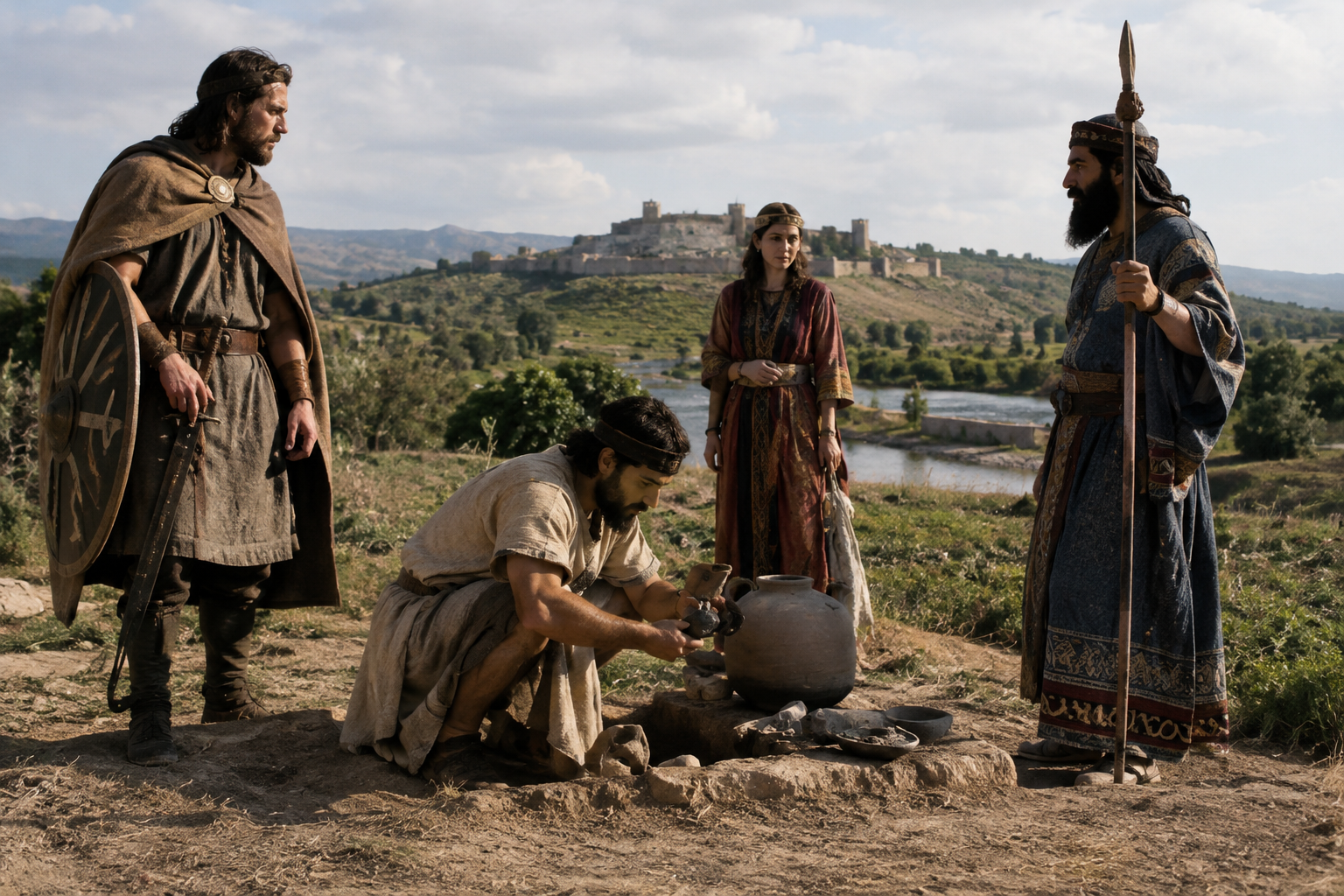
The earliest sample in this group is I14339 from Dzhoghaz Cemetery in Armenia, dated to around 2385 BC. Even with sparse site description in hand, the importance of the find is clear enough. It places the paternal line associated here with J1a2b1 in the South Caucasus during the Bronze Age, long before the classical kingdoms and empires more familiar to most readers.
This matters because the South Caucasus was not some sealed mountain refuge. It was a corridor as well as a frontier, tied into exchange networks linking Anatolia, northern Mesopotamia, the Iranian world, and the Black Sea zone. A Bronze Age Armenian occurrence therefore fits a world of movement, contact, and regional diversity rather better than any single-origin folk tale.
An ancient DNA study on the South Caucasus and neighboring regions, published in Science, helped underline just how dynamic these populations were over long time spans. One paternal marker alone cannot map that whole process, but I14339 shows that this branch belonged to that deep regional history.
A second Armenian case, I13947 from Lorid Berd Cemetery, dated to around 667 BC, brings the story forward into the Iron Age. Now we are in a very different political and cultural setting from the Bronze Age, yet the appearance of the same haplogroup label suggests at least some degree of long-term paternal persistence in the highlands.
That is the crucial point. Ancient DNA often shows that spectacular changes in material culture or political control do not necessarily erase all earlier local lineages. The men buried in Iron Age Armenia were not simply living museum pieces from the Bronze Age, of course; they belonged to new societies with their own contacts and identities. But a lineage associated with J1a2b1 still being present there suggests continuity amid change rather than total demographic replacement.
Readers interested in the region's wider genetic background may also enjoy this related discussion of ancient Iranian evidence and skeletal identification.
The sample SFI-55, described as an Assyrian Empire citizen from Saifi, Lebanon and dated to around 650 BC, adds something the Armenian cases do not. Here the setting is not the highland Caucasus but the Levant under imperial rule, in a society shaped by trade, administration, and the long political reach of Assyria.
That difference is exactly why SFI-55 is useful. It shows that the haplogroup's ancient footprint was not confined to one upland region. By the first millennium BC, men associated with this paternal branch appear in the eastern Mediterranean as well, in an urbanized and internationally connected environment where local Levantine populations interacted with imperial systems.
One should not leap from that to a specific migration route for every later carrier. Still, the combination of Armenia and Lebanon does point to a plausible ancient zone of distribution in the broader Near Eastern world. For anyone with J1a2b1 today, that is a more grounded historical starting point than romantic guesses about a single tribe or conquering people.
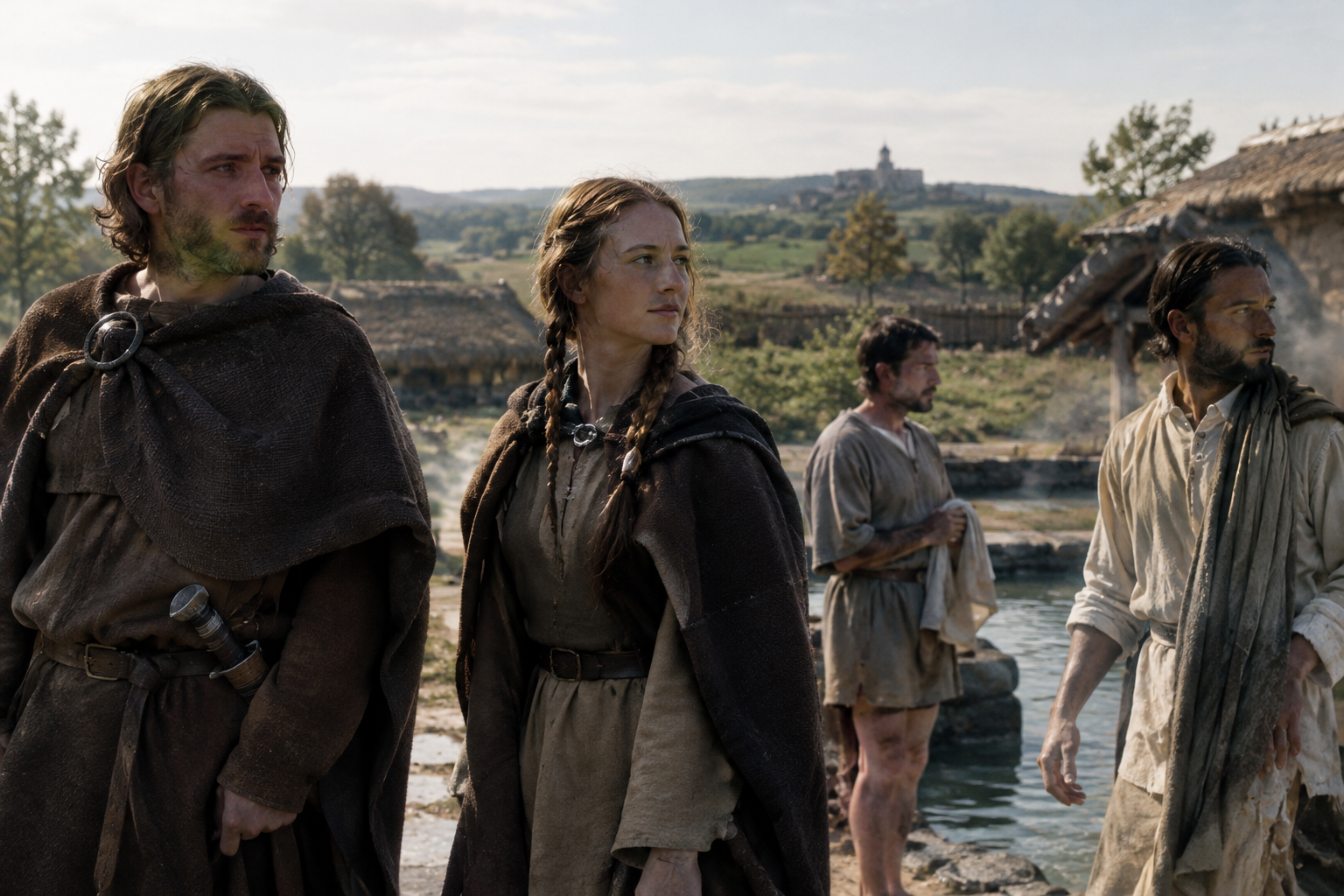
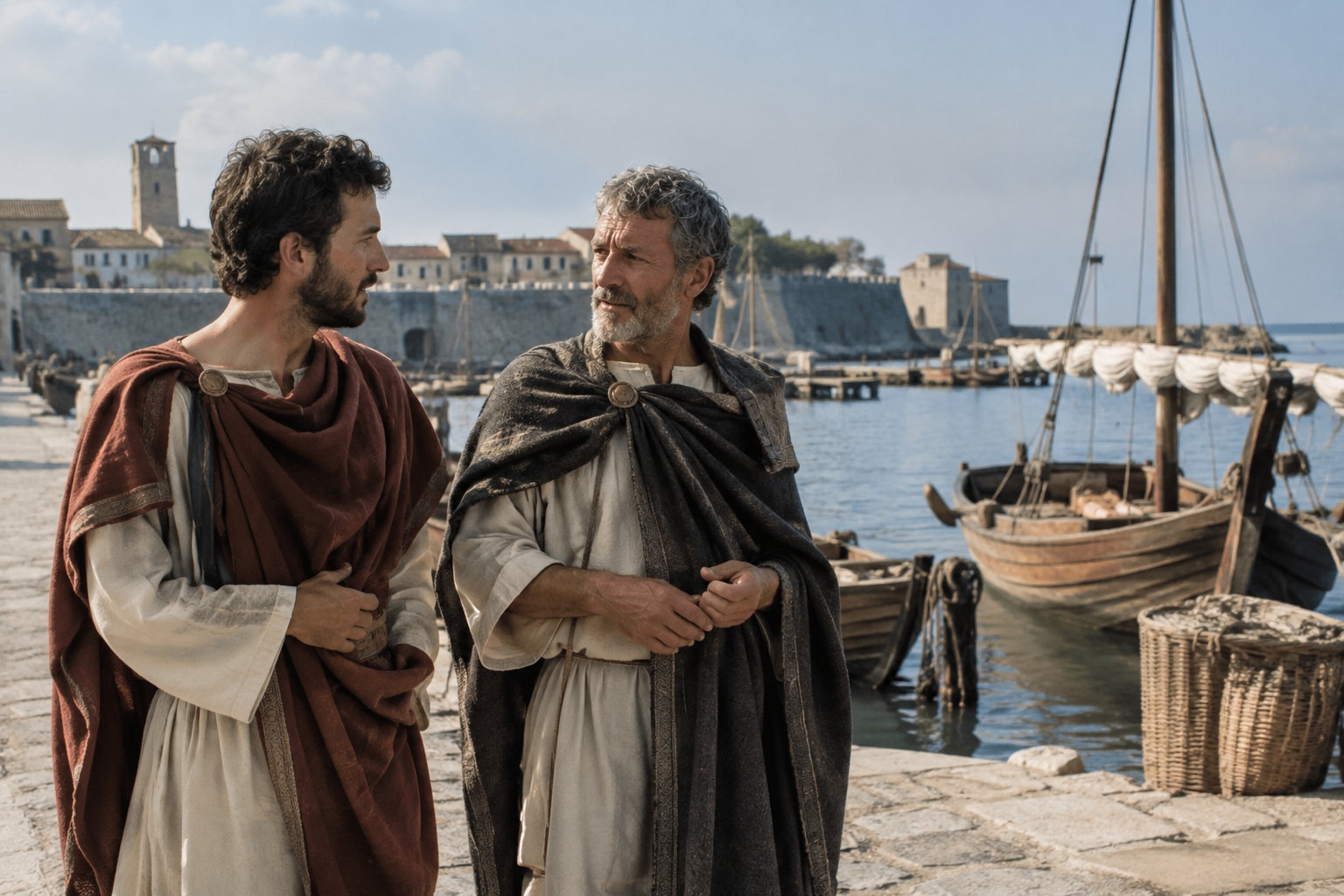
The most surprising sample in this set may be I20273 from Sarria de Ter Pla de lHorta in Girona, dated to around AD 600. This is early medieval northeastern Spain, in the Visigothic period, and it reminds us that "Visigothic" cemeteries do not contain a single biological type marching in from the north. They contain real communities formed after centuries of Roman rule, mobility, military service, intermarriage, and regional survival.
The presence of J1a2b1 here does not mean that all Visigoths, or even all men in that cemetery, belonged to a Near Eastern paternal line. It means one direct male line in that community did. And that is enough to make the point. By the sixth and seventh centuries, Iberia was already the product of repeated movements across the Mediterranean and across the former Roman world.
Research published on ancient Iberian populations in Cell has emphasized just how varied these later communities could be. I20273 sits very comfortably in that bigger picture: not an anomaly to be explained away, but part of the real human mixture of post-Roman Spain.
There is a particularly close parallel in another MyTrueAncestry discussion of a seventh-century burial context from central Spain, where ancient DNA also revealed diverse origins rather than a single homogeneous population.
Put the samples together and a striking pattern emerges. The strongest ancient anchors for J1a2b1 in this evidence lie in the South Caucasus and eastern Mediterranean: Bronze Age Armenia, Iron Age Armenia, and Assyrian-period Lebanon. The later Spanish example shows that such paternal lines could travel, persist, or be absorbed into communities far to the west by the early Middle Ages.
That does not require a single dramatic migration event. History rarely behaves so neatly. Trade, imperial service, forced movement, marriage, local continuity through changing states, and the ordinary untidiness of Mediterranean life all offer mechanisms by which a paternal line could pass from one historical setting into another.
A useful comparison here is the growing picture of mixed Gothic and post-Roman communities elsewhere in Europe, where archaeology and genetics repeatedly refuse simple labels.
For someone researching J1a2b1 today, the most defensible takeaway is not a claim to one famous people or one royal house, but something subtler and better supported. This branch is visible in ancient men from the South Caucasus and the Levant, and it later appears in the mixed society of Visigothic Spain. In other words, it belongs to the long human history linking Near Eastern and Mediterranean worlds, where paternal lines could endure through centuries of political change and still turn up in unexpectedly distant places.

Comments