Haplogroup J1a2a1a2d2b2b
– 5 min read


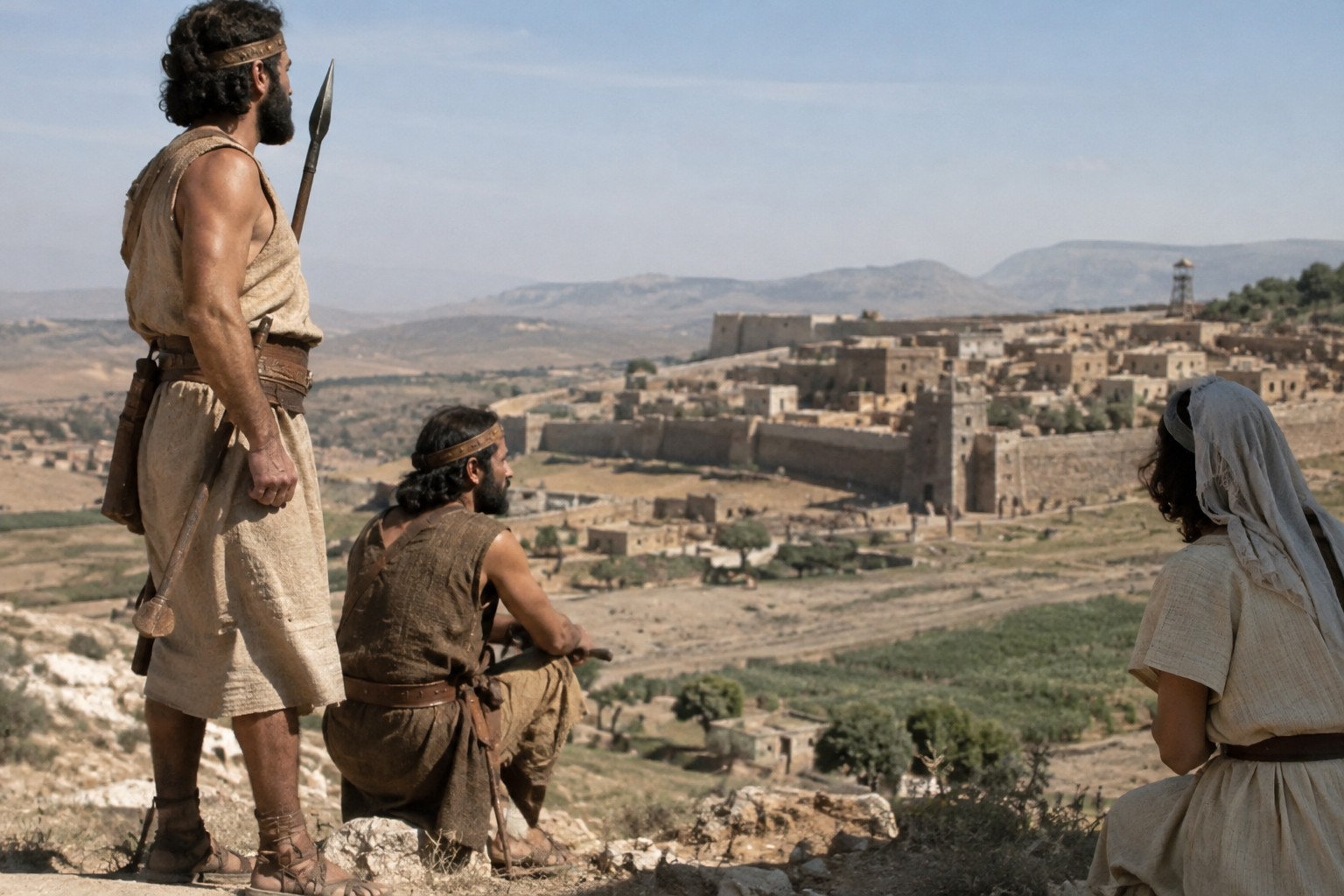
At Megiddo, one of the great mound-cities of the southern Levant, ancient DNA has put a paternal line into a setting archaeologists have argued over for generations. The sample known as I8188, dated here to around 1725 BC and identified as a Late Bronze Age Canaanite from Megiddo, links the very specific Y-DNA branch J1a2a1a2d2b2b to a place that sat at the crossroads of trade, diplomacy, and war.
That matters because Megiddo is never just a dot on a map. It is a city of gates, palaces, and repeated rebuilding, perched above the Jezreel Valley where routes from Egypt, inland Syria, and the Mediterranean coast converged. A Y-chromosome lineage traces only one direct paternal line, not a person's whole ancestry, but in a city like this even one securely placed male line is a valuable historical clue.
When people say "Canaanite," they often mean a broad cultural world rather than a single tribe or kingdom. In the second millennium BC, cities such as Megiddo were part of an urban network tied together by shared material culture, writing traditions, and political entanglements with larger powers. The interest of I8188 is that he belongs to that world in a concrete archaeological setting, not as a later literary label.
The broader Y-DNA family behind this branch, haplogroup J1, has a deep and complicated history in the Near East. But the article haplogroup here is not "J1 in general"; it is the much narrower subclade J1a2a1a2d2b2b. With only one ancient sample provided, the careful thing to say is not that this entire subclade "was Canaanite" in any sweeping sense, but that a man associated with this branch was present at Bronze Age Megiddo.
That may sound modest, yet archaeology often advances by exactly such modest gains. One lineage, placed well, helps anchor a discussion that would otherwise drift into vague statements about the Levant.
Earlier Burials in Central Israel
Megiddo's importance in the Bronze Age was geographical before it was anything else. Control of the valley meant influence over movement: merchants, envoys, soldiers, and the ordinary traffic of grain, animals, and crafted goods. This makes any paternal lineage found there historically interesting, because it comes from a place where local continuity and outside contact were both part of daily reality.
For that reason, one should resist the temptation to turn I8188 into a migrant hero, a tribal founder, or a dynast. Ancient DNA does not give us a biography at that level. What it does give us is something more disciplined: proof that a man carrying a branch reported here as J1a2a1a2d2b2b formed part of the human landscape of a major Canaanite center around the early second millennium BC.
Megiddo is especially useful because it was not an isolated hamlet. A lineage attested there belongs to a population living inside urban institutions, diplomatic spheres, and regional exchange systems. In other words, this is not just Near Eastern prehistory in the abstract; it is Bronze Age city life.
There is a recurrent public misunderstanding about haplogroups: that they behave like ethnic labels. They do not. A Y-DNA branch can pass through speakers of different languages, through several political formations, and across long stretches of time. So the discovery of J1a2a1a2d2b2b at Megiddo does not make the branch exclusively Canaanite, nor does it mean every man at Megiddo carried it.
Still, one sample can be surprisingly informative when it comes from the right site. Megiddo has long been central to debates about population continuity in the Levant, the relationship between local Bronze Age groups and later Iron Age peoples, and the extent to which urban centers absorbed newcomers while maintaining local traditions. Research on ancient populations from the region, including work accessible through this ancient DNA study, helped shift those debates from guesswork toward testable biological history.
That does not mean genetics replaces archaeology. On the contrary, without the stratigraphy, chronology, and historical importance of Megiddo, the haplogroup would be little more than a code. Archaeology gives the code a world to inhabit.
Bronze-Iron Age Mesopotamia DNA
Because the branch name is so specific, there is a temptation to write its whole history as though the fine detail were already mapped across antiquity. It is not. Ancient Y-DNA resolution is uneven, publication standards vary, and different databases sometimes present lineages at different depths. The most responsible reading is therefore local and contextual: this branch, or a directly related paternal line reported at that level, appears in an individual from Canaanite Megiddo.
That placement fits a larger historical truth about the Levant. This was a region where cities rose on older tells, where family lines might remain in place for generations even as political overlords changed, and where local populations could be connected to much wider worlds without losing their own urban identity. A paternal line from Megiddo is interesting not because it solves everything, but because it belongs to one of the best-documented crossroads in the ancient Near East.
For modern testers, that is often the real value of ancient DNA. It does not hand you a heroic ancestor with a name and a crown. It gives you something better grounded: a documented place, a real period, and a glimpse of where one paternal thread was woven into history.
Archaeological sites are not all equal as historical witnesses. A sample from a poorly understood context can tell us less than a sample from a major settlement with centuries of excavation behind it. Megiddo belongs firmly in the second category. Its architecture, administrative importance, and long occupational sequence make it one of the anchor sites for reconstructing the Bronze and Iron Age Levant.
So I8188 is significant not because he stands alone as a celebrity burial, but because he comes from a city that lets us ask better questions. Was this paternal line part of a locally rooted urban population? Was it one of several male lines circulating in a cosmopolitan center? How far back in the Levant might related branches extend, and how far forward might they persist? A single sample does not answer all of that, but it makes the questions historically real.
Eastern Mediterranean DNA Journeys
The clearest supported insight for J1a2a1a2d2b2b is simple and important: this lineage is attested in a man from Bronze Age Megiddo, one of the defining urban centers of ancient Canaan. That does not turn the haplogroup into a badge of ethnicity, but it does place one paternal branch inside the living fabric of Levantine city society at a formative moment in Near Eastern history.
If this is your haplogroup, the useful takeaway is not a grand claim of descent from a famous kingdom, but a historically grounded possibility that your direct paternal line connects into the deep human history of the Levant's urban Bronze Age world.



Comments