Haplogroup J2a2
– 5 min read


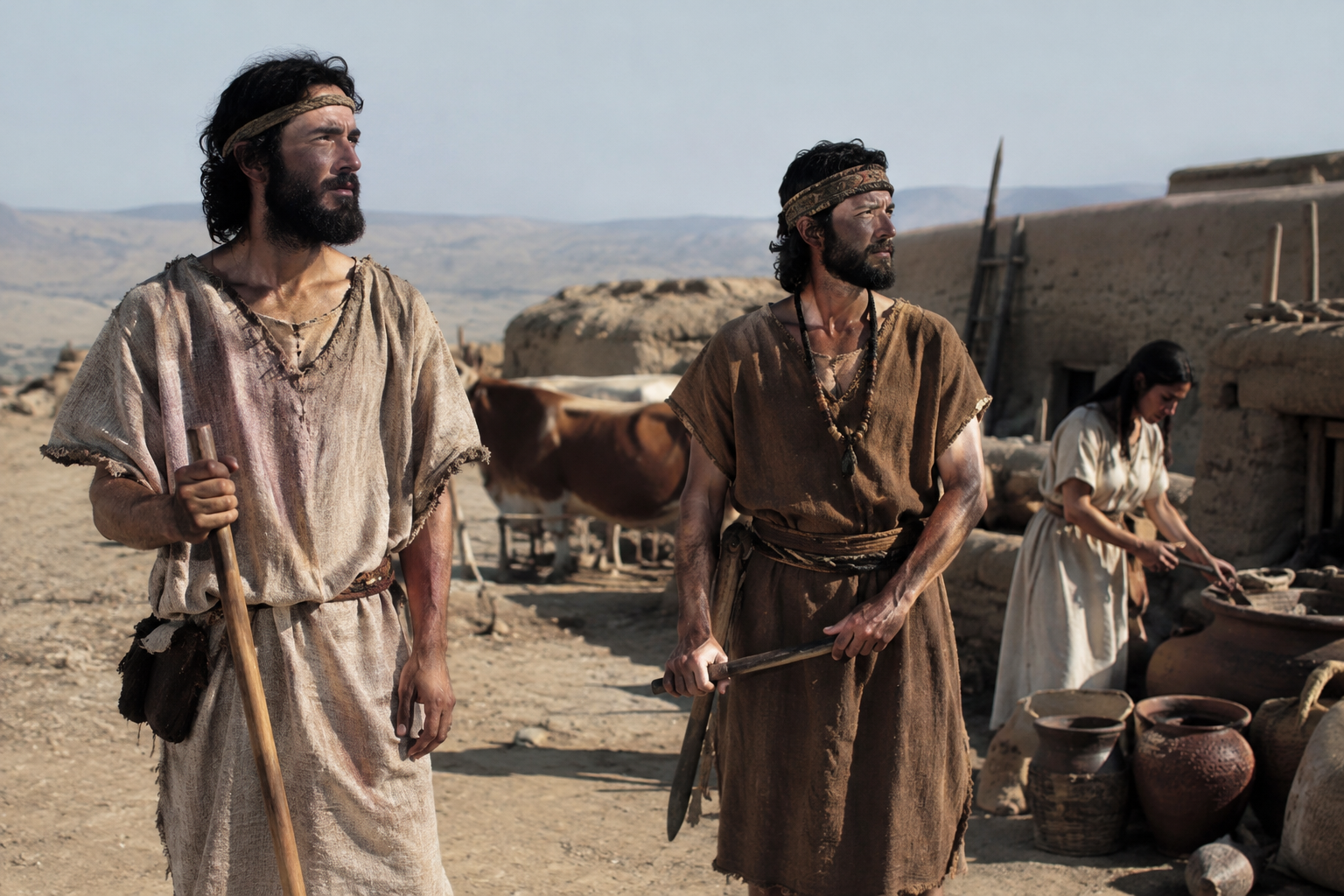
At Tatika in southeast Anatolia, one ancient male identified as I4622 has become a small but telling witness to the early history of Y-DNA haplogroup J2a2. He is dated to around 3575 BC, placing him in the Early Bronze Age world that linked upper Mesopotamia, eastern Anatolia, and the Caucasus through farming, metallurgy, and movement across surprisingly connected landscapes. That matters because J2a2 is a paternal lineage best understood not as a badge of ethnicity, but as one thread running through some of the societies that helped build the first complex economies of western Asia.
The value of I4622 is not that he lets us tell a heroic origin story. Quite the opposite. He anchors J2a2 in a real archaeological setting, in a region where early urban influence, village life, and long-distance exchange all met. When another ancient male, I7421, appears much later at Sappali Tepe in Bronze Age Uzbekistan around 1840 BC, the picture becomes even more interesting: not a single migration tale, but evidence that paternal lines associated with J2a2 could be present at both the Near Eastern heartland and the eastern margins of Bronze Age interaction.
Southeast Anatolia in the fourth millennium BC was no backwater. It sat in one of the great contact zones of the ancient world, where communities were tied into developments spreading out from northern Mesopotamia and neighboring highland regions. The Tatika sample I4622, associated here with J2a2, belongs to that setting: a landscape of settlement growth, changing social organization, and increasingly wide exchange networks.
For a haplogroup article, this is a good place to begin because J2 lineages are often discussed in very broad terms, as though they can simply be mapped onto "farmers," "traders," or "civilizations." The archaeological reality is messier and more useful. A man like I4622 was not a symbol of a whole continent-wide process. He was one person in one region where populations had already been mixing, moving, and reorganizing for millennia.
Research on ancient populations of this wider region has helped show how dynamic the genetic landscape of West Asia was in prehistory, with local continuity in some places and substantial interaction in others. One study relevant to this broader Near Eastern setting is linked here: https://www.science.org/doi/10.1126/science.abm4247.
J2a2 is a branch within the wider haplogroup J2, a major paternal lineage with deep roots in western Asia. In practical terms, Y-DNA traces one direct male line only: father to son to son across generations. That makes it powerful for following particular lineages, but it does not describe a person's total ancestry, language, culture, or social identity.
That distinction matters especially for J2a2 because the branch appears in regions that were repeatedly transformed by movement and mixture. A J2a2 lineage in southeast Anatolia during the Early Bronze Age does not mean every man there belonged to the same paternal cluster, nor does it prove a neat march outward from a single homeland. What it does suggest is that this branch formed part of the male-line diversity already present in some of the most interconnected societies of prehistoric western Asia.
So the sensible historical question is not "which people were J2a2?" but rather: in what kinds of archaeological worlds do we actually find it? With the samples here, the answer points to zones of exchange stretching from Anatolia toward Central Asia.
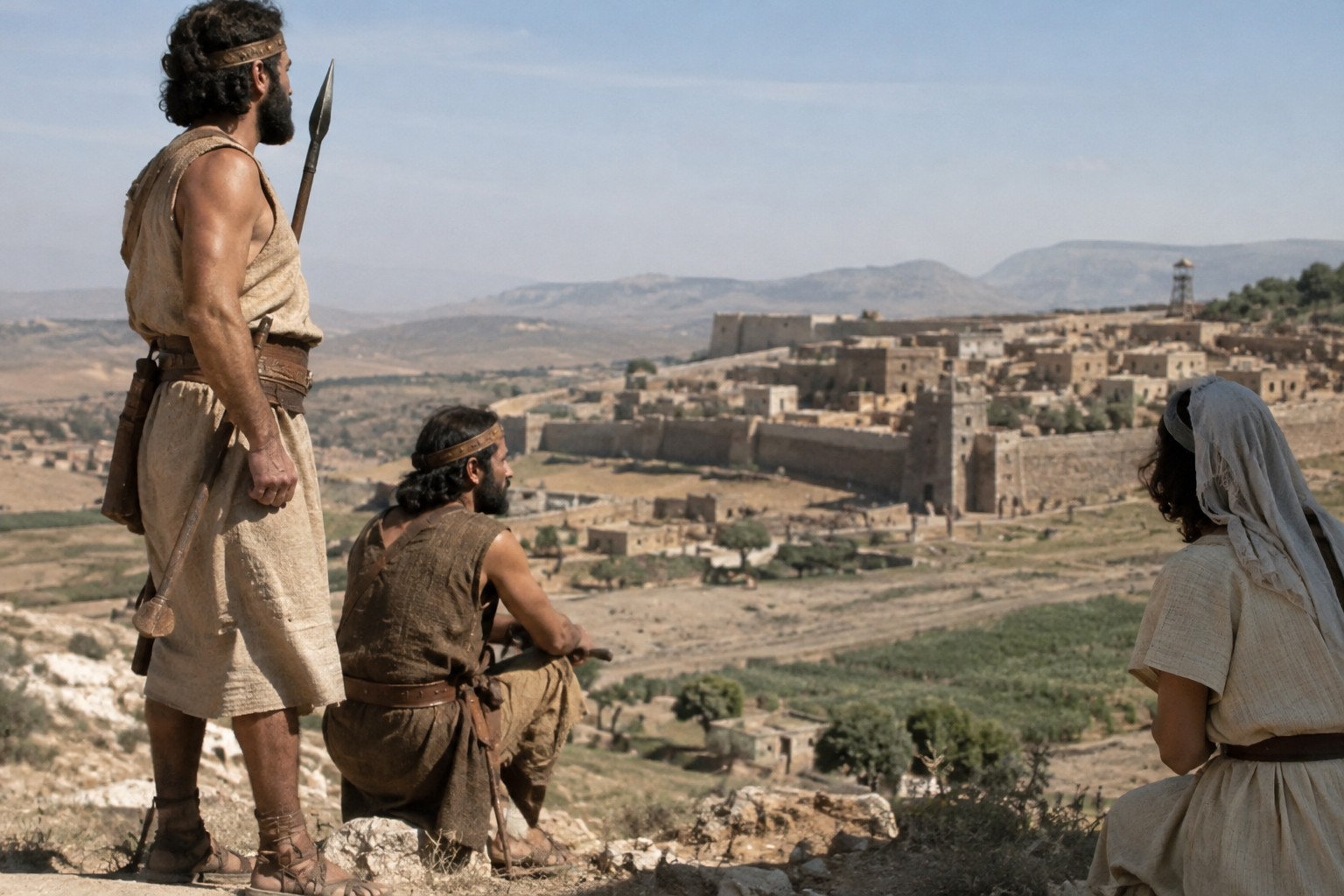
The second supplied ancient male, I7421, comes from Sappali Tepe in present-day Uzbekistan and is dated to around 1840 BC. By then we are in a very different historical landscape from Tatika. Bronze Age Central Asia was home to settled oasis communities, craft production, irrigation, and far-reaching contacts with regions to the south and west, including Bactria and the Iranian plateau.
Sappali Tepe is important because it reminds us that lineages associated with western Asia did not stop at the Zagros or the Iranian plateau. They could appear far deeper into Inner Asia, in communities participating in the exchange of materials, ideas, and probably people across the Bronze Age world. A J2a2-associated male there does not prove a recent migrant from Anatolia, but it does fit a broader archaeological reality in which Central Asia was a crossroads rather than an isolated edge.
That is precisely why the gap between I4622 and I7421 is so revealing. These are not two points on a tidy family tree that we can draw with confidence. They are two securely ancient appearances of the branch in very different regional settings. One stands in the Early Bronze Age societies of southeast Anatolia; the other in an eastern settlement sphere linked to the Oxus world and its neighbors. Together they show reach, not uniformity.
Sogdians and Silk Road Ancestry
It is tempting to imagine ancient haplogroups spreading in a single dramatic wave. Archaeology usually spoils that fantasy, and rightly so. The world between southeast Anatolia and Uzbekistan in the third and early second millennia BC was full of overlapping corridors: mountain routes, steppe margins, river valleys, and oasis chains. Trade in metals, stone, textiles, crops, and finished goods did not move in straight lines, and neither did people.
That makes J2a2 a particularly interesting branch for public ancestry because its ancient appearances often sit in precisely these connected worlds. Instead of being tied to one famous empire or one celebrated migration, it seems at home in regions where local populations interacted over long periods. In historical terms, this is the human background to the Bronze Age system: not a single empire's expansion, but repeated contact between neighboring and sometimes distant communities.
Ancient DNA research across Inner Asia has repeatedly underlined that Bronze Age populations there were diverse and shaped by mixtures from multiple directions. A major study of Central and South Asian population history is linked here: https://science.sciencemag.org/content/365/6457/eaat7487. Even without pressing that paper beyond what is secure for these exact samples, it helps frame the larger setting in which a site like Sappali Tepe belongs.
For someone researching J2a2 today, this is the real historical value of the evidence. The lineage is not just "from the Near East" in some vague textbook sense. The ancient cases here place it within working archaeological landscapes of settlement, exchange, and regional mobility stretching from Anatolia into Central Asia.
Bronze and Iron Age Mesopotamia
There is another reason these samples deserve careful handling. Ancient Y-DNA assignments are sometimes reported at different levels of resolution, and a broader J2-related placement is not always the same thing as a confidently resolved downstream subclade. In public discussions, people often slide too quickly from a specific label like J2a2 to sweeping claims about language families, named peoples, or direct descent from famous civilizations.
The better approach is to stay close to what the archaeology and genetics genuinely share. At Tatika, J2a2 is part of the male-line variation in an Early Bronze Age Anatolian context. At Sappali Tepe, it appears in a Bronze Age Central Asian context shaped by long-range cultural links. That is already historically rich. It shows that one paternal branch could be carried by men living in very different social worlds, centuries apart, across a wide expanse of Eurasia.
In that sense, J2a2 belongs to the story of connection. Not connection in the romantic sense of lost princes and guaranteed dynasties, but in the archaeologist's sense: settlements, routes, neighbors, exchange partners, and generations of ordinary men whose descendants sometimes surface again in ancient DNA.
Ancient Migrations and the Black Sea
The most distinctive thing about the evidence for J2a2 here is its early presence in southeast Anatolia and its later appearance in Bronze Age Uzbekistan. That does not give any modern tester a ready-made pedigree, but it does place this paternal line in some of the most connected regions of the ancient world. If your direct male line belongs to J2a2, the ancient record hints at ancestors who may have been part of those long-running networks linking West Asia and Inner Asia, where local communities were never quite as isolated as older histories used to imagine.

Comments