Haplogroup J2a1a1a2b2a3b
– 5 min read



At Black Fortress in Armenia, one Late Bronze Age man, sample I18165, anchors this branch of evidence in a place that mattered. Around 1100 BC, the South Caucasus was not a quiet backwater but a zone of fortresses, shifting kingdoms, metalworking, and long-distance exchange. The appearance here of the Y-DNA lineage J2a1a1a2b2a3b is interesting not because one burial can stand for a whole people, but because it places this paternal line squarely inside one of the great contact regions between Anatolia, Mesopotamia, and the Iranian plateau.
That matters all the more because the second ancient example tied to this article, I8370, comes from a very different world: the Byzantine-period underwater basilica at Nicaea in Anatolia, around AD 500. Two sites, two eras, two political landscapes, but a broadly connected eastern Mediterranean and Near Eastern setting. For a paternal lineage, that is exactly the sort of evidence worth lingering over: not a grandiose migration tale, but a long archaeological presence across regions where cities, empires, and trade routes repeatedly overlapped.
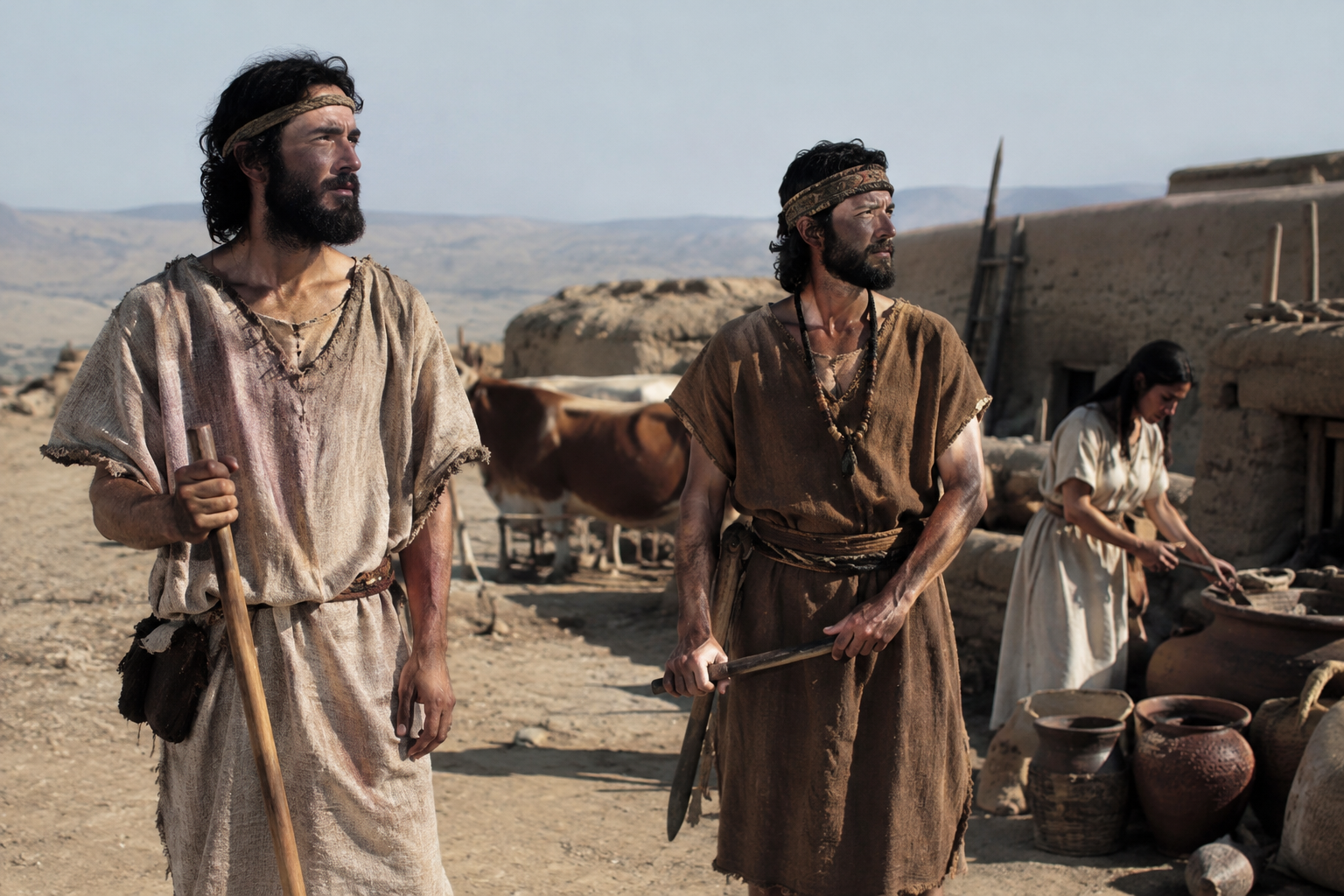
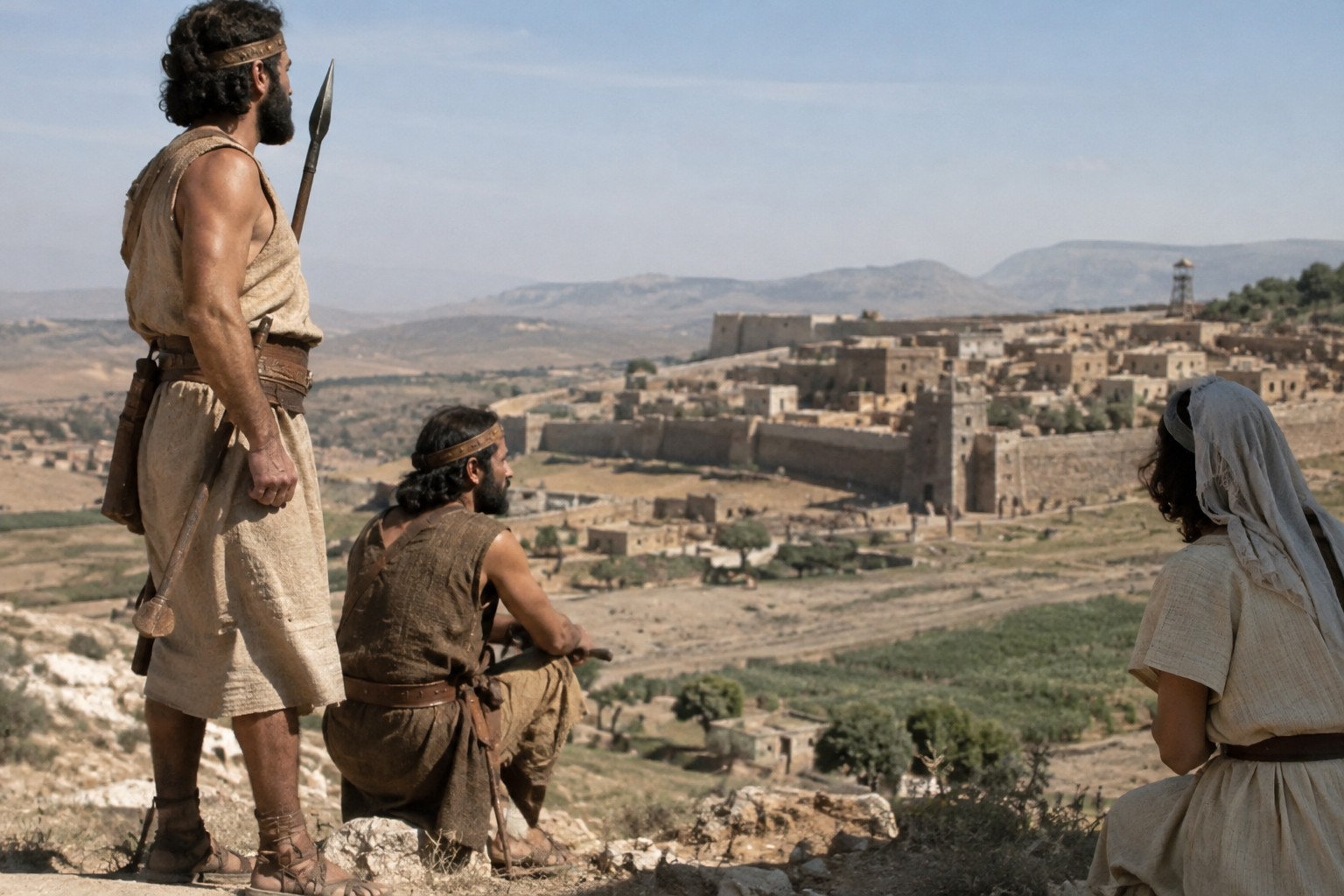
The Black Fortress sample is the earlier of the two and, in many ways, the more revealing starting point. Armenia around 1100 BC sat at the tail end of the Late Bronze Age, a period when older regional powers were under strain and local highland societies were reorganizing themselves. Fortified sites in this landscape were not just military points on a map; they were places where authority, storage, movement, and community all met.
To find a branch associated with J2a here is historically plausible in the strongest sense of the word: it fits a region long tied into the agricultural and urban worlds south of the Caucasus, while still being distinctly its own. J2 as a wider haplogroup is often discussed in connection with western Asia and the eastern Mediterranean, but the article's much narrower branch, J2a1a1a2b2a3b, should not simply be assigned the whole story of its parent lineage. What the Black Fortress individual gives us is something firmer and smaller: direct evidence that this paternal line, or a reported association with it, was present in Bronze Age Armenia.
A useful broader backdrop comes from research on ancient DNA in the South Caucasus, which has helped show just how deep and regionally continuous many population patterns in this area could be, even as political orders changed. That is important context for J2a1a1a2b2a3b. The lineage does not need to be made exotic or dramatic; its significance is that it appears in a region where continuity and connectivity often existed side by side.
Y-DNA follows one direct paternal line: father to son, back through time. That makes it powerful, but also narrow. A man carrying J2a1a1a2b2a3b in Bronze Age Armenia was not "nothing but" that lineage, and neither are modern testers. He also had countless ancestors on every other line, as do you.
Still, paternal lines matter historically because they can persist through very different cultural settings. That is precisely what makes the pairing of Armenia and Byzantine Nicaea so suggestive. We are not looking at a lineage trapped in one isolated valley. We are looking at one that appears in settings shaped by major regional networks, first in the Bronze Age highlands and later in an urban Christian landscape of late antiquity.
This is also where caution is needed. The exact terminal label in this article is extremely specific, far more specific than many published ancient assignments usually are. Unless a source explicitly supports that full resolution, the safest reading is that these ancient men are associated with the branch used here for reporting purposes, while the broader J2a framework remains the more archaeologically interpretable level.
The second sample, I8370, comes from the underwater basilica at Nicaea in Anatolia, dated around AD 500. Even without embellishing the burial context, the site itself is striking enough. Nicaea was one of the most important cities in late Roman and Byzantine history, famous for councils, theology, and imperial politics, but also simply as a lived urban place on the Anatolian shore of Lake Iznik.
The basilica setting places this paternal line in a Christianized imperial world utterly different from the fortress society of Late Bronze Age Armenia. By AD 500, Anatolia was tied into Roman administration, Greek-speaking civic traditions, Christian institutions, and the social aftershocks of centuries of imperial movement. If J2a1a1a2b2a3b appears here as well, the headline is not sudden migration from nowhere, but durability within the broad eastern Mediterranean zone where J2-related lineages are often found.
That is a rather grown-up lesson from ancient DNA. A paternal branch may outlast kingdoms, languages of administration, and even religions at a site. The man from Nicaea was not a Bronze Age Armenian revived in Byzantine dress; he belonged to his own time. But his Y-line helps show how some male ancestries could remain part of the human landscape of Anatolia and neighboring regions across very long spans.
Put the two samples together and a pattern begins to emerge, modestly but usefully. The lineage is not appearing in far-flung, disconnected places chosen to flatter a sweeping theory. It appears in Armenia and northwestern Anatolia, two regions that were repeatedly linked by trade, warfare, diplomacy, resettlement, and empire.
In the Late Bronze Age, the South Caucasus interacted with the great powers to its south and west while maintaining its own local political geography. In the Byzantine period, Anatolia was one of the empire's core regions, but still deeply shaped by older layers of settlement and ancestry. J2a1a1a2b2a3b therefore sits comfortably within a historical corridor that runs through the highlands and lowlands of western Asia.
That does not mean every carrier of this haplogroup today descends from Armenia or from Nicaea in any simple documentary sense. It does mean that if your paternal line belongs here, the ancient evidence points toward a long history in the Near Eastern and eastern Mediterranean sphere rather than a purely recent or narrowly local origin story.
Bronze-Iron Age Mesopotamia DNA
Two ancient samples are not a dynasty, not a tribe, and certainly not a complete map of this lineage. But they are enough to make one important point. J2a1a1a2b2a3b is not merely a modern testing label floating free of history; it has archaeological anchors in regions central to the making of western Asian and eastern Mediterranean history.
The contrast between I18165 at Black Fortress and I8370 at Nicaea is especially useful because they are separated by roughly sixteen centuries. Between them lie the rise and fall of kingdoms, Achaemenid and Hellenistic power, Roman rule, and the Christian transformation of Anatolia. Yet the paternal line remains visible within this broad world.
For someone exploring J2a1a1a2b2a3b, the most defensible takeaway is not a romantic claim of descent from one fortress man or one Byzantine believer. It is that your direct paternal line belongs to a branch with ancient evidence in the connected worlds of Armenia and Anatolia, spanning from the Late Bronze Age into late antiquity. In historical terms, that places your Y-line in a region shaped by deep settlement, repeated cultural change, and remarkably persistent human continuity.

Comments