Genetic Study of Iranian Sayyed Ancestry
– 5 min read


Across Iran, lineage is public identity, social inheritance, and sacred claim. The title of Sayyed marks those who identify as descendants of the Prophet Muhammad through the male line, connecting households, shrines, and reputations to the founding figures of early Islam.
Muhammad's death in 632 immediately split the community over succession, creating the great Sunni-Shia divide. For Shia communities, Ali's family became central to religious identity. His sons Hasan and Husain stood as moral beacons, martyrs, and anchors of legitimacy. A Sayyed claim runs through these grandsons of the Prophet, representing belonging within the most revered family tree in Islamic history.
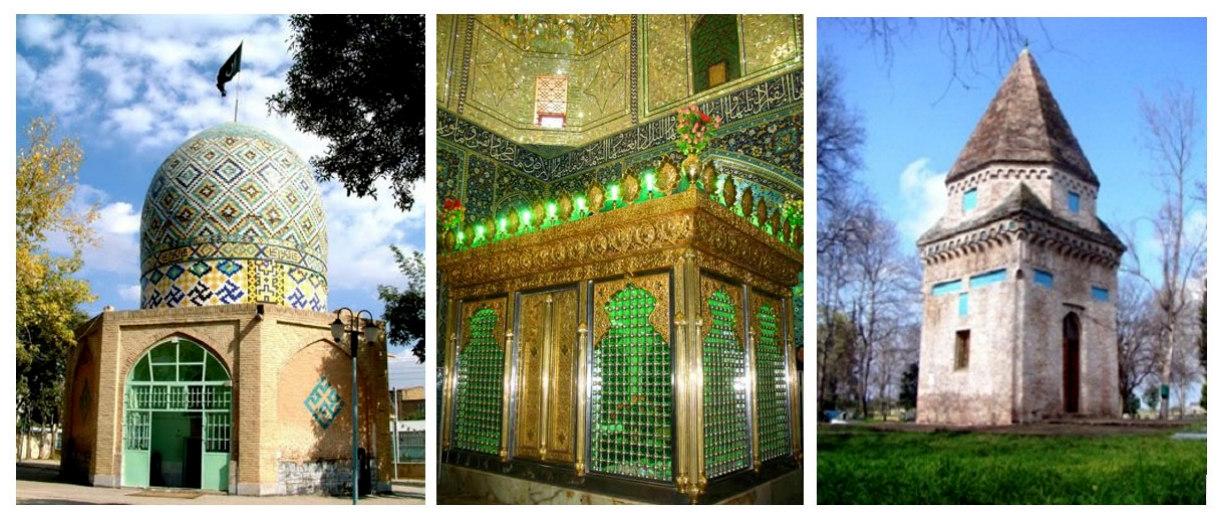
When the Safavid dynasty made Shia Islam the state religion in the sixteenth century, devotion to the Prophet's descendants became woven into public culture and everyday religious life. Imamzadeh shrines now dot Iran in extraordinary numbers, places where people pray, mourn, and petition holy ancestors. These are never merely buildings but declarations that descent can shape sacred geography.
The title passes strictly through men, creating a structured social grammar that gives the male line special importance. Family surnames preserve these claims visibly: Hasani signals descent from Hasan, Husaini from Husain, Razavi from Imam Reza. These are miniature genealogies worn in daily life.
Among sampled men, two individuals possessed unusually strong documentary claims. A 32-year-old from Yazd's Taba-Taba family carried a genealogy handwritten across centuries on a Quran's back cover. A 54-year-old from the Sadr family, with roots across Lebanon, Iraq, and Iran, demonstrated how elite religious families moved through the broader Shia world. Iran's Sayyeds stand where faith, ancestry, honour, and public memory converge in one deeply human chain.
Iran's Imamzadeh shrines reveal how ancestry becomes visible in stone, tile, and pilgrimage. From roughly 1,500 known shrines in the late twentieth century, the number reportedly grew to more than 10,000 after the revolution, suggesting an actively expanding sacred map rather than a fixed ancient one.
Every shrine contains layers: an original burial, modest marker, chapel, dome, mirrored decoration, and the bustling life of a modern pilgrimage site. Lamps, textiles, votive gifts, and metal grilles rubbed by countless hands materialise centuries of devotion. A tomb becomes an active historical engine, dominating a district because identity and ancestry concentrate in one named person linked directly to the Prophet's family.
Sayyed status carried real social consequences. Such people received respect, religious authority, and in some traditions support through designated religious payments. No wonder the shrine landscape mattered: it legitimised living families and broader clerical power simultaneously.
Yet the same society that revered Sayyeds worried about false claims. If the title brought honour and material benefit, it created temptation. Many historians suspected non-genuine Sayyed families emerged especially after Safavid rule made such status particularly valuable. This tension gives shrines complex significance, places of sincere devotion standing within contested genealogies and locally reinforced traditions.
The shrine and the family archive are two sides of the same cultural coin. One is public stone, the other domestic parchment. Together they form a map of historical imagination, revealing how communities anchor themselves in sacred kinship and how burial places become engines of legitimacy.
Rather than focusing on a single location, this research swept across Iran, sampling men from many ethnic groups and provinces. Over 2,500 male Iranian samples were collected, including 123 self-identified Sayyeds, gathered between 2003 and 2007 through transfusion centres while carefully avoiding close relatives.
The distribution was strikingly uneven. Persian speakers from Yazd and Kerman showed the highest Sayyed proportions, around one in ten. Northern, southern, and south-western regions also showed substantial representation. Turkmen samples had none, and some western Azerbaijani and Baluchi groups had very low levels. This suggests Sayyed identity was not random but moved through specific channels of opportunity, patronage, and danger.
Projected onto the modern population, the pattern suggests over eight million Iranians fall within the broad Sayyed category, making this a mass social phenomenon rather than aristocratic remnant. Yet the most striking detail is documentary: over 93 percent of identified Sayyeds had no reliable written proof of descent. Only two men produced especially strong documentation certified by an ancestry research centre in Qom.
This reveals how ancestry truly works in many societies. Family tradition, surname, local reputation, and public acceptance matter far more than official paperwork. The two well-documented men, the Taba-Taba individual with his Quran-preserved genealogy and the Sadr individual from a transregional clerical family, stand like named individuals in a sea of collective memory.
Of 123 sampled Sayyed men, only three identified as Sunni, confirming that Sayyed identity here is overwhelmingly lived through Shia religious culture. The ethnic diversity spanning Persian speakers, Arabs, Azeris, Baluch, Kurds, Lors, and others confirms that sacred family claims attached themselves across Iran's entire human mosaic, carried by families who migrated, married, and settled near shrines across many centuries.
The investigation asked a simple question with enormous consequences: if a community claims descent through fourteen centuries of fathers from a revered ancestor, what traces survive in living people?
On the maternal side, Sayyed groups showed very high diversity, most maternal signatures unique to single individuals, closely resembling other Iranian populations. Common West Eurasian groups appeared, with haplogroup H especially prominent. This indicates centuries of incorporation from a wide range of backgrounds. The mothers of Sayyed households came from a much wider world, suggesting the fathers' corridor was guarded strictly while the mothers' doorway remained open.
On the paternal side, one lineage stood out strongly: haplogroup J1, particularly the M267 branch, associated with Arab populations and common in the Arabian Peninsula. Among sampled Sayyeds it appeared markedly more often than in comparison Persian-speaking populations. Crucially, both well-documented men, the Taba-Taba and Sadr individuals, belonged to this same paternal lineage, giving it special historical weight.
This lineage appeared across Tehran, Gilan, Mazandaran, Khorasan, Khuzestan, Hormozgan, Kermanshah, and Kurdistan, suggesting long-term movement and integration rather than one compact colony. The contrast between paternal concentration and maternal variety tells a rich story: families preserving a prestigious identity through one social rule while absorbing wives and mothers from many directions across centuries.
The research narrows to its most dramatic point: men whose paternal signatures gather within a star-like J1 cluster. This arrangement, suggesting expansion from a shared ancestral core, becomes the leading candidate for a paternal thread linked to old Sayyed claims.
Researchers asked how much variation would be expected if all sampled Sayyeds shared a male ancestor from around 1,400 years ago. The answer: the entire group showed far too much variation to plausibly descend from one seventh-century ancestor. However, focusing specifically on the most common J1 pattern produced variation much closer to expectation, suggesting a coherent subset with ancestry reaching the right time depth.
The conclusion is striking: only a maximum of around 19 percent of sampled Iranian male Sayyeds could plausibly belong to this specific paternal lineage sharing a common male ancestor from the Arabian Peninsula approximately 1,400 years ago. Sayyed identity is therefore not one unbroken biological stream but a mixture of possible true descent, historical prestige, local recognition, and social expansion.
This should not disappoint. Prestigious ancestry claims naturally spread beyond strict biological truth. Families marry in, titles are adopted, records are lost, and political systems reward certain identities. Over centuries the social body of Sayyedhood could easily grow far beyond any original biological core.
A common Arabian lineage is not identical to descent from the Prophet's family specifically. What the evidence does is narrow the field, suggesting this particular paternal line is more plausible than others as part of the story. The science does not sweep away tradition but tests, trims, and complicates it.
The J1 cluster stands like a half-opened doorway into the past. Behind it may lie genuine paternal descendants of the old holy house. Around it stands a much larger community shaped by centuries of reverence, migration, marriage, and belief. Iran's Sayyeds emerge as a vast social phenomenon with a smaller probable biological core: bloodline, shrine culture, family manuscripts, and living identity all meeting in one layered and deeply human truth.




Comments