Avar Elite Warrior of Carpathia
– 5 min read


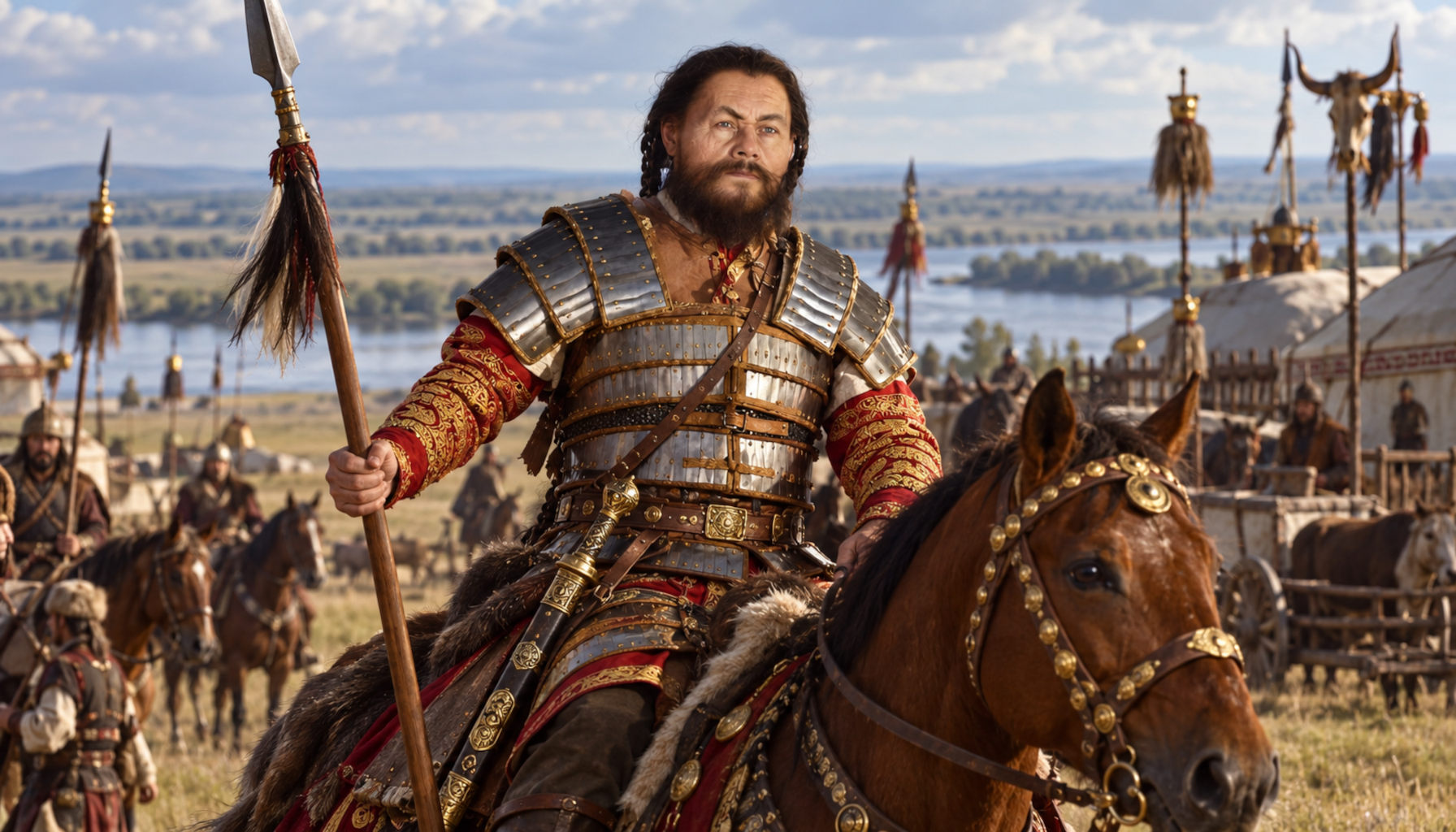
In about AD 650, in the Carpathian Basin of present-day Hungary, a high-ranking Avar warrior was laid to rest with the unmistakable signals of power. Known to ancient-DNA research as sample A1801, he has been interpreted as a member of the elite retinue surrounding the khagan, the ruler of the Avar Khaganate. He matters historically because he stands very near the center of one of early medieval Europe’s most formidable political machines: a cavalry empire that arrived from the steppe in the late 6th century and rapidly made itself a decisive force between Byzantium, the Balkans, and central Europe.
What makes him so compelling is that archaeology and genetics pull in the same direction. His burial belongs to the world of mounted aristocrats whose identity was expressed through weapons, ornate belt sets, horses, and the habits of a steppe military elite. Yet he was not living on some distant Asian grassland. He lived in the central Danubian world, in a landscape of river plains, former Roman territories, and neighboring Slavic, Germanic, and Byzantine spheres. In other words, he is an excellent witness to how the Avar ruling class transplanted older steppe traditions into a new European homeland.
Explore the Origins of the European Huns
The Avar Khaganate was not a vague cloud of horsemen drifting across the map. It was a durable state, wealthy, militarized, and deeply involved in the politics of its age. From the later 500s into the 700s, the Avars dominated much of the Carpathian Basin and repeatedly confronted the Byzantine Empire. Their power depended on mobility, tribute, warfare, and the cohesion of an elite stratum close to the khagan. A1801 appears to belong precisely to that inner world. He was not identified by name from a written inscription, so this is not a securely named historical individual in the way a king in a tomb might be. Rather, he is a strongly supported archaeological identification: a high-ranking man whose grave goods, date, and context place him among the Avar warrior aristocracy at the core of the state.
This matters because early medieval empires are often easiest to describe from the outside, through hostile chronicles or diplomatic reports. Burials like his allow us to see the system from within. The decorated belt fittings, weapons, and equestrian associations are not mere trimmings. They formed part of the grammar of status in the steppe world. They proclaimed rank, military function, and closeness to power. If the khagan ruled through personal loyalty and armed retinues, then men like A1801 were the connective tissue of empire.
The biological sample is described as High Ranking Elite Retinue of Khagan Avar-Period Budapest Hungary, dated approximately to AD 650. The available information ties the sample to an Avar-period elite burial in the Budapest region, within the political and military heartland of the khaganate. That is enough to place him very securely in time and social context, though not enough to attach a personal name.
So it is worth being careful. The identification here is not “this was definitely a known ruler or commander mentioned in a text.” Instead, it is “this was very likely a high-ranking member of the khagan’s military elite,” based on grave context and interpretation. That distinction is important in ancient DNA. Genetics can illuminate ancestry and relationships, but it cannot conjure a missing nameplate.
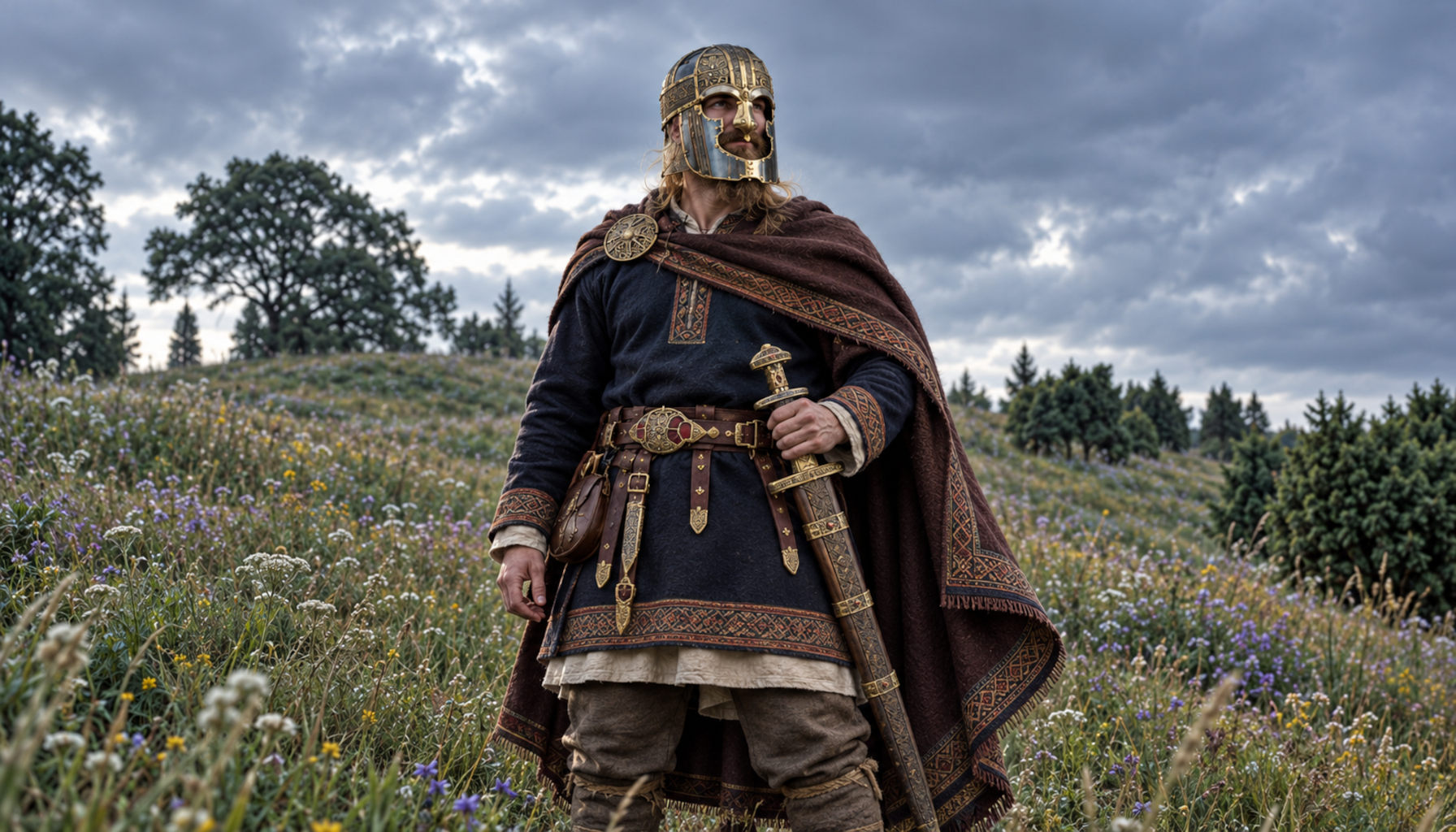
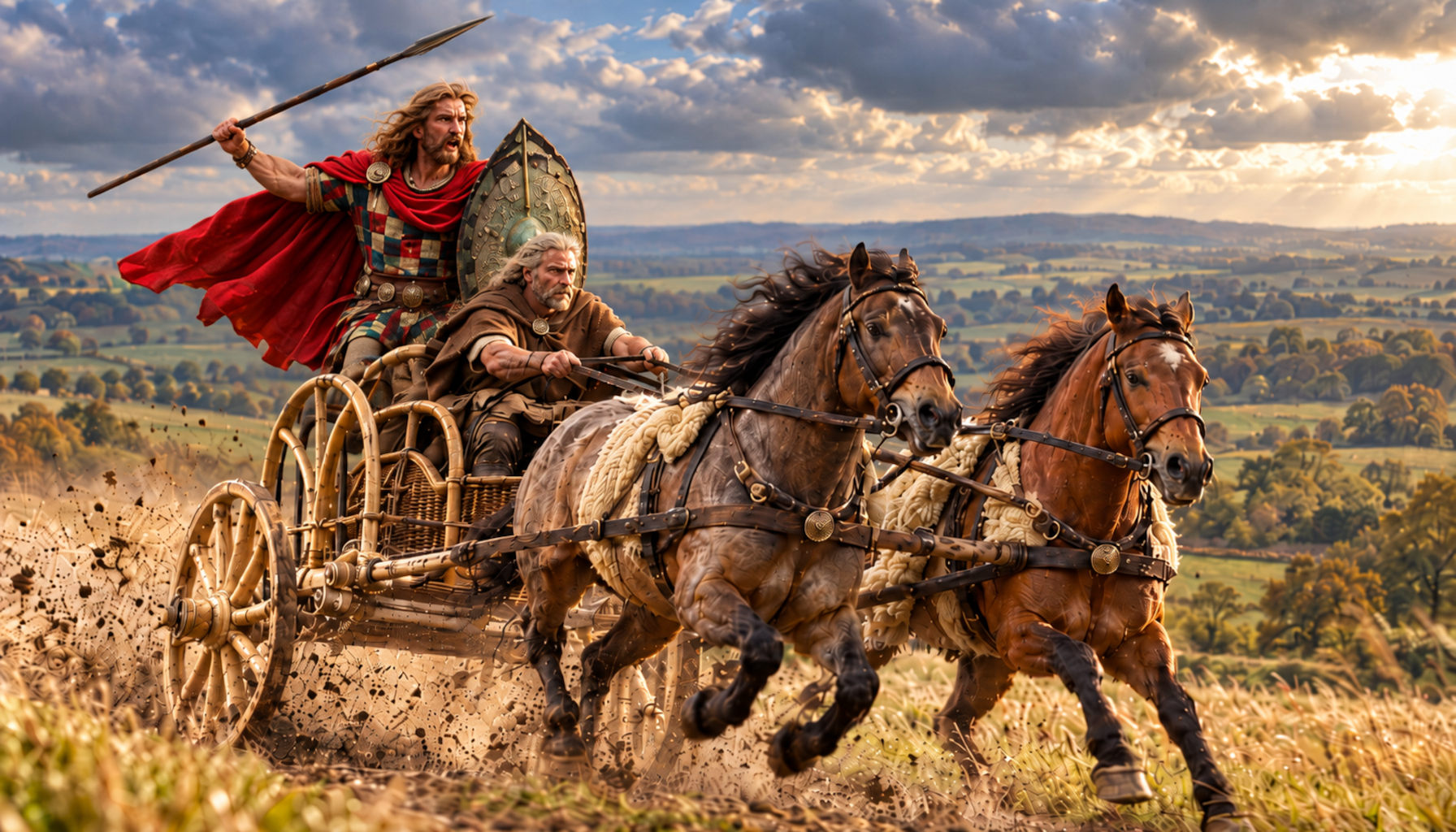
Even so, the burial tells a vivid story. Avar elite graves often emphasized mounted warfare and aristocratic display. Horse gear, weaponry, and ornate metalwork were part of a social language understood across the steppe and beyond. In the Carpathian Basin, these traditions were adapted to a region long shaped by Roman infrastructure, migration-era politics, and new local alliances. A1801 therefore stands at the crossroads of imported tradition and local rule.
Read about Post-Roman DNA in Hungary
A1801 belonged to Y-DNA haplogroup N1a1a1a1a3a2 and mitochondrial haplogroup C4b6. The Y-DNA lineage traces his direct paternal line, passed from father to son. The mtDNA lineage traces his direct maternal line, passed from mother to child through the mother. These are useful lineages, but they represent only two narrow threads in a much larger family tree.
Historically, his Y-DNA is especially interesting because lineages within broader haplogroup N are often associated in ancient DNA with populations across northern Eurasia and the eastern steppe world. That does not mean the haplogroup “equals” Avar identity; cultures are not the same thing as haplogroups. But in this case, the paternal lineage fits neatly with the broader picture emerging for parts of the Avar elite: some of them carried genetic signals pointing to origins or connections further east than the Carpathian Basin itself.
His mtDNA haplogroup, C4b6, traces one direct maternal line and is also notable for its eastern Eurasian associations in ancient population history. Again, this does not reduce his identity to a label. It does, however, support the impression that the upper layers of Avar society included people whose recent ancestry was linked to regions well east of Hungary. That is historically significant because it suggests that the Avar ruling stratum was not simply adopting steppe fashion in Europe; at least in some cases, it preserved genuine biological ties to eastern homelands and networks.
A short ancient-DNA comparison is revealing here. The same Y-DNA lineage, N1a1a1a1a3a2, appears in A1801 and in several related Avar-period individuals from Hungary, including Kunszállás-Fülöpjakab samples such as KFJ021, KFJ013, KFJ017, KFJ025, KFJ020, KFJ010, KFJ048, KFJ050, KFJ024, KFJ030, KFJ040, KFJ012, KFJ044, KFJ007, and KFJ016, as well as Early Avar examples like Szegvár-Oromdűlő SZOD1-554 and the elite burial Csepel-Kavicsbánya CS-465 where available in comparative datasets. Taken together, these linked paternal lines suggest that this was not an isolated case but part of a broader pattern among Avar groups, particularly within elite or high-status contexts.
The mtDNA picture is narrower. For C4b6, the supplied related example is A1801 himself. That does not make the lineage unimportant; it simply means that, within the material highlighted here, his direct maternal line is less broadly represented than his paternal one. In practical terms, his maternal haplogroup adds another strand of evidence consistent with eastern connections, but by itself it cannot map the whole movement of Avar women, families, or marriage networks.
The wider context comes from the major genomic study published in Cell at https://www.sciencedirect.com/science/article/pii/S0092867422002677. That research showed that core Avar elite individuals in the Carpathian Basin could carry a strong East Asian-related genetic profile, consistent with rapid long-distance movement from the Eurasian steppe into Europe within only a few generations. A1801 sits squarely within that historically important finding. He is one of the clearest examples of how an early medieval ruling elite could move fast, establish power far from its earlier homeland, and still retain a distinct genetic signature.
The value of A1801’s DNA is not that it tells us his personality, his language, or the details of his career. It cannot say which campaigns he fought in, whether he had children, or what political intrigues swirled around the khagan’s court. But it can do something arguably just as interesting: it helps show that the Avar elite was not merely a cultural performance staged in European dress. In at least some cases, the men buried with elite steppe symbols also carried lineages and broader ancestry consistent with eastern origins. That makes the archaeology sharper, the history more concrete, and the khaganate less abstract.
Discover Ancient DNA and Archaeogenetics
If this Avar warrior’s world fascinates you, MyTrueAncestry lets you compare your DNA with ancient populations and archaeological samples from across history. You can explore whether your genetic results show connections to the kinds of populations and lineages found in the early medieval steppe world and the Carpathian Basin.
Comments