Elite Vendel Warrior of Uppland
– 5 min read


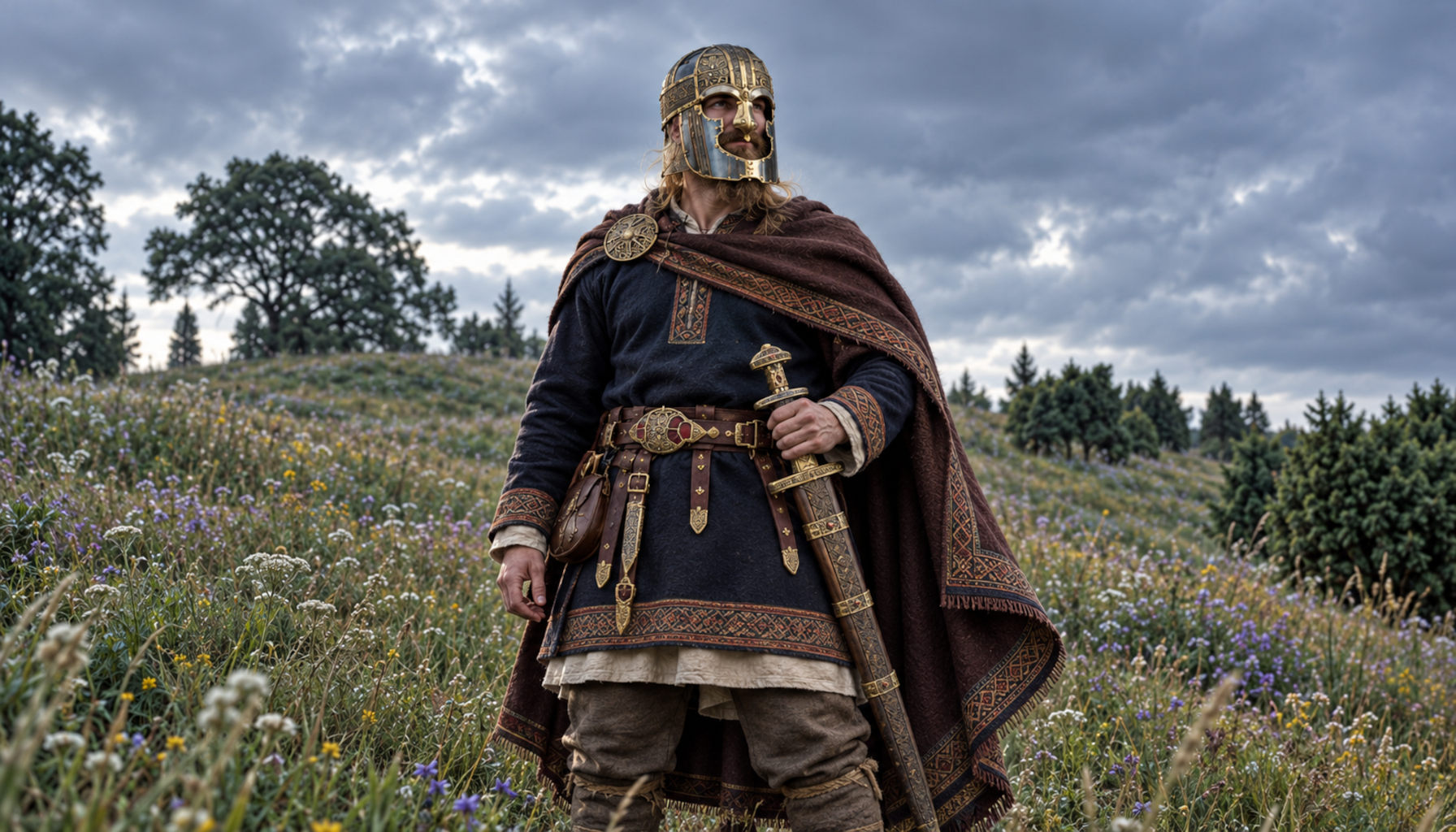
The Elite Vendel Warrior of Uppland was a high-status man buried around 588 AD at Tuna in Alsike in the Mälaren region of eastern Sweden, at that intriguing hinge-point between the Migration Period and the Vendel Period. He is known in the genetic record as sample als001, and he matters because his grave captures a society in transition: local Scandinavian power becoming more formal, more martial, and more ostentatiously connected to the wider world.
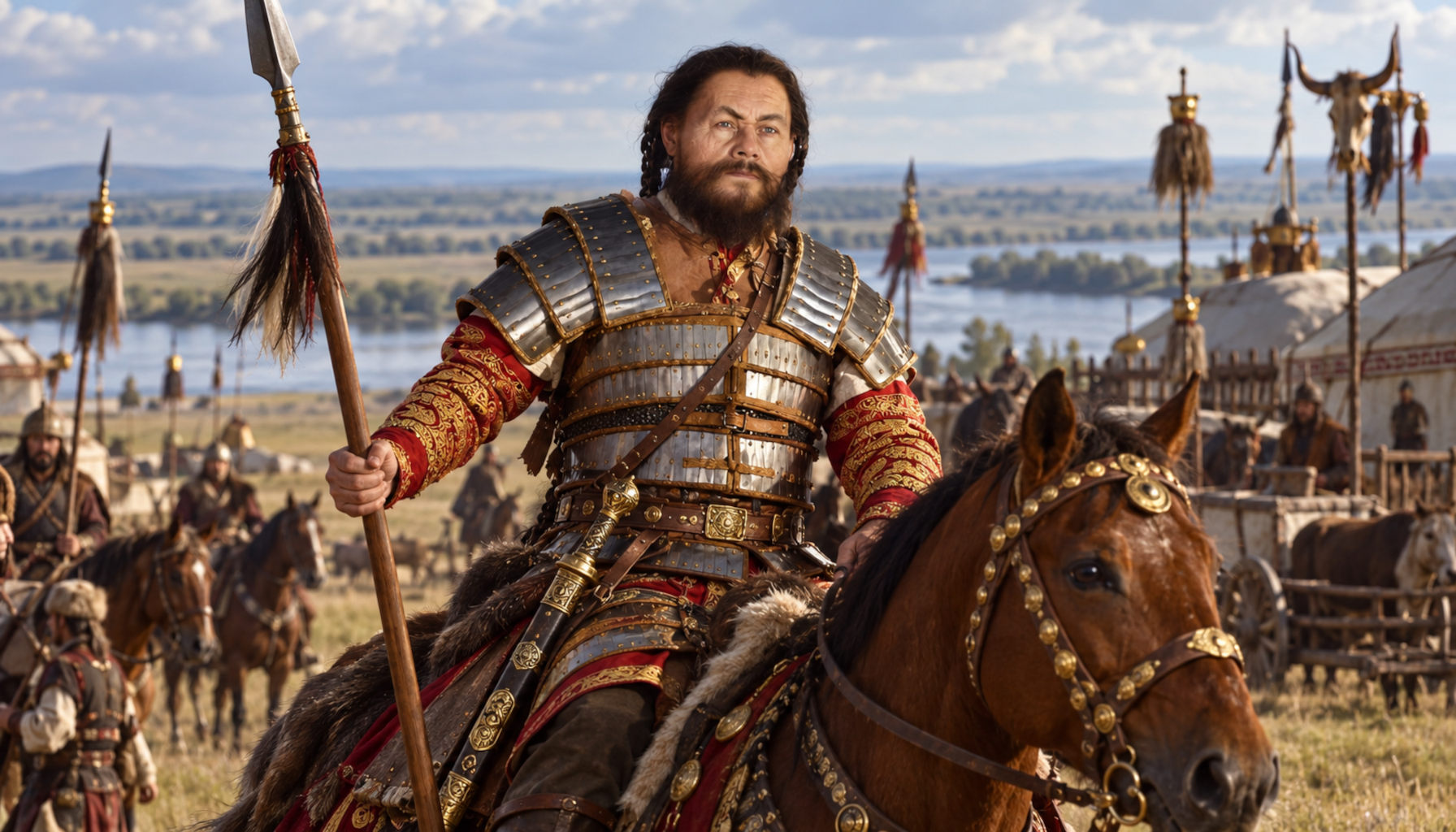
What makes him memorable is not simply that he was buried with weapons, though he was, but the particular combination of things placed beside him. A sword, a seax, elaborate belt fittings, and above all a richly decorated buckle with garnet cloisonné set in precious metal announce rank, taste, and access. The garnets have been traced to sources as distant as India. That is the point to linger over. Here is a man who was probably local to Uppland, yet buried with materials that had travelled across astonishing distances before ending up in the Mälaren basin.
It is easy to treat pre-Viking Scandinavia as dimly lit prelude, but burials like this show something sharper and more organised. The man from Tuna in Alsike belonged to the emerging warrior aristocracy that would come to define Vendel-period Sweden. His grave was not merely a disposal of the dead; it was a carefully staged statement about status, arms, and elite identity. The sword and seax signal martial standing, while the decorated belt gear points to display as an essential part of power. In other words, this was a world in which rank had to be seen as well as possessed.
The wider setting matters too. In the later 6th century, Scandinavia stood at the edge of long-distance exchange systems linking the Baltic, the Continent, and far more distant regions. Prestige goods circulated through gift exchange, alliance, trade, and probably the social theatre of elite competition. The buckle from his grave, with its imported garnets, is not evidence that he himself travelled to India, of course; archaeology does not work like that. But it does show that the society to which he belonged was already plugged into vast networks of movement and value. The future splendour of Vendel and eventually Viking-age Scandinavia did not appear from nowhere. It had antecedents, and this man is one of them.
Explore Viking-age Scandinavia
The archaeological sample is described as Vendel Age Elite Warrior Sweden Uppland Alsike, dated approximately to 588 AD. In this case, the historical individual and the biological sample are closely tied: the DNA comes from the remains of the man buried in the high-status grave at Tuna in Alsike. He is not a named figure from written sources, so this is not a securely identified person in the way a king or saint might be. Rather, he is a real excavated individual whose importance comes from the burial context and what it reveals about his social role.
That distinction is important. We can say with confidence that sample als001 represents the man buried in this elite grave. We cannot give him a personal name, a dynasty, or a career from textual evidence, because none is supplied. What we do have is strong archaeological context: the weapon assemblage, the ornate fittings, the remarkable buckle, and isotopic evidence suggesting that he was probably local to the Mälaren region rather than a recent migrant. That contrast is one of the most interesting features of the burial. The exotic goods were not necessarily carried in by a foreign newcomer; they were possessed by a local elite man embedded in Uppland society.
The man’s Y-DNA haplogroup was R1a1a1b1a3a4, which traces his direct paternal line: father to father to father across many generations. His mtDNA haplogroup was H6a1a, which traces his direct maternal line: mother to mother to mother. These are lineages, not ethnic labels, and they do not tell us that he was “really” one people or another. They simply place his paternal and maternal ancestry within broader branches of the human family tree.
The paternal lineage R1a1a1b1a3a4 appears in a striking spread of ancient individuals across time and space, including this same Vendel Age Elite Warrior from Alsike, Lombard-era Collegno in northern Italy, Migration Period Hungary, Nordic Bronze Age Denmark, Iron Age and medieval individuals from England, medieval Denmark and Belgium, Wielbark-associated contexts in Poland, Viking-era Norway, Staraya Ladoga, Salme in Saaremaa, and Viking-age Gotland. That broad distribution does not mean all these people belonged to one tribe, nation, or ruling house; far from it. What it does show is that this paternal branch participated in a long and complex history across northern and central Europe, stretching back into Bronze Age populations and reappearing in later Germanic, Scandinavian, and other medieval contexts. For the Uppland warrior, that makes his Y-line historically interesting as part of a wider northern European tapestry, not as a badge of singular identity.
The maternal lineage is much narrower in the material supplied here. For H6a1a, the directly related ancient sample specifically cited is the Vendel Age Elite Warrior Sweden Uppland Alsike himself, sample als001. That means the mtDNA result is useful chiefly as a precise identifier of his direct maternal line rather than as a broad comparative network in this case. As with all mtDNA, it describes only one ancestral thread among many.
The broader genomic context from the major ancient DNA study published in Cell helps place him historically. That research examined large-scale population change in the Viking world and its surrounding regions, showing that Scandinavia was neither isolated nor genetically uniform. For a pre-Viking elite man like als001, the value of DNA lies in adding one more well-dated, well-contextualised individual to the picture of how Scandinavian populations were formed before the better-documented Viking Age. It complements the archaeology rather than replacing it.
Read about Viking Age genetics
The most revealing thing here is not some dramatic claim of foreign origin, but almost the reverse. Isotopes suggest he was probably local to the Mälaren region, while the grave goods speak of astonishingly wide exchange networks. His DNA therefore sits inside a rather telling historical picture: a local Scandinavian aristocrat using imported prestige objects to express power. Genetics can map parts of his ancestry and place him among other ancient populations, but it cannot tell us his language, his loyalties, or the exact route by which those Indian garnets reached his buckle. Those answers still depend on archaeology and historical interpretation.
That is why this burial matters so much. It shows that the making of elite Scandinavia was not simply a story of migration or conquest, nor simply one of isolated northern tradition. It was a combination of local roots and far-reaching connections. The man at Tuna in Alsike stands right at that junction.
Discover Baltic early medieval DNA
With MyTrueAncestry, you can compare your DNA with ancient populations and archaeological samples from the worlds that produced figures like this Vendel warrior: the Baltic, Scandinavia, Migration-period Europe, and beyond. It is a way to explore deep genetic connections to past populations and lineages, without pretending that a shared marker alone proves direct descent from any one ancient individual.
Comments