Early Medieval Finland: Genomics, Population Change, and Baltic Connections
– 6 min read


Between roughly 800 and 1250, southwestern Finland occupied one of northern Europe's most dynamic positions. Far from a forgotten fringe, it was a lived-in landscape already threaded into sea routes connecting Sweden, Gotland, the eastern Baltic, and Russia's river systems. Milder climate, fertile soils, and direct Baltic access made it a region of food, movement, exchange, and power.
Communities divided loosely into coastal and inland zones, each shaped by its environment yet part of the same historical drama. The coast thrived on maritime trade; inland Häme followed lakes, river valleys, and farming rhythms. Both zones contributed to the making of medieval Finland from Iron Age roots, outside contacts, and local resilience.
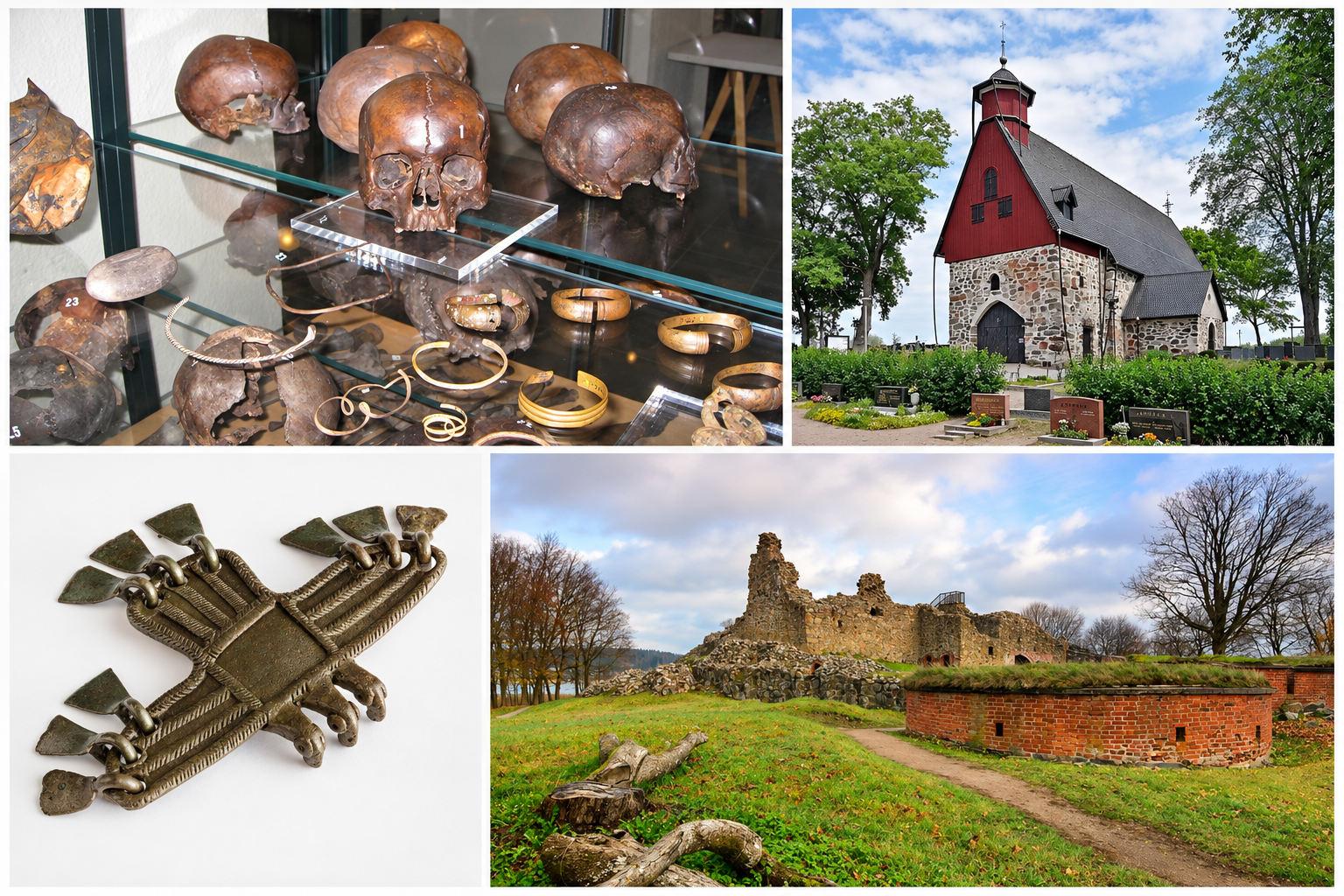
Written sources from the people themselves are almost nonexistent, making archaeology extraordinary in its importance. Cemeteries, grave goods, weapon burials, and imported objects become the archive. The soil, listened to carefully, becomes the document.
Key burial sites—Eura, Luistari, Rikala, and inland Häme cemeteries—preserve communities in motion without being uprooted. Swords of Scandinavian type, Baltic-influenced jewellery, and local dress ornaments speak of status, identity, and wide horizons. A single bead may have travelled farther than many kings; a coin may carry memory of trade networks stretching through the Islamic world into the Baltic exchange system.
Southwestern Finland was no passive receiver. Finnish-influenced objects found at Birka in Sweden confirm that goods, styles, and people moved both ways. Furs likely drove much of this commerce—a fact preserved in language itself, where a word for money also meant a fur pelt.
Luistari in Eura is one of Finland's greatest archaeological sites. Its graves contain dress ornaments, brooches, beads, and weapons suggesting a prosperous, outward-looking community. Isotope analysis hints that some buried there may not have spent childhood locally—this cemetery may hold both locals and newcomers whose life stories crossed the Baltic.
A brooch is never merely decoration. It signals gender presentation, status, and connections to wider fashions. Strings of beads hint at trade access or inherited heirlooms. Weapons point to both everyday work and symbolic display. The dead at Luistari were presented to posterity with extraordinary care.
Inland cemeteries at Hollola, Janakkala, and Häme appear quieter but are equally fascinating. Their material culture blends western and eastern influences, reflecting a position between spheres. At one inland site, closely related individuals were identified—a parent with children, a set of siblings. Suddenly the cemetery transforms from an abstract population sample into a family place, charged with grief and ordinary continuity.
Some burials reflect wealth through weapons. A sword in a Finnish grave is never only a weapon—it is theatre, displaying rank and connection to Scandinavian networks. Women's graves are equally revealing: richly adorned dress accessories signal both local status and Baltic-wide fashion. Clothing was identity made visible.
Burial customs themselves shifted across the period. Cremation gave way gradually to inhumation as Christian influence spread, yet change was uneven and locally negotiated. Old customs and new ideas met in the cemetery earth.
One of the most remarkable findings from southwestern Finland concerns its inland zone: extraordinary demographic continuity. The people buried inland during the late Iron Age and early medieval centuries were, in broad terms, strikingly similar to those living in the same regions much later. Generations stayed.
Sites at Hattula, Hollola, Janakkala, and Renko together suggest a regional population with durable roots. Political systems changed overhead—Christian institutions grew, Swedish rule extended, castles rose—yet inland population lines continued with surprising steadiness. History happened, but local people were not swept away.
The closely related individuals found at one inland site bring this alive at household scale. A parent buried near children, siblings laid together: these were not floating strangers in a sample but close kin, probably a real local lineage. Their presence captures the ordinary miracle of continuity—children growing up, burying parents, and joining the cemetery earth themselves.
Crucially, this continuity coexisted with openness. Inland Finland absorbed new farming methods, maintained contact with eastern and western worlds, and blended material influences without wholesale population replacement. Institutions can travel farther than people. Authority spreads through churches, law, and taxation without emptying and refilling the countryside.
This finding also illuminates later Finnish regional patterns. Modern Finland's marked internal differences between southwest and northeast, coastal and inland populations, reflect a very old layer of population structure. Here, despite all the complexity of the Baltic world, the inland line remained remarkably visible.
If the inland story is one of astonishing continuity, the coast tells an equally dramatic tale of transformation. After roughly the thirteenth century, the southwestern coastal zone underwent substantial demographic change linked to immigration from Sweden. Sea routes carried people as well as goods.
The thirteenth and fourteenth centuries saw Sweden consolidate control over territories in what is now Finland—not merely through armies but through administration, the church, legal structures, and fortified centres. Castles at Turku, Raasepori, and Hämeenlinna anchored a growing order. Near these nodes, Swedish settlers found familiar institutions and useful harbours linking them back across the sea.
The result was a marked enrichment of Scandinavian ancestry on the coast compared with earlier centuries, giving material depth to what older scholarship inferred from place names and language history. Swedish-speaking coastal communities were rooted in real medieval migrations, family by family, shoreline by shoreline.
Crucially, movement likely occurred in repeated flows rather than a single dramatic event. Some immigrants arrived as farmers, others as clerics, merchants, or families seeking land. Some blended quickly into local society; others maintained distinct communities for generations. The stronger demographic impact remained concentrated on the coast, leaving many inland communities largely continuous—an important reminder that political conquest spreads along communication routes rather than soaking every landscape equally.
The earlier coastal cemeteries now carry fresh significance. The people buried there before the main medieval immigration belonged to a community more similar to inland neighbours than the later record suggests. They preserve a lost phase of Finnish history—a connected coast not yet transformed by large-scale Scandinavian settlement. Their graves witness a world that later changed beyond easy recognition.
Perhaps the most exhilarating finding is that southwestern Finland belonged firmly to a broad Baltic world of human movement. Some individuals from Viking Age Gotland appear to have had ancestry strongly resembling people from Finland—a reminder that movement ran in both directions. Finnic-connected people travelled to, settled in, or left descendants on that great island hub of Baltic trade.
Latvia offers another striking case. One woman buried at Laukskola along the Daugava river showed distant kinship links to individuals in southwestern Finland. The Daugava was a great road made of water, drawing goods and people through an expansive commercial world connecting the eastern Baltic to wider markets. A kin link between her and people in Finland suggests a common ancestor joining these shores—perhaps through merchant families, marriage ties, or seasonal movement.
Russia enters through contacts with Staraya Ladoga and Gnezdovo, key nodes on trade routes linking the Baltic with river systems running south and east. Furs, metalwork, beads, silver, and weapons moved through these channels. Southwestern Finland was plugged into one of medieval Eurasia's most dynamic exchange networks.
What makes this evidence so powerful is that it does not merely document traded objects—it reveals shared ancestry between individuals across regions. The Baltic world was not only commercial. It was reproductive, domestic, and generational.
These connections stretch even into the seventeenth century. Two victims recovered from the Swedish warship Kronan, lost in 1675, showed ties consistent with Finnish ancestry. Men from the Finnish world, or descended from it, were still entangled in the Swedish empire's military machinery centuries after the early medieval period. The Baltic, which once linked farmers and traders, later drew in imperial fleets—yet the older human ties persisted through it all.
Small cemeteries in Finland thus become nodes of an international network. A grave in Eura or Häme may connect, through ancestry and contact, to an island cemetery on Gotland, a burial by the Daugava, a trading quarter in Staraya Ladoga, or a royal warship centuries later. Southwestern Finland was local, yes—but also expansively, unmistakably Baltic.
 University of Turku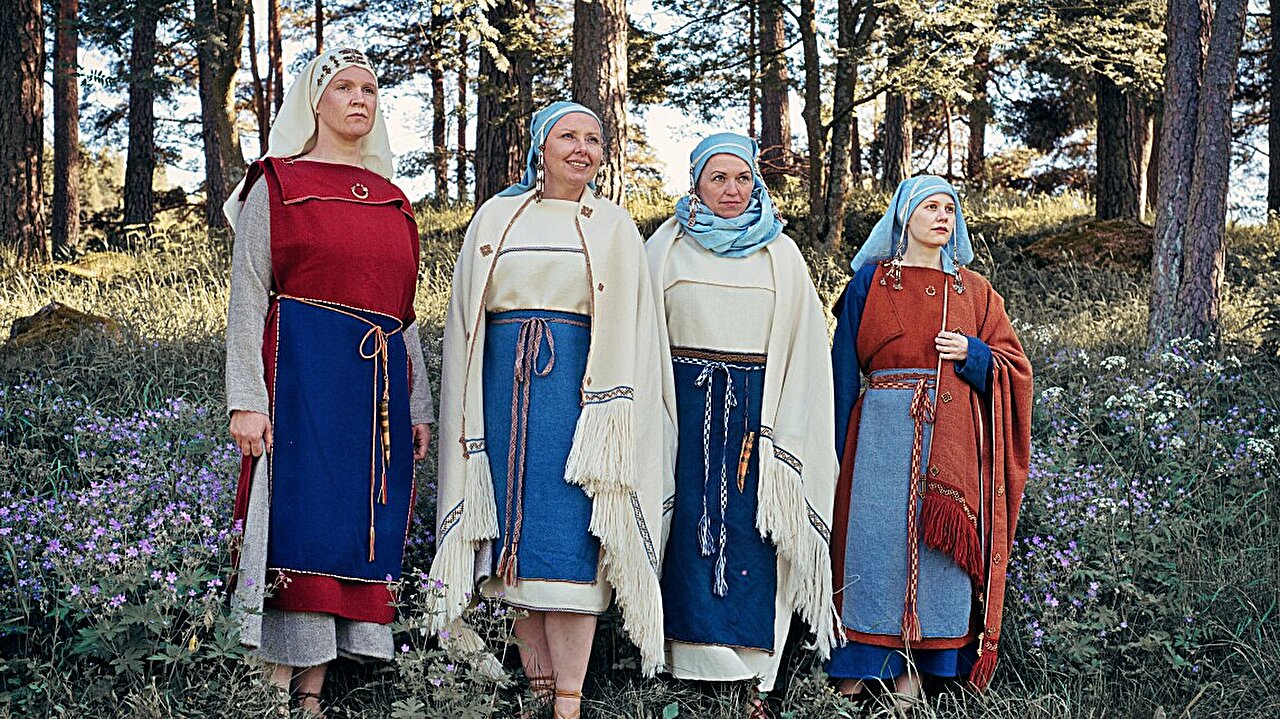
Comments