Haplogroup I2a1b2a

– 6 min read


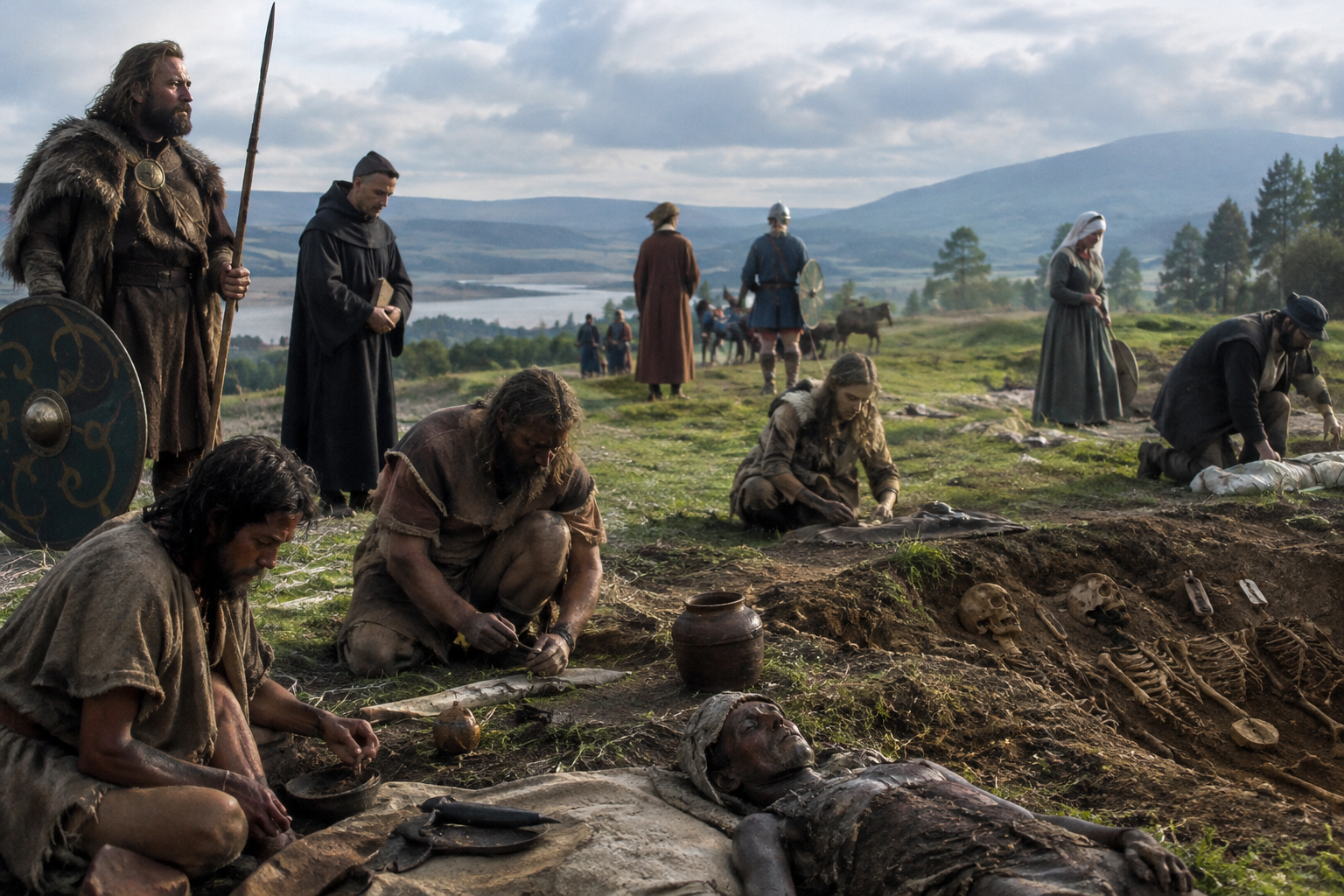
Haplogroup I2a1b2a is the sort of Y-DNA lineage that reminds us how awkward, and how interesting, paternal history can be. It does not belong neatly to one people, one kingdom, or one heroic origin story. Instead, when it turns up in ancient DNA, it appears in settings as different as Mesolithic Britain, Early Bronze Age Czechia, an elite Celtic burial in Germany, Anglo-Saxon Yorkshire, and even a late medieval friary in England. That is precisely what makes it historically valuable: it offers a long view of male-line continuity and movement across Europe without pretending that one chromosome can explain everything.
It is worth saying at the outset what a Y-DNA haplogroup can and cannot do. Y-DNA traces one direct paternal line only: father to father to father across time. It does not represent a person's whole ancestry, culture, language, or identity. A man with I2a1b2a could have had ancestors from many different populations on all his other family lines. But because ancient DNA now lets us spot these paternal signatures in real burials, haplogroups like I2a1b2a can illuminate where some male lines persisted, where they moved, and how they surfaced in very different archaeological worlds.
I2a1b2a sits within haplogroup I, one of the major Y-chromosome lineages long associated with ancient European hunter-gatherer ancestry. That broad background matters, but it should not be lazily pasted onto every narrow sub-branch. A specific clade such as I2a1b2a has its own later history, and the evidence supplied here suggests a story not of one single dramatic migration but of survival, regional continuity, and repeated absorption into new cultural settings.
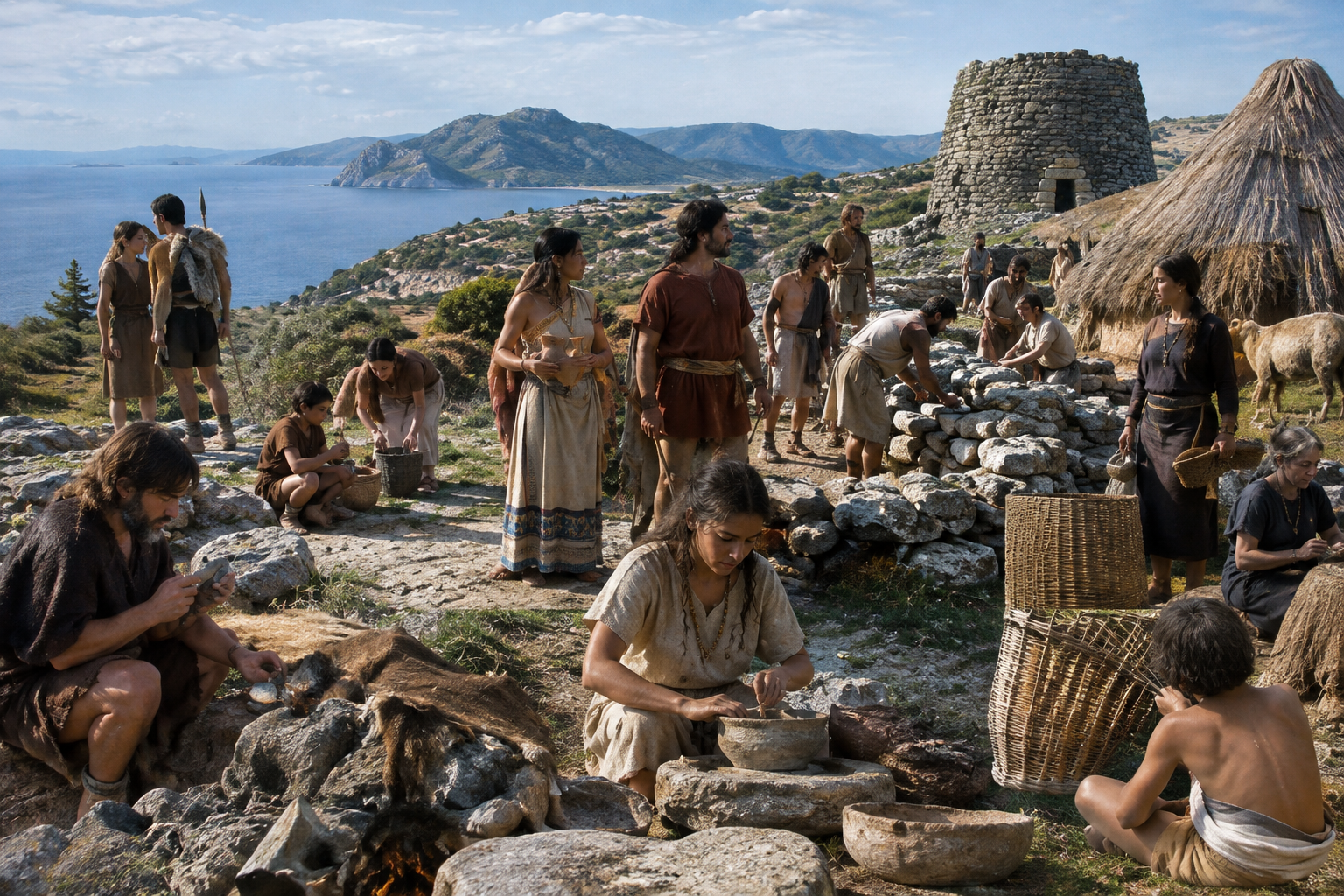
The deepest hint comes from the western edge of Europe. Cheddar, better known as Cheddar Man from Somerset in England, dated here to 7150 BC, is a famous reminder that male lines within haplogroup I were present in post-Ice Age Britain long before farming, metalworking, Celts, Romans, or Anglo-Saxons. Another important early case is SRA62 from Sramore, Leitrim, Ireland, dated 4024 BC. Together, these samples anchor the wider paternal background of this lineage family in the Mesolithic and early post-Mesolithic worlds of the Atlantic fringe.
That does not prove that later carriers of I2a1b2a in central Europe or medieval England were descended directly from those particular men. It does show that this paternal heritage belonged to the deep human landscape of prehistoric Europe and was still available to be carried forward into later populations.
By the Early Bronze Age, the story becomes more geographically mixed and therefore more intriguing. Sample I7959 from Praha-Stodulky-Mal-Ohrada, Prague, Czechia, dated to 2000 BC, places this paternal lineage in an Unetice context. That matters because Unetice society belonged to one of the key early Bronze Age formations in central Europe, tied to metallurgy, exchange networks, and emerging hierarchies. A Y-line like I2a1b2a appearing there suggests that older European paternal strands were not swept aside everywhere by later demographic changes; some remained embedded in new social orders.
This is one of the most useful lessons from ancient DNA. Archaeological cultures are not biological clones. A Bronze Age community could be culturally innovative and still include paternal lines with much deeper regional roots. I2a1b2a, at least in this sample set, looks rather like one of those lineages that kept turning up as Europe changed its language, politics, and burial customs around it.
That same flexibility is visible in Iron Age central Europe. MBG008, from the Elite Celtic Burial Germany Magdalenenberg Villingen-Schweningen, dated 530 BC, places the lineage in a high-status Celtic setting. Magdalenenberg is one of those burials that immediately catches the imagination because it belongs to a world of ranked society, display, and power. Yet the genetics remind us that "Celtic" was not a single biological package. This elite burial shows a paternal line with far older European roots carried by a man buried in an unmistakably Iron Age aristocratic context.
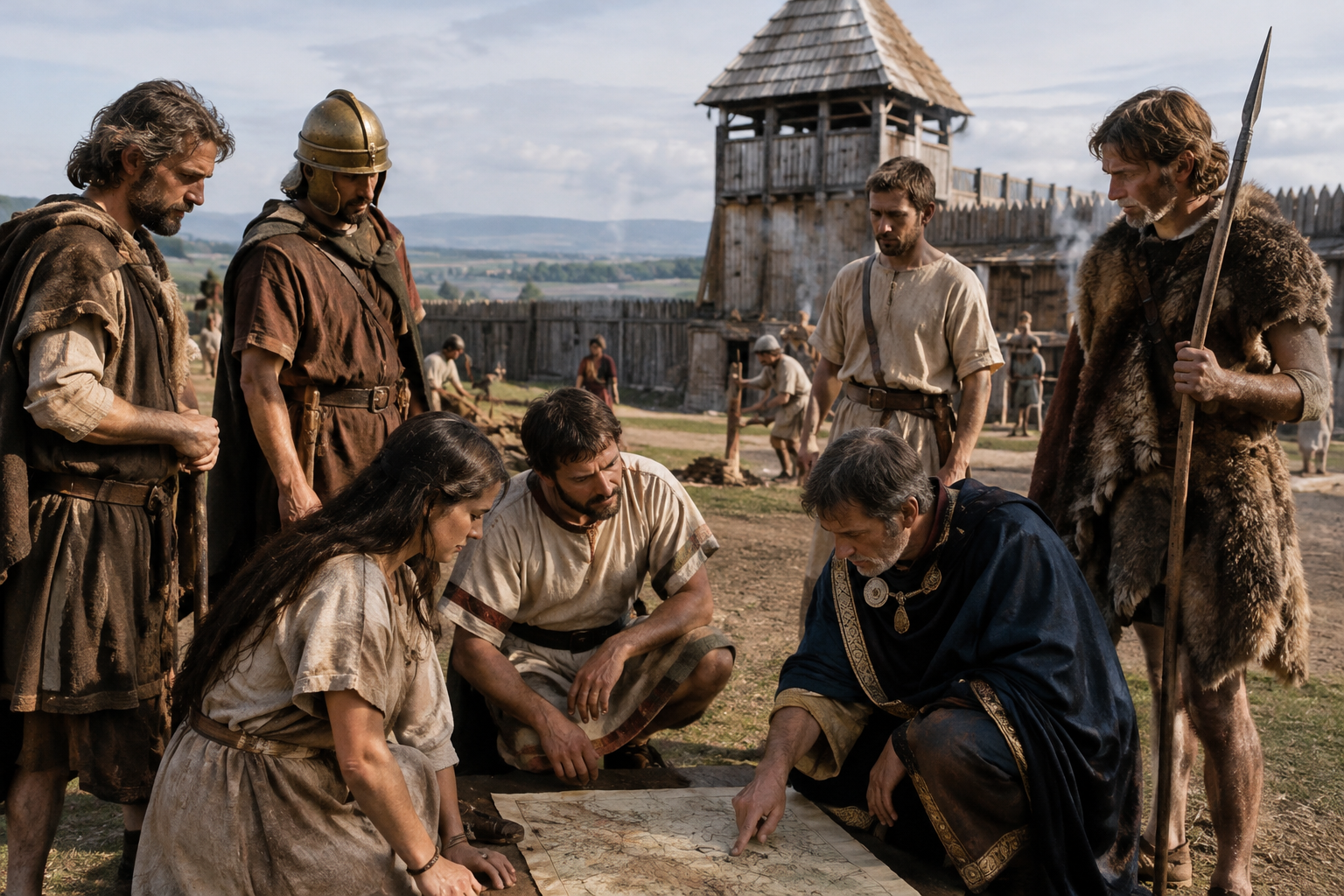
By late antiquity and the early medieval period, I2a1b2a appears again in regions central to the remaking of Europe after Rome. BRC039x, from Migration Period Germany Saxony-Anhalt Bruecken, dated 500 AD, is especially revealing. This was an age of political fragmentation, local realignment, and movement across the old Roman frontier. A lineage like this appearing in Saxony-Anhalt fits a world in which older regional male lines persisted while new identities formed around them.
The English evidence is equally striking. Two samples from the Early Anglo Saxon Cemetery West Heslerton Yorkshire, I11590 and I20641, both dated 550 AD, place the lineage in early Anglo-Saxon England. Again, caution is needed. Sharing a haplogroup does not make these men close kin, and it certainly does not turn I2a1b2a into a uniquely "Anglo-Saxon" marker. But the presence of the lineage in this cemetery shows how paternal lines with deep European roots could become part of the social fabric of post-Roman England.
And then there is ATP_PSN_522, from Medieval England Augustinian Friars, dated 1290 AD. By this stage we are in the written historical world: monasteries, towns, surnames, charters, property, and memory. The gap between an Iron Age elite in Germany and a friar in medieval England is enormous culturally, but not impossible genetically. That is the fascination of Y-DNA: it ignores the categories historians often prefer and follows a single male line through wholly different societies.
The latest sample in this set, ELW030 from Ellwangen, Germany, dated 1550 AD, comes from a Post Medieval Plague Victim. There is something sobering in that. By the 16th century, Europe was a world of states, confessions, written surnames, and increasingly dense records; yet the same paternal lineage still surfaces in a burial shaped by epidemic mortality. Ancient DNA does not merely recover conquerors and princes. It also recovers ordinary and extraordinary deaths alike.
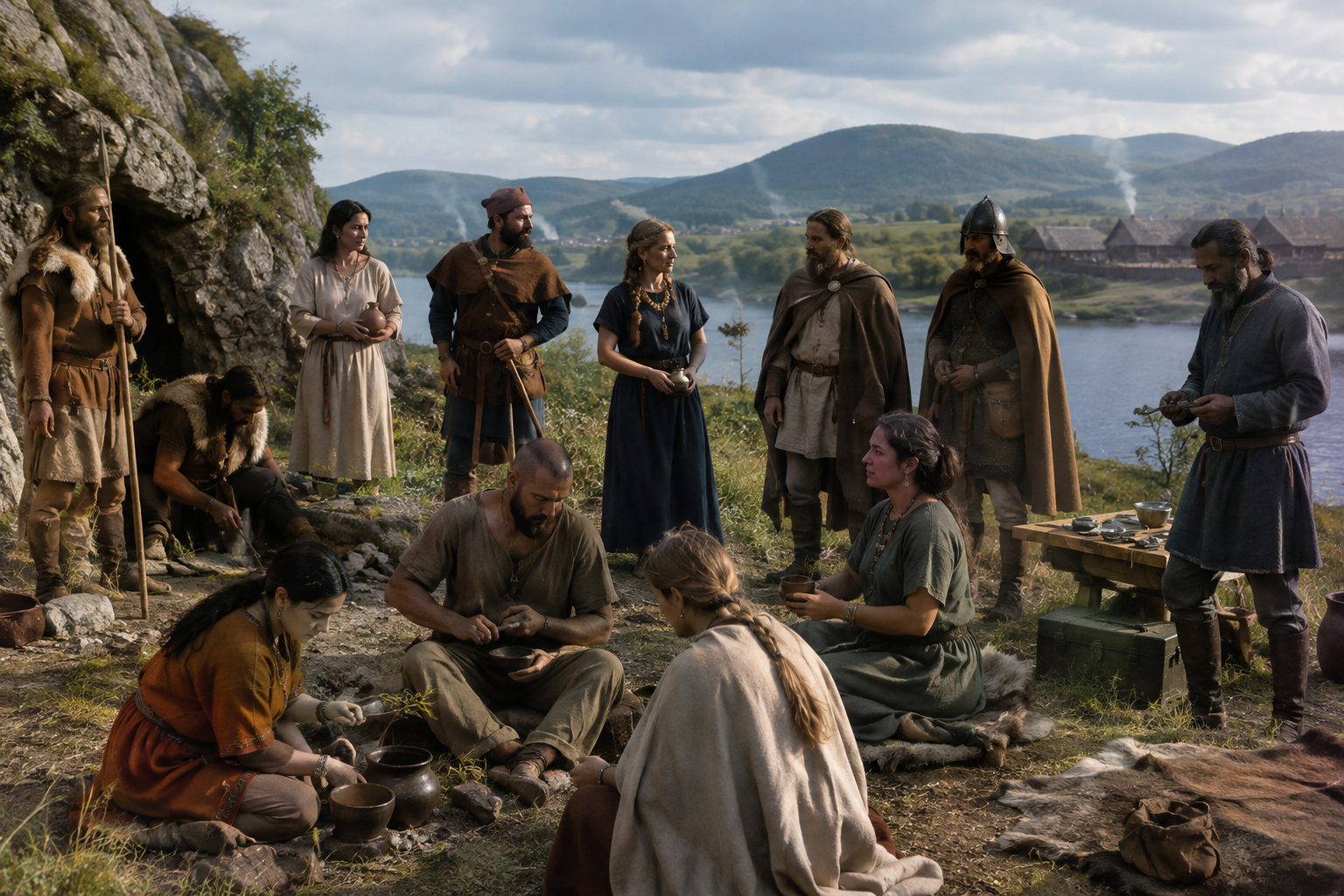
Taken together, these samples suggest that I2a1b2a was not confined to one brief episode or one narrow population. It appears in hunter-gatherer contexts, Bronze Age central Europe, Iron Age elite burial, Migration Period Germany, Anglo-Saxon England, medieval religious life, and post-medieval plague mortality. That is not a tidy ethnic story. It is a European one.
No associated noble families or castles were supplied with this article's input, and that absence is actually worth noting. It is tempting, when discussing Y-DNA, to rush toward coats of arms, ruined towers, and claims of dynastic descent. But genetics is often more powerful when it resists that temptation. For I2a1b2a, the supplied evidence points us more securely toward broad historical landscapes than toward one verified aristocratic pedigree.
That does not make the lineage less interesting. Quite the opposite. It means the story of I2a1b2a is not trapped in the usual genealogical spotlight of kings and nobles. Instead, it belongs to the longer and wider history of Europe itself: from Mesolithic shelter sites and Irish prehistoric landscapes to Czech Bronze Age settlements, German princely burials, Yorkshire cemeteries, and English friaries. If later noble houses in these regions carried related paternal lines, that would require specific evidence, not assumption.
Read Post-Roman Central Europe
The real lesson of haplogroup I2a1b2a is that paternal ancestry is both narrow and unexpectedly durable. Narrow, because it traces only one line out of countless ancestors. Durable, because that one line can persist through astonishing historical change. Men carrying related paternal signatures could live as Mesolithic foragers, Bronze Age metal-age farmers, Iron Age elites, Migration Period villagers, Anglo-Saxon settlers, medieval clerics, or plague victims. The Y-chromosome alone does not tell us which language they spoke or how they saw themselves. It does, however, show that male-line continuity can run beneath dramatic cultural transformation.
That is why ancient DNA matters so much. Written genealogy usually reaches only the last few centuries and often privileges the wealthy. Archaeology recovers the dead but not always their relationships. Y-DNA adds another layer: not proof of noble descent, not a badge of ethnicity, but a direct thread of paternal history stretching across deep time.
If your own results include I2a1b2a or a nearby branch, MyTrueAncestry can help place that lineage into a much larger human story - one that may connect you with ancient individuals such as MBG008, I7959, I11590, I20641, ATP_PSN_522, or ELW030. Those matches do not prove direct descent from any one burial or membership in a particular historical family, but they can open an extraordinary window onto the worlds your distant paternal ancestors moved through.
Comments