Haplogroup R1b1a

– 5 min read


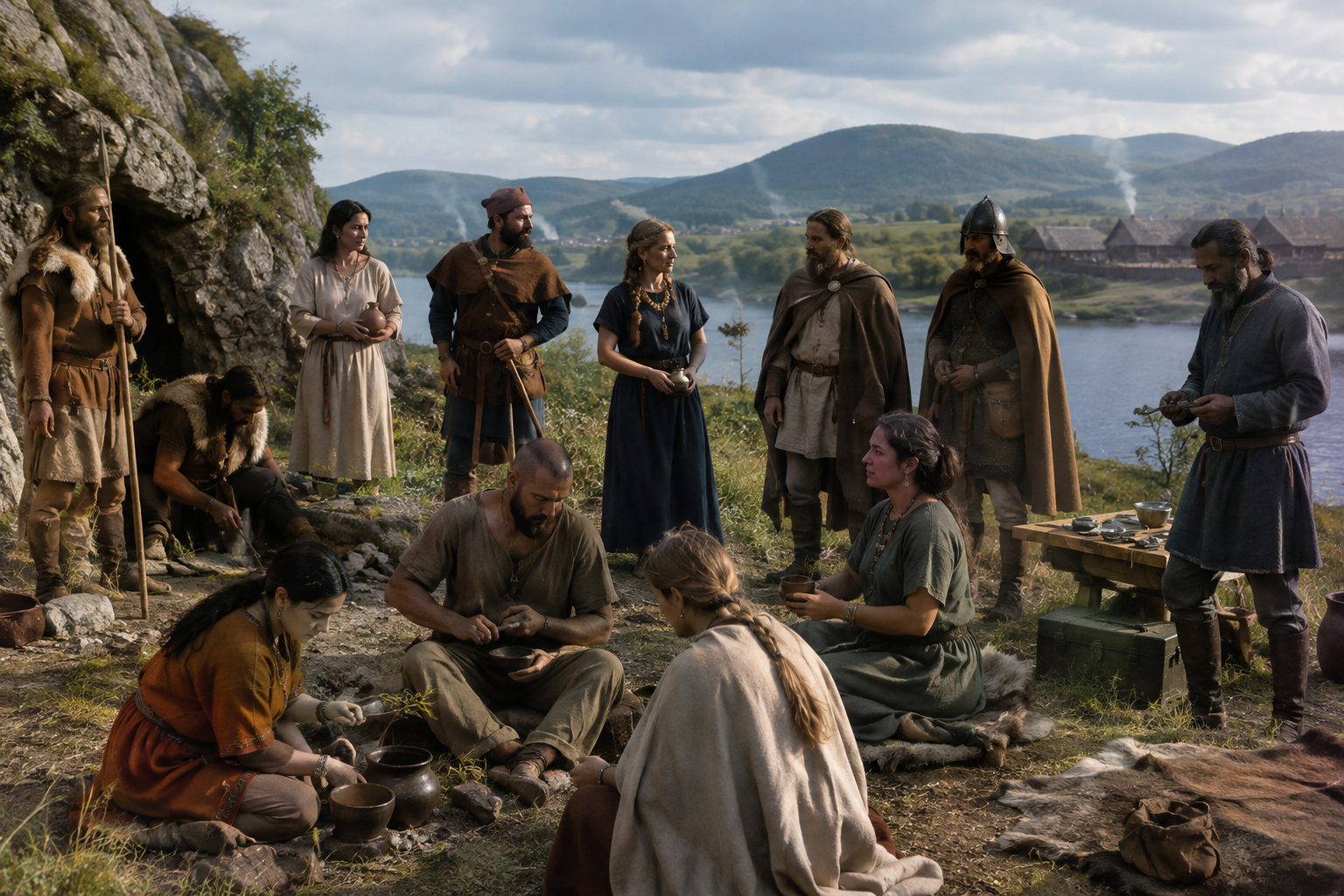
R1b1a is one of those Y-chromosome lineages that turns up so often in the story of western Eurasia that it can feel almost too familiar. But that is precisely why it is interesting. Once you start following it through ancient DNA, this paternal line appears not as a single people or a tidy ethnic badge, but as a thread running through very different worlds: Neolithic caves, steppe burials, Bell Beaker cemeteries, medieval towns, and even the mining communities of early modern Scandinavia.
As always with Y-DNA, a note of caution comes first. A haplogroup such as R1b1a traces one direct paternal line only: father to father to father. It does not describe a person's whole ancestry, culture, language, or identity. Still, paternal lineages matter because they allow us to see long-term continuities and disruptions that written sources alone can never show. In the case of R1b1a, ancient DNA has made that story far more concrete, and far more complicated, than older historical models ever imagined.
R1b1a belongs within the wider R1b branch of the Y-chromosome tree, a major paternal lineage found across large parts of Europe and beyond. In broad terms, many of its better-known downstream branches became especially important in later prehistoric and historic Europe. But the key point is that a parent label like R1b1a covers a deep and branching family tree, not a single uniform population.
That matters because the supplied ancient samples span an astonishing range of places and periods: Romania in the Chalcolithic, the Volga-Ural steppe in the Yamnaya horizon, Bell Beaker Pommerania, Bronze Age Barcelona, Copper Age Bavaria, Longobard-era Hungary, medieval Denmark, and early modern Sweden. That spread alone warns us against simplistic stories. R1b1a is not the property of any one kingdom, tribe, or language family. It is better understood as a paternal framework through which several major episodes of Eurasian prehistory can be traced.
For readers interested in the broader archaeological setting of these early shifts, MyTrueAncestry's article on the Bell Beaker world is a useful companion.
One of the most revealing features of the sample list is that R1b1a-associated males appear before, during, and after the great population changes of later prehistory. Take I4081, from Chalcolithic Urziceni Romania, dated 4100 BC. This places the lineage in the Carpathian world well before the classic Bronze Age societies that usually dominate popular imagination. Then there is I1594 from Neolithic Blatterhohle Germany Bltterhoehle Cave, dated 3190 BC, showing that paternal lines of this broader family were present in central Europe in the late Neolithic too.
And then we come to one of the most historically charged names in ancient DNA: I0439, from Neolithic Russia Yamnaya Lopatino Sok River, dated 2925 BC. The Yamnaya horizon has become central to debates about steppe-related migrations into Europe. It would be wrong to claim that one sample proves an entire migration narrative on its own, but finds like I0439 help explain why R1b branches are so often discussed alongside steppe expansions in the third millennium BC. The point is not that every R1b1a man was "Yamnaya," but that steppe-linked movements seem to have been one major vehicle by which some R1b paternal lines spread so widely.
That spread is visible again in poz929, from Bell Beaker Siniarzewo Pommerania, dated 2285 BC, and I3587, from Copper Age Alburg-Lerchenhaid Straubing Bavaria, dated 2225 BC. Here we are in the zone where central European and northern European prehistory was being reshaped by new burial customs, exchange networks, and probably substantial movements of people.
If you want to place those movements in a broader steppe-to-Europe setting, another excellent companion piece is this article on the North Pontic world.
The western reach of this story is just as striking. I0261, from Bronze Age Cerdanyola Barcelona, dated 2550 BC, places this paternal ancestry in Iberia during a period of major transformation. That does not mean one can leap from a single Bronze Age burial near Barcelona to the whole later history of Spain. But it does show how far west branches within this paternal family had already travelled by the third millennium BC.
In other words, when later historic populations of western Europe emerge into written record, many of the paternal lineages behind them had already been circulating, diversifying, and settling for thousands of years. Ancient DNA is useful precisely because it stops us imagining medieval Europe as if it appeared out of nowhere with castles already attached.
Readers interested in how later Iberian history layered itself onto these deep prehistoric foundations may enjoy this related article.
The later samples show something equally important: continuity of presence, not just dramatic arrival. KMU004, from Longobard Period Pannonia Arrabona Kony Barbaricum Hungary, dated 550 AD, belongs to the unsettled centuries after Roman power in the west had fragmented. Pannonia was a meeting ground of imperial leftovers, migrating warbands, local communities, and new political identities. A paternal lineage like R1b1a appearing here should not be turned into a simple ethnic label for "Longobards" or anyone else. What it does reveal is that these lineages were part of the human mix on the post-Roman Danube frontier.
Then there is CGG100691, from Medieval Denmark Jutland Tjaerby Randers, dated 1350 AD. By the late Middle Ages, we are in a quite different world of parishes, kingdoms, and written records, yet the paternal line remains visible. The same is true of Sk6866, from Sala Silver Mine Sweden, dated 1610 AD, a reminder that Y-DNA is not only about glamorous chiefs and warriors. Sometimes it turns up in industrial settings, among working people whose lives powered early modern states.
This is one of the most salutary lessons of archaeogenetics: paternal lineages survive through ordinary men as much as through dynasties. Kings may leave seals and chronicles; miners and villagers leave bones and DNA.
For a Scandinavian comparison stretching across another period of transition, see this MyTrueAncestry article on Denmark.
In this case, the supplied field for associated noble families and castles is empty. That is worth stating plainly rather than padding the article with guesswork. R1b1a is certainly broad enough that it could overlap historically with many later noble houses across Europe, but without specific family and castle data, there is no responsible way to tie this article to named dynasties, ancestral seats, or medieval fortresses.
And that restraint is part of good historical method. A broad Y-haplogroup cannot by itself identify a noble lineage. Even where a later family is associated with a particular paternal branch, that does not mean every documented member carried it, nor that all men with that haplogroup are connected to that house. Castles preserve memory, status, and political geography; they are not genetic evidence in stone.
The real fascination of R1b1a lies in its scale. It appears in the record before the Bronze Age, during the steppe-linked upheavals of the third millennium BC, in Bell Beaker contexts, in central and western Europe, on the Danube frontier, in medieval Jutland, and in early modern Sweden. That long arc does not produce a neat identity label. It produces something more interesting: a paternal line that helps map how populations moved, mixed, and persisted across thousands of years.
Ancient DNA also changes the terms of the question. Traditional genealogy works downward from named ancestors in documents. Archaeogenetics works outward from anonymous individuals in graves. When the two approaches meet, they can illuminate one another brilliantly, but they are not the same thing. Sharing a broad haplogroup with an ancient sample does not prove direct descent from that individual, still less membership in some medieval dynasty. What it offers is context: a deeper sense of where one paternal line has been before it reached the present.
If you would like to explore more of that wider method, this overview of archaeogenetics is a good place to continue.
Learn How Archaeogenetics Works
Upload your DNA to MyTrueAncestry to discover whether your results show similarities to ancient individuals like I0439, I4081, poz929, or KMU004, and to explore the populations among whom lineages such as R1b1a appeared. These comparisons can open a remarkable window onto your deep ancestry, even though they do not by themselves prove direct descent from a specific ancient person or noble family.
Comments