Haplogroup I2a1b1a2

– 6 min read


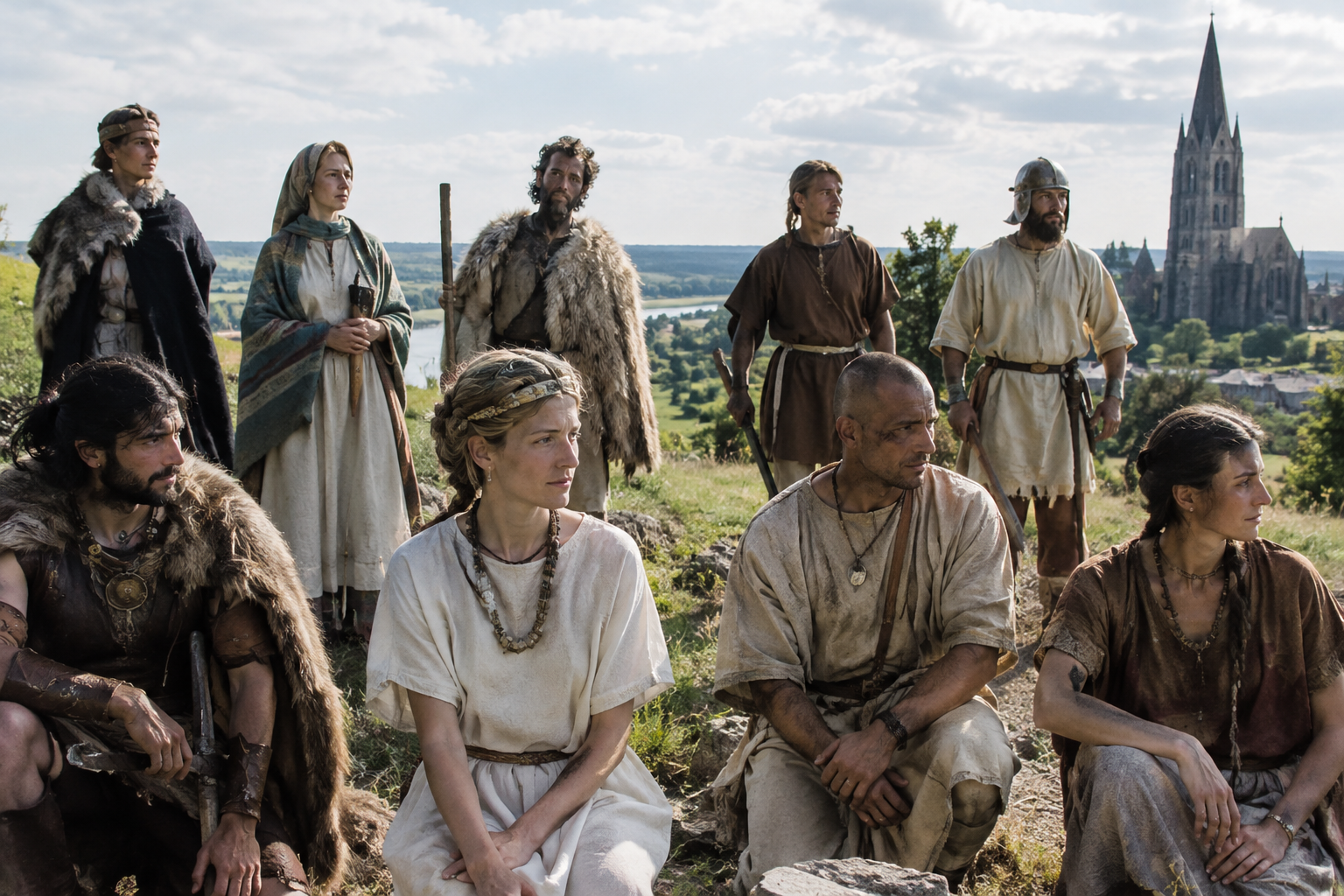
There is something wonderfully stubborn about a Y-chromosome lineage. Kingdoms collapse, languages spread, churches rise over older sacred ground, and yet a paternal line can still be glimpsed in a burial from Neolithic Italy, a tomb in northern Scotland, a kurgan in the Caucasus, and a medieval churchyard in Belgium. Haplogroup I2a1b1a2 belongs to that sort of story: not a single people, not a single kingdom, but a long and sometimes surprising record of male-line continuity and movement across Europe.
As ever with Y-DNA, a note of caution matters. A Y-haplogroup tracks only one narrow ancestral line: your direct paternal line, father to father to father. It does not represent your whole ancestry, and it certainly does not make someone simply "Celtic," "Roman," "Viking," or noble by itself. What it can do is offer a remarkable thread through time, especially when ancient DNA allows us to place that thread into real archaeological settings.
Haplogroup I is one of the old European branches of the Y-chromosome tree, and its many sub-branches have deep roots in the continent. Within that wider family, lineages related to I2 are often associated in broad terms with long-standing European paternal ancestry, though different downstream branches had very different histories. That matters here. We should be careful not to pour the whole history of haplogroup I, or even all of I2, straight into the narrower vessel of I2a1b1a2.
What the supplied ancient evidence does suggest is that this lineage, or very close branches around it, appears in a striking range of places and periods: early farming contexts in Alpine Italy, Neolithic and Bronze Age southeastern Europe, Neolithic northern Scotland, the Bronze Age Caucasus, Iron Age Denmark, and medieval Belgium. That is not the map of a single migration event. It is the map of a lineage that turns up repeatedly in communities shaped by farming expansion, local continuity, later Bronze Age transformations, and medieval settlement.
If you want a wider introduction to how these very old paternal lines are reconstructed from archaeological remains, MyTrueAncestry's overview of archaeogenetics is a useful companion.
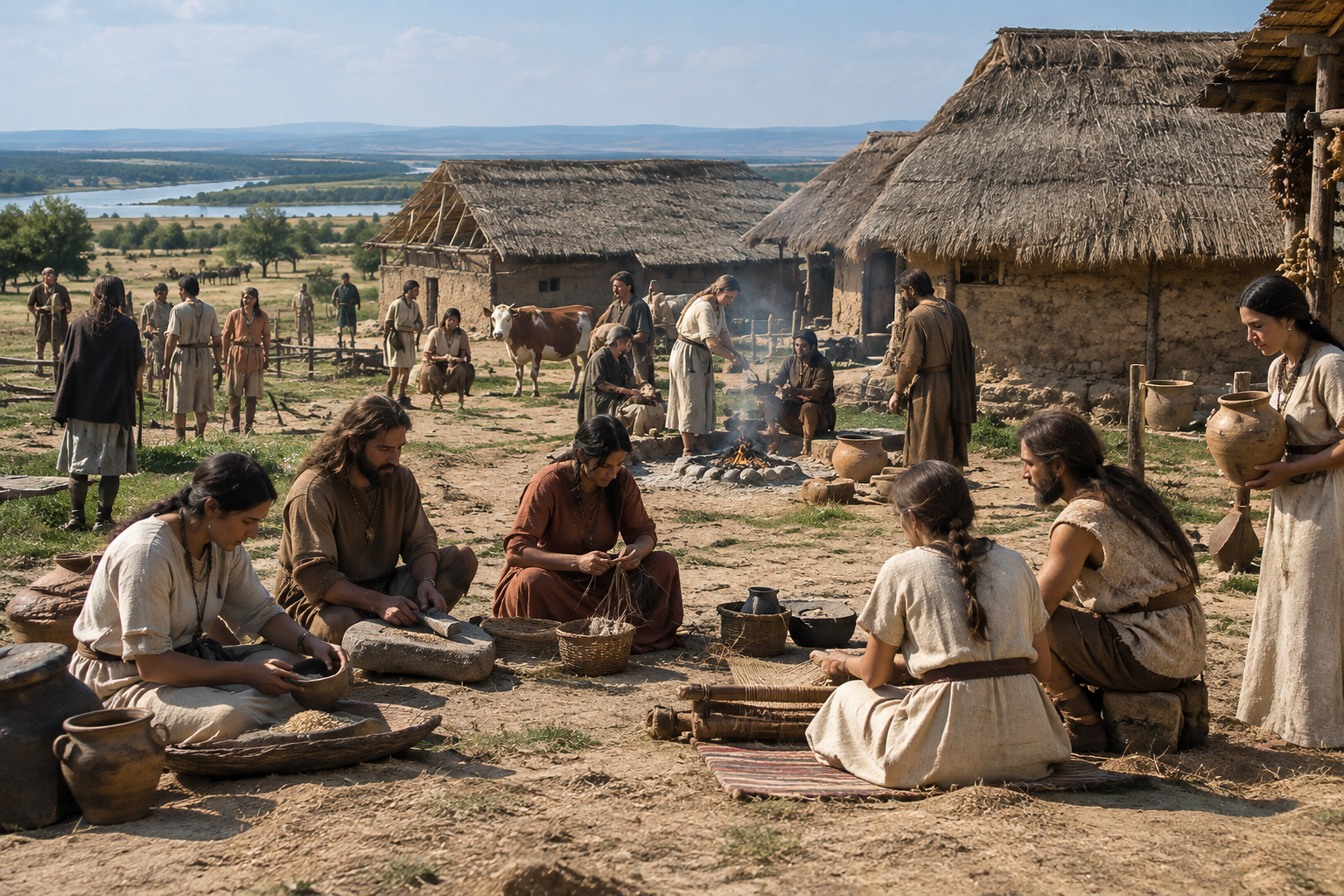
One of the most intriguing early appearances in the dataset is MAD01, from Neolithic Alpine Italy Madonna Bianca, dated to 6300 BC. This is very early indeed in the European Neolithic, a period when farming communities were establishing themselves across much of the continent. A sample like MAD01 does not prove that I2a1b1a2 was "the farmer haplogroup," which would be far too simplistic. But it does place this paternal line, or a lineage assigned within this branching framework, among some of the earliest agricultural populations in Europe.
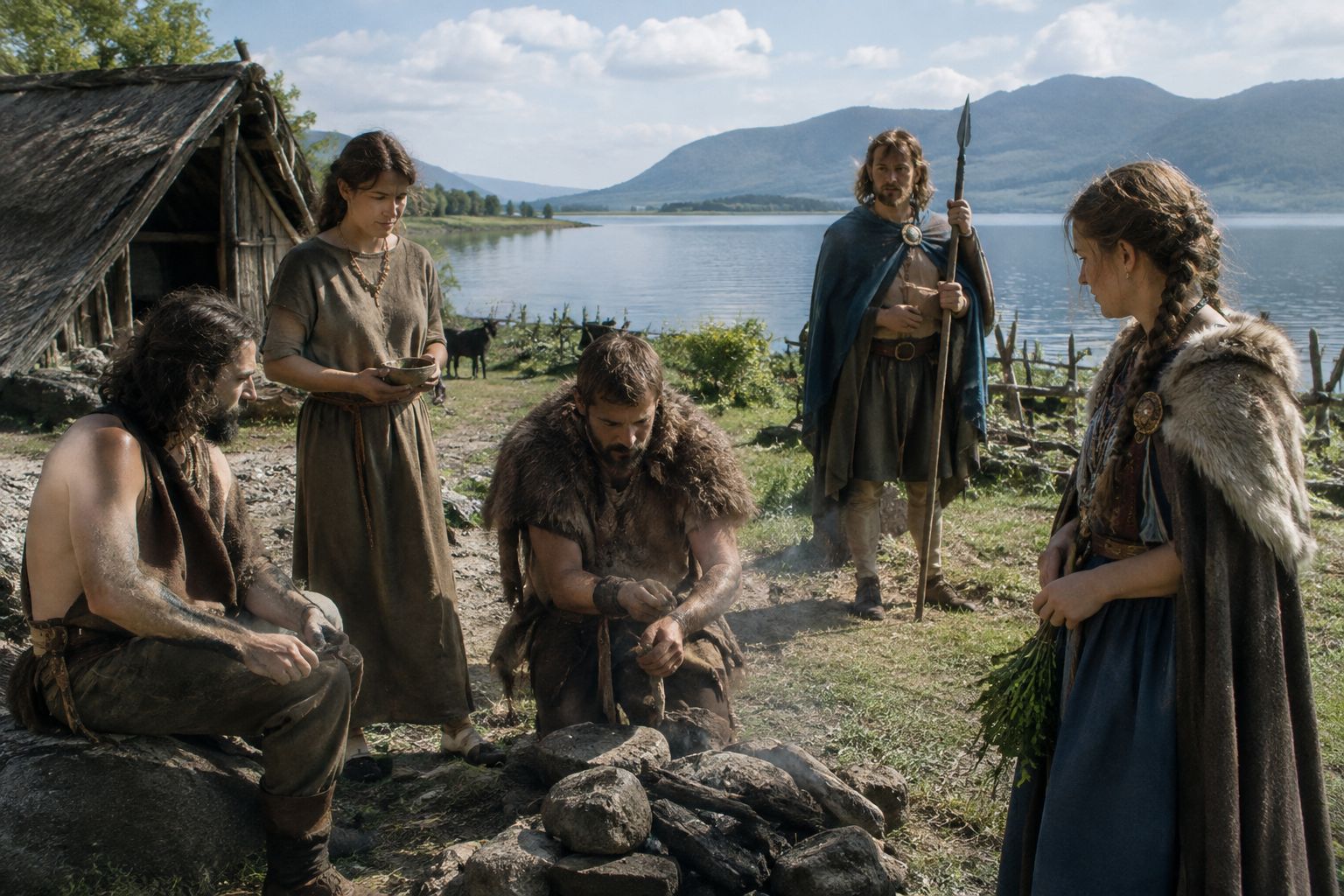
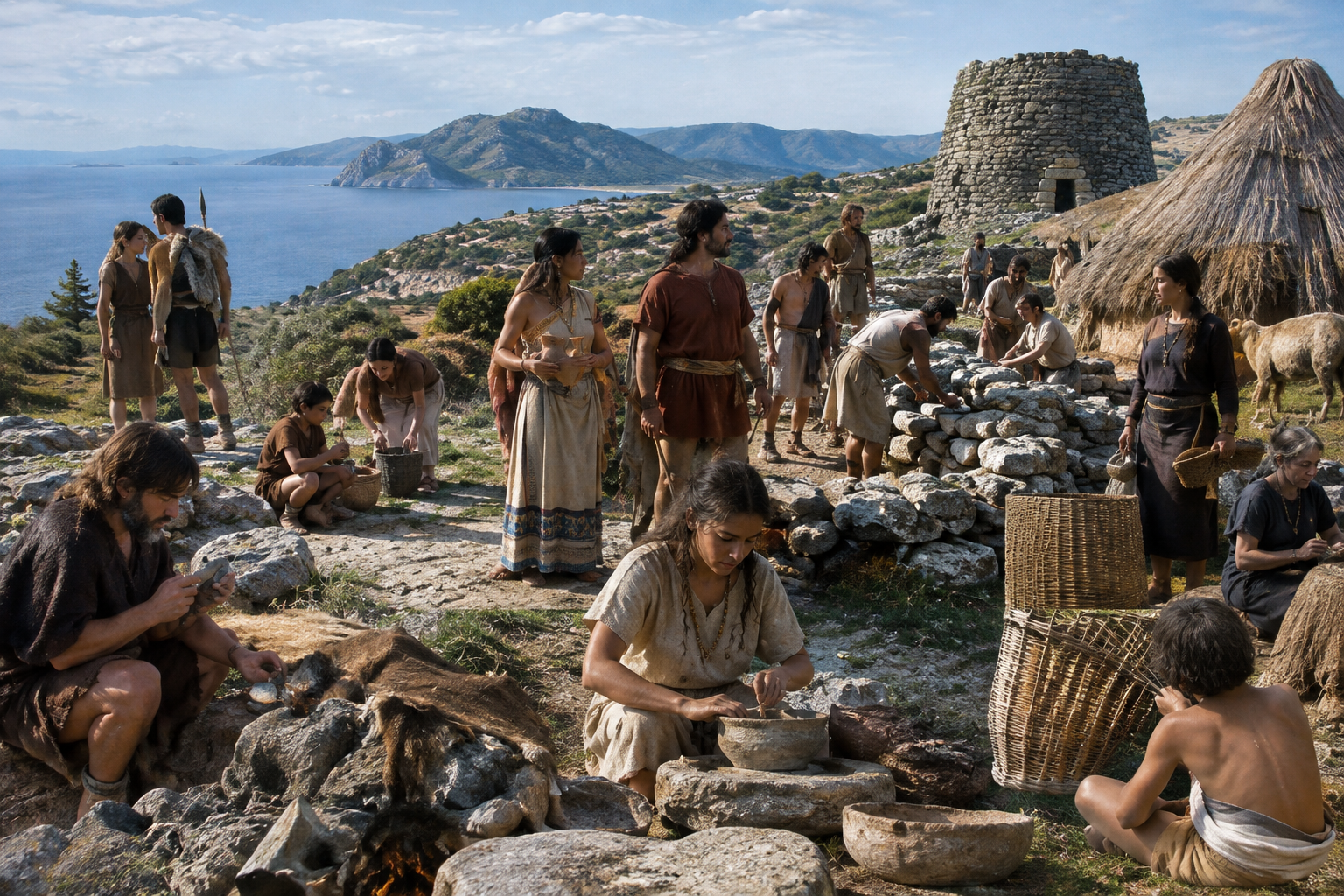
Then there is I36003 from Neolithic Holm of Papa Westray North Scotland, dated to 3193 BC. The setting could hardly be more different. We are no longer in the Alpine world of the first farmers, but in the islands of northern Scotland, among the monument-building communities of late Neolithic Orkney. That a related paternal branch appears here is a reminder that by the 4th millennium BC, male lines connected to I2-derived ancestry could be found in regions often treated as marginal, though they were anything but marginal in ceremonial ambition. Tombs, stone structures, and kin networks in the far north were part of the same human business of inheritance and belonging.
Readers interested in that Orcadian context should have a look at MyTrueAncestry's piece on Neolithic tomb kinship in northern Scotland.
Several of the strongest clues for the historical geography of this haplogroup come from southeastern Europe. I18113 from Urziceni Bodrogkeresztur Neolithic Romania, dated to 3700 BC, places the lineage within the Carpathian world of late Neolithic and Copper Age communities. This is a region central to discussions of prehistoric mobility, exchange, and cultural change. It is also a region where paternal continuity and turnover can both be detected depending on time and place.
By the Bronze Age, the branch appears again in Romania and Bulgaria. The samples I10480 from Bronze Age Romania Moneoru Culture Arman Carlomanesti and I10559 from Bronze Age Romania Carlomanesti Arman, both dated to 2000 BC, suggest that this paternal line persisted in the lower Danube-Carpathian zone into a new age of metallurgy, warfare, and shifting regional networks. Nearby in the Balkans, I19452 from Bronze Age Bulgaria Tell Kran Yasanovo, also dated to 2000 BC, shows the same wider pattern.
This does not mean one unbroken dynasty of fathers across all these sites. What it does show is that this lineage was present across communities from the Carpathians to the Balkans during a period when Europe was being reorganized socially and genetically. That makes southeastern Europe one of the most important landscapes for understanding the history of I2a1b1a2.
For a broader look at how deep regional ancestry in this zone fed into later populations, see the article on Balkan hunter-gatherers and their long afterlife in Europe.
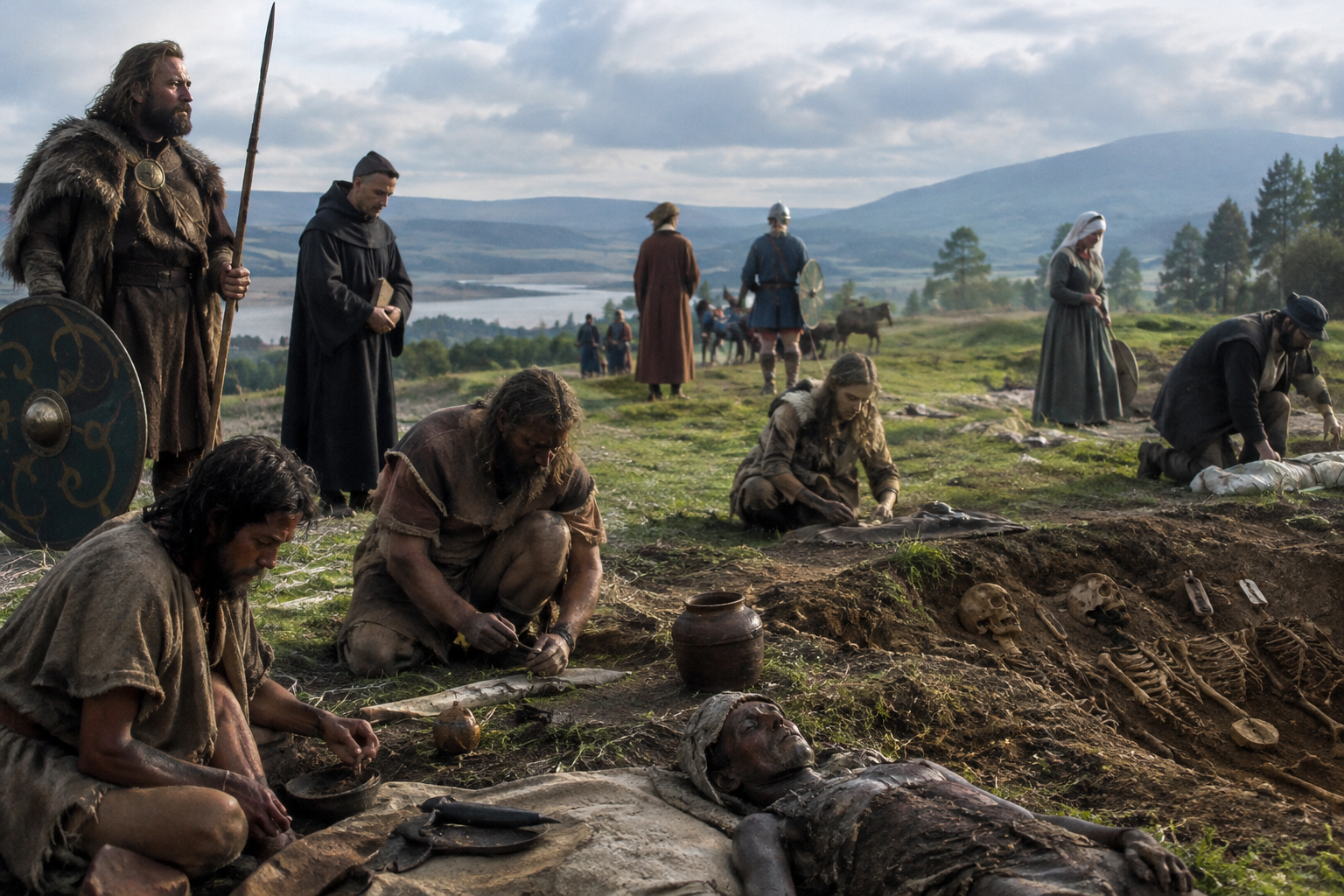
Ancient DNA becomes especially interesting when a lineage appears where one might not expect it. IV3008, from Middle Bronze Age Caucasus Kurgan Grave Ipatovo dated to 1950 BC, places this paternal branch in a kurgan burial context of the broader Caucasus-steppe contact zone. A kurgan grave always prompts historical curiosity: was this local continuity, a mobile elite, or the result of wider networks stretching between the steppe and settled regions to the south? The sample does not answer all that on its own, but it warns us not to imagine the lineage as confined neatly to one corner of Europe.
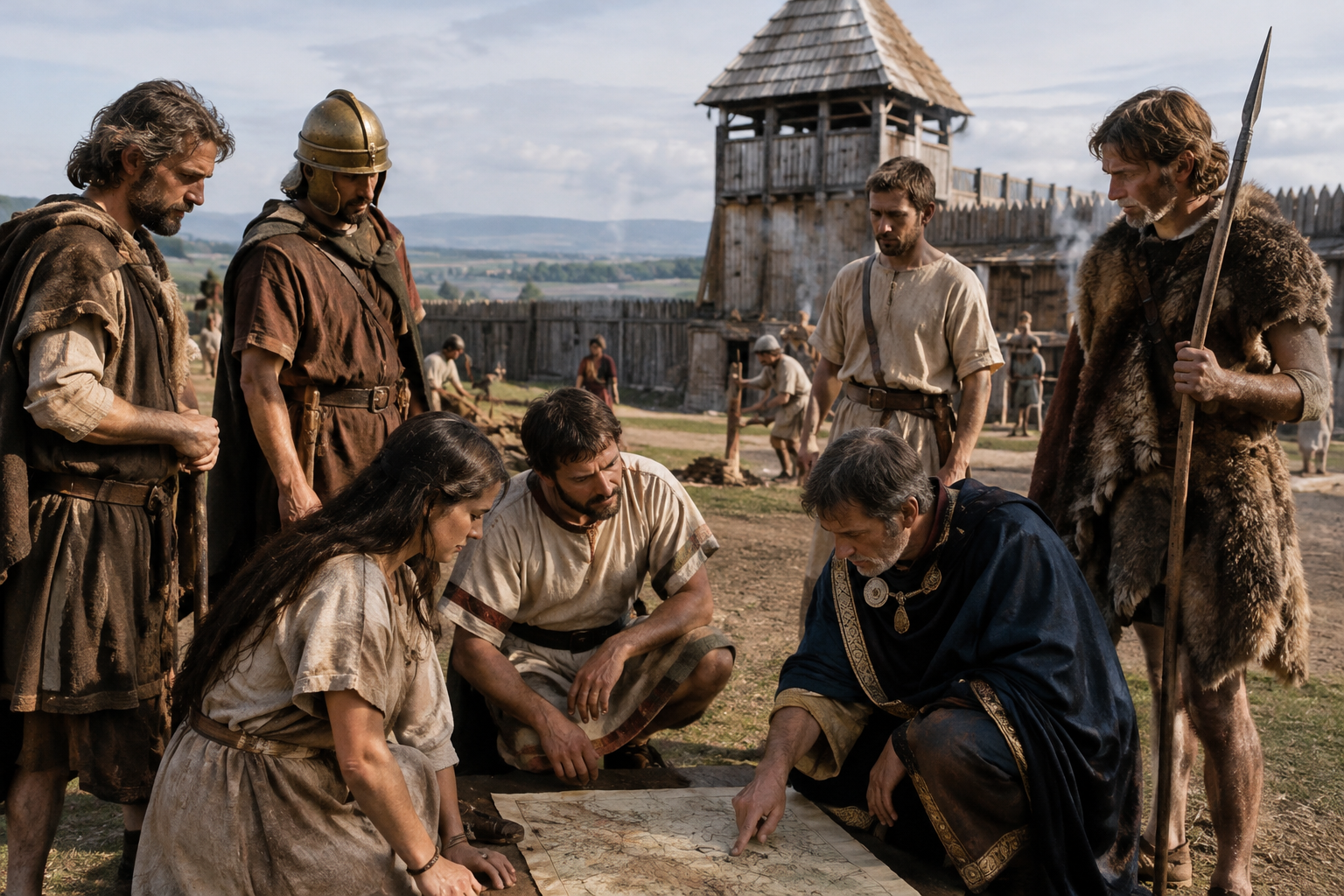
The same applies to CGG106811 from Iron Age Denmark Jutland Hamahus Outlier, dated to 175 AD. Even the label "outlier" is tantalizing. In Roman-era northern Europe, mobility could be subtle or dramatic: trade, military service, marriage, fosterage, migration. A paternal line turning up in Iron Age Jutland may reflect local persistence, arrival from elsewhere, or the mingling of populations that written history only partly captures.
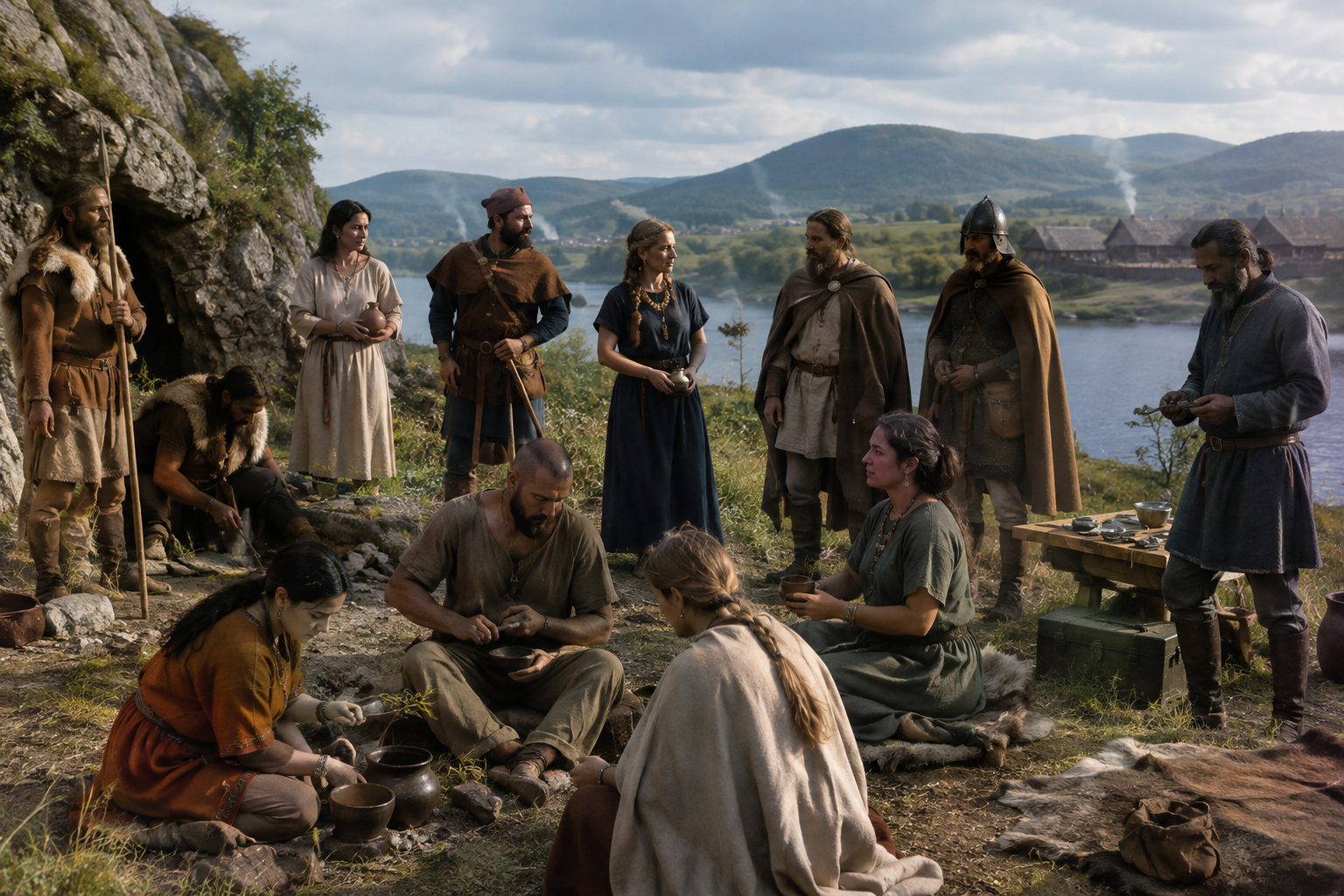
And then we move to the medieval world: ST2390 from Medieval Belgium Sint-Truiden Onze-Lieve-Vrouwekerk, dated to 900 AD. Here the lineage appears in a Christian burial setting in the Low Countries, a world of towns, monasteries, lordship, and emerging regional polities. By this point, the men carrying such a Y-lineage were not "prehistoric survivors" in any romantic sense. They were medieval people, living inside institutions, laws, churches, and inherited landscapes.
The Sint-Truiden setting is especially worth pursuing through MyTrueAncestry's article on medieval urbanization there, which shows how genetics can illuminate the making of a medieval town.
In this case, the supplied field for associated noble families and castles is empty. That is not a flaw. In fact, it is rather refreshing. Too often, ancient DNA is hustled too quickly toward castles, coats of arms, and fantasies of direct descent. Without explicit family data, the honest thing to say is that no specific noble house or castle can be responsibly linked here from the supplied evidence.
Still, the broader historical point remains important. By the time we meet a sample such as ST2390 in medieval Belgium, Europe was already a continent of dynasties, ecclesiastical lordship, fortified residences, and inherited territories. Any paternal lineage that survived into that world might later appear among peasants, townsmen, clergy, knights, or noblemen. A haplogroup alone cannot tell us which. It certainly cannot prove that a present-day tester descends from some medieval lord merely because both belong to a broad Y-chromosome branch.
That is one of the useful disciplines imposed by archaeogenetics. Written genealogy begins late, and unevenly. DNA reaches much further back, but often in broader strokes. The two forms of evidence are most powerful when used together, and least reliable when one is made to impersonate the other.
So what sort of story does I2a1b1a2 tell? Not a simple one. It appears in an early Neolithic individual from Alpine Italy, in late Neolithic northern Scotland, in Neolithic and Bronze Age Romania, Bronze Age Bulgaria, a Caucasus kurgan burial, Iron Age Denmark, and medieval Belgium. That spread suggests durability, movement, and adaptation across very different social worlds.
It also shows why Y-DNA is so compelling. A narrow paternal marker can sometimes illuminate enormous historical questions: how farming communities spread, how regional lineages endured through the Bronze Age, how mobile the Iron Age really was, and how medieval populations were assembled from much older ingredients. But the best use of such evidence is careful rather than grandiose. Shared haplogroup does not equal close kinship. Ancient similarity is not proof of named descent. What we gain instead is context, depth, and a firmer sense that our family histories sit inside a far older human past.
If your own Y-DNA falls within I2 or nearby branches, MyTrueAncestry can help place that result beside real archaeological individuals like MAD01, I36003, IV3008, or ST2390. The match will not make you a direct descendant of any one ancient man, nor a member of a medieval dynasty by magic. But it may give you something arguably better: a historically grounded glimpse of where your paternal line fits in the long human story.
Upload your DNA to MyTrueAncestry and explore whether your results reveal connections to ancient populations, archaeological cultures, and the buried individuals who help bring haplogroups like I2a1b1a2 to life.
Comments