Neolithic Tomb Kinship in Northern Scotland
– 4 min read


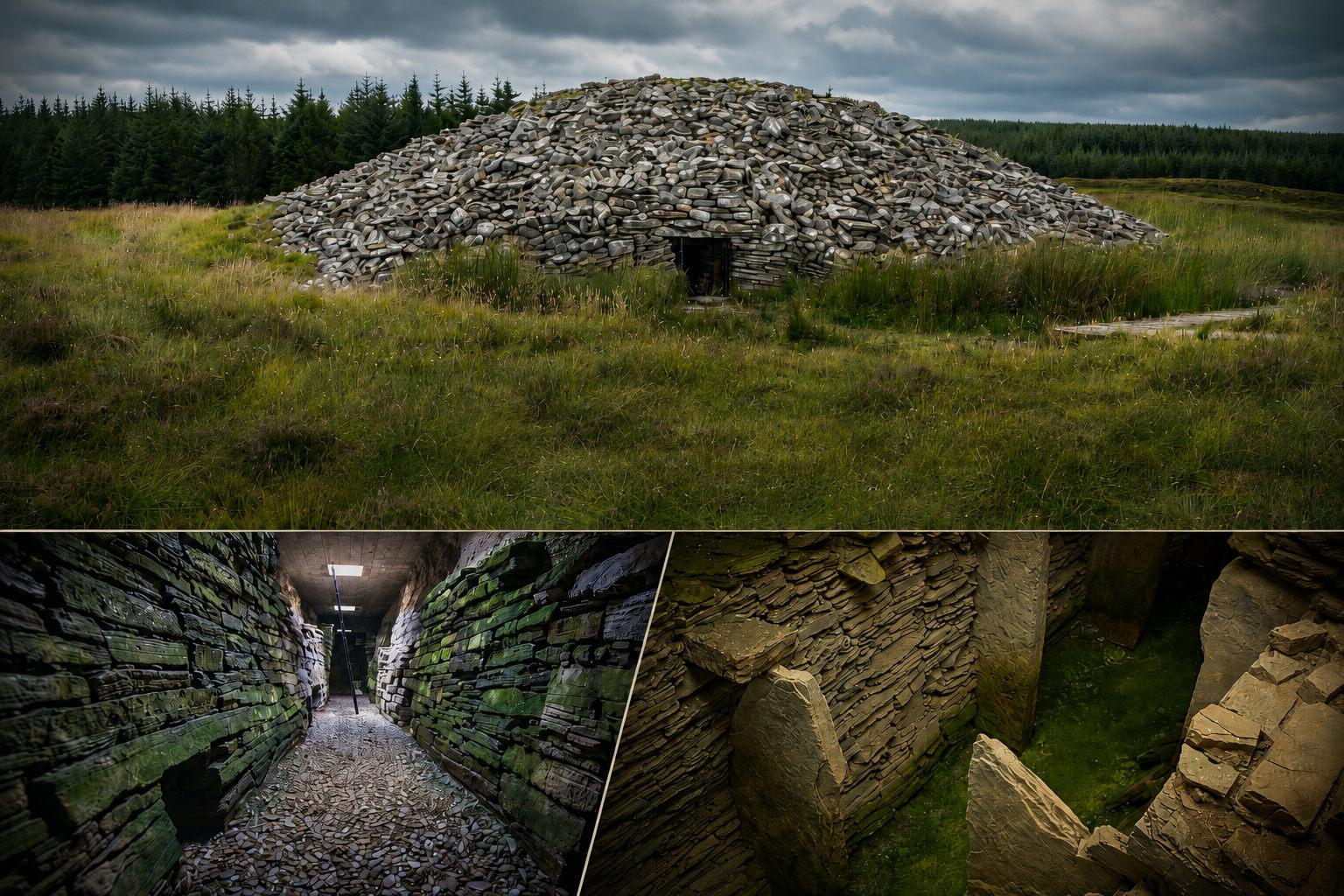
Along Scotland's northern edge, early farming communities built remarkable stone tombs in Caithness and Orkney. These carefully constructed monuments featured dry-stone walls, arranged chambers and piled cairns. More than containers for bodies, they were places where ancestry and belonging were physically built into the landscape.
Around Loch Calder, three tombs stood close enough to see each other: Tulloch of Assery A, Tulloch of Assery B and Tulach an t-Sionnaich. Each shared a common building tradition yet maintained its own personality — one chamber, two opposing chambers, three divided parts. The builders were announcing both connection and distinction: we belong to this wider world, but we are our own group.
Rattar East on the coast looked directly toward Orkney across the Pentland Firth. That sea was no barrier — it was a route of movement and kinship. Across the water, Holm of Papa Westray North grew from a modest single chamber into an elaborate stalled cairn, its physical expansion almost thrilling to imagine. A community did not simply inherit a tomb; it reworked it, making old monuments speak to new generations.
Excavation revealed not neat skeletons but broken, partial and mixed remains — arms, skulls, vertebrae — deliberately arranged on stone benches and in compartments. At Tulloch of Assery A, at least six people including children were present, with one group of bones coated in clay, suggesting careful handling before placement. Death was not a single event followed by silence; it was followed by repeated ritual attention.
Tulloch of Assery B produced one electrifying detail: a leaf-shaped arrowhead still embedded in an adult's vertebra. Someone had been shot, and the arrowhead remained lodged in the spine. The chamber also held a neonate and teenager, with some bones burnt while already dry — signs of later action performed on old remains.
Tulach an t-Sionnaich mixed human remains with animal bones, shells, pottery and flint. At least seven people were represented, including an infant showing signs of scurvy — a poignant glimpse of frailty cutting through the grandeur of monuments, reminding us these were ordinary communities facing hunger, illness and grief.
At Holm of Papa Westray North, at least fourteen individuals were identified, with remains concentrated in compartments three to five. Bones and stone chambers together formed a memory structure, repeatedly reworked across generations.
Modern DNA analysis transformed the picture entirely. What appeared as scattered bone deposits became networks of fathers, sons and brothers. At Tulloch of Assery A, three adult males formed a father-son-grandson line — three generations assembled on the same stone bench. A male from neighbouring Tulach an t-Sionnaich was also related to two of those men, meaning kinship stretched across neighbouring tombs. The landscape itself became a map of descent.
At Rattar East, two brothers were buried together — a wonderfully direct human connection across millennia. At Holm of Papa Westray North, a father, son and paternal uncle were identified, yet several women buried there had closer biological ties to men in the Caithness mainland tombs than to anyone local. Women appear to have been central to linking communities across the Pentland Firth, moving between groups and maintaining bonds over generations.
The pattern is striking: fathers and sons recur, brothers recur, longer male lines can be traced — but no mother-daughter or sister pairs appear. This suggests male descent was being deliberately emphasised in burial practice. Even so, the women who crossed the water were essential to the broader social web. Some individuals across separate tombs shared fourth- or fifth-degree links, pointing to a small, interwoven population maintaining ties across generations.
The Loch Calder cluster — three tombs within two hundred metres, all intervisible — represents a social conversation carried out in architecture. Building near existing monuments was a claim: placing a new group into a pre-existing ancestral history while still asserting local identity. The result is prehistoric dialogue in stone.
The sea crossing extended that dialogue. Shared building techniques appeared on both sides of the Pentland Firth, yet local patterns diverged revealingly. In Caithness, tombs clustered tightly together. In Orkney, they dispersed across a wider landscape alongside stone houses, spreading identity across both domestic and funerary spaces. Same tradition, different expressions.
These communities were among the earliest farmers of the far north, investing extraordinary labour in stone monuments while adapting agriculture to demanding landscapes. That investment reveals how crucial ancestry and community identity had become. They were not merely surviving — they were constructing elaborate social histories in stone.
These monuments actively created social relationships rather than simply reflecting them. A tomb was a machine for memory: it took stones, labour and bones and fused them into a durable statement — these people belong together. The father-son-grandson line at Tulloch of Assery A, drawn together on stone benches across years of separate deaths, made three generations into one visible, enduring tableau.
Every modification — enlarging a cairn, adding compartments, rearranging bones — was a negotiation between old and new generations. Holm of Papa Westray North's builders did not sweep away the earlier tomb; they reworked it, folding earlier memory into a new form. The old structure remained meaningful, and building onto it honoured that meaning.
Burial practice is selective performance, not a perfect mirror of society. These tombs show what mattered enough to monumentalise. Male descent lines appear repeatedly, but female connections — especially those crossing the water — shaped the broader social world just as profoundly. The divergence between clustered Caithness tombs and dispersed Orcadian ones represents some of the earliest evidence of distinct local histories developing on either side of the Firth.
What makes these sites so captivating is their combination of the grand and the intimate: major prehistoric structures that are simultaneously about specific individuals — a man with an arrowhead in his spine, an infant showing signs of illness, two brothers on a coastal shore, three generations in one chamber. The stone cairns of northern Scotland turned ancestry into architecture, made kinship durable, and left behind one of Britain's most compelling records of how early communities imagined who they were and to whom they belonged.
 Vicki Cummings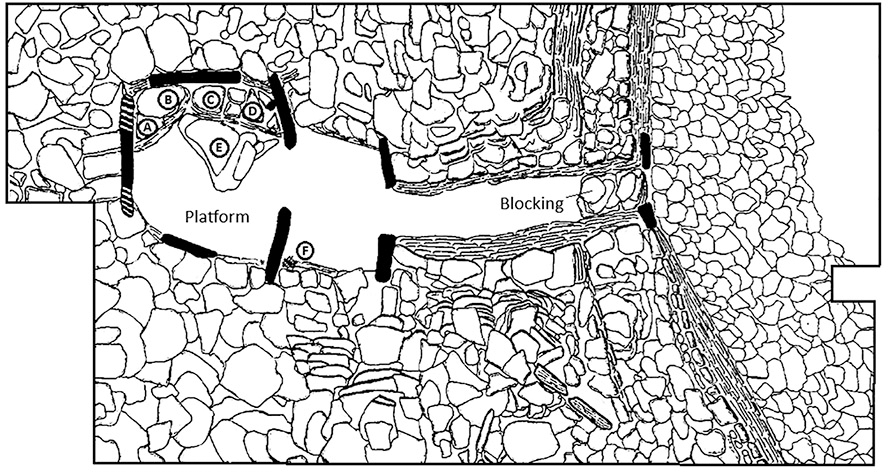
Comments