Bronze Age Reuse of Neolithic Tombs in Southwestern Britain
– 4 min read


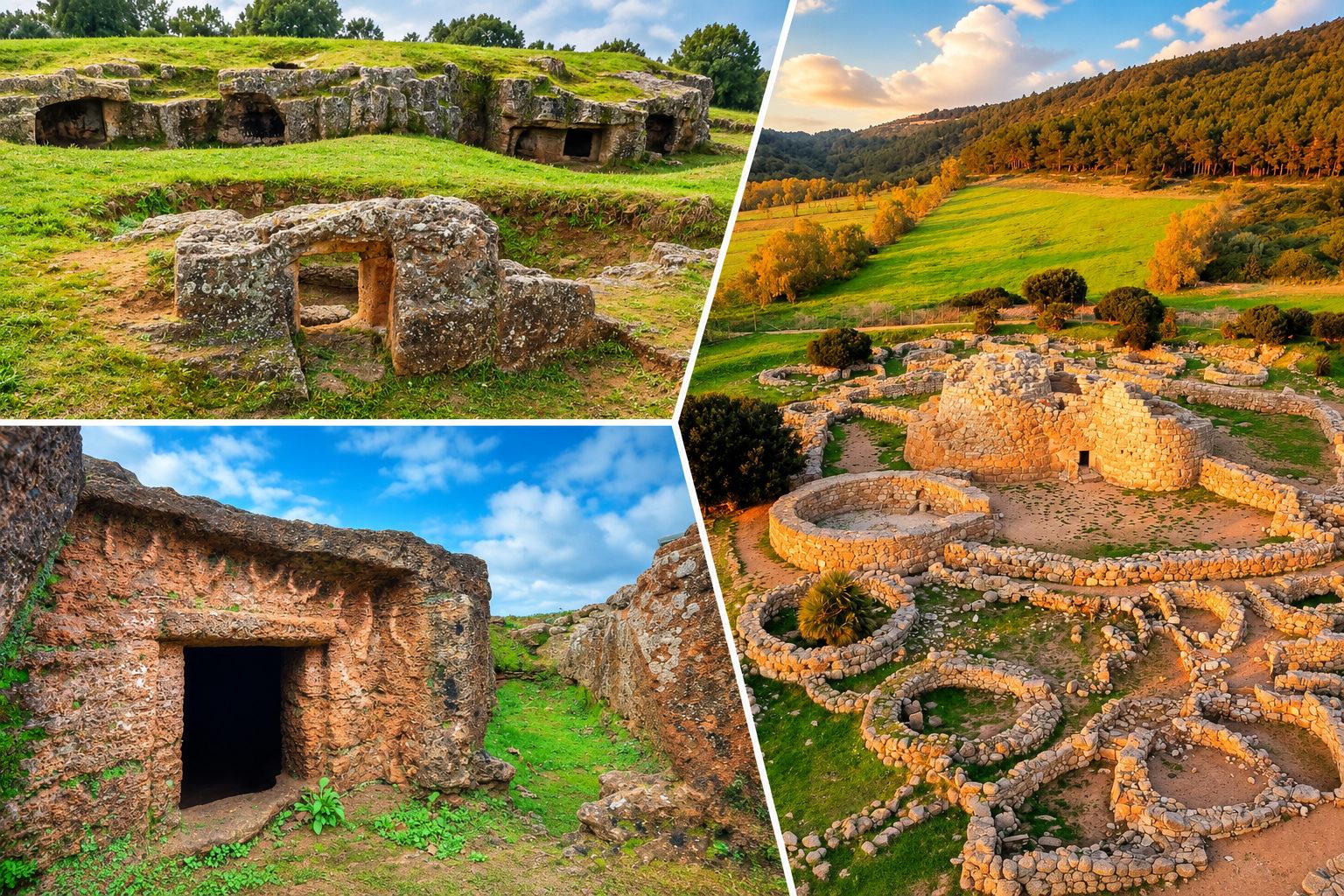
Southwestern Britain in later prehistory was already crowded with monuments and memories made powerful by vanished generations. Across Dorset and Gloucestershire, great burial mounds had been raised by the first farming communities centuries before metal arrived. These long barrows were bold statements in earth and stone, visible from far away, gathering the dead, the living, and the land into a single enduring claim.
Then a new population arrived, connected with Bell Beaker culture. This was not simply a matter of new pots or fresh styles. It involved a substantial change in ancestry detectable in buried bones. After around 2550 BCE, people carried ancestry tied to movements spreading westward from the eastern steppes. Yet the landscape remained the same, and some later Bronze Age dead were laid to rest in monuments already ancient by over a thousand years.
At Sale's Lot Long Barrow, Sisters Long Barrow, and Monkton-up-Wimborne, later burials were inserted into Neolithic monuments. The striking point is that these later burials belonged to people who were not close biological descendants of the original builders. The old tombs had survived their makers and acquired a second life in the rituals of others, serving perhaps as claims to legitimacy, ways for newcomers to root themselves in unfamiliar country by attaching themselves to powerful places.
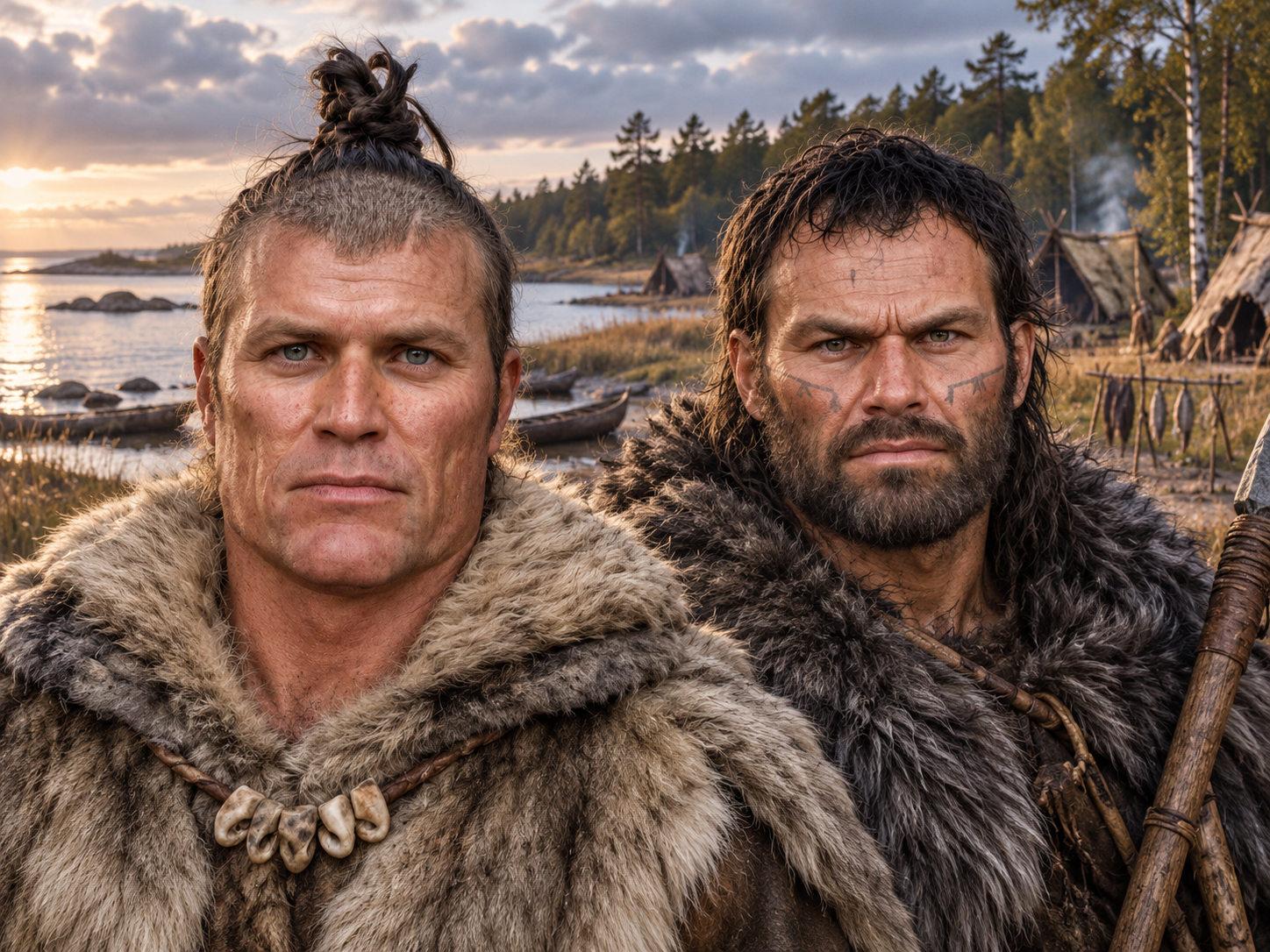
Before the great population shift, southwestern Britain belonged to the world of the first farmers, who arrived around 4000 BCE bringing domesticated animals, cultivated crops, and new ways of shaping the land. Their long barrows were carefully built collective monuments used to receive selected individuals, marking territory and gathering communities around ancestry and the proper treatment of the dead.
Most moving of all is Monkton-up-Wimborne, where four individuals were placed in a single oval grave during the middle Neolithic. Genetic analysis reveals one adult female and three children sharing the same maternal line, with two clear sibling relationships. Instead of a vague burial assemblage, one is suddenly looking at a family — a mother and children, or brothers and sisters — carefully sealed beneath chalk rubble in a formal ritual enclosure thirty-five metres across.
By around 3500 BCE, collective burial traditions in long barrows had largely ceased. Yet the mounds still stood, fixing memory into the land and continuing to shape the social imagination of later peoples who encountered them as ancient and authoritative places.
Between roughly 3100 and 2550 BCE, southwestern Britain changed in a way that was both cultural and biological. Human remains show a clear divide: those buried before belong to the earlier farming population, while those buried after resemble populations associated with Bell Beaker culture. The shift is startlingly sharp, representing one of the clearest prehistoric population changes ever identified in Britain.
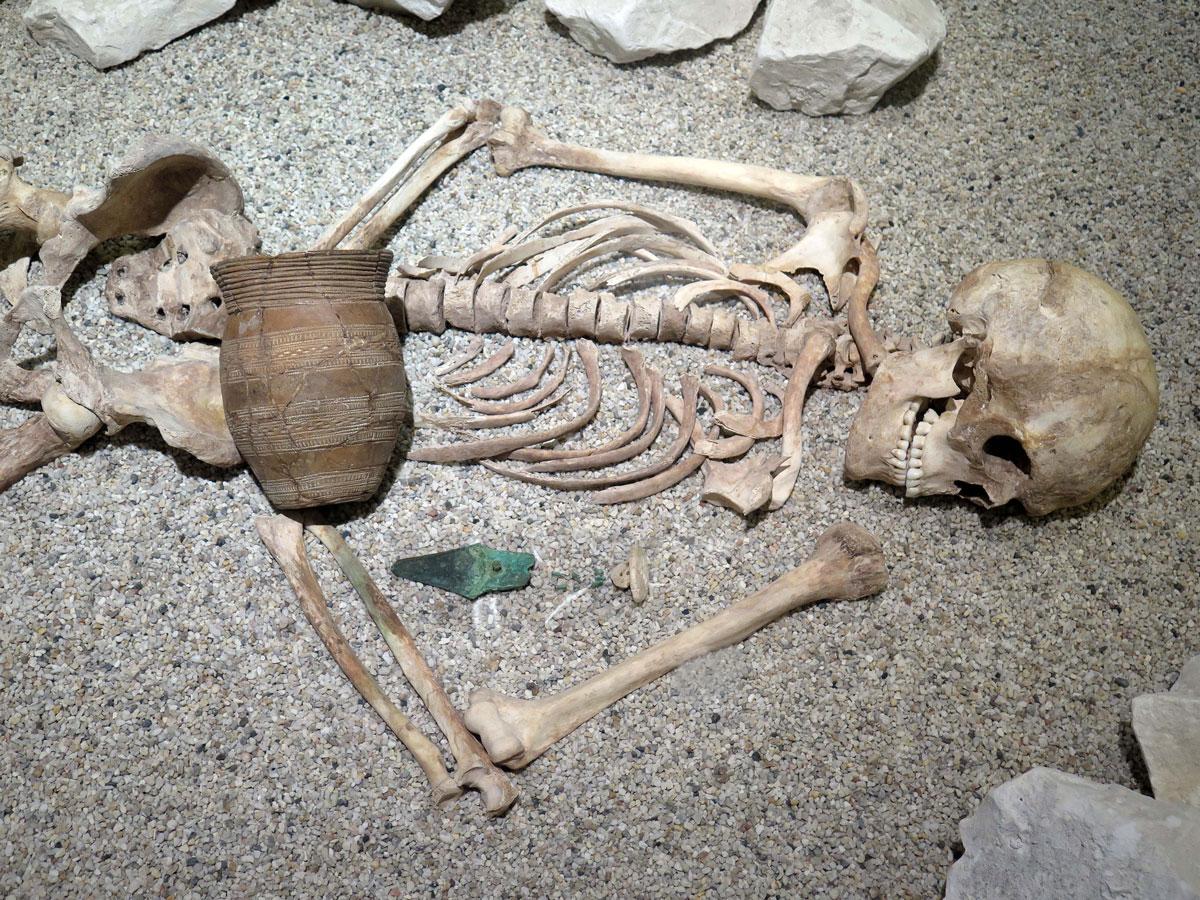
One of the most compelling figures is the woman buried at Sale's Lot Long Barrow, dated to around 2622 to 2467 BCE, accompanied by a beaker and a fragment of copper. She carried the ancestry of the newcomer population yet was inserted into the core of a Neolithic long barrow already ancient beyond living memory. She may even have been a first-generation immigrant, laid finally to rest in a monument old when her grandparents' grandparents were alive.
Evidence from Canada Farm in Dorset suggests bodies could be preserved and moved before final burial, giving the dead long biographies after death. If the Sale's Lot woman was similarly curated, her story becomes extraordinary: a newcomer who continued to matter physically to her community before being placed with carefully chosen prestige objects into an ancient tomb.
At Monkton-up-Wimborne, more than fifteen centuries after the Neolithic family was sealed beneath chalk rubble, the same monument was reopened for a single Bronze Age man. He belonged genetically to the Bell Beaker-descended world that had transformed Britain long after the original grave was closed. Placed centrally within the old feature and capped by a small flint cairn, his burial was a deliberate choice. Someone in the later second millennium BCE decided this ancient place remained the right setting for the dead.
Sisters Long Barrow tells a parallel story. After a complex Neolithic burial history involving multiple males and disarticulated remains, a young adult female was buried some two thousand years later in a grave cut into the top of the mound. She was not hidden in a new cemetery but inserted into the visible body of the ancient barrow itself, suggesting clear and purposeful selection of a place that still carried power.
These sites reveal that continuity of ritual place does not require continuity of population. People can adopt ancient sites for symbolic, political, or emotional reasons. Reusing a long barrow may have declared belonging, honoured the past, or simply placed the distinguished dead in settings worthy of them. The monuments were never merely inherited or replaced — they were argued with, reimagined, and filled again with the dead across broken time.
The graves of southwestern Britain contain women and men, children and adults, carefully chosen resting places, and objects placed with intent. The beaker and copper fragment buried with the Sale's Lot woman combined new forms of prestige with old monumental authority. Metal at this stage carried novelty and connection to wide exchange networks, making such a burial a powerful statement at the meeting point of two worlds.
Beneath all this lies a larger insight. A beaker, a copper fragment, a log coffin, a flint cairn, a carefully cut grave in the body of an ancient mound: these are acts of meaning. They show communities deciding how the dead should appear, what histories they should be folded into, and how memory should be anchored in material form. The prehistoric dead of southwestern Britain emerge not as mute data points but as striking individuals whose stories remind us that archaeology is never only about structures or ancestry. It is also about bodies, objects, gestures, and the stubborn human wish to make death meaningful.
 Nikola Vuković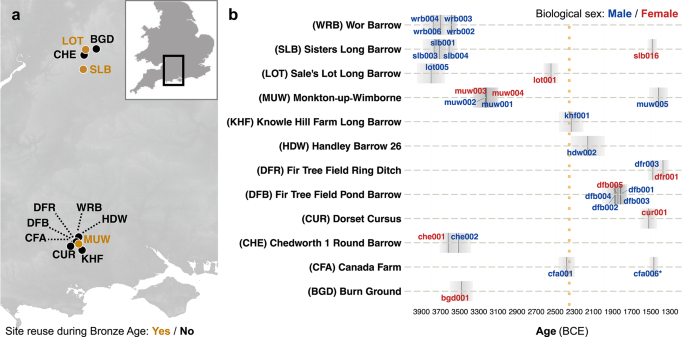
Comments