Kinship, Tomb-Building and Community Connections in Neolithic Northern Scotland
– 6 min read


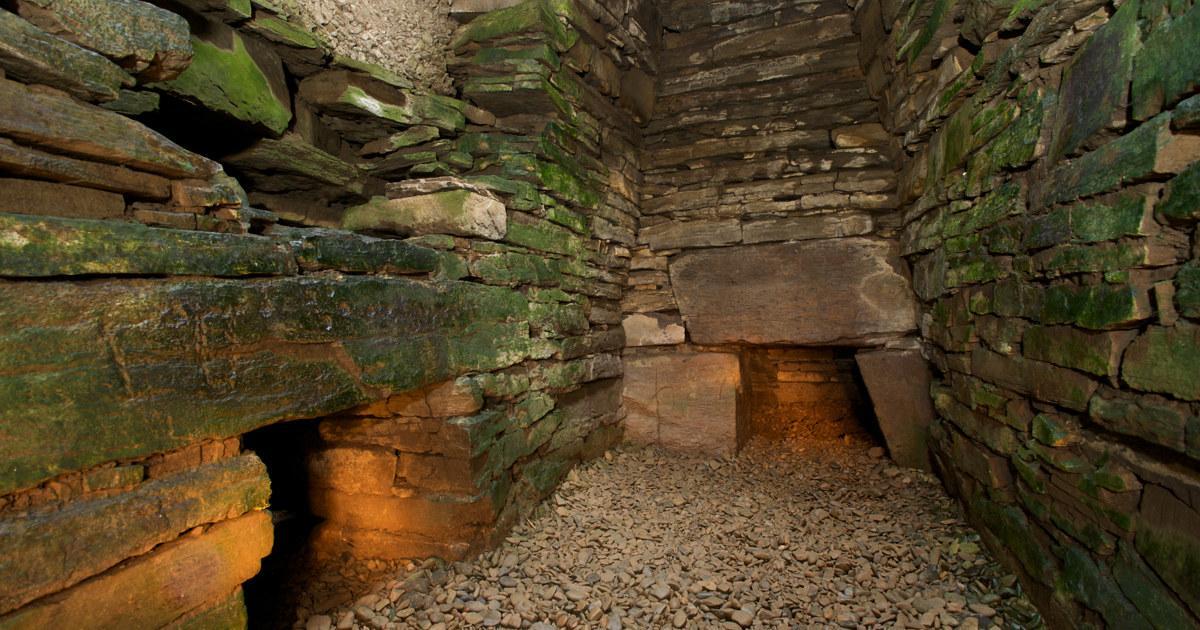
The stone-built world of Early Neolithic northern Scotland reveals a remarkable tradition where the dead were laid to rest in long, low cairns that functioned almost like ancestral houses. These stalled cairns of Caithness and Orkney represent chambered tombs featuring stone "stalls" arranged like cattle pens, where human bones were carefully placed, moved, and rearranged across generations.
Behind every ancient burial site or artifact lies a human story — one that might, unexpectedly, connect to yours. Discovering that connection can be as simple as uploading your DNA at www.mytrueancestry.com.
Neolithic communities in northern Scotland followed a shared architectural template for their chambered tombs. Builders constructed cairns of stone containing long central chambers built with precise dry-stone walling. Perpendicular to these central spaces, they positioned upright slabs forming sequences of stone "stalls" resembling stable bays. These stalls varied from as few as two to more than a dozen, exemplified by the famous Midhowe tomb on Rousay.
These monuments developed through multiple construction phases rather than single building episodes. Some began as modest box-like tombs before later enlargement and reshaping. At Holm of Papa Westray North, what started as a small single chamber within a round cairn eventually became an impressive four-stalled cairn. Sites like Point of Cott and Tresness on Orkney demonstrate repeated rebuilding and expansion, suggesting each generation sought to rework the ancestral stage where the dead were displayed.
Around Loch Calder in Caithness, the stalled cairn tradition appears with markedly varied architectural layouts between tombs. Each structure echoed shared stylistic elements while simultaneously announcing the distinctive identity of its builders.
Three chambered tombs cluster around Loch Calder in Caithness: Tulloch of Assery A, featuring paired chambers with multiple stalls; Tulloch of Assery B, displaying a tripartite design with three distinct compartments; and Tulach an t-Sionnaich, containing a single elongated chamber. These intervisible monuments, with two located barely thirty metres apart, demonstrate strikingly different internal designs despite belonging to the same architectural tradition. All feature dry-stone interior walls, upright slabs forming internal stalls, and stone benches for body placement. This cluster represents communities expressing both mutual affinity and distinct identities through stone architecture.
Excavations revealed not neat skeletal arrangements but disarticulated and fragmentary bones spread across benches and floor surfaces. At Tulloch of Assery A's north chamber, bone deposits were organized into groups across stone benches and flagstones, sometimes semi-articulated, sometimes clearly rearranged. Clay coating on some bones suggests deliberate handling and preparation of remains. Osteological analysis identified at least six individuals, including three subadults aged approximately 5-7, 10-11, and 14-16 years.
Ancient DNA analysis reveals remarkable family connections. Among the adults, three males form a clear lineage: a father, his son, and his grandson, their bones eventually placed together on the benches. Each generation appears to have been added sequentially, with remains later gathered to display three successive generations sharing the same stone resting place. This arrangement transcends practical considerations, suggesting the living remembered relationships and used the tomb to construct visible chains of descent.
Tulloch of Assery B contained at least four individuals: two adults, a neonate, and a 14-16 year-old. Notably, one adult had a leaf-shaped flint arrowhead embedded in a vertebra, carrying evidence of violence into eternity. Ancient DNA increased the count to three males and two females, with some bones showing post-drying burning. A later male individual dating to the second millennium BC represents a post-Neolithic intrusion, demonstrating these cairns retained significance long after their original builders disappeared.
Tulach an t-Sionnaich produced highly fragmented human bones intermixed with animal remains and shell. The human fragments represented at least seven people: three adults including one woman, a child, an infant, and a neonate showing signs of scurvy. Additional materials included flint, pitchstone, pottery, and later dog remains, indicating repeated visitation and layered deposits over time. One adult male proved closely related to men in neighboring Tulloch of Assery A, binding the monuments through kinship networks.
Rattar East, positioned on the Caithness coast overlooking the Pentland Firth toward Orkney, yielded limited but powerful evidence: six skulls, five adult and one child. Despite this restricted assemblage, DNA analysis revealed two adult brothers resting together, providing another glimpse of close biological relatives united in death within the stalled cairn tradition.
Across the Pentland Firth on Papa Westray, Holm of Papa Westray North began as a small box-like chamber before expansion into a four-stalled monument. Excavations revealed disarticulated but well-represented bones from at least fourteen individuals: eight adults, two older teenagers, and four younger children. The presence of complete skeletal elements suggests bodies decayed in situ before internal movement rather than selective importation from elsewhere.
Ancient DNA analysis uncovered striking relationships including a father-son pair and their maternal relative, either uncle or half-brother. Two women at this site stand out for their fourth to fifth-degree relationships with males at Tulach an t-Sionnaich and Tulloch of Assery B, despite lacking close relationships to the father-son pair in their own cairn. These women likely served as crucial connectors between communities across the Pentland Firth, their Orcadian burials preserving mainland kinship ties.
Combining radiocarbon dating with genetic data reveals the stalled cairn tradition's remarkable longevity. The main construction and use period spans approximately 3800-3300 BC, but evidence demonstrates continued significance for centuries afterward. Tombs experienced revisitation across generations, architectural alterations, and occasional reactivation, as shown by Bronze Age burial at Tulloch of Assery B and Beaker pottery at Tulach an t-Sionnaich.
The tradition represents more than mortuary practice; it constitutes social technology. Builders made statements about relationships and group identity through architectural choices. In Caithness, communities deliberately built intervisible tomb clusters while placing close male relatives including fathers, sons, grandsons, and brothers across multiple cairns. When males at Tulach an t-Sionnaich prove related to men at Tulloch of Assery A, architecture and DNA tell unified stories of interwoven local descent landscapes.
Orkney presents subtly different patterns. Stalled cairns appear early alongside stone-built houses using similar construction techniques. Unlike Caithness, tombs and houses remain more dispersed rather than tightly clustered. Dry-stone architecture housed both living and dead with different spatial relationship choices.
Both regions employed the stalled cairn as shared stone language. Building recognizable tomb styles signaled affinity with earlier builders and neighboring groups. Constructing stalled cairns placed communities within larger narratives of farming traditions, stone-building expertise, and networks of remembered dead.
Beyond broad patterns emerge vivid individual figures: the three-generation male line at Tulloch of Assery A demonstrating patrilineal memory preservation; two brothers at Rattar East overlooking the Pentland Firth, positioning family groups within maritime networks; the man with embedded arrowhead at Tulloch of Assery B, carrying violence traces into death; women at Holm of Papa Westray North maintaining cross-water family connections through their burials far from closest male relatives; and the Bronze Age man at Tulloch of Assery B representing later population intrusion into ancient monuments.
Through these individuals and their stone houses, Neolithic people in Caithness and Orkney used stalled cairn architecture not merely for burial but to build ancestry, maintain cross-water ties, and establish shared belonging. The cairns appear today as low, turf-covered mounds, but their interiors once hosted remembered names, stories, and careful bone movements between stalls. These monuments demonstrate how Early Neolithic communities employed stone architecture to materialize kinship networks, express group identity, and maintain social connections across both time and the challenging waters of the Pentland Firth, creating lasting frameworks of family, ancestry, and affinity that continue shaping these northern Scottish landscapes.
 Vicki Cummings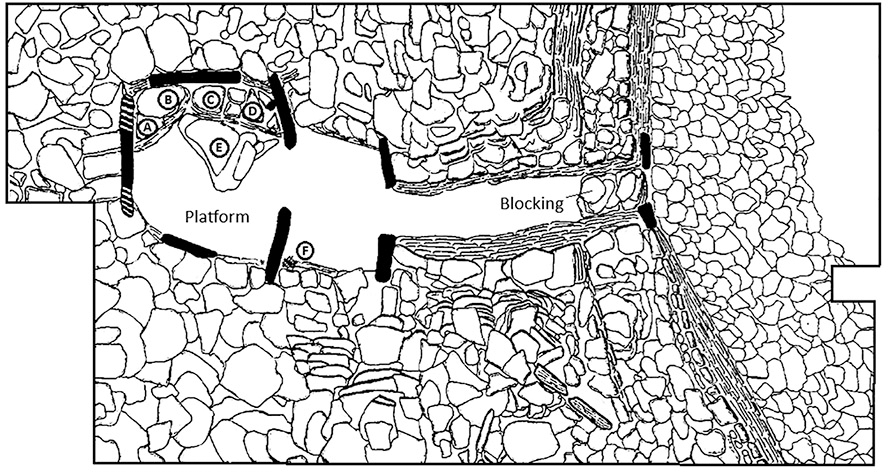
Discover how your DNA connects to ancient civilizations at www.mytrueancestry.com.
Comments