Ancient DNA Reveals 4,000 Years of Population Shifts at the Ningxia Crossroads Between Steppe and Yellow River China

– 5 min read


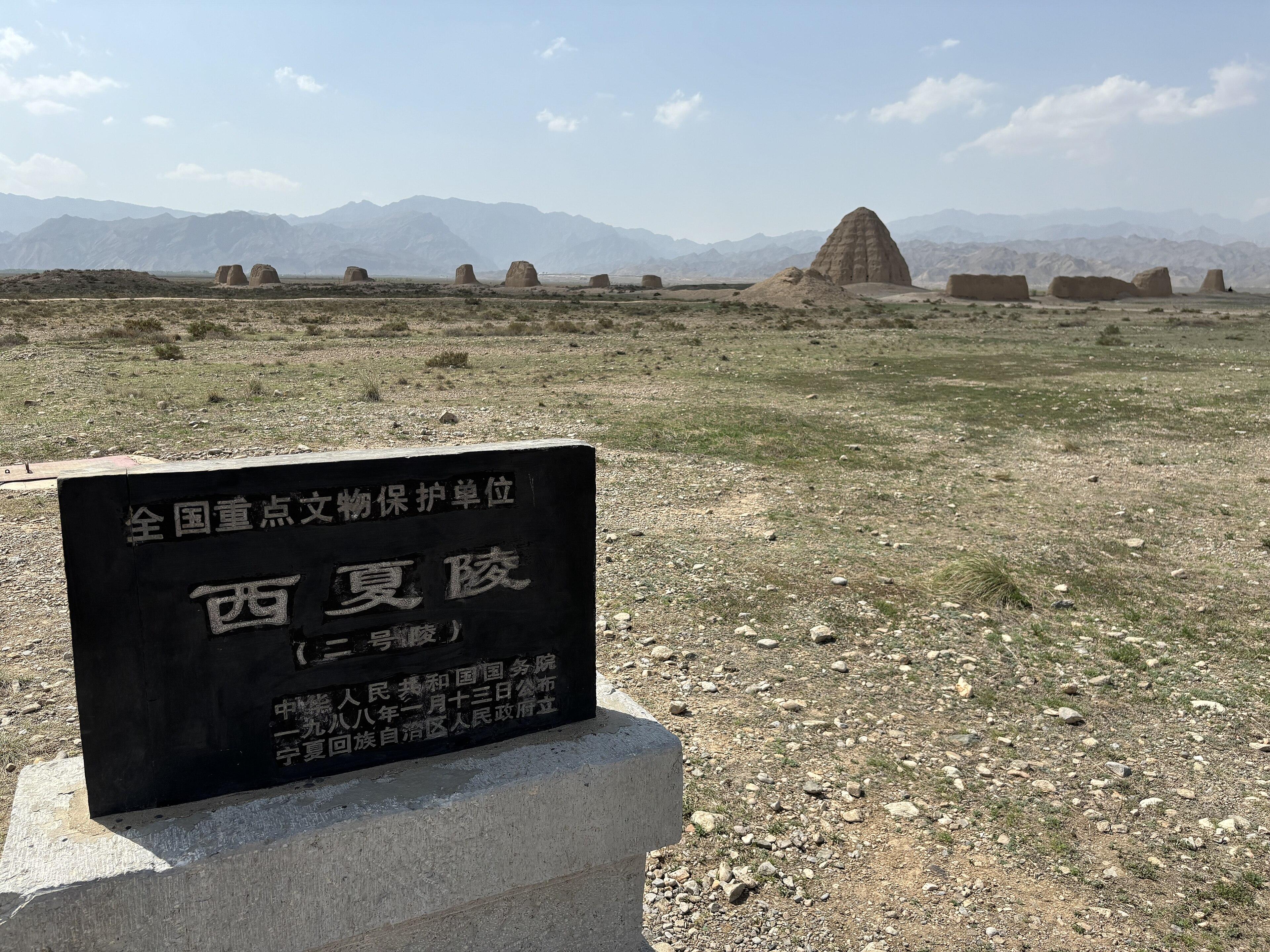
Ningxia: A Long-Term Crossroads of Peoples and Genes
Ningxia emerges as one of Eurasia's great crossroads—not just a line on a map, but a place where very different worlds met across four millennia. This region witnessed the convergence of farmers from the Yellow River basin, hunter-fishers and herders from the far northeast, high-altitude communities from the Tibetan Plateau, and later, newcomers from as far away as Central Asia and Europe. Their movements left traces in the bones excavated from Ningxia's cemeteries, creating a genetic tapestry that mirrors the complex archaeology of the region.
The story begins in the late Neolithic with the Caiyuan and Qijia cultures, excavated at sites such as Wutai and Shatang Beiyuan. These were settled farming communities, growing millet on the loess soils, but their genetic signatures show they were anything but isolated. By around 4,000 years ago, Ningxia's villages already hosted a mix of local Yellow River farmers, northerners from the Ancient Northeast, and people with links to the Tibetan highlands.
At Wutai, representing the Caiyuan culture, one individual stands out with DNA linking them mostly to groups from the far northeast, but with substantial contribution from people of the Tibetan Plateau. This person even carries a genetic variant usually associated with high-altitude life, yet here they are buried down on the Loess Plateau, far below the snow line. At Shatang Beiyuan, representing the Qijia culture, the graves tell two different genetic tales: three people closely related to Yellow River farmers further east, and a fourth person genetically much closer to ancient northeast Asian hunter-gatherers.
The Western Zhou period brings us to Yaoheyuan, one of Ningxia's most spectacular sites. Archaeologically, this is a high-status cemetery with rich burials that speak of political power on the northwestern frontier of the Zhou state. Genetically, the elite buried at Yaoheyuan look like classic Yellow River folk, with DNA closely matching late Neolithic and early Bronze Age farmers from the middle reaches of the Yellow River.
These findings suggest that Yaoheyuan represents the arrival of a politically organized group from the east—administrators, soldiers, and their families—installed at Ningxia as part of the Zhou enfeoffment system. Their grave goods and ordered cemetery layout speak the language of power, while their genes tell us they were newcomers from the river heartlands rather than descendants of earlier local populations.
By the Eastern Zhou period, the balance shifts dramatically. Several cemeteries associated with the Northern Bronze Complex reveal burials rich in horse gear, animal-style plaques, and weapons, where horse, cattle and sheep heads and hooves were laid in graves as offerings. These rites match a broad nomadic tradition stretching from the Mongolian Plateau to the Ili valley in Central Asia.
The DNA confirms that these are not simply Yellow River farmers adopting steppe fashions, but people whose ancestry leans strongly towards Ancient Northeast Asian populations, with an added component often called "Ancient North Eurasian" ancestry. This ancestry appears to have arrived via earlier mixed groups from the northern forests and steppes—populations who had already blended Ancient Northeast Asian and Ancient North Eurasian ancestries further north before moving southwards into Ningxia during the Bronze to Iron Age transition.
Under the Han dynasty, Ningxia was firmly drawn into the imperial frontier system, with commanderies and garrisons established along the Yellow River. Most Han individuals in Ningxia look genetically very similar to late Neolithic and early Bronze Age Yellow River farmers, with an additional contribution from southern East Asian groups. This fits the historical picture of organized migration and land-reclamation: farmers, soldiers and their households dispatched from the Central Plains to hold and work the frontier.
Yet one burial stands out dramatically: Yangjia Zhuang Han 2. This individual, excavated from a grave whose pottery hints at nomadic influence, carries a four-fold ancestry combining Yellow River farmer heritage, Ancient Northeast Asian ancestry, steppe pastoralist lineage, and Central Asian oasis connections. Genetic evidence indicates that the steppe and Central Asian ancestry came largely via women, suggesting intermarriage patterns between local or Yellow River-derived men and women from nomadic backgrounds.
The Northern Dynasties and Sui-Tang periods saw Ningxia become a nodal point on the flourishing overland trade routes linking Chang'an with Central Asia. Cemeteries from this era—such as Jiulongshan, Nanjiao and Nanyuan—reveal far-reaching connections across Eurasia.
At Jiulongshan, two individuals cluster closely with Western Eurasian populations, with more than four-fifths of their ancestry matching groups from western Eurasia. One individual even carries a genetic variant linked to lactose tolerance common in Europeans. At Nanyuan, the graves tell several different stories: some individuals appear as straightforward descendants of Yellow River farmers, while others show no trace of Yellow River ancestry at all, instead combining Ancient Northeast Asian, steppe pastoralist, and Central Asian oasis ancestry in roughly equal parts.
In several Sui-Tang burials, the genetic pattern points to men with steppe or Central Asian origins marrying local women with Yellow River ancestry. This matches archaeological and historical knowledge about Sogdian merchant communities and other foreign groups in northwest China: male-dominated caravans and garrisons settling, trading and marrying into local society.
When the Tangut-ruled Western Xia kingdom made today's Yinchuan its capital, Ningxia again became a political center. Analysis of one individual from the Minning Western Xia burial reveals a nearly even split between Yellow River farmer ancestry and ancestry tied to the Tibetan Plateau. That plateau ancestry is best matched by ancient groups from the northeastern edge of the Tibetan highlands—populations who already carried some Ancient Northeast Asian ancestry themselves.
The genetic picture fits the idea that the Tangut had deep roots in highland groups often linked to "Qiang" populations from the upper Yellow River. Here again, Ningxia appears as a place of convergence: a Tangut leader interweaving the lowland Yellow River genetic tradition with that of the high plateau, ruling from a capital set on the edge of the steppe.
Later cemeteries from the Song, Yuan, Ming and Qing periods show that although the intense wave of western migrants seen in the Sui-Tang era subsides, their genetic echoes do not vanish altogether. Most later individuals cluster with other East Asians closely related to Yellow River farmers, forming a stable core ancestry. Yet many also carry small but detectable amounts of Ancient Northeast Asian, steppe-derived and plateau-related ancestry, inherited from earlier episodes of contact rather than representing new arrivals.
By the Ming and Qing periods, Ningxia's people look genetically firmly part of the broader Yellow River world. But layered beneath that, like archaeological strata, lie older traces of Ancient Northeast Asians, Tibetan Plateau groups, and Western Eurasian travelers whose descendants had long since blended into the local gene pool.
Across the Neolithic villages, elite Zhou graves at Yaoheyuan, horse-rich Eastern Zhou cemeteries, Han frontier sites, Sui-Tang merchant and military burials, and Tangut graves of Western Xia, Ningxia emerges as a landscape where different populations repeatedly arrived, settled, married and were buried. The region served not as a quiet backwater with one continuous population, but as a busy crossroads repeatedly reshaped by incoming peoples from very different directions.
The genetic evidence reveals at least four or five major waves of migration and genetic turnover, each leaving distinct traces in the archaeological and biological record. From late Neolithic villages blending Yellow River farmers, northeast Asian hunter-gatherers, and high-altitude groups, through Zhou political colonies and Eastern Zhou steppe influences, to Han imperial expansion, Sui-Tang Silk Road cosmopolitanism, and Tangut highland traditions, Ningxia's cemeteries preserve an astonishingly diverse population history.
This long-term perspective shows how Ningxia functioned as a true meeting ground where the pastoral world of Inner Asia, the farming societies of the Yellow River valley, the highland cultures of the Tibetan Plateau, and the merchant networks of Central Asia repeatedly intersected. The resulting genetic tapestry reflects not just individual life stories, but the broader currents of Eurasian history written in the bones of those who lived, died, and were buried at this remarkable crossroads of peoples and genes.
Original source: https://www.nature.com/articles/s41467-026-73369-6
Comments