Ancient and Modern Microbes on Ötzi: The Dynamic Microbiome and Conservation Risks of the Iceman
– 5 min read


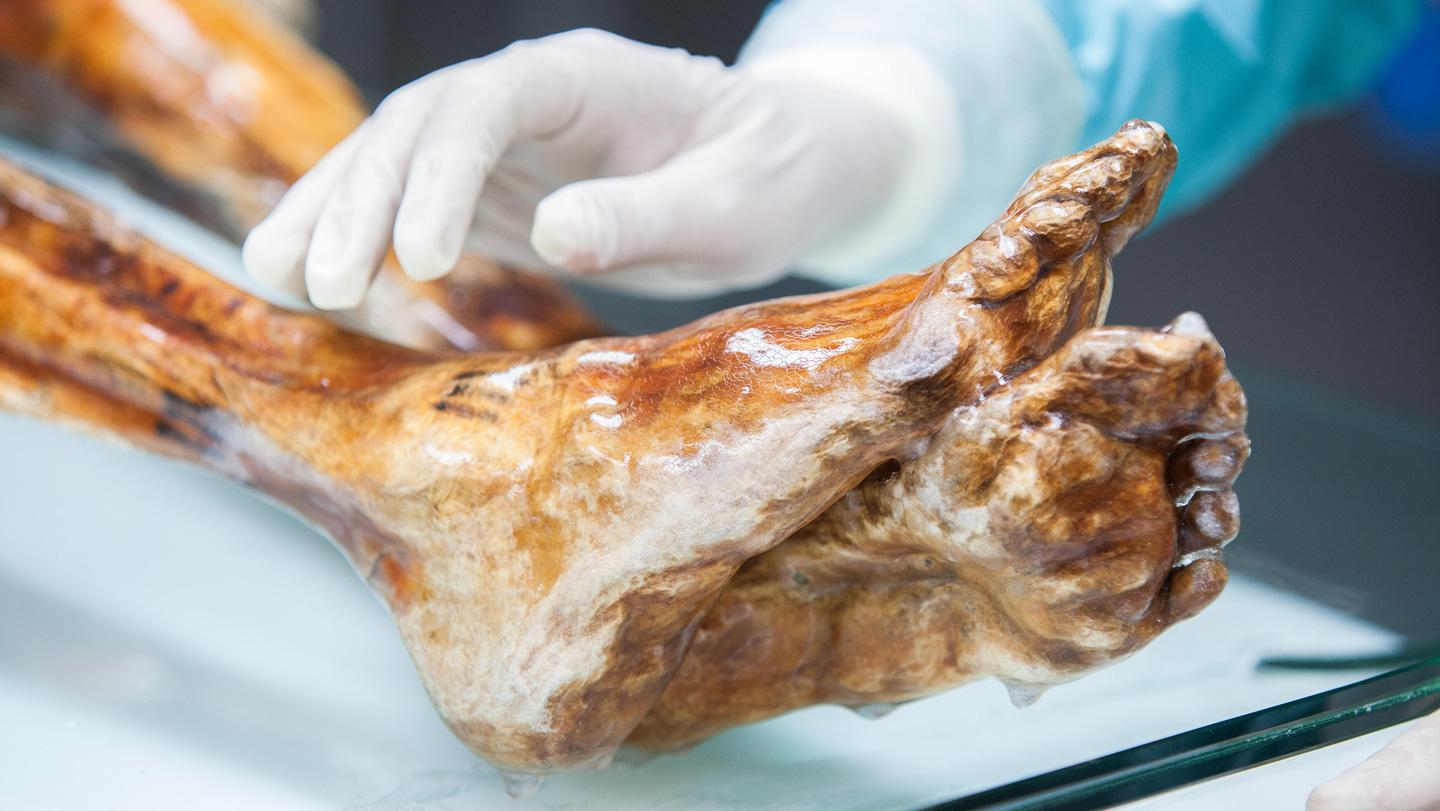
The Iceman's Microbiome: A 5,300-Year Journey Through Ancient and Modern Microbial Worlds
The story of Ötzi the Iceman begins 5,300 years ago in the Ötztal Alps, where a traveler met his end on what is now the Austrian-Italian border. Found in 1991, his naturally mummified body has become far more than an archaeological treasure—it represents an unprecedented window into both ancient and modern microbial ecosystems. Preserved first by glacial ice and now in a carefully controlled museum environment, Ötzi carries within and upon his body a complex community of microorganisms that spans millennia, offering insights into Copper Age biology while revealing the ongoing microbial drama surrounding his preservation.
Deep within Ötzi's preserved intestinal tissues lies perhaps the most scientifically valuable microbial treasure: remnants of his original gut microbiome. Using advanced DNA sequencing techniques, researchers have identified bacteria that paint a vivid picture of Copper Age digestion and lifestyle. The intestinal community includes Treponema succinifaciens, Romboutsia, and Clostridium moniliforme—species largely absent from modern industrialized populations but still found in traditional rural communities worldwide.
These bacteria reveal an intestinal system equipped to process a tough, fibrous diet of coarse grains, wild meat, and unprocessed foods. The presence of Treponema succinifaciens particularly links Ötzi's gut to present-day small-scale farming and hunting societies rather than modern urban populations. Chemical analysis of the bacterial DNA shows characteristic damage patterns that accumulate over thousands of years, with cytosine bases converting to thymine—a molecular signature proving these microbes are genuinely ancient rather than modern contaminants.
This ancient intestinal community provides an invaluable baseline for understanding human gut ecosystems before antibiotics, industrial food processing, and modern sanitation reshaped our internal microbial landscapes. When compared to contemporary microbiomes, Ötzi's gut most closely resembles those of people maintaining traditional lifestyles with less processed food and higher exposure to soil and animals.
While Ötzi's gut preserves his personal microbial past, his skin tells the story of 5,000 years in glacial ice. The glacier that entombed him was far from sterile—it harbored its own community of cold-adapted microorganisms that gradually colonized his remains. Among the most remarkable discoveries are specialized yeasts that typically inhabit Arctic and Alpine environments: Glaciozyma watsonii, Phenoliferia glacialis, Candida nivalis, and Vishniacozyma victoriae.
These are not ordinary fungi but extreme specialists adapted to life at or below freezing. Their closest relatives live in Antarctic ice shelves, Arctic glaciers, and cryoconite holes—the dark, dust-rich pockets that form on glacier surfaces. Genetic analysis confirms that Ötzi's yeast strains belong firmly within lineages evolved for polar conditions, suggesting they represent either descendants or actual survivors of the cold ecosystems that surrounded his body on the mountain.
Particularly striking is the bacterial colonizer Pseudomonas strain 5C2, which appears throughout Ötzi's tissues with remarkable consistency. This same strain, known from Greenland glacial environments, has colonized his lung, stomach, skin, and internal cavities. Genetic comparisons reveal that versions found in different body parts are nearly identical to each other but distinct from soil strains, indicating that this glacier-adapted bacterium has made Ötzi's body its long-term home, following him from mountain ice to museum chamber.
Since 1991, Ötzi has resided in the South Tyrolean Museum of Archaeology in Bolzano, housed in a chamber maintained at -6°C and nearly 100% humidity to mimic his glacial tomb. However, this controlled environment has become a new microbial habitat in its own right, introducing modern contaminants that complicate the ancient microbial story.
The humidification system, designed to prevent tissue desiccation, has inadvertently introduced water-borne bacteria across Ötzi's external surfaces. The spray water carries environmental genera including Methylobacterium, Sphingomonas, and various other clean-water system inhabitants. These modern organisms now form a distinct microbial signature on the mummy's outer layers, clearly distinguishable from the ancient communities preserved in deeper tissues.
Museum air has contributed its own microbial rain, depositing indoor fungi like Cladosporium, Penicillium, and Alternaria, along with cold-tolerant species well-suited to the chamber's chilly, moist conditions. Human contact over decades of study and conservation has introduced Staphylococcus strains typical of skin microbiomes, creating a layer of 21st-century microbial archaeology atop the ancient body.
Perhaps most intriguingly, early conservation treatments have left their own microbial legacy. Phenol-based disinfectants applied in the 1990s were intended to prevent fungal growth, but genomic analysis reveals that several current microbial inhabitants possess genes for phenol degradation. Rather than eliminating all microbes, the chemical treatment acted as an ecological filter, selecting for organisms capable of surviving—and even feeding on—the disinfectant residues.
One of the study's most significant revelations is that Ötzi's microbiome is not frozen in time but continues to evolve under museum conditions. Comparison of skin samples taken in 2010 and 2019 reveals dramatic changes in the yeast community composition. While several cold-adapted species were present in 2010, by 2019 Glaciozyma had achieved near-complete dominance of the fungal community.
More remarkably, the DNA characteristics suggest active growth rather than passive decay. Yeast DNA fragments from 2019 are longer and show fewer chemical damage markers compared to 2010 samples, indicating recent biological activity rather than ancient preservation. This pattern suggests that at -6°C and high humidity, these glacial yeasts have found optimal conditions for continued survival and reproduction on a Copper Age corpse.
The persistence and apparent growth of these microorganisms transforms our understanding of mummy preservation. Rather than achieving biological stasis, the conservation chamber has created a unique ecosystem where ancient tissues, glacial microbes, and museum conditions intersect in an ongoing biological experiment.
Advanced genomic analysis reveals that many of Ötzi's current microbial inhabitants possess genetic capabilities that could threaten his long-term preservation. Several Clostridium species found in his tissues carry genes for collagenase and other enzymes that break down the structural proteins holding his body together. Clostridium algidicarnis, notorious in the food industry for spoiling refrigerated meat, appears particularly well-equipped to degrade tissue at low temperatures.
The cold-adapted yeasts dominating his skin possess enzymes for breaking down fats and proteins, potentially threatening the preservation of his famous tattoos and external features. Meanwhile, the persistent Pseudomonas strain combines phenol degradation capabilities with cold tolerance, creating a microbe perfectly adapted to the museum's chemical and physical environment.
These findings suggest that preserving ancient remains requires more than controlling temperature and humidity—it demands ongoing genomic monitoring to track microbial communities and their metabolic capabilities. The same analytical tools that reveal Copper Age lifestyle and diet now guide conservation strategies to protect this irreplaceable archaeological resource.
Ötzi the Iceman represents a unique intersection of ancient and modern microbial worlds. His preserved gut provides an unprecedented baseline for understanding pre-industrial human microbiomes, revealing intestinal communities adapted to process unrefined foods in ways largely lost to modern populations. Simultaneously, his skin and external tissues tell a complex story of glacial colonization, museum contamination, and ongoing microbial adaptation.
The study demonstrates that even under carefully controlled conditions, ancient remains continue to serve as dynamic biological interfaces where past and present meet. Glacial yeasts thrive in museum chambers, conservation chemicals select for specialized degraders, and human handling introduces modern skin bacteria—all layering new microbial archaeology onto a 5,300-year-old foundation.
This research transforms our understanding of both ancient human biology and modern conservation challenges. Ötzi's microbiome offers invaluable insights into Copper Age life while highlighting the complex biological processes that continue to shape archaeological preservation. As we peer into this microscopic world spanning millennia, we discover that the boundary between ancient and modern, preserved and living, remains beautifully and problematically blurred in the person of one remarkable Alpine traveler.


Comments