Late Bronze Age Central Europe: Ancient DNA, Isotopes and Burials Reveal Local Continuity Amid Cultural Change
– 9 min read


Ancient DNA and Late Bronze Age Central Europe
The Late Bronze Age of Central Europe (approximately 1300–800 BCE) presents a fascinating window into ancient communities through rare genetic evidence. During this period, most people were cremated and their bones reduced to ash, making DNA preservation extremely unlikely. However, inhumations – bodies buried intact in the ground – become precious exceptions that allow us to peer into the genetic landscape of these ancient societies. This comprehensive study focuses on such graves from two closely linked sites in Central Germany, Kuckenburg and Esperstedt, and compares them with other Late Bronze Age burials from South Germany, Bohemia, and southwest/central Poland.
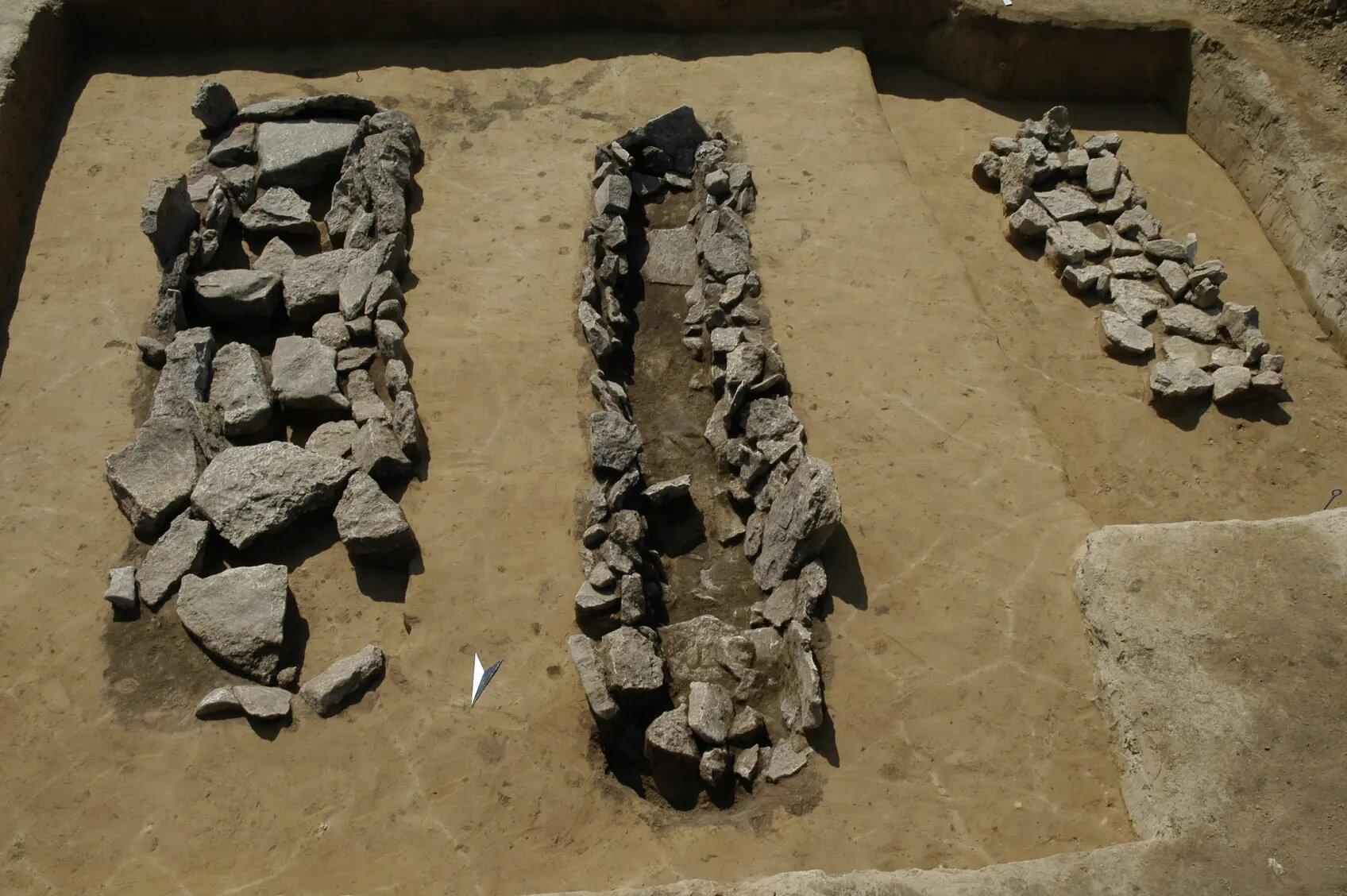
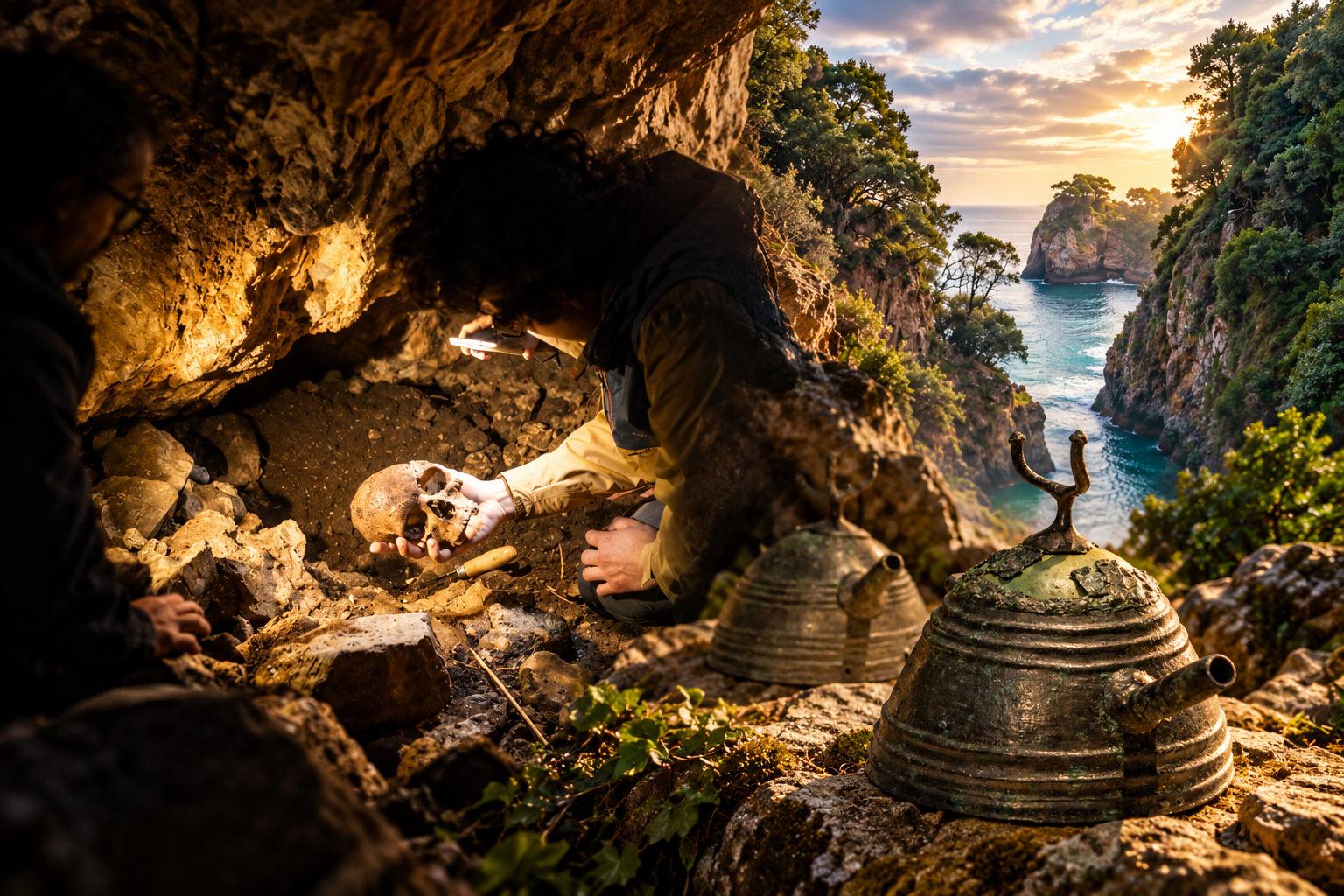
At Kuckenburg, a fortified settlement perched on a spur above the Weida river, archaeologists uncovered a remarkably varied mortuary landscape that challenges conventional understanding of Bronze Age burial practices. Within the settlement itself, people were buried in storage pits and ditches, in double and triple graves, and perhaps most strikingly, as skull-only deposits. One particularly significant pit (Feature 39/2018) contained seven human skulls, a human long bone, a bovine mandible and ceramic vessels, two of which held cremated remains. This assemblage represents not the orderly, row-on-row cemetery one might expect, but rather a carefully curated collection of people and things, used and reused over time.
Across the valley at Esperstedt, researchers examined an early Late Bronze Age graveyard with circular ditch graves and later burials within the settlement area itself. Here too, inhumations coexisted with cremations, but without the dramatic skull-only burials seen at Kuckenburg. These scattered inhumations, most tucked into settlement pits and often poor in grave goods, form a patchwork of genetic snapshots across the Late Bronze Age landscape.
By the Late Bronze Age, the basic genetic recipe of Central Europeans had long been established through the mixing of three major ancestral streams in earlier millennia. First, the early European farmers who brought agriculture from Anatolia and the Near East around 7000 years ago, establishing the foundation of Neolithic society. Second, the indigenous hunter-gatherers who had lived in Europe since the Ice Age, maintaining their genetic heritage through interactions with incoming agricultural populations. Third, the steppe-related ancestry associated with Bronze Age migrations from the Pontic steppes around 4500-4000 years ago, which brought new technologies and cultural practices.
The study reveals that Late Bronze Age people from all studied regions still carried mixtures of these three ancestries, but in different balances and with subtle shifts over time. These variations provide crucial insights into population movements, cultural exchanges, and the complex demographic processes that shaped Bronze Age Central Europe.
The early Late Bronze Age individuals from Central Germany, specifically from Esperstedt and the earliest Kuckenburg burial, cluster genetically with earlier Early Bronze Age people of the Únětice culture. This demonstrates that the inhabitants of the Unstrut group territories are largely descendants of the same communities who had built the rich barrows and metal hoards of the Early Bronze Age. From a genetic perspective, there is strong continuity spanning several centuries.
However, the later Late Bronze Age burials from Kuckenberg and Esperstedt show a subtle but significant shift toward the ancestry of early farmers, and away from steppe ancestry. This gradual change manifests clearly in statistical tests and modeling: Early Late Bronze Age Central Germans carry approximately one-third ancestry related to early farming groups, but by the later Late Bronze Age this proportion rises modestly, to slightly more than a third, at the expense of steppe-related ancestry.
This pattern does not suggest a great wave of newcomers sweeping away the local population. Instead, it appears to represent continued local descent with a gradual infusion of people whose ancestors were more strongly rooted in older farming populations, many of them likely coming from the south or southeast. The modeling suggests mixtures between Central German Únětice-derived people and groups resembling Middle Bronze Age populations from southern Germany, Bohemia, or even further south toward the Carpathian Basin.
One young man from Kuckenburg, designated KUC022, stands out as particularly significant. Genetically he leans more strongly toward early farmer ancestry than his neighbors, overlapping with individuals from the Tollense battlefield in northern Germany and with Bohemian Knovíz burials. Statistical tests confirm him as a genetic "outlier," suggesting that he or his recent ancestors came from outside the immediate Unstrut region, perhaps from further south within the broader Urnfield cultural sphere.
The all-male cemetery at Neckarsulm in South Germany offers a fascinating counterpoint to the Central German evidence. Here, genetic analysis confirms that all twelve tested individuals are male and form a remarkably uniform group in ancestry terms. These men sit clearly apart from the Central Germans, with a much higher share of early farmer-related ancestry. Their genetic profile fits well as a continuation of Middle Bronze Age populations from the Lech valley in southern Germany, themselves already characterized by high levels of farmer ancestry.
The Neckarsulm men appear to be descendants of long-standing southern populations that had, for centuries, been more deeply shaped by Neolithic farmer ancestry than their neighbors to the north. This regional differentiation highlights the complex mosaic of populations across Late Bronze Age Central Europe.
Even within this genetically homogeneous group, individual NES021 emerges as exceptional. Also identified as a strontium outlier through isotopic analysis, he carries the highest early farmer-related ancestry of anyone in the entire study. Genetic modeling suggests his ancestry could represent a blend of local southern German stock with people from regions even richer in early farming ancestry, such as Early Bronze Age Switzerland or northern Italy. Spatial analysis tools that search for the best genetic matches across ancient Europe place NES021's closest parallels in Switzerland and northern Italy, underlining South Germany's connections to the wider Danubian and Alpine world.
The Bohemian Late Bronze Age burials, many linked to the Knovíz and related Urnfield groups, mostly demonstrate continuity with Middle Bronze Age populations in the same region. Compared with Early Bronze Age Únětice people in Bohemia, they carry a noticeably higher share of farming ancestry, mirroring patterns seen further south in Austria and Hungary. However, individual exceptions illuminate the complex network of connections across Bronze Age Central Europe.
Two individuals, LNV001 from Libčice nad Vltavou and SNY001 from Slaný, exhibit higher steppe-related ancestry and lower early farmer ancestry than their Bohemian peers. They align more closely with Central German and earlier Czech Únětice individuals, suggesting continued connections northward despite the general trend toward increased farmer ancestry in the region.
In southwest and central Poland, the few Late Bronze Age and early Iron Age individuals studied also show rising early farmer ancestry compared with earlier Middle Bronze Age people, but they retain a somewhat higher share of hunter-gatherer ancestry than their German neighbors. This pattern suggests a gradual drift toward more farmer ancestry without dramatic demographic disruption, while maintaining distinctive regional characteristics shaped by the area's particular prehistoric heritage.
When all regions are analyzed together in a temporal framework, a shared broad trend emerges with important regional variations in timing. In South Germany and Bohemia, early farmer-related ancestry rises earlier, between the Early and Middle Bronze Age, and then stabilizes at elevated levels. In Central Germany and southwest/central Poland, the increase is delayed, with the noticeable step up occurring between the earlier and later phases of the Late Bronze Age, around or after 1000 BCE.
This staggered timing parallels archaeological observations: southern regions were more tightly integrated into Danubian and Carpathian networks earlier, importing distinctive axes, pins and hoard types from the Middle Bronze Age onwards. North of the Ore Mountains, these strong southern connections appear to leave a clearer genetic mark only in the later Bronze Age, suggesting that cultural and demographic changes moved gradually northward across the Central European landscape.
Genetic ancestry reveals long-term population history, while isotopic analysis of teeth and bones tracks where individuals actually grew up. The study combines strontium and oxygen isotope measurements with DNA results to address fundamental questions about Bronze Age mobility and migration patterns.
At Kuckenburg and Esperstedt, most individuals – both those buried intact and those cremated – have strontium values that fall within a locally defined range, based on animals and earlier human remains. Only a handful stand out as non-locals, and oxygen isotope values show no clear outliers, suggesting that even these "non-locals" grew up in broadly similar climatic zones. None appears to be a childhood migrant from a dramatically different environment.
An intriguing pattern emerges when isotopes are compared to diet. Earlier research on these individuals showed that many early Late Bronze Age people in Central Germany consumed millet, a hardy grain that thrives in drier conditions, while later individuals returned to a diet dominated by temperate crops such as wheat and barley. The new strontium results reveal that millet-eaters tend to have slightly higher strontium values than those who did not consume millet, suggesting that millet may have been grown on soils with different geological characteristics.
Crucially, the study finds no clear isotopic differences between inhumations and cremations, or between skull-only burials and whole-body burials. Burial mode appears not to have been simply a matter of distinguishing locals from non-locals, but rather reflected complex cultural and ritual choices within established communities.
The combination of genetics, burial context and isotopic analysis allows reconstruction of specific family relationships and social patterns. At Kuckenburg, a triple burial containing individuals KUC004, KUC005, and KUC007 proves to be a mother buried with her two daughters. They were laid together in a settlement pit rather than a formal cemetery, with no signs of special wealth, suggesting that family ties could be expressed in death even in contexts where most multiple burials involved unrelated individuals.
Identity-by-descent analysis reveals only distant relationships beyond the third degree between individuals at Kuckenburg and Esperstedt, confirming that these nearby sites shared a kin-linked community while demonstrating that most people buried together were not close blood relatives. Analysis of runs of homozygosity – long stretches of DNA where both copies are identical – points to one Kuckenburg woman (KUC006) whose parents were closely related, likely first cousins, indicating occasional marriages within closely related lineages.
At Neckarsulm, none of the tested men in double or multiple burials proves to be closely related, supporting the interpretation that the cemetery belonged not to a single lineage but to a socially defined male group, perhaps a retinue or warrior band, in which membership was determined by social factors rather than strict inheritance through blood relationships.
One of the study's most significant findings is that the remarkable variety of burials at Kuckenburg and Esperstedt – inhumations, cremations, skull-only deposits, settlement pits, and formal graveyards – does not correspond neatly to different genetic groups or obvious outsiders. People buried in settlement pits have, on average, somewhat higher early farmer ancestry than those buried in the earlier graveyard, but this also reflects the chronological shift from early to late Late Bronze Age, when that ancestry was rising in the region generally.
There are no systematic differences in ancestry, sex, age, diet or mobility between skull-only burials and whole-body burials. Grave goods are rare and show no clear pattern by sex, age or ancestry. This suggests that choices about how to treat the dead – whether to cremate or bury, to remove a skull, or to inter someone in a pit or a ditch – were driven less by who a person was in genetic terms, and more by local ideas about memory, personhood and ritual practice.
The famous shift to cremation during the Urnfield period, which gave its name to an entire archaeological culture, appears in this study less like a sudden replacement of one people by another, and more like a patchwork of coexisting rites. In the Unstrut group heartland, communities continued to practice inhumation for centuries while their neighbors embraced urnfield cremation practices.
The preserved skeletal remains provide rare insights into Late Bronze Age health and disease patterns. Adults commonly show degenerative joint changes, especially older individuals, indicating lives of hard physical work. Traumatic injuries, while not common, are present in the form of long bone and rib fractures, and occasional cranial trauma.
Two cases stand out for their evidence of violence. The woman KUC025, aged around 40-50, bears severe skull trauma and damaged tooth enamel. The young male KUC023, who is also an isotopic and genetic outlier, shows cranial trauma that appears to have been inflicted around the time of death. However, the overall skeletal record does not indicate mass violence or systematic warfare.
Children and adolescents show high rates of cribra orbitalia, porotic hyperostosis, and enamel hypoplasia – all signs of nutritional stress or recurrent illness in childhood. Ancient DNA analysis of dental calculus reveals bacteria associated with tooth decay and gum disease, exactly the opportunistic microbes expected to thrive on carbohydrate-rich diets. In one individual, researchers detected DNA from Yersinia enterocolitica, a pathogen causing gut infections, highlighting the zoonotic diseases that circulated in these mixed farming communities.
This comprehensive analysis reveals Late Bronze Age Central Europe not as a collection of isolated cultures, but as a dynamic landscape of interconnected communities maintaining distinct regional traditions while participating in broader networks of exchange and interaction. The genetic evidence demonstrates gradual demographic changes rather than sudden population replacements, with timing that varied significantly between regions.
The mortuary practices, from the elaborate skull deposits at Kuckenburg to the all-male warrior cemetery at Neckarsulm, reflect sophisticated social organizations that transcended simple kinship structures. These communities were experimenting with new ways to honor the dead, manage social memory, and express group identity during a period of significant cultural transformation.
The isotopic evidence for generally local origins, combined with occasional long-distance migrants and the genetic signs of gradually shifting ancestry, paints a picture of societies that were fundamentally rooted in place while remaining open to new influences, technologies, and people. The Late Bronze Age emerges as a time when established communities adapted creatively to changing circumstances, maintaining continuity with their past while embracing innovations that would shape the future of European civilization.
For the Late Bronze Age communities of Kuckenburg, Esperstedt, Neckarsulm, Bohemia and Poland, this study reveals not dramatic invasions but gradual, regionally varied genetic and cultural changes, intertwined with persistent local traditions and the enduring human creativity expressed in the diverse ways people chose to honor and remember their dead.
Original source article: https://phys.org/news/2026-03-ancient-dna-reveals-life-death.html
Comments