Genetic Continuity and Mainland Affinities of Pre‑Ceramic Caribbean Populations

– 6 min read


Early Settlement and Cultural Chronology of the Pre-Ceramic Caribbean
The Caribbean islands were among the very last places in the Americas to be settled, with the first clear traces of people on Hispaniola and Cuba appearing about 6,000 years ago. This study opens a new chapter in understanding the first islanders by combining archaeological discoveries on the Samaná Peninsula of the Dominican Republic with the earliest genomes yet recovered from the region, focusing on people who lived before pottery became widespread during what archaeologists call the Lithic and Archaic Ages, together forming the pre-Ceramic period.
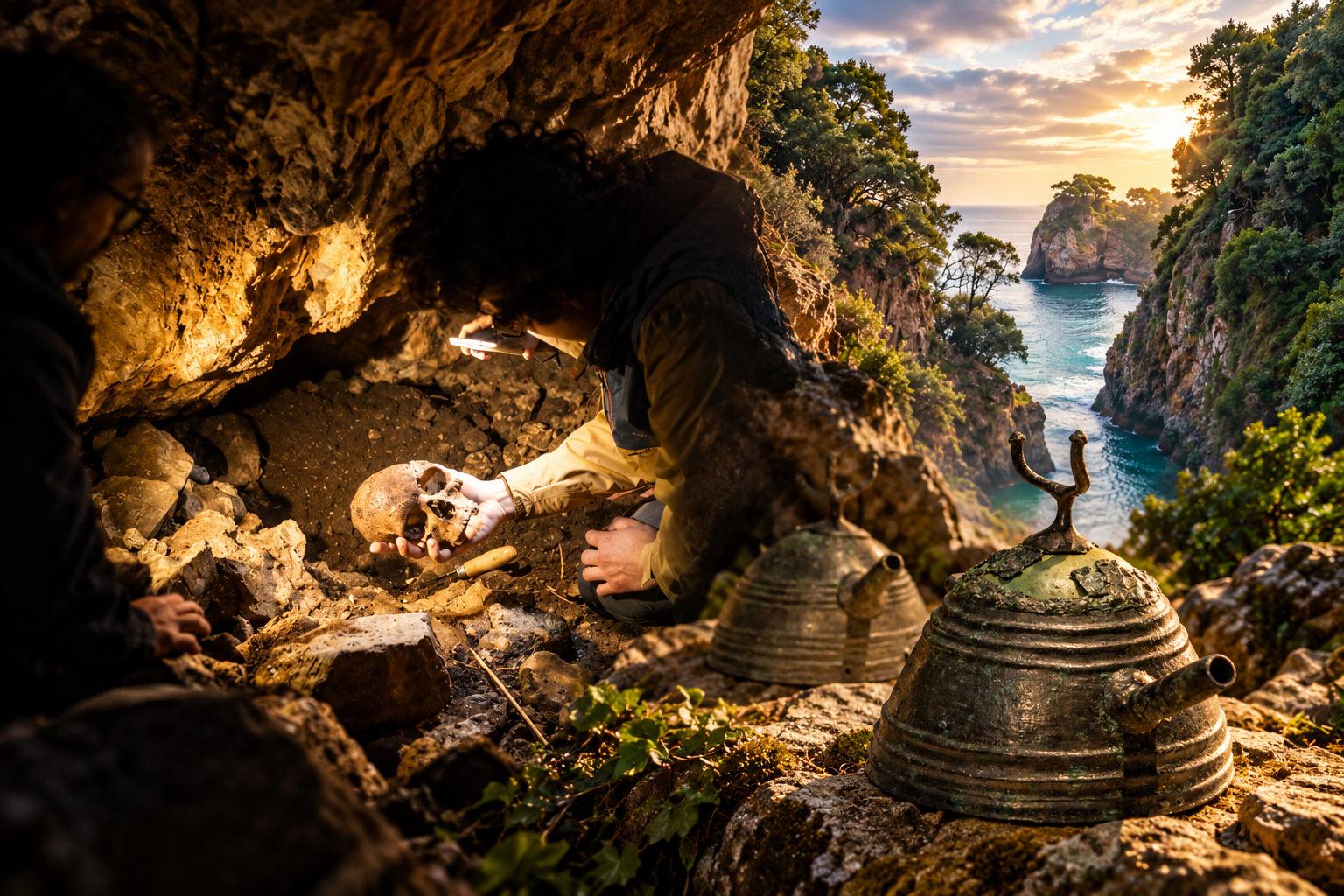
The research centers on excavations carried out in 2022-2023 in a dramatic coastal landscape on the Samaná Peninsula in northeastern Dominican Republic, within the protected area of Monumento Natural Cabo Samaná. Archaeologists identified a complex of caves, rock shelters, and a nearby beach site that together preserve an exceptionally long record of pre-Ceramic life spanning over two thousand years.
Four key sites underpin the story. Abrigo Dana contained postholes and hearths showing that communities occupied this spot from around 5,400 to 3,000 years before present, where wooden structures once stood protected by overhanging rock. Cueva Funeraria de Daniel served as a dedicated burial cave, holding some of the oldest skeletons yet known from the Caribbean islands. Abrigo Daniel functioned as both a habitation site and cemetery, containing both living areas and carefully arranged human burials. Playa Madama, though dominated by later remains, shows evidence of much earlier occupation during pre-Ceramic times.
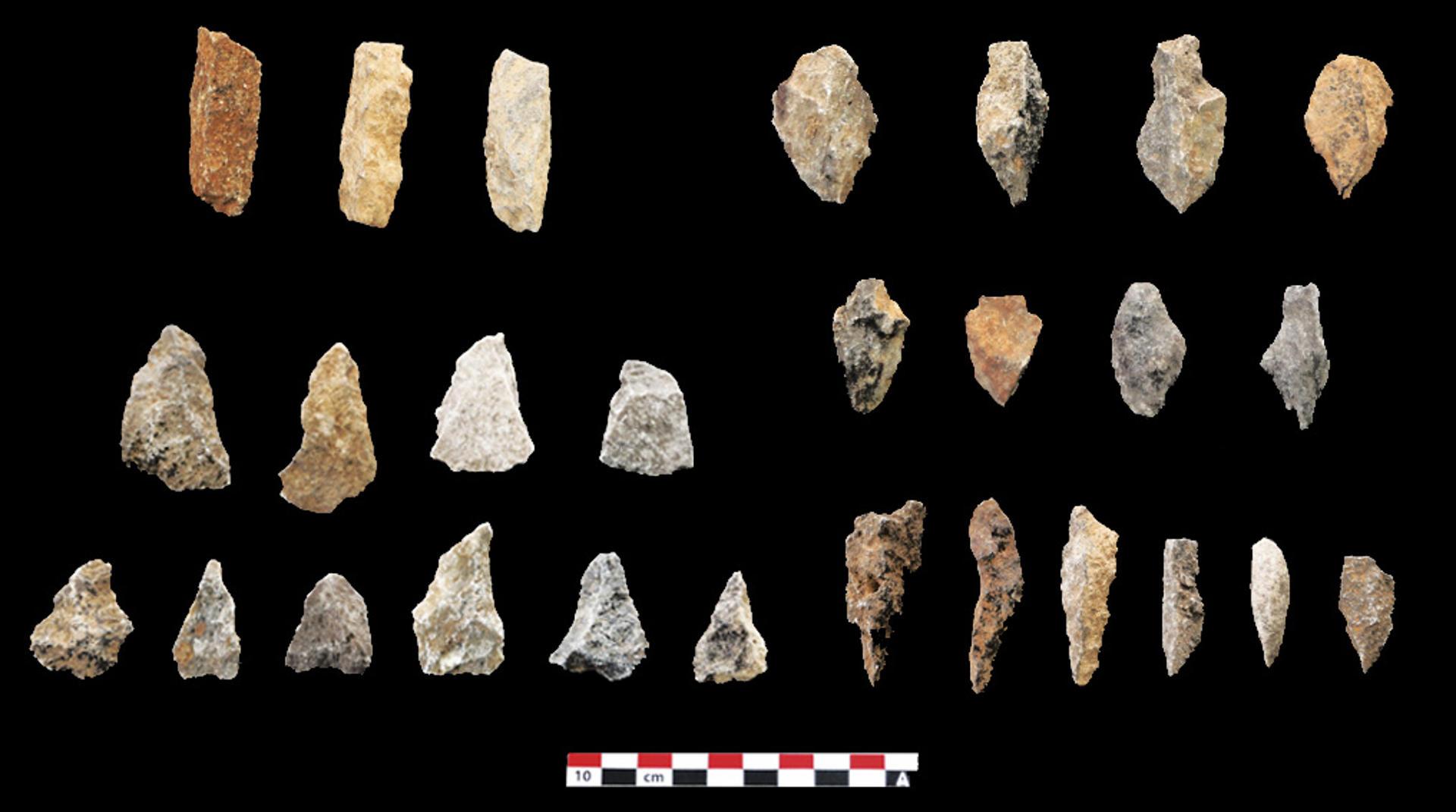
Across these sites, archaeologists discovered a rich material world including carefully finished stone tools, evidence of both marine and land-based foods, and signs of long-distance exchange along the surrounding seas. There are hints of early agriculture alongside foraging, suggesting these were not simple wandering hunter-gatherers but communities experimenting with plant use and small-scale cultivation.
Among the most significant discoveries are specific individuals whose bones anchor the chronology and whose DNA illuminates their connections. Individual I36726, a man from Cueva Funeraria de Daniel, is currently the oldest individual from the Caribbean with genome-wide data. Radiocarbon dating places him between about 4,400 and 4,000 calibrated years before present, making him more than a thousand years older than the previous genetic record-holder from Cuba. He was buried lying on his back in a supine position, with evidence that his body was wrapped when placed in the grave.
Three additional individuals from Abrigo Daniel, dated to just over 4,000-3,900 calibrated years ago, also lie squarely in the Lithic Age. Like I36726, they were buried on their backs, with at least one showing evidence of being wrapped. Their graves occur in a part of the shelter distinct from later burials, and their burial patterns match those of the dated Lithic burials closely.
These burials demonstrate that the people of the Lithic Age were organizing their landscape systematically: a main habitation shelter at Abrigo Dana, a nearby shelter at Abrigo Daniel where some people both lived and were buried, and a separate funerary cave at Cueva Funeraria. This structured use of space, with dedicated burial areas and repeated use of the same shelters, speaks of communities with clear ideas about place, death, and the ancestors.
The genetic findings provide crucial new insights into long-standing archaeological debates. Archaeologists have long questioned whether the shift from flaked-stone technologies of the Lithic Age to the ground-stone emphasis of the Archaic Age represents a new wave of people arriving from the mainland, or cultural change among existing islanders. The study shows that individuals from the earliest Lithic contexts in Samaná share the same overall ancestry as later pre-Ceramic individuals from both Hispaniola and Cuba.
People from Cuba's Archaic Age, a pre-Ceramic individual from Andrés in southeastern Hispaniola, and the four early Samaná individuals all form a single broad genetic group. Despite clear changes in tools and subsistence strategies between the Lithic and Archaic phases, there is no sign of a major influx of genetically distinct newcomers during this pre-Ceramic period. The dramatic changes in stone technology and increased use of marine resources are better understood as local developments rather than sweeping population replacement.
One of the most striking results is the long-term genetic continuity across islands. The earliest individual from Cueva Funeraria, at over 4,400 years ago, and the latest pre-Ceramic individuals from Cuba, less than 700 years before present, are part of a single, shared ancestry stream. All these pre-Ceramic islanders appear to derive from a single founding population that entered the Greater Antilles in the Lithic Age and then remained in place, diverging only slightly on each island and within regions.
The study provides fascinating insights into the social fabric of these ancient communities. By examining stretches of identical DNA inherited from both parents, the authors estimated how large the breeding population was and whether close relatives commonly had children together. The four Lithic Age individuals from Samaná show patterns indicating that their parents, grandparents, and more distant ancestors were drawn from a limited pool of potential partners, exactly what one would expect in small island communities where people tend to marry within the group.
This pattern implies that while partners were often distant relatives, perhaps second or third cousins, there is no strong evidence that unions of very close kin like first cousins were the norm. When these patterns are translated into demographic terms, the study estimates that the effective community size in Samaná may have been only around 114-163 people. These early island societies resembled small, tightly knit villages rather than large, sprawling populations.
The study also investigates where the first islanders' ancestors lived before they took to the sea. When the genomes of the pre-Ceramic Caribbean group are compared with ancient populations across the Americas, they clearly belong to what geneticists call the Southern Native American lineage. Within this broad framework, pre-Ceramic Caribbean ancestry shows especially strong connections to populations from Belize, Panama, Venezuela, and other parts of Central America and northern South America.
However, no single sampled mainland group is a perfect match. The authors argue that the first Caribbean islanders likely came from a yet-unknown, now-unsampled population that was part of this wider region. That ancestral group seems to have been spread across parts of southern Central America and northwestern South America before one branch made the leap into the islands.
One of the longstanding misconceptions about the pre-Ceramic Caribbean is that its people were strictly non-pottery-using foragers who lived purely by hunting and gathering. The study situates its findings within growing evidence that dismantles this picture. Archaeological evidence shows that even before the dramatic spread of large-scale pottery-making and intensive farming around 2,500 years ago, some groups in the islands were experimenting with early ceramic production and small-scale plant cultivation.
The so-called pre-Ceramic islanders were not backward foragers simply awaiting the arrival of farmers and potters. They were already managing a mixed economy, relying on fishing, hunting, gathering, and early plant cultivation, and in some places incorporating ceramics into their daily lives well before the grand Ceramic Age migrations.
The study demonstrates that even after later migrations brought intensive pottery-making and agriculture to the Caribbean around 2,500 years ago, the genetic legacy of the pre-Ceramic populations persisted. Later Ceramic Age people carried measurable amounts of pre-Ceramic ancestry, ranging from a few percent to nearly one-fifth in some individuals from Haiti. This genetic echo tells of encounters between long-established small island communities and incoming groups, suggesting that rather than being entirely replaced, the descendants of the first Caribbean settlers persisted, intermarried, and contributed to the genetic makeup of later societies.
By connecting meticulous excavation at rock shelters and caves in Samaná with genome-wide data from 19 individuals, including four from the earliest Lithic layers, the study pushes the genetic record of the Caribbean back by more than a millennium. It shows that communities using Casimiroid Lithic technologies were already firmly rooted in the islands more than 4,000 years ago, that people in the Lithic and Archaic Ages across Hispaniola and Cuba shared deep, common ancestry even as their tools and lifeways evolved, and that these early islanders belonged to small, locally structured communities connected to wider population currents running through southern Central and northern South America.
The research transforms the early prehistory of the Caribbean from a sparse outline based on tools and shells into a more vivid narrative populated by identifiable individuals whose genomes still carry the imprint of the first voyages into the island world. These findings reveal communities that were small but sophisticated, well-adapted to their coastal settings, and deeply attached to particular caves and shelters over many generations, living in a carefully organized landscape that distinguished between spaces for the living and spaces for the dead.
Original source article: https://pmc.ncbi.nlm.nih.gov/articles/PMC13192915/


Comments