Kondopoga Kindred: Patrilineal Continuity and Female-Mediated Ancestry Change in Medieval Karelia

– 7 min read


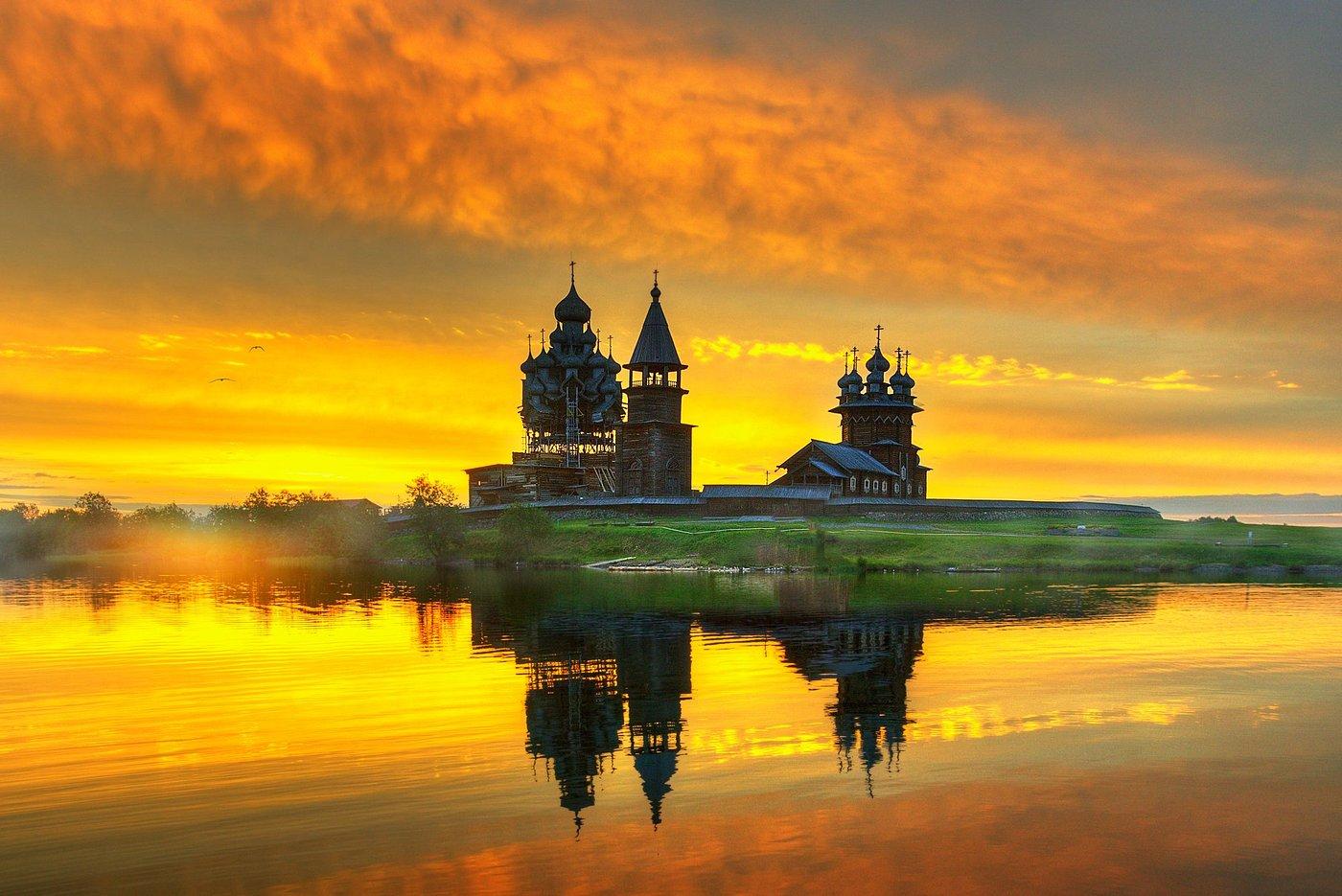
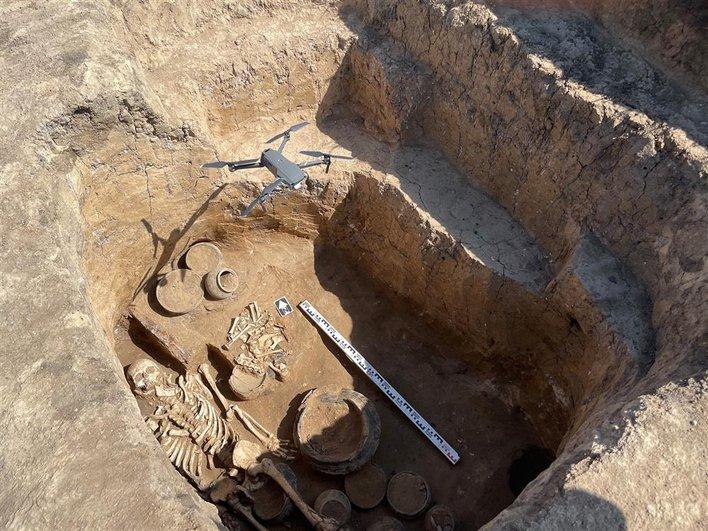
On the shore of Kondopoga Bay, beside the wide waters of Lake Onega, a remarkable burial ground lay hidden for centuries beneath a churchyard. Its rediscovery came dramatically. When the wooden Assumption Church was destroyed by fire in 2018, archaeologists began rescue excavations and uncovered a necropolis used across an astonishing span of time, from the 12th century to the 19th. What emerged was not simply a collection of graves, but the outline of a community rooted in one place for generations.
Lake Onega's shores have long been a meeting ground of peoples, languages, and trading routes. Medieval Karelia sat between worlds: Baltic-Finnic-speaking communities lived across the region while Novgorod's political orbit reached deep into these northern lands. Every grave at Kondopoga belongs to that borderland story.
The earliest graves clustered on the highest, most central part of the hill, the heart from which the cemetery spread outward through later centuries. Among the most striking discoveries was P273, a woman buried in a stone cist, a carefully built box-like grave lined with upright flat stones, accompanied by gold and silver costume ornaments. Such grave goods speak of display, status, and the bodily language of rank. Even after death, she was presented as someone of consequence.
Nearby lay P276, a man buried in the same central zone during the same early phase. Together they appear to stand at the beginning of the cemetery story, and close by were burials later shown to belong to their descendants: two sons and a grandson. The physical layout on the hill mirrored lines of descent, as though kinship had been written into the ground itself.
The site also pushes back the known history of Kondopoga. Written records mention the place later, but these graves show people living, dying, and claiming this ground before the settlement appears in surviving documents. Medieval life in northern regions often slips past chroniclers, but graves keep their own record of habits, loyalties, and long memory.
Explore Early Medieval Finland
At the heart of the Kondopoga cemetery stands a family story of unusual clarity. Archaeology often gives us groups and broad cultures; here it also gives parents, sons, grandchildren, and more distant kin. Medieval Karelia becomes populated not by faceless masses but by linked individuals whose lives and deaths touched the same sacred ground.
P273 and P276 appear to form the founding couple. Their position is early and central, their dates fit the opening phase of burial, and the people nearest them turn out to be their descendants. Two sons, P274 and P288, were buried close by. A further man, P275, was the son of P274 and therefore the grandson of the founding couple. The shape of a family group becomes visible across a compact cluster: parents, sons, grandson, genealogy and grave placement overlapping almost perfectly.
The reconstructed line stretches over five generations. P285 fits as a granddaughter of P275; P282 appears as a grandson of P288. Other individuals were clearly related to this kindred even when exact positions could not be fixed. The cemetery offers both a clear pedigree and a broader halo of kin.
The elder generation founded the burial place; a second generation of sons maintained it; a grandson carried the line forward; later descendants connected back to those earliest burials. That continuity suggests the cemetery was strongly associated with one dominant kin group for much of its history. P273, buried with distinction in the stone cist, appears to have been a person of genuine consequence. Her husband P276, though lacking such flamboyant grave goods, became the anchor of a male line lasting centuries.
Not every figure fits neatly. P297 was clearly related to the main family, yet his burial date seemed too late for the degree of kinship indicated. Rather than smoothing this over, the evidence leaves him as a historical question mark, refreshingly honest about the messiness of real cemeteries. Elsewhere, P298 and his son P300 formed a separate male line using the same ground, confirming that Kondopoga was anchored by one lineage but never monopolised by it entirely.
The most compelling social pattern at Kondopoga is also one of the simplest. The men of one line kept returning to the same burial ground, while women from outside joined the family across generations. The cemetery preserves a strongly male-rooted line of descent, but that line was repeatedly transformed by marriage.
P276's paternal line appears in his son P288, in later descendants, and in still later men buried centuries afterward. Yet each generation was also the child of a different mother, and each mother brought a new part of the region's wider human story. P274 fathered P275, but P275's maternal ancestry differed from his grandmother's, showing that an outside woman had entered the family. Through her, the family changed. P282, further down the line, tells a similar story. Even P295, not a founder herself, appears connected to the maternal side of P282, meaning the churchyard preserves traces of the in-married relatives, the families from which wives came.
The pattern strongly suggests a community in which men remained attached to ancestral ground while women moved into it through marriage. Daughters of the main line likely married out and were buried elsewhere. Sons stayed tied to their fathers' burial place. Wives came from neighbouring groups around Lake Onega and became part of the community through marriage and motherhood.
This links large historical themes to individual people. Medieval Karelia was a zone where Baltic-Finnic communities and populations connected with Novgorod overlapped. Kondopoga shows what such contact looked like at the household level: not through armies or treaties, but through marriages. A woman arrives from a nearby Finnic-speaking population, marries into the lineage, and her children carry both worlds. Repeat this over generations and the whole family changes while the burial ground stays the same. The men stayed, but the women remade the house.
The Kondopoga cemetery captures change over time within a single family, not just in grave layout or objects, but in ancestry itself. The earliest couple and their sons appear somewhat different from many later people buried in the same churchyard. Over generations, the family's ancestral background shifted, reflecting marriages with surrounding local groups.
P273 and her sons P274 and P288 show closest broader links toward populations of northwestern Rus' and the eastern Baltic. The founding male P276 appears slightly more intermediate. Then the family begins to change. The grandson P275 already shows a marked shift, which must have come through his unsampled mother. By P282, further down the line, the process had continued. What began as a distinctive founding pair had become a more thoroughly local Karelian family.
The lesson is elegant: people do not need invasions or dramatic migrations to change. A few generations of marriage can do a great deal. A son marries a woman from a nearby local population; their children differ from the grandparents. Another generation repeats the pattern and the shift deepens. The likely source of incoming ancestry lies among Finnic-speaking populations of the wider region, related to later Karelians and Veps. The women marrying into the lineage resembled these local populations more than the founding couple did.
This gives the cemetery special historical resonance, showing cultural borderlands at work not as abstract zones on a map but as marriage networks. The founding family may have had roots tied to the eastern Baltic and northwestern Rus' world. Their descendants, through local wives, became increasingly similar to the Finnic populations around Lake Onega. Identity is caught in motion: not one side winning and another losing, but blending through kinship.
Some members of the family also shared more distant ties with people buried at other medieval sites in northern Rus', southern Finland, and the Baltic region, suggesting the founding family was part of a broader network stretching toward Novgorod and other northern communities rather than isolated on the edge of nowhere.
Read about a travelling Sámi in Finland
The Kondopoga cemetery is compelling not only because it reveals a long family history, but because it remains stubbornly archaeological. Graves have places, objects, orientations, and puzzles. Some burials are rich, some plain. Some fit neatly into the wider pattern; others resist it. This mixture gives the site its human quality.
P273 remains the most arresting individual. The stone cist, the gold and silver ornaments, and the placement at the highest central point make this funerary theatre as much as burial. Metal fittings and ornaments were social language in the medieval north, speaking of position, wealth, and perhaps inherited rank. P276, though lacking such singular richness, left a legacy that endured through sons and later descendants for centuries. Together they form a powerful founding pair in both social and archaeological terms.
Archaeological details sharpen the impression of reality. P274 was noted as having light reddish hair and beard; his son P275 also had light-coloured hair and beard. Such observations remind us that these were bodies encountered in excavation, not merely data points. Even in fragmentary form, aspects of physical presence survive.
P297 remains the great mystery. His family relationships suggest he should belong much earlier in the sequence, yet the grave was dated later, to the 16th or 17th century. It was shallow, poorly defined, and had an unusual orientation with the head to the south-south-east rather than aligned with the church. Its date rested heavily on a single finger ring. The evidence does not line up tidily, and rather than forcing a false solution, the discrepancy remains open, exactly the kind of case that makes archaeology feel alive.
Later men P303 and P294 extend the founding paternal line into the 15th and 16th centuries. Their inherited connection to the founders had naturally grown fainter over generations, but the male line persisted. That persistence means the memory of burial at Kondopoga outlived any single household and became a durable ancestral tradition.
The churchyard setting intensifies everything. This was a sacred plot reused and redefined over generations, with later churches standing above earlier graves. Descendants may have worshipped above the bones of forebears whose names they no longer knew, while still understanding this as ancestral land. A ring used to date one troubling grave, costume fittings signalling rank, and precious ornaments in the founder's cist are the handles by which archaeologists grasp chronology, status, and identity, anchoring lives in material form.
Kondopoga succeeds because it restores individuality without losing the sweep of time. P273 with her precious ornaments. P276 with his enduring male line. P274 and P288, the sons near the founders. P275, the grandson who marks a turning point. P282 and P303, carrying the lineage onward. P297, forever slightly out of joint with the chronology. P298 and P300, father and son from another branch. These are people recovered from the soil of Lake Onega's shore, each one adding contour to a family and a place, giving the medieval north back its people.
If this Kondopoga kindred speaks to your own northern roots, you can explore whether your DNA shows links to related ancient populations and families. Upload your DNA to MyTrueAncestry and see whether you match this family or related ancient DNA samples.

Comments