Haplogroup R1b1a2a1a2

– 6 min read


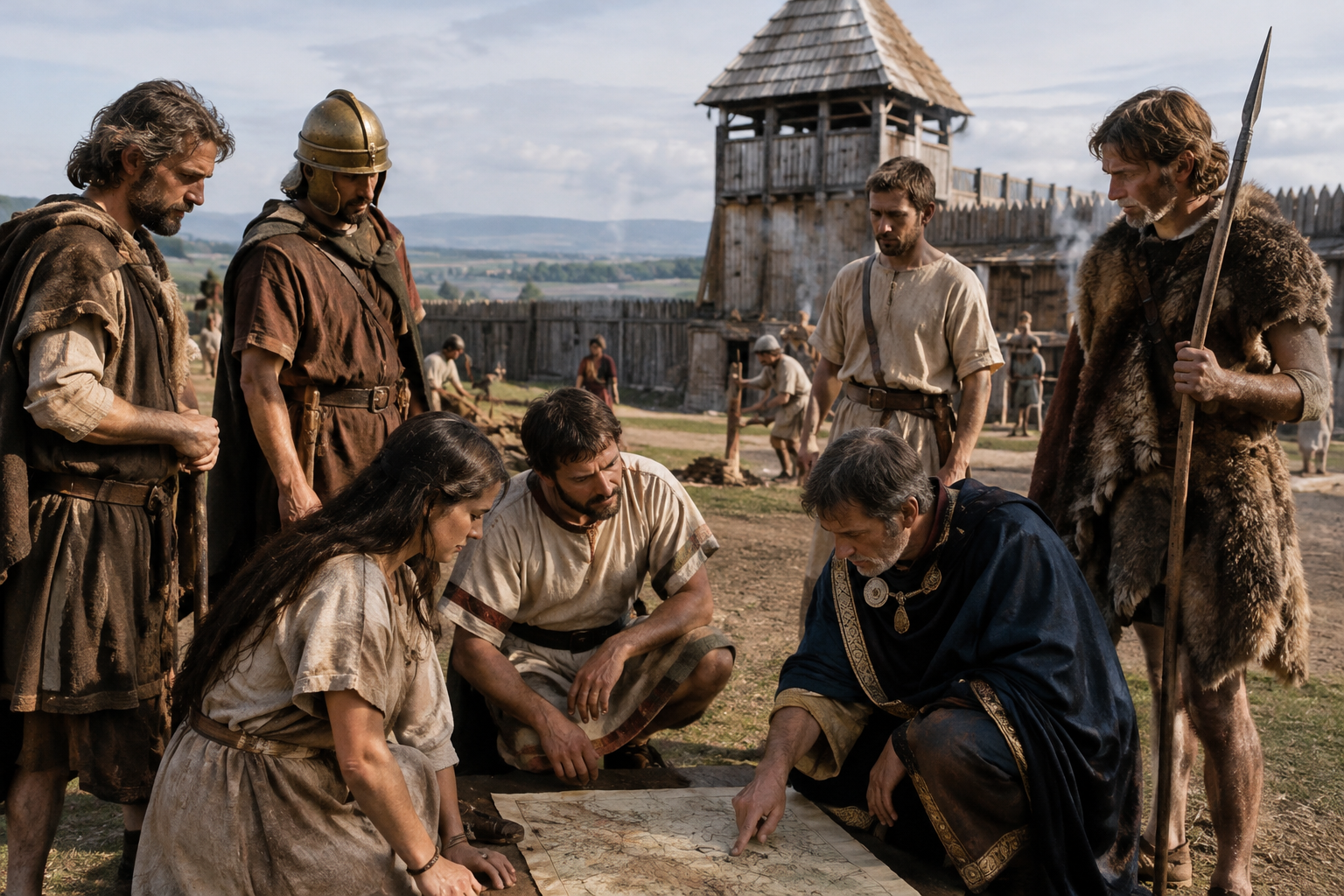
Some Y-chromosome lineages turn up once or twice in the ancient DNA record and then disappear into the statistical fog. Others keep appearing in places that make historians stop and look twice. Haplogroup R1b1a2a1a2 is interesting for exactly that reason. In the material supplied here, it is present in a cluster of Bronze Age individuals from Austria, appears again in a post-Roman burial from Pannonia Prima in Hungary, and even turns up in the much later remains of George Baehr, the architect associated with Dresden in 1738 AD. That does not give us a neat family tree. It does give us a striking long-term pattern across Central Europe.
As always, a quick genetic health warning is in order. Y-DNA haplogroups trace one direct paternal line only: father to father to father. They are powerful tools for reconstructing ancient male-line history, but they do not represent a person's whole ancestry. Nor does sharing a haplogroup prove close kinship. Still, when the same paternal branch appears in multiple archaeological settings across millennia, it can help illuminate continuity, movement, and the changing human geography of a region.
R1b1a2a1a2 belongs within the wider R1b family, one of the major Y-chromosome lineages of western Eurasia. Broadly speaking, branches of R1b became especially important in later prehistoric and historic Europe, though the story is complicated and different subclades had different trajectories. For a specific branch such as R1b1a2a1a2, caution matters: we should not lazily pour the entire grand history of all R1b into this narrower lineage.
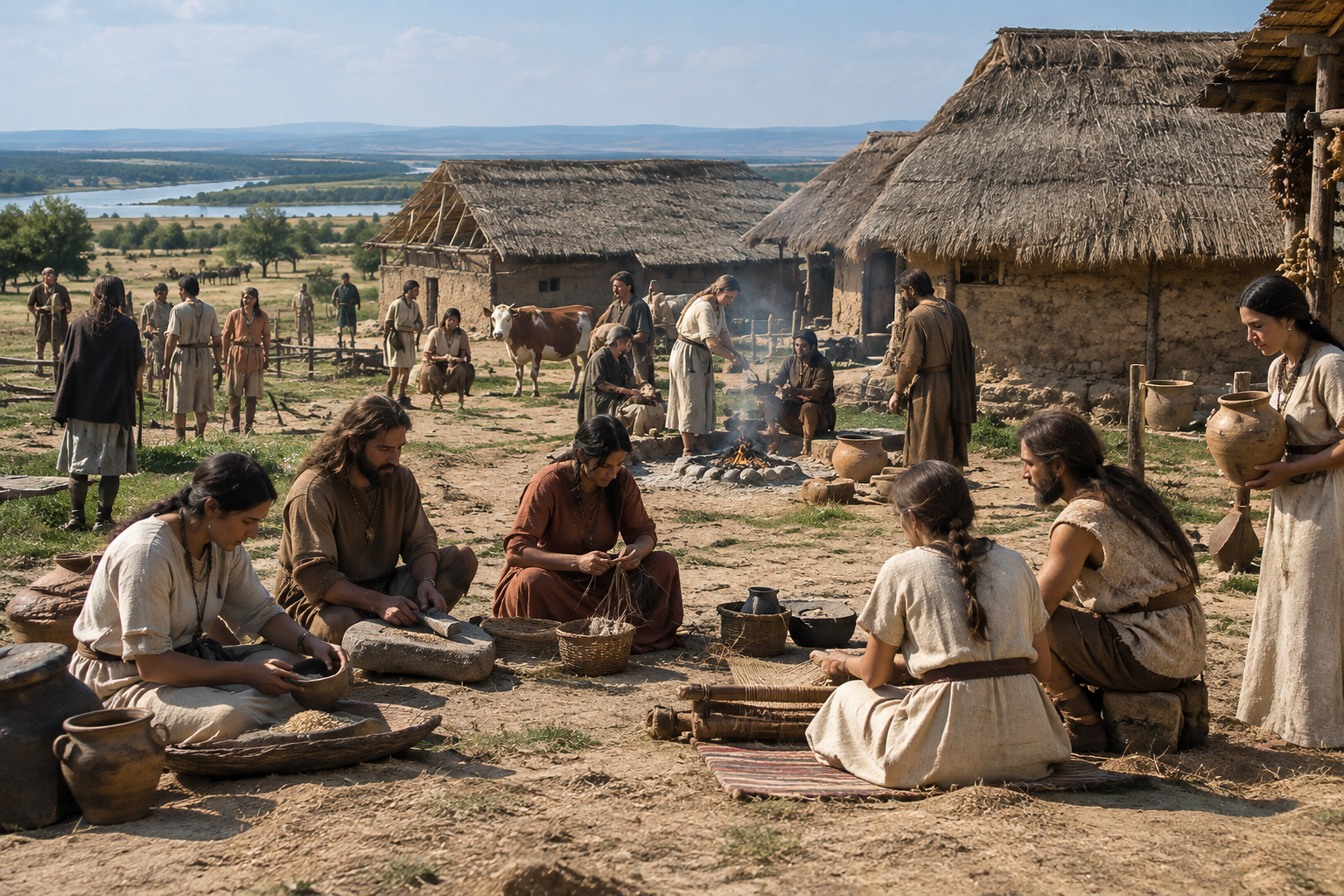
What the supplied evidence does support is a strong Central European angle. The Bronze Age Austrian samples suggest that this paternal line, or something very close to it, was already established in communities north and east of the Alps by around the early second millennium BC. That places it in a world of barrows, metal exchange, farming settlements, cattle, kinship networks, and increasingly connected societies stretching across the Danube basin and beyond.
If you want a wider background to how ancient DNA transformed these questions, MyTrueAncestry has a useful overview in Ancient DNA and the Rise of Archaeogenetics.
The clearest early cluster in this dataset comes from Bronze Age Austria. We are not dealing with one isolated grave, but several individuals from nearby sites: DSH027 from Drasenhofen dated to 2000 BC, DSH006 also from Drasenhofen dated to 2000 BC, UZH026 from Unterhautzenthal dated to 1900 BC, UZH004 from Unterhautzenthal dated to 1875 BC, PEB004, PEB012, and PEB019 from Pottenbrunn dated to 1900 BC, and ULK011 from Ulrichskirchen dated to 1800 BC.
That concentration matters. A single sample can be a curiosity. A run of samples across several sites begins to look like a regional paternal pattern. These are landscapes in what is now Lower Austria, part of a corridor linking the Danube world, the Alpine fringes, and routes toward the Carpathian Basin. In archaeological terms, this was a period when communities were local in daily life but tied into long-distance exchange systems in metals, marriage networks, and cultural practice.
It would be rash to claim all these men were closely related, let alone part of one dynasty. But their shared paternal classification suggests that this branch had a real foothold in Bronze Age Central Europe. It is precisely the sort of evidence that lets genetics add flesh to archaeology: behind the pottery styles and grave goods were living male lines that sometimes endured locally for generations.
Readers interested in this regional setting should also see Genetic and Cultural Dynamics in Bronze Age Austria, which places such finds in their broader archaeological context.
Then comes a very different sort of context: GYR002, listed as Post Roman Arrabona Frigyes Laktanya Pannonia Prima Hungary Year:350 AD. Arrabona, in the Roman province of Pannonia Prima, sat in a frontier zone shaped by soldiers, merchants, migrants, imperial officials, and nearby non-Roman groups. By the 4th century AD, this was a world where identities were anything but simple.
The importance of GYR002 is not that he "proves" a direct line from Bronze Age Austria into late Roman Hungary. Ancient DNA cannot usually deliver such tidy narratives. What he does show is that this paternal lineage, or a very near branch of it, still formed part of the human landscape of the middle Danube long after the Bronze Age societies had vanished and Rome had come and gone. The male line persisted while languages, political systems, burial customs, and social labels changed around it.
That is one of the most useful lessons of Y-DNA. Paternal lines can outlast kingdoms. They can pass through tribal confederations, imperial frontiers, Christianization, and medieval state formation while written history resets the scene again and again.
For more on this exact regional transition, Ancient DNA Sheds Light on Post-Roman Society in the Little Hungarian Plain is an especially relevant companion read.
The latest individual in the supplied set is Baehr: George Baehr Architect Dresden Germany Year:1738 AD ID:Baehr. George Baehr is known historically as the architect of the Frauenkirche in Dresden, and his appearance here gives this haplogroup story an unexpected early modern coda. We are now a long way from Bronze Age cemeteries and Roman frontier graves. Yet the same paternal branch is still present in the German-speaking lands of Central Europe.
Again, no one should leap from this to some melodramatic conclusion about an unbroken named family from 2000 BC to 1738 AD. That is not what the evidence says. But it is perfectly fair to note the geographical resonance. A Y-line present in Bronze Age Austria and post-Roman Hungary is also found centuries later in Saxony. Central Europe, for all its wars and transformations, could preserve very old paternal threads.
The supplied noble-family field is blank, and that is worth saying plainly rather than pretending otherwise. Without specific family names, castles, or dynastic details, there is no responsible way to attach R1b1a2a1a2 to a particular medieval house, fortress, or aristocratic lineage in this article.
Still, the absence of a named castle is rather revealing in itself. People often imagine genetics as a shortcut to a coat of arms, a baronial seat, or a famous surname. In reality, ancient DNA usually works differently. It is far better at showing the deep population background of regions than at proving that a modern tester belongs to a specific noble pedigree. Written genealogy begins late, is often patchy, and is shaped by inheritance, legitimacy, and memory. Genetics reaches much deeper, but in broader strokes.
So if a later noble house from Austria, Hungary, Bavaria, or Saxony were ever associated with this paternal line, that would need to be demonstrated with direct evidence from tested remains or a securely documented male-line study. Geography alone is not enough. Sharing a broad haplogroup with an ancient man from Drasenhofen or Arrabona would create an interesting historical context, not proof of dynastic descent.
For readers interested in how noble and royal lineages are cautiously explored through genetics, one useful comparison is Ancient DNA reveals Hungary's Arpad dynasty burials.
So what can we safely say about haplogroup R1b1a2a1a2 from this evidence? First, it appears in a notable Bronze Age cluster in Austria, suggesting a meaningful presence in early Central European farming and metalworking societies. Second, it is still visible in the wider Danubian zone in the post-Roman period through GYR002 from Arrabona in Pannonia Prima. Third, it survives into the early modern era in Dresden through Baehr.
That does not give us a single tribe, ethnicity, language, or dynasty. It gives us something more historically realistic: a paternal lineage embedded in Central Europe across radically different worlds. Bronze Age villagers, late Roman frontier populations, and early modern urban society were not the same people in any simple sense. But some male lines could pass through all of those transformations.
For anyone who carries this haplogroup today, that is the real fascination. Your direct paternal line may connect, not to one glamorous historical label, but to a very long and very Central European human story - one that runs through prehistoric settlements, Danubian mobility, and the layered societies that followed.
Upload your DNA to MyTrueAncestry to explore whether your results show connections to ancient individuals like DSH027, UZH004, ULK011, GYR002, or later historical populations. These matches do not by themselves prove direct descent or noble ancestry, but they can open a remarkable window onto the deeper past behind your family line.
Comments