Haplogroup I2a1b1a1b2
– 5 min read


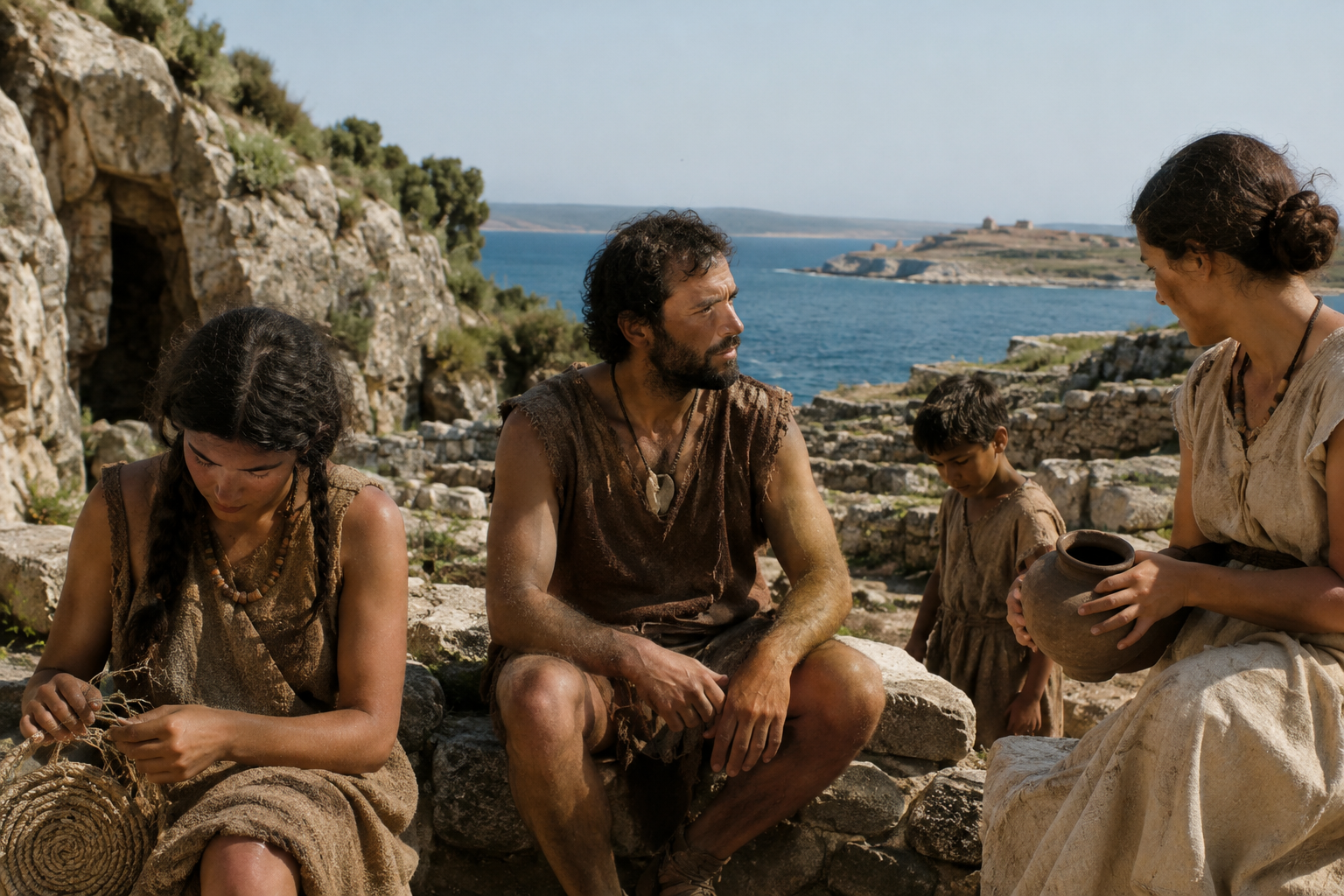
At Cueva de las Lechuzas in Bronze Age Iberia, one ancient male labeled CLL004 offers a small but striking clue to the long history of Y-DNA haplogroup I2a1b1a1b2. Dated to around 2200 BC, he belongs to a period when Iberia was changing quickly: old local traditions persisted, while new population movements and new social forms were reshaping the peninsula. A single Y-chromosome does not tell us everything about a person, but it does trace one direct paternal line, and in this case that line appears in a place and time that matter enormously for European prehistory.
The interest of I2a1b1a1b2 here is not that it points to one grand, simple migration. Quite the opposite. The samples associated with this branch in the present evidence come from Iberia and Sardinia, and they sit in that awkward, fascinating zone where archaeology refuses easy slogans. These men lived in the western Mediterranean during the Copper and Bronze Ages, among communities shaped by deep local ancestry as well as wider networks of contact.
CLL004 is the clearest place to begin because Bronze Age Iberia is one of the best-studied laboratories for ancient population change in Europe. By around 2200 BC, the peninsula was not an isolated backwater. It contained communities with different local histories, varied burial practices, and increasingly visible signs of connection across land and sea.
A major ancient-DNA study of Iberia, published in Science, helped show just how dynamic this period was, especially in the transition into the Bronze Age. One of the big lessons from that broader research is that paternal lineages could shift dramatically even when many other aspects of ancestry showed continuity or mixture. That matters for I2a1b1a1b2: its appearance in CLL004 places this paternal branch within the complicated male-line landscape of later prehistoric Iberia, rather than outside it.
It is worth being precise here. The haplogroup in this article is a narrow branch, I2a1b1a1b2, but ancient assignments are sometimes reported at different resolutions depending on DNA quality and analytical method. So the important historical point is not to imagine one lone "tribe" of I2a1b1a1b2 men sweeping into Iberia. It is that this paternal line was present among real Bronze Age people in Iberia at a time of major demographic and cultural transformation.
The other two associated ancient males shift the story onto an island that often behaves differently from the mainland. SUC006, from Porto Torres, Sardinia, is dated to about 2100 BC and described as Early Copper Age in the sample summary, while R27 comes from Bronze Age Sardinia, around 2200 BC. Even before we get into genetics, that combination tells us something useful: the paternal line linked here to I2a1b1a1b2 is not confined to one mainland valley or one burial cluster. It appears in more than one western Mediterranean setting.
Sardinia is archaeologically famous because it often preserves long-term continuity unusually well, while still taking part in Mediterranean exchange. That makes it a very helpful testing ground for ancient DNA. An ancient population on an island may keep old lineages longer than heavily trafficked mainland zones, but island life is never simply frozen in time. Contacts with neighboring regions, maritime movement, and internal social change all matter.
Research on ancient Sardinian populations, including work presented in this ancient DNA study, has drawn attention to exactly that balance between continuity and connection. Without pretending that every detail of SUC006 or R27 is fully resolved from the brief sample summaries alone, their association with I2a1b1a1b2 fits a wider archaeological reality: western Mediterranean communities could preserve paternal lines with considerable time depth while still participating in broader regional change.
Three ancient samples are not a dynasty, and they are certainly not the whole history of the haplogroup. But taken together, CLL004, SUC006, and R27 are still revealing. They place I2a1b1a1b2 in the western Mediterranean during the late 3rd millennium BC and early Bronze Age horizon, across both mainland Iberia and Sardinia.
That is historically interesting because the period around 2200 BC was not merely a neat archaeological label. It was a time of reorganization in many parts of Europe: settlement systems changed, metalworking expanded, exchange routes thickened, and male-line patterns in some regions shifted quite sharply. A paternal lineage appearing on both sides of the western Mediterranean invites a sensible question: are we looking at survival of older western European male lines, regional branching within island and mainland communities, or some combination of both? With the evidence in hand, the honest answer is that the last option is the safest.
In other words, I2a1b1a1b2 should not be reduced to a single ethnic badge. Ancient Y-DNA is best read alongside archaeology, not instead of it. The men carrying this lineage lived in communities defined by local customs, household ties, burial traditions, and wider ancestry profiles that were much richer than one paternal branch alone can capture.
The wider haplogroup I2 has deep roots in European prehistory, and many of its branches are associated in broad terms with long-standing European male lines that predate the better-known Bronze Age expansions of some other haplogroups. But that broad statement about I2 is not the same thing as a complete origin story for I2a1b1a1b2. Narrow branches often have much more regional and historically contingent stories than their parent groups suggest.
That is why these western Mediterranean cases matter. Rather than presenting I2a1b1a1b2 as a vague relic of "old Europe," the ancient evidence anchors it in specific prehistoric populations. One sample comes from Bronze Age Iberia, two from Sardinia around the same broad era. That is already enough to move the discussion from abstraction to archaeology.
It also helps explain why people researching this haplogroup may find connections to places that look coastal, insular, or western Mediterranean in character, even if the full family story later spread far beyond those settings. Haplogroups travel, branch, and survive in unexpected ways. The archaeology gives us snapshots, not a complete map.
Iberia and Sardinia are not interchangeable, and that is exactly why they are useful together. Iberia in the later 3rd millennium BC was tied into major mainland transformations, with substantial regional diversity and evidence for changing paternal structure. Sardinia, meanwhile, often preserves lineages and ancestry patterns that can look conservative by comparison, even while remaining connected to the sea-lanes of the Mediterranean.
So when a branch like I2a1b1a1b2 appears in both settings, it hints at durability. Not necessarily dominance, not necessarily prestige, but durability. This was a paternal line capable of persisting through periods of change in more than one neighboring region.
That makes the branch especially interesting for members of the MyTrueAncestry community whose results point toward western Mediterranean prehistory. The ancient evidence does not assign them to one archaeological culture or one language. It does something better: it places their direct paternal line among real communities living through one of the great transition periods of prehistoric Europe.
For now, the most distinctive thing about I2a1b1a1b2 is its appearance in a small but telling cluster of ancient western Mediterranean males: CLL004 in Bronze Age Iberia, and SUC006 and R27 in prehistoric Sardinia. That does not turn the haplogroup into a simple label for one people. It does, however, place this paternal line in exactly the sort of archaeological landscape where continuity and change ran side by side, and where family lines could survive while whole societies were being remade.
Comments