Haplogroup N1b2
– 5 min read


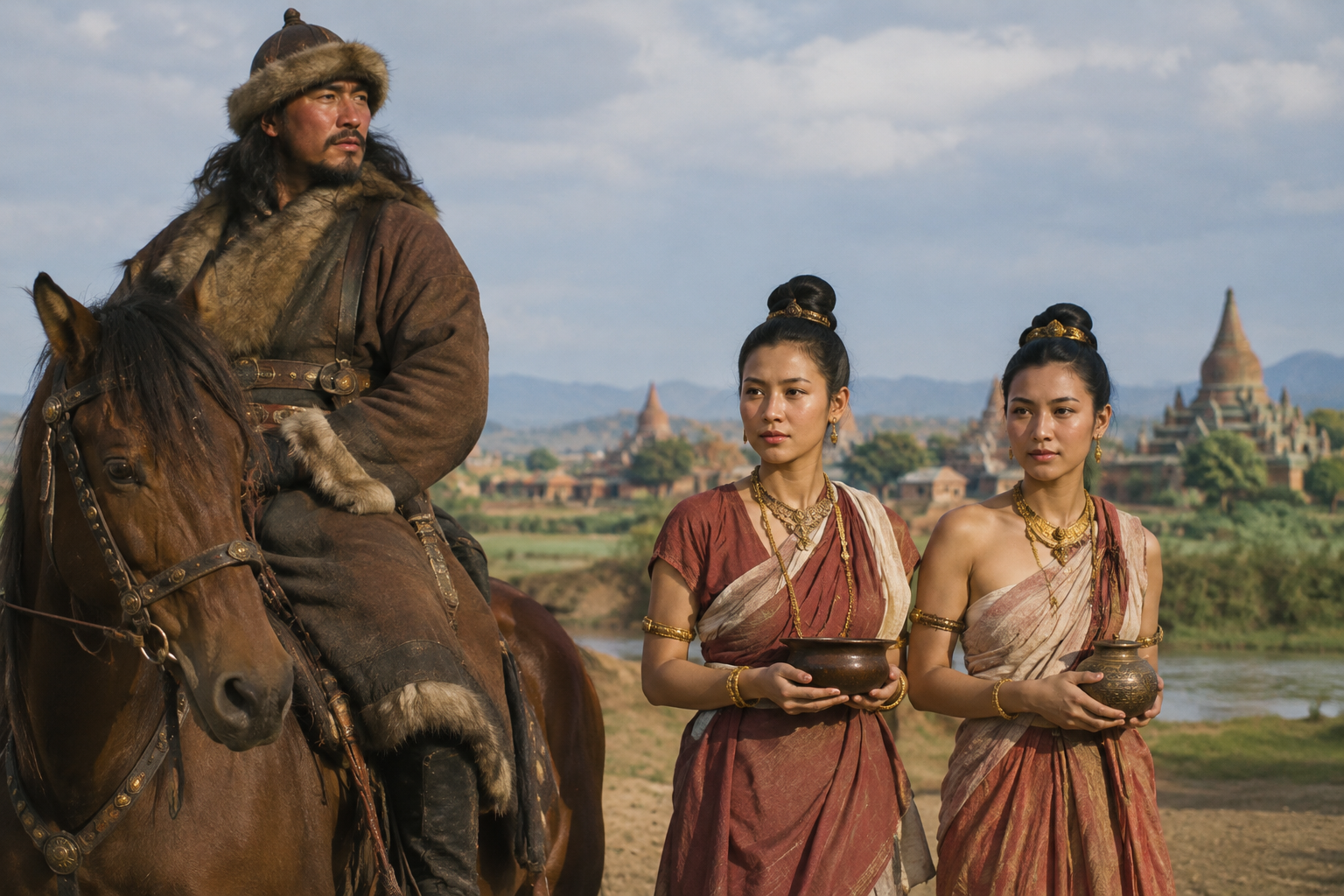
At Yuroo II in the Selenge region of Mongolia, one Late Xiongnu individual dated to around AD 50 stands out for MyTrueAncestry users interested in Y-DNA haplogroup N1b2. The sample, YUR001, places this paternal line in a very specific archaeological setting: not in a vague story about "Inner Asia," but in the world of the Xiongnu, the steppe confederation that dominated Mongolia and shaped the political landscape north of Han China.
That matters because N1b2 is not being glimpsed here as an abstract modern lineage. It appears in a real burial horizon, attached to a named ancient individual from a period of intense mobility, alliance-making, and imperial pressure across the eastern steppe. Y-DNA traces one direct paternal line rather than a person's full ancestry, but even so, finds like YUR001 give this branch a tangible historical footing.
The Late Xiongnu period belongs to a time when the older Xiongnu imperial structure had already changed and fractured, yet its cultural and political legacy remained powerful. A burial from Selenge is therefore not just "Mongolian" in the broadest sense. It belongs to a frontier-rich zone of herding, exchange, and shifting power, where communities were tied into larger networks reaching toward Siberia, northern China, and the wider steppe.
For N1b2, YUR001 is the clearest ancient anchor in the material provided here. The significance is not that one man can define a haplogroup, still less an entire people. It is that this paternal branch was present within the Late Xiongnu sphere at a historically recognizable moment. Research on ancient Mongolia has repeatedly shown that steppe populations were not genetically uniform, and that imperial confederations often brought together men of different paternal backgrounds under shared political structures. A major ancient DNA study of the region can be found here: https://science.sciencemag.org/content/361/6397/88,
That wider point is worth pausing over. The Xiongnu were described in Chinese historical texts as formidable steppe rivals, but archaeology and genetics complicate any simple picture of a single tribe or a single biological population. Burials associated with Xiongnu and post-Xiongnu horizons can include people with varied ancestry profiles, and the presence of N1b2 in this setting fits that broader picture of diversity rather than neat ethnic purity.
N1b2 is a branch within the larger Y-DNA haplogroup N, a paternal lineage with deep importance across northern Eurasia. But one of the easiest mistakes in popular genetic history is to slide too quickly from the big parent haplogroup to a much narrower sub-branch. We should resist that. The appearance of N1b2 in these ancient samples does not mean that every ancient carrier shared the same language, culture, or migration story as all other men in broader haplogroup N.
What we can say more carefully is that N1b2 appears here in eastern and mainland Southeast Asian archaeological contexts during the first centuries AD. That is already interesting. It suggests a paternal branch with a footprint extending across very different cultural worlds: one in the eastern steppe, another in early urban polities farther south.
Just as importantly, the exact terminal resolution for ancient samples is often limited. In some cases, a sample may be confidently associated with the article's branch; in others, the underlying science may support only a broader placement within haplogroup N or a nearby internal branch. That is why ancient DNA works best when it is tied tightly to excavated context, not inflated into a total biography.
The other supplied ancient examples come from the Pyu Kingdoms of Myanmar, both dated to around AD 260: sample Th530 and sample Th519. Here the setting changes dramatically. We are no longer in the political world of the Late Xiongnu steppe, but in one of mainland Southeast Asia's early urban civilizations, known for walled settlements, long-distance exchange, and a place in the early history of Buddhism in the region.
The Pyu are especially important because they belong to a literate and urbanizing landscape, quite different from the pastoral and confederative structures associated with the Xiongnu. If N1b2 is indeed represented by Th530 and Th519, then this lineage was present in a society shaped by riverine agriculture, craft production, and links stretching toward India and southwest China. That does not make the Pyu samples descendants of Xiongnu men, nor the Xiongnu sample a precursor of the Pyu. It shows, rather, that the same paternal branch could appear in very different historical environments.
An ancient DNA study associated with early Southeast Asian populations and related supplementary material is linked here: https://www.biorxiv.org/content/10.1101/2020.03.25.008078v1.supplementary-material. Without over-claiming details beyond the sample information at hand, the broad lesson is that mainland Southeast Asia in the early historic period was already a zone of mixture, movement, and local continuity rather than an isolated cultural pocket.
Set side by side, YUR001, Th530, and Th519 make N1b2 archaeologically interesting precisely because they do not belong to one simple cultural chain. One sample comes from the Late Xiongnu horizon in Mongolia around AD 50. Two more appear about two centuries later in the Pyu world of Myanmar. This is not a tidy migration arrow on a map. It is evidence that a paternal lineage associated with wider northern Eurasian history could also be found in early historic mainland Southeast Asia.
That wider pattern matches what ancient DNA has been teaching us again and again: old populations were rarely sealed units. Men, women, goods, and languages did not always travel together, and paternal lines can move through trade, marriage, military recruitment, frontier settlement, or elite patronage without leaving a single obvious archaeological signature. A haplogroup may therefore span settings that historians once treated as entirely separate.
In that sense, N1b2 is a useful corrective to oversimplified stories. It does not confirm one grand conquest or one named tribe. Instead, it shows how ancient paternal ancestry can surface in both a steppe imperial context and a settled urban polity, reminding us that Eurasian history was connected in ways that were often indirect, layered, and local.
Three ancient individuals are not enough to write a total history of N1b2. But they are enough to say something solid. They show that this paternal branch had a presence in eastern Asia by the first centuries AD, and that it appears across markedly different archaeological settings rather than in only one narrowly defined community.
For someone researching N1b2 today, that is the real value of the evidence. Your Y-line is not a badge of a single ancient ethnicity. What the current ancient record does suggest is a connection to the broad human worlds of northern and eastern Asia, including the Late Xiongnu horizon in Mongolia and the early historic Pyu sphere in Myanmar. It is a small but vivid dossier: a steppe burial, two early urban individuals, and a reminder that paternal ancestry often travels through history in ways far messier than legend would like.
Comments