Haplogroup I1a1a3a1
– 5 min read


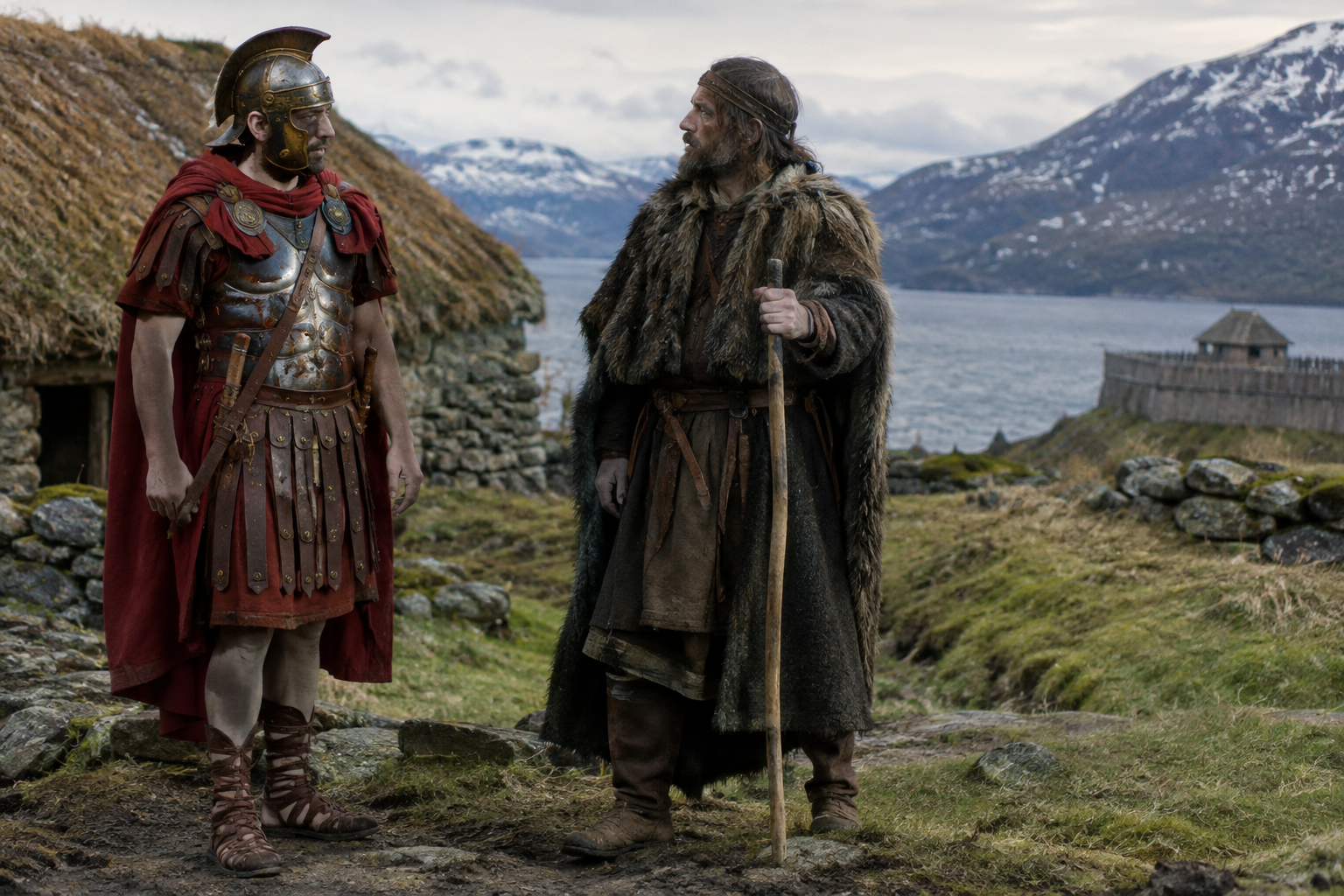
In 1197 AD, during the violent civil-war politics of medieval Norway, a dead man was thrown into a well at Sverresborg Castle near Trondheim. He is known simply as the "Well Man," and for years he hovered in that curious borderland between saga and archaeology: a body described in medieval writing, then physically recovered centuries later. Genetic work has now made him more than a dramatic anecdote. For people exploring Y-DNA haplogroup I1a1a3a1, he is one of the rare ancient men who gives that paternal line a place, a date, and a very human setting.
That matters because Y-DNA follows one direct paternal line only: father to son to son's son. It does not define a person's whole ancestry, language, or identity. But when a branch like I1a1a3a1 appears in ancient remains from both Roman-era England and medieval Norway, it begins to sketch a northern European story grounded in actual lives rather than modern maps.
The Sverresborg individual, sample WM, belongs to one of the most memorable finds in Scandinavian medieval archaeology. The body was recovered from a castle well and linked to a passage in Sverris saga, which tells of a man being cast into the water supply during conflict. That does not mean every detail of the saga can be read as straightforward reportage, but it does give the skeleton an unusually sharp historical frame.
The site itself was no ordinary farmstead burial ground. Sverresborg was a royal stronghold, and the man in the well belonged to a moment when Norway was contested by rival factions and fortified places mattered. The archaeological significance of WM lies partly in that context: this is not just an isolated skeleton with a lab result, but an individual embedded in a documented political landscape.
Public reporting from the Norwegian University of Science and Technology has highlighted how the find connects text, place, and biomolecular evidence in a rare way. The combination makes WM especially valuable for anyone interested in how a paternal lineage such as I1a1a3a1 appears in medieval Scandinavia without needing to turn him into a dynastic founder or a saga hero he may never have been. You can read more about the find here: https://www.ntnu.edu/museum/the-man-in-the-well.
The broader Y-DNA haplogroup I1 is strongly associated with northern Europe, especially Scandinavia and regions shaped by long interaction around the North Sea and Baltic. But it is important not to dump the whole history of I1 onto the narrower branch I1a1a3a1. A subclade is a smaller twig on a large paternal tree. Its own ancient footprint has to be built from specific evidence, sample by sample.
With only a small number of ancient examples here, the safest conclusion is a modest one: this branch is present in northern European contexts spanning very different historical worlds. One belongs to Roman Britain, the other to medieval Norway. That is not proof of an unbroken local dynasty, nor does it tell us the language or legal identity of every man in the line. What it does show is that this paternal branch sat within the populations moving around the North Sea zone over many centuries.
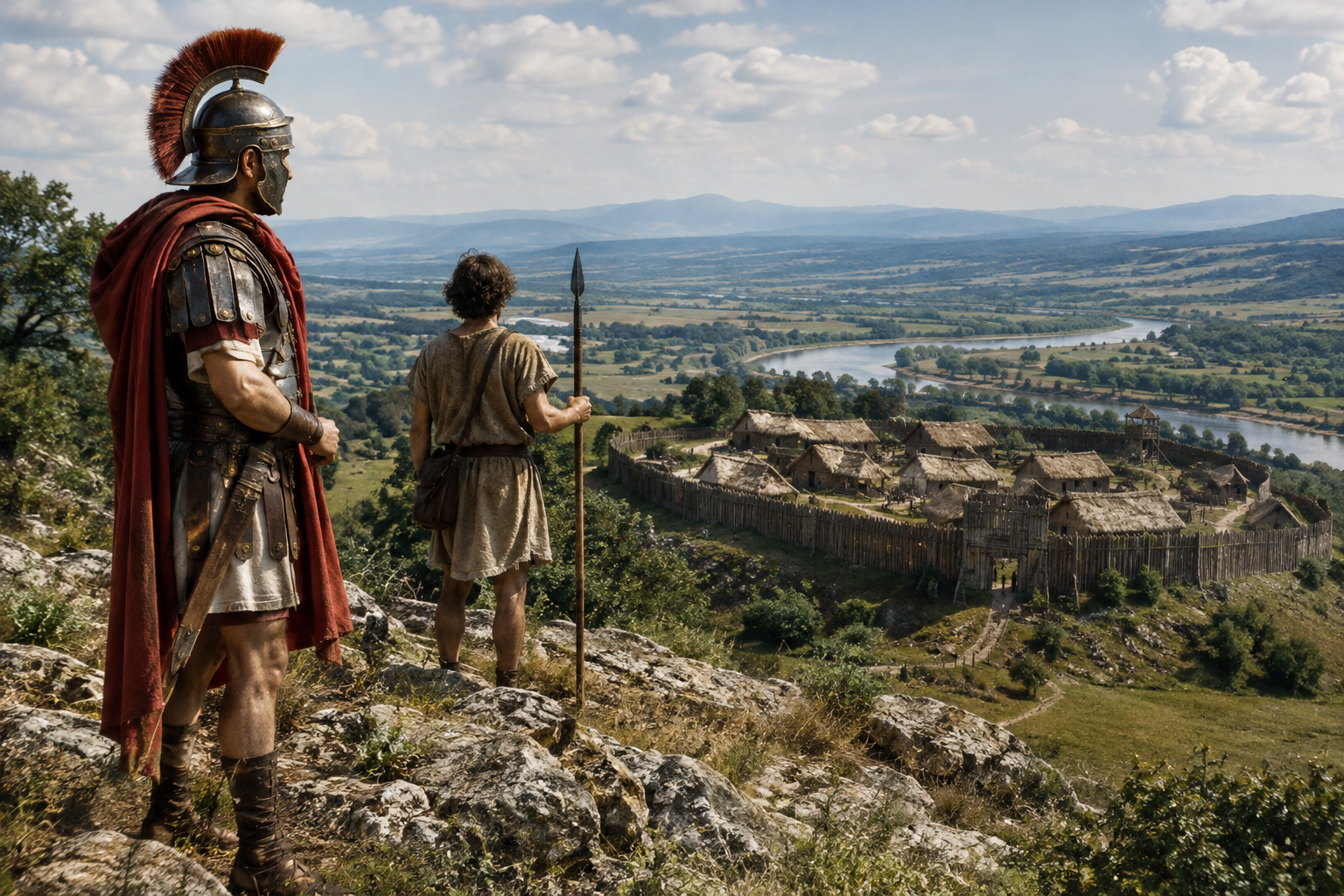
The earlier of the two ancient men is KNF005, dated to around 200 AD from Knobbs Farm, Somersham in England. This places I1a1a3a1 in Britain during the Roman period, a world of towns, villas, army supply networks, market exchange, and mobile communities. Roman Britain was not genetically uniform, and one of the most interesting lessons from recent archaeology is just how local and how connected it could be at the same time.
KNF005 is useful precisely because he should not be overdramatized. A Y-line found in Roman England does not automatically mark a soldier from Scandinavia, a migrant from across the sea, or a family that had only recently arrived. By the 2nd and 3rd centuries AD, Britain had long been tied into wider northern European population histories. Paternal lines associated today with northern Europe could have been present through earlier movements, regional continuity, or more recent mobility under Roman rule.
A broader ancient DNA study of Roman and early medieval Britain has helped clarify this complicated background, showing that ancestry in Britain during and after Roman rule was highly varied and changed by region and period. That wider framework is the right one for interpreting KNF005: not as a lone ethnic label, but as one man within a mixed and changing provincial society. The research context can be found here: https://academic.oup.com/mbe/article/41/9/msae168/7741671?login=false#480989996.
Roman and early medieval Britain
Put KNF005 and WM side by side and the most striking thing is not a straight-line migration tale, but a durable northern distribution. Around 200 AD, the branch appears in eastern England. By 1197 AD, it appears in a Norwegian castle during the age of kingdoms, church power, and civil war. The two men lived nearly a thousand years apart, and the worlds they inhabited were utterly different.
Yet the North Sea itself links those worlds. Roman Britain had contacts with continental and northern populations long before the better-known Viking Age. Later, Scandinavian expansion, trade, raiding, settlement, and royal politics drew England and Norway into even denser contact. A haplogroup like I1a1a3a1 does not by itself narrate those events, but it sits plausibly within that larger zone of interaction.
This is exactly where archaeogenetics is at its most useful. It does not replace history; it sharpens it. Instead of speaking vaguely about "northern ancestry," we can point to actual individuals from dated sites: one from a Roman-era landscape in England, one from a medieval fortress in Norway. That is a better, more disciplined kind of storytelling.
North Sea migrations to Britain
There is a temptation, whenever a lineage appears in ancient DNA, to race backward toward tribal names and heroic founders. That is particularly strong with northern European Y-DNA branches, because later medieval and early modern genealogies loved exactly that sort of origin story. But the real value of I1a1a3a1 here is humbler and more solid.
It appears in evidence from two well-separated historical contexts that are both archaeologically meaningful. KNF005 places the branch in Roman-era England. WM places it in a documented medieval Scandinavian setting with an unusually vivid historical backdrop. Together they remind us that paternal lineages often persist through enormous cultural change: empire, post-Roman transformation, Christianization, kingdom-building, and civil conflict.
That kind of continuity is not glamorous in the old antiquarian sense. It is better than glamour. It is history measured in real bodies, real sites, and real dates.
Ancient DNA in post-Roman Britain
For someone who carries Y-DNA haplogroup I1a1a3a1 today, the clearest supported picture is of a paternal branch present in the northern European world that linked Britain and Scandinavia across many centuries. The branch is not a badge of one tribe, one kingdom, or one surname. It is better understood as part of the long population history of the North Sea zone, now illuminated by ancient men like KNF005 and the Sverresborg Well Man.
That is a fine result in itself: not mythic certainty, but a lineage anchored in places we can actually name and periods we can actually study.
Comments