Haplogroup J2a1a1a2b2a2b
– 5 min read


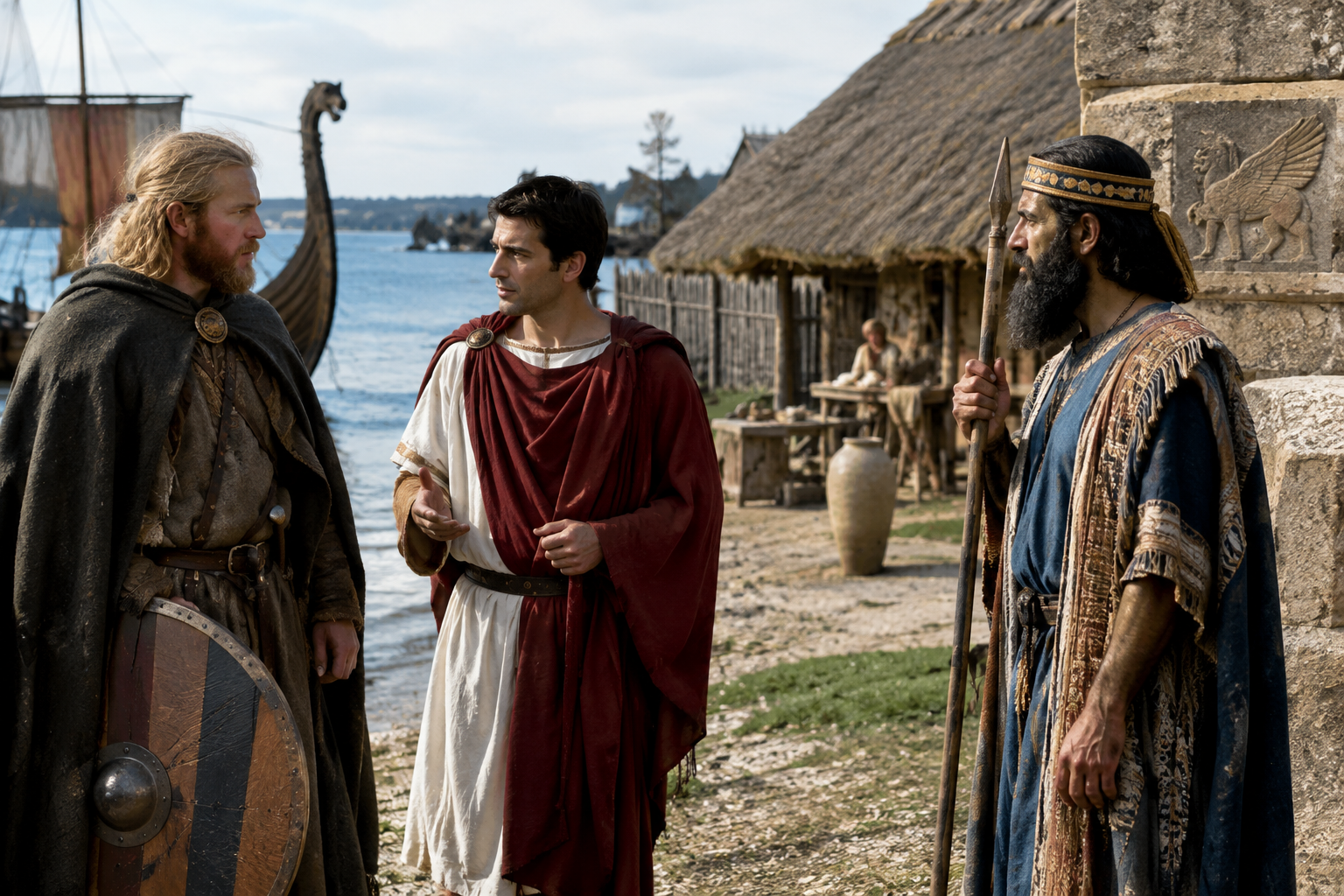
At Kaargarden in Denmark, one Viking Age man has become a particularly useful clue in the long history of Y-DNA haplogroup J2a1a1a2b2a2b. The individual known as VK317, dated to around AD 950, places this paternal line in a Scandinavian setting that many readers might not expect at first glance. Not because J2 is "a Viking haplogroup" in any simple sense, but because the Viking world was full of movement, trade, migration, slavery, mercenary service, and settlement across very long distances.
That is what makes this branch so interesting. The scattered ancient appearances linked here - MA2205 in Old Assyrian Anatolia around 1625 BC, R81 in Roman-period Viale Rossini around AD 100, and VK317 in Viking Age Denmark - do not tell us of one tidy ethnic story. They suggest something better: a paternal line turning up in very different historical worlds, from Bronze Age Anatolia to the Roman Mediterranean and then into the North Sea zone. Y-DNA tracks one direct male line only, but that line can still illuminate the routes by which people, households, and descendants moved through history.
J2a1a1a2b2a2b is a very specific sub-branch inside the much wider haplogroup J2, a lineage long associated in broad terms with parts of the Near East and eastern Mediterranean. But it is important not to overstate that. A narrow terminal branch is not automatically entitled to the whole history of its parent haplogroup, and ancient assignments are often reported at different levels of resolution depending on DNA quality.
So the safest way to read these ancient matches is not as proof that one man in Denmark was "really" Assyrian or Roman, nor that all bearers followed a single migration route. Instead, the value lies in the pattern: this paternal line, or a closely related ancestral branch, appears in contexts tied to Anatolia and the Mediterranean long before it turns up in Scandinavia.
The oldest sample in this set is MA2205, described as Old Assyrian Anatolia and dated to about 1625 BC. Even with sparse accompanying detail, that context matters. Old Assyrian trade colonies in Anatolia belonged to a world of merchants, caravan traffic, local elites, and mixed urban communities. This was not an isolated landscape. It was one of the great connective zones of the early second millennium BC.
That makes MA2205 more than a remote chronological marker. It places a lineage associated with this branch in an Anatolian setting during a period when central and eastern Anatolia were tied into Mesopotamian commercial networks. If your paternal line belongs to J2a1a1a2b2a2b, this is the deepest clue in the present evidence: a signal that the older roots of the branch may lie in precisely the sort of interconnected Near Eastern world where kin groups, merchants, and local populations constantly overlapped.
A major ancient DNA study on populations across Eurasia, published in Science, helped establish just how dynamic these prehistoric and Bronze Age population histories were. For Anatolia and its surrounding regions, genetics has repeatedly reinforced what archaeology already suspected: movement was normal, not exceptional.
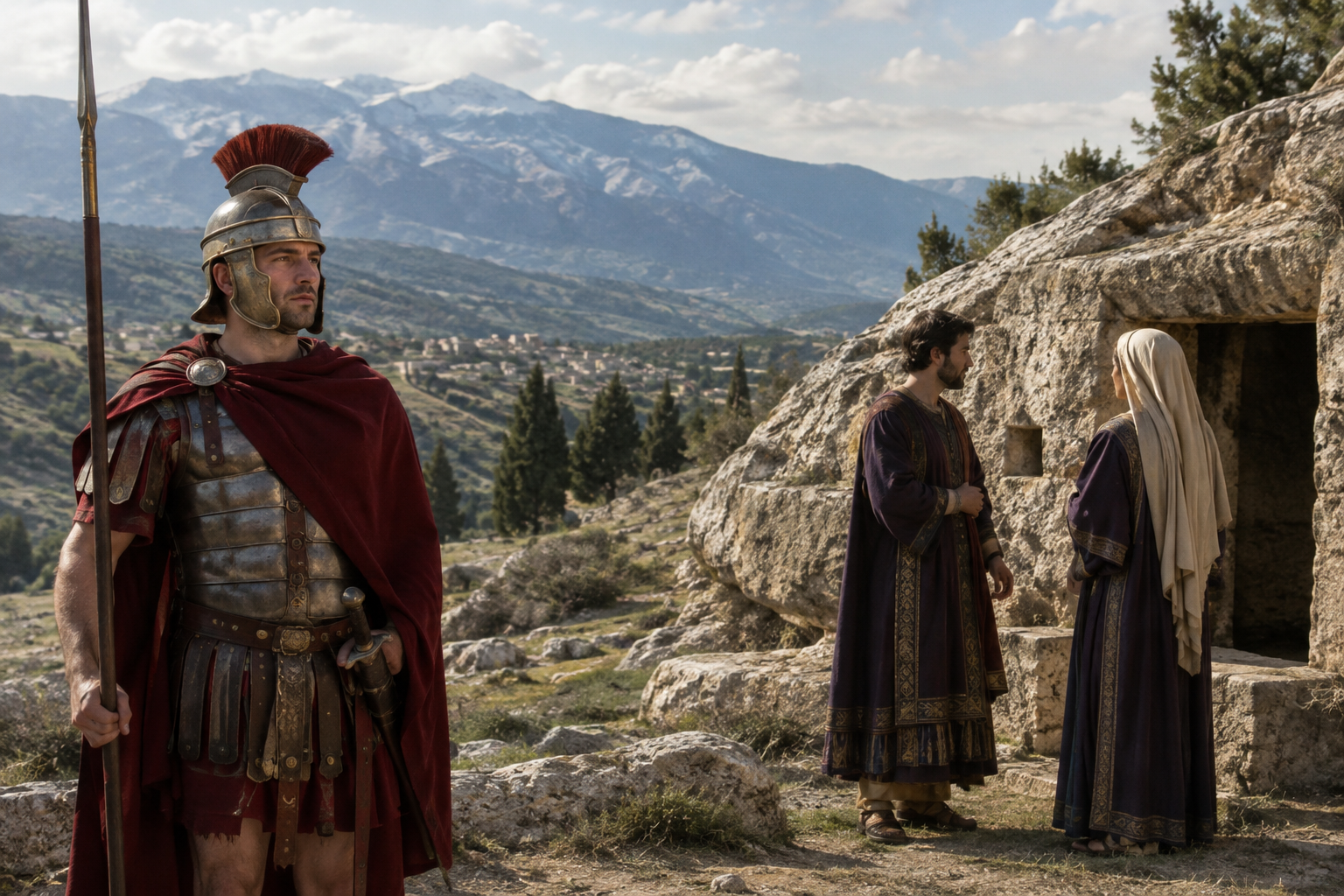
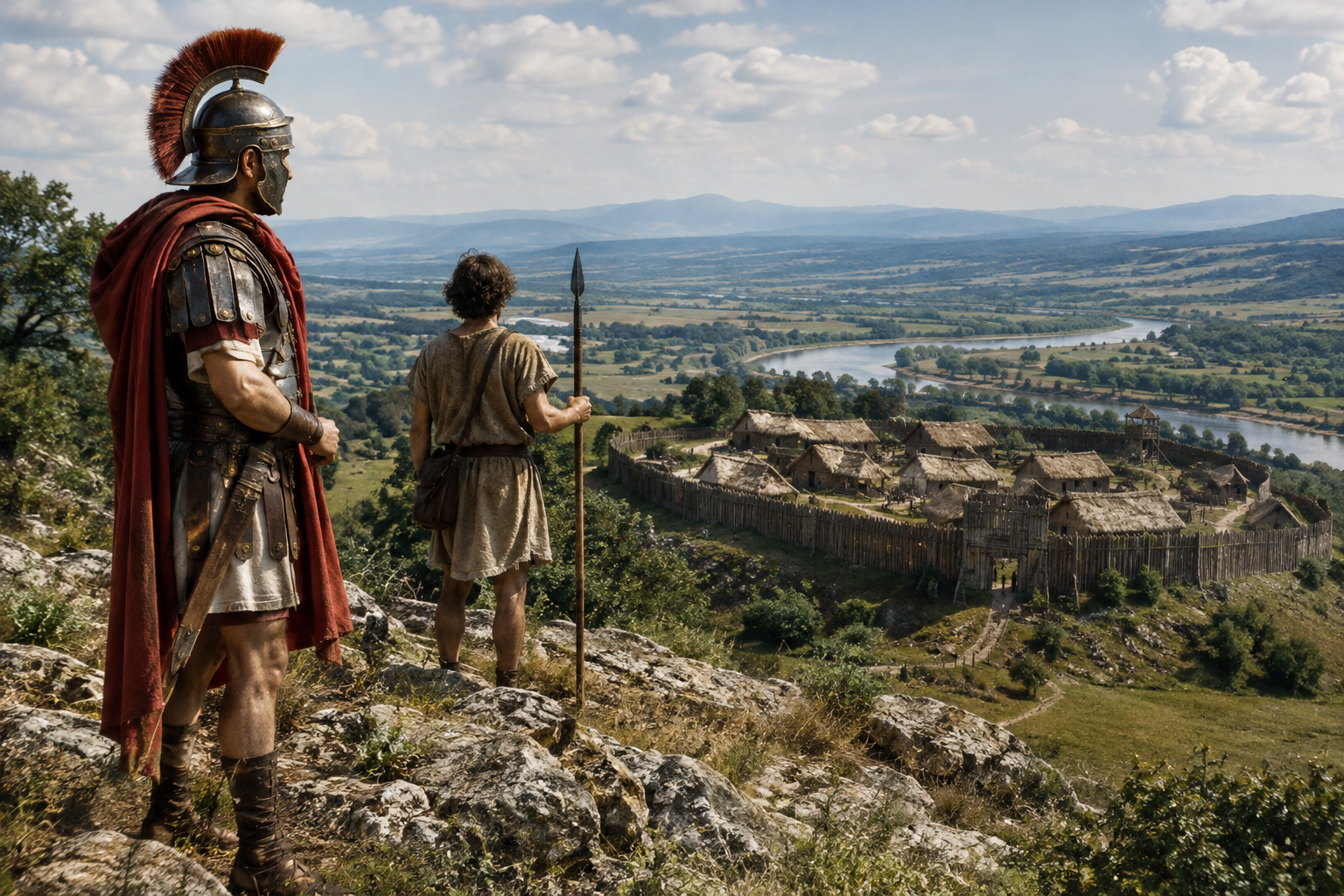
The sample R81, listed as Anatolian Roman Viale Rossini and dated to around AD 100, brings the story into the Roman imperial world. The very phrase "Anatolian Roman" is a reminder of how misleading neat categories can be. Under Rome, people from Anatolia did not stay put in a single homeland box. They served in armies, worked in ports, moved through trade, and settled in other parts of the empire.
Viale Rossini therefore matters as a social setting as much as a geographical one. A man carrying a branch linked here to J2a1a1a2b2a2b in a Roman-period context suggests continuity, mobility, or both, within the eastern and central Mediterranean orbit. The Roman Empire did not erase local ancestry; it redistributed it. Paternal lines with eastern Mediterranean associations could appear in Italy and far beyond without any need for melodrama.
That broader picture has emerged strongly from ancient DNA research on the Roman world. One widely discussed study of ancient Rome showed how dramatically the city and its surrounding population changed through time, especially under empire, when eastern Mediterranean and Near Eastern connections became much more visible in the genetic record. R81 fits comfortably into that larger historical reality: Roman populations were often far more mobile and mixed than older textbook caricatures allowed.
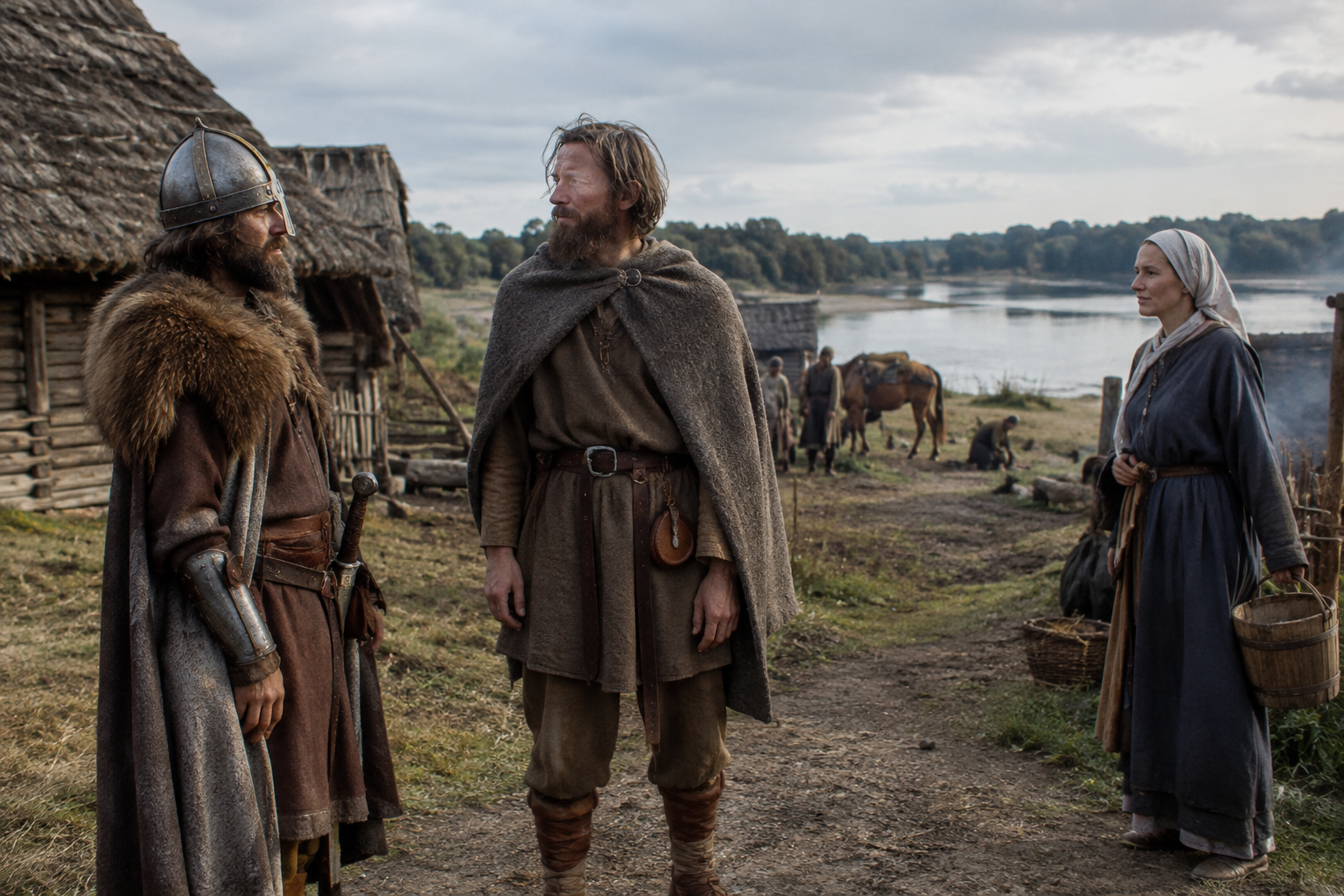
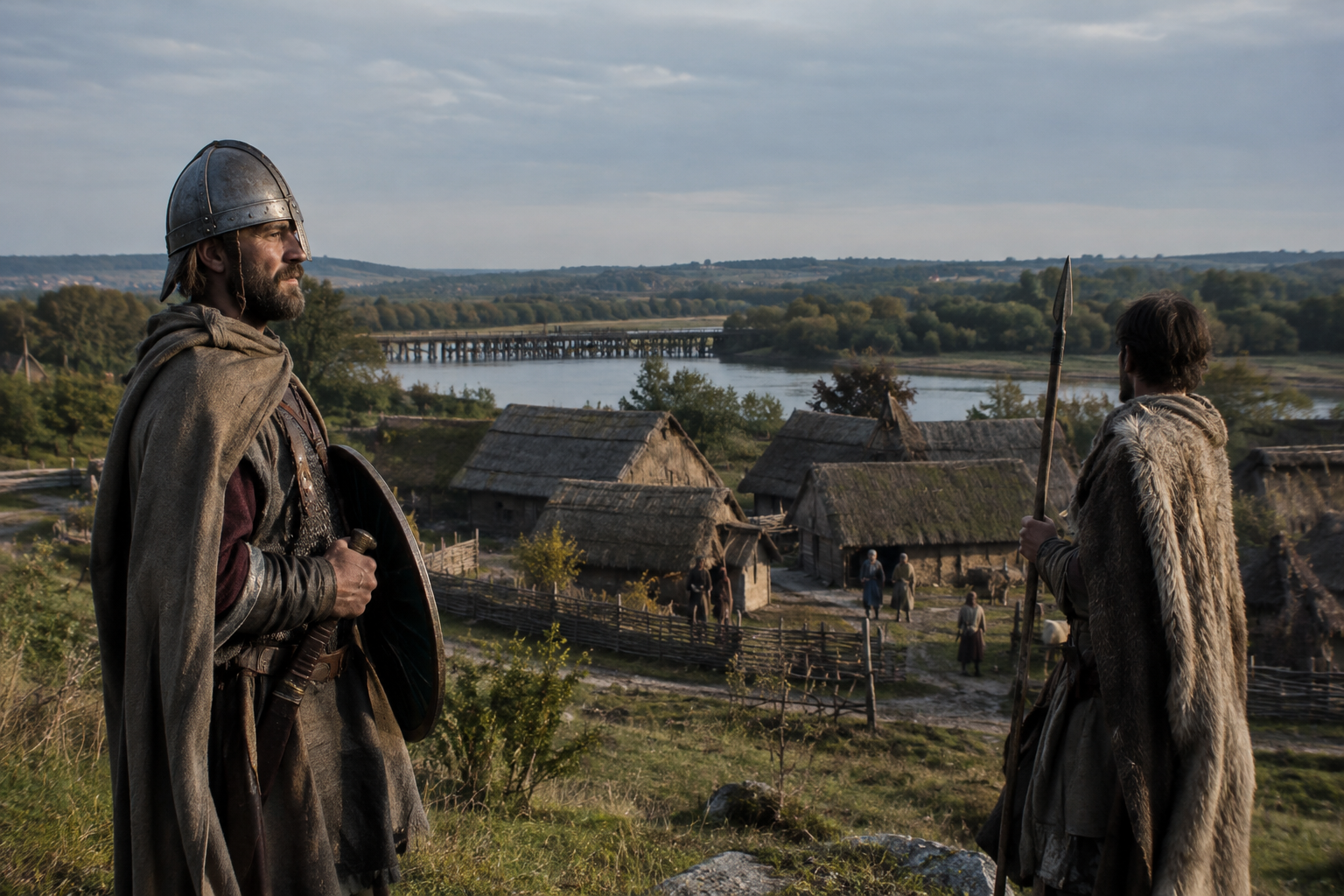
Then comes VK317 from Kaargarden, Denmark, around AD 950. This is the point where many readers sit up. A lineage with deeper appearances in Anatolia and the Roman world is now found in Viking Age Scandinavia. The temptation is to leap straight to a saga-worthy explanation - raiders, merchants, Varangians, captives, settlers - but the evidence does not let us choose one with confidence.
Still, the context is historically plausible in several ways. By the 10th century, Scandinavia was plugged into trade networks stretching through the Baltic, the North Sea, the Frankish world, the British Isles, the rivers of eastern Europe, Byzantium, and the Caliphate. Silver, textiles, weapons, people, and ideas moved along these routes. A paternal lineage ultimately rooted further south or east could arrive in Denmark generations before VK317, perhaps so thoroughly absorbed into local society that nothing outwardly marked it as foreign.
That is one of the most useful lessons of Viking Age genetics. The Viking world was not genetically uniform, and not every individual buried in Scandinavia represents a deep local paternal ancestry. Some lineages point to mobility into Scandinavia as well as movement out of it.
When these three samples are placed side by side, the strongest point is not that they prove a single uninterrupted trail from one named ancestor to another. They do not. What they do show is that the paternal ancestry associated with J2a1a1a2b2a2b belonged to regions and societies that were repeatedly plugged into major systems of movement.
In the Bronze Age, Anatolia sat between Mesopotamian, Caucasian, and Aegean worlds. In Roman times, the Mediterranean acted as an imperial highway, carrying people as much as goods. In the Viking Age, Scandinavia was no backwater, but part of another enormous web of exchange. A lineage that appears in all three settings begins to look less like an exception and more like a participant in the long history of Eurasian connectivity.
This is also why modern paternal ancestry can feel geographically surprising. A present-day man with J2a1a1a2b2a2b may have deep family history in Britain, Scandinavia, the Balkans, Italy, or elsewhere, while the older paternal branch has much earlier ties further southeast. Ancient DNA does not flatten those histories into one origin story; it layers them.
For someone researching J2a1a1a2b2a2b, the most distinctive insight from the current ancient evidence is its appearance across three very different but highly connected historical settings: Bronze Age Anatolia, the Roman Mediterranean, and Viking Age Denmark. That does not grant a neat ethnic label or a guaranteed noble pedigree. It does suggest that this paternal line was carried through some of the busiest corridors of the ancient and medieval world, where trade, empire, settlement, and family formation repeatedly brought distant regions together.
Comments