Clan Bayne
– 3 min read


Clan Bayne was a Scottish family of the Highlands, remembered less for vast political power than for a particularly vivid kind of clan symbolism: courage, vigilance, local rootedness, and the fierce protection of kin. The name is closely tied to the north of Scotland, especially Ross-shire, where Bayne tradition became linked with Tulloch and the landscape around Dingwall. In genetic tagging terms, the primary family haplogroup linked here is R1b1a1b1a1a2c1a1h1, a branch within the great R1b line so often associated with western Europe and, in many family-history discussions, with the long male-line background of Atlantic and Celtic-speaking regions.
The Bayne story sits very comfortably inside the larger Scottish clan world, where identity was made not only from blood and land, but from memory, warning, and emblem. The family is often associated with the wildcat motto tradition, the sharp Highland warning not to touch the cat without a glove. It is a splendid bit of martial heraldry: do not trouble peaceful people, but if you do, do not expect a gentle answer. That spirit of defensive pride runs through the Bayne name. Though not one of the biggest clans, Bayne has the sort of presence that lingers because symbols matter in Scotland. They condense a whole moral universe into one image: watchful, ready, loyal to its own, and not inclined to be pushed about. Among named figures connected to the broader family memory is Donald Mackay, noted in 1370, a useful reminder that northern Scottish kin-networks often overlapped in a world of alliances, landholding, and martial reputation.
Read more about Clan Mackenzie
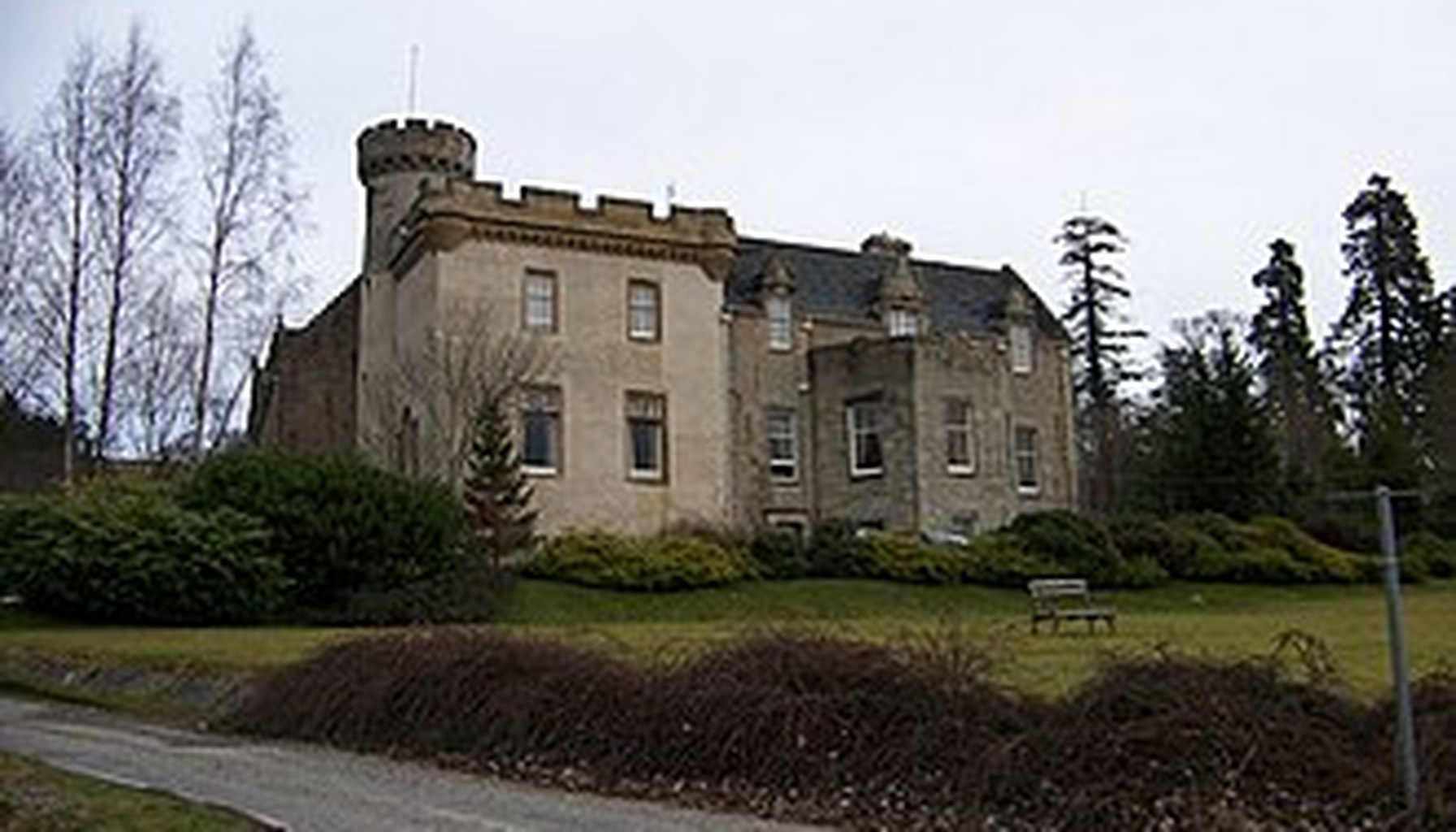
The great location anchor for the Bayne family is Tulloch Castle, near Dingwall in the Highlands, a place that gives the clan story walls, skyline, and geography. The castle stands on ground with medieval roots and later development, with parts of the structure growing over centuries into the substantial towered building known today. Historically it passed through important northern hands, including the Bains or Baynes of Tulloch, and later the Davidsons, before undergoing further alteration in the modern era. It is exactly the sort of Highland seat that helps one understand clan history properly: not as tartan theatre, but as lived territorial reality, with command of routes, visibility over surrounding country, and the social prestige that came from being fixed in stone. Tulloch Castle still survives and can be visited today, which is no small thing. To stand there is to grasp how a family identity could be tied to one defended place, one district, one view over the land, and one long memory of kinship and watchfulness.
From an ancient-DNA perspective, the Bayne haplogroup tag R1b1a1b1a1a2c1a1h1 can be placed in a much wider web of related or linked ancient males across Britain and Europe, though of course not as proof of direct descent from any one excavated person. Relevant linked samples include several Celtic Durotriges individuals from Duropolis at Winterborne Kingston in England, such as WBK12, WBK20, WBK29, WBK41, WBK05, WBK30, WBK43, WBK06, WBK08, WBK18, and WBK191, as well as later and wider examples like I26776 from Imperial Roman era Zadar in Croatia, KD061 from Bronze Age Orkney at Westray Links of Noltland, GMO015 from Bronze Age Calabria, ST2025 and ST1308 from medieval Belgium, CGG023699 from Gallic France, I11580 from post-Roman Dorset, IND013 from Merovingian Germany, R10656 from late Roman Austria, R10488 from late Roman Portugal, I21182 from Celtic Briton Oxfordshire, I16488 from late Bronze Age Wales, I11991 from Iron Age Somerset, I21309 from the Battlesbury Bowl hillfort, I3256 from Bronze Age Trumpington Meadows, I2417 from Amesbury Down, I4950 from Bell Beaker Upavon, I7576 and I7577 from Bronze Age Bedfordshire, I5473 from Boatbridge Quarry in South Lanarkshire, HI2 from Iron Age Hinxton, I5377 from Early Bronze Age England, and Rathlin2B from Copper Age Ireland. What these linked samples suggest is not a single neat family tree, but a deep and rather thrilling pattern: the same paternal branch appears in contexts stretching from Bronze Age Britain to Iron Age Celtic communities, Roman provincial worlds, and early medieval Europe.
If the Bayne story speaks to you, the next step is not simply to admire the motto and the castle, but to test the deeper ancestry behind the name. Upload your DNA to MyTrueAncestry and see whether you match Clan Bayne, the R1b1a1b1a1a2c1a1h1 haplogroup profile, or related ancient DNA samples from Celtic, Bronze Age, Roman, and medieval Britain and Europe.
Comments