The Glamorgan Family
– 2 min read


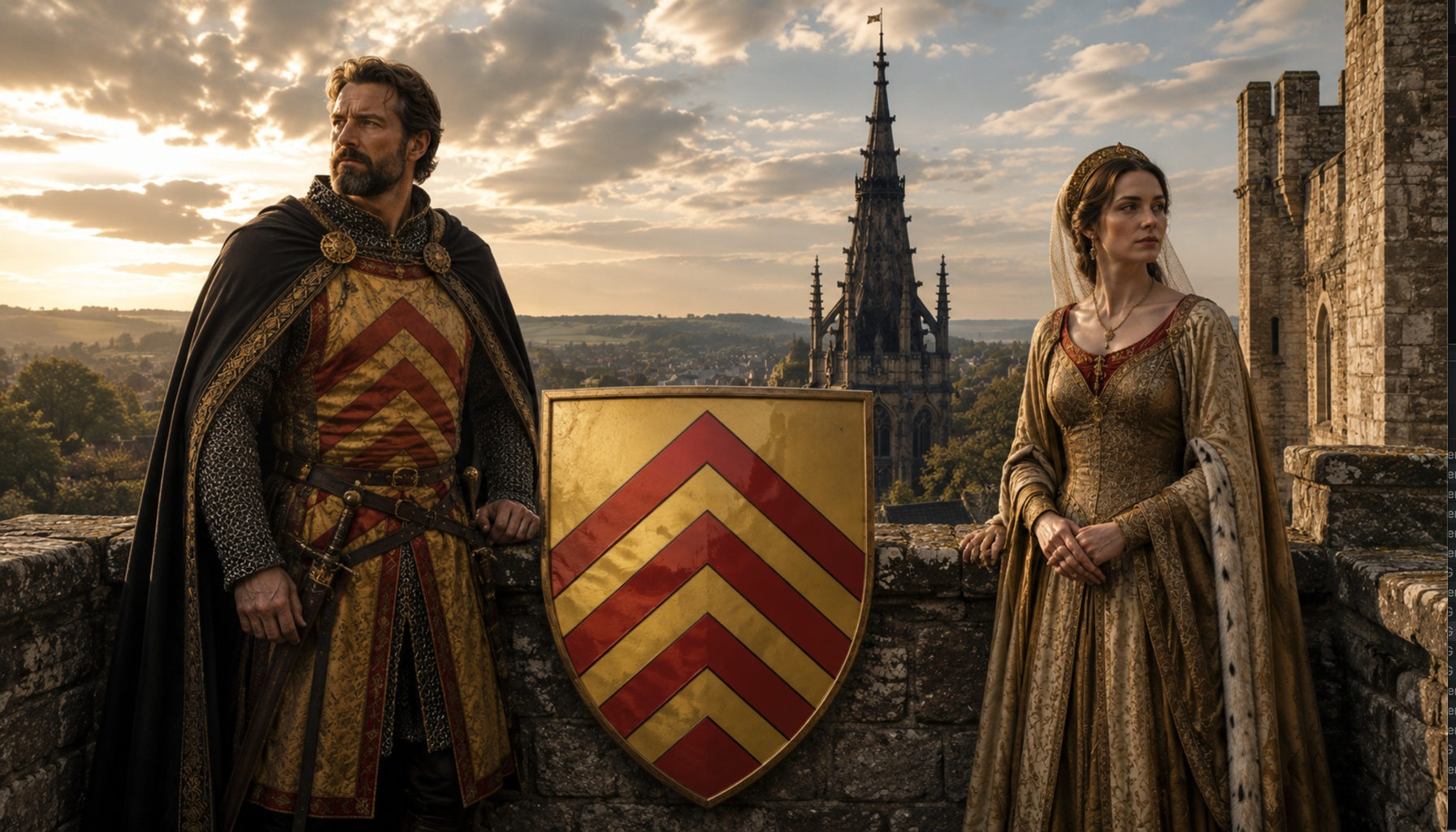
The Glamorgan family, in heritage terms, is best understood not as one tight modern surname line but as a noble identity rooted in the historic lordship and region of Glamorgan in south Wales. It belongs to that wonderfully tangled border world where native Welsh tradition, old dynastic memory, Norman expansion, Marcher lordship, ecclesiastical patronage, and castle power all met. The linked primary haplogroup here is R1b1a1b1a1a2a, a lineage widely associated with western European paternal histories, and very much at home in the broad genetic landscape that shaped Britain, Gaul, Iberia, and Atlantic-facing Europe.
To speak of a House of Glamorgan is really to speak of place-based aristocratic memory. Glamorgan was not merely a map label. It was a political theatre of fortified manors, great churches, shifting loyalties, Welsh lordship, and Anglo-Norman feudal structures laid over an older British landscape. Families associated with this world carried status through landholding, heraldry, service, marriage, and local authority. Among the notable figures linked to this heritage are Sir Thomas Stradling (1495-1571) and Sir Edward Stradling (1528-1609), members of one of the best-known gentry houses anchored in Glamorgan's long medieval and early modern story. Their prominence reflects exactly the sort of regional aristocratic identity the Glamorgan name evokes: learned, landed, martial, and deeply tied to the political culture of south Wales.
No location captures this heritage better than St Donats Castle on the Glamorgan coast. The site began as a Norman castle after the conquest period, but like so many Welsh strongholds it developed over centuries into something more layered: part fortress, part grand residence, part statement of lineage and authority. Associated for generations with the Stradling family, St Donats became a major seat of local influence, overlooking the Bristol Channel and embodying the blend of defensive architecture and elite domestic life that defined Marcher society. The castle as seen today is the result of medieval foundations and later additions, restorations, and reinventions, which is very fitting for Glamorgan itself, a region continually reshaped by conquest, adaptation, and memory. It is still standing and can be visited today, making it one of the most tangible surviving anchors for anyone exploring this branch of Welsh noble heritage.
From an ancient DNA point of view, the Glamorgan family's tagged haplogroup R1b1a1b1a1a2a sits within a deep and remarkably wide western European pattern. Related or linked samples carrying this broader lineage appear in contexts that feel strikingly relevant to a Glamorgan heritage story: Celtic and elite Iron Age burials in Germany such as Magdalenenberg MBG013, Asperg-Grafenbuehl APG001 and APG003, and Hochdorf HOC001; Celtic Durotriges individuals from southern Britain including WBK103, WBK106, WBK17, WBK36, WBK192, WBK10, WBK105, and WBK23; Roman and post-Roman Britain examples such as NWC009, FEN008, ARB003, and DUX003; Pict-era Scotland samples from Rosemarkie Cave including KD001 and related individuals; and medieval western European cases from Las Gobas in northern Spain such as ldo066, ldo037, ldo046, ldo048, ldo040, and ldo062. The point is not to claim direct descent from any one of these men, which the evidence does not support, but to show that the Glamorgan paternal signature belongs to an old network of lineages found among Bronze Age, Iron Age, Roman, medieval, and elite contexts across Atlantic and continental Europe. In other words, the DNA landscape suits the history rather well: Welsh, but never isolated; local, yet connected to a larger world of migration, lordship, and cultural mixing.
If you want to see how your own family story may connect with places like Glamorgan, medieval Wales, and the wider ancient world of R1b1a1b1a1a2a-linked populations, upload your DNA to MyTrueAncestry and explore the historical matches for yourself.
Comments