Clan Chaomanach
– 3 min read


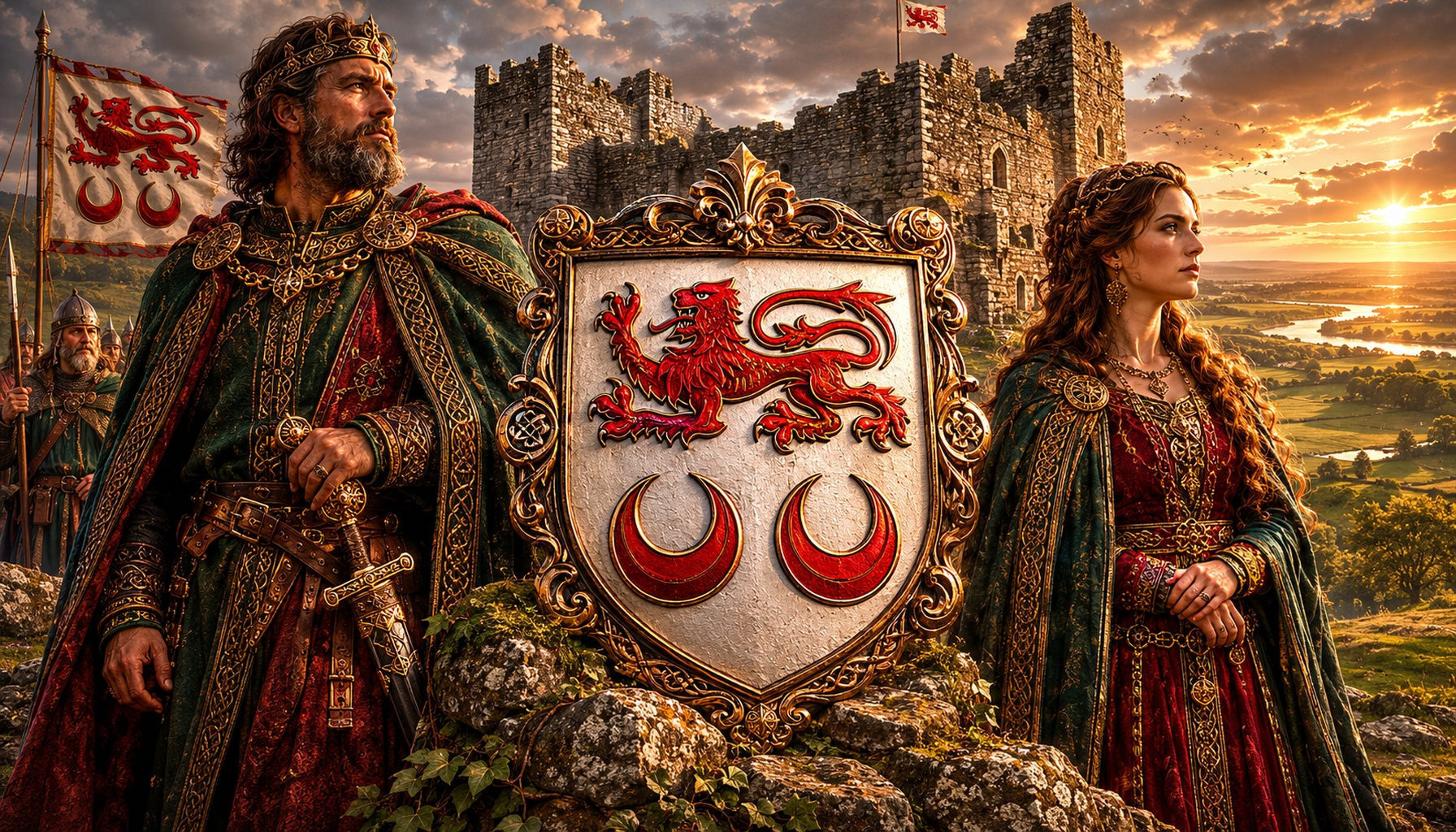
Clan Chaomanach belongs to the old Gaelic world of Ireland, and in surname tradition it is closely tied to the Caomhanach or Kavanagh line: a family identity rooted in ancestry, kingship, memory, and place. This is not simply a surname in the modern sense, but the echo of a lineage that carried weight in medieval Leinster, especially in the lands of south-east Ireland. The primary haplogroup linked with this family report is R1b1a1b1a1a2c1a4a, a branch well represented across parts of Atlantic and Celtic Europe and often associated, in broad population history, with long-standing paternal lines in the British Isles and Ireland.
The Chaomanach name survived because Gaelic families were stubborn in the best historical sense: they remembered who they were. Even through conquest, anglicization, shifting lordship, and migration, the older form endured in tradition. Historically, the Kavanaghs were associated with the dynastic orbit of the kings of Leinster, and the name itself points back to a Gaelic identity shaped by kinship rather than neat modern borders. Figures such as Donal Kavanagh, active in the years 1171-1175, stand in that world of transition, when native Irish lordship was confronting the enormous upheaval brought by the Anglo-Norman arrival. Clan Chaomanach therefore represents a very Irish pattern of continuity: descent, land, language, and the remarkable staying power of ancestral memory.
Read more about Clan Mac Murchada
A fitting location anchor for Clan Chaomanach is Dun Ailinne, the great ceremonial site in County Kildare, near modern Knockaulin. In early Irish tradition it was one of the royal sites of Leinster, which matters enormously for understanding the deeper setting of families linked to the political world from which the Kavanagh tradition emerged. Archaeology has shown Dun Ailinne to be a major prehistoric and early historic center, with vast timber structures and evidence of elite assembly, ritual, and kingship. It was not a castle in the later Norman sense, but something older and in some ways more intriguing: a place where power was staged, remembered, and made visible. If you want to understand Gaelic dynastic identity, sites like this are essential, because they remind us that lordship in Ireland was tied not only to territory but to sacred landscapes and ancient inauguration traditions. And yes, the site can still be visited today, though what you see is largely the earthwork and the setting itself rather than standing monumental ruins. It is exactly the sort of place where the landscape does much of the talking.
From an ancient DNA perspective, the R1b1a1b1a1a2c1a4a-linked picture is wide, mobile, and very much at home in the broader story of Celtic and post-Roman Europe. Related or linked samples include a notable cluster from Celtic Durotriges burials at Duropolis, Winterborne Kingston in England, such as WBK12, WBK20, WBK29, WBK41, WBK05, WBK30, WBK43, WBK06, WBK08, WBK18, and WBK191, alongside examples from Iron Age and later Britain and Ireland including Ramsgate in Kent, Mine Howe in Orkney, Kilteasheen in Roscommon, and several Roman, Saxon, Pict-era, and medieval contexts across Britain and Ireland. Comparable linked samples also appear farther afield, from Las Gobas in northern Spain, Verona, Zadar, Belgium, Hungary, and beyond. That does not prove direct descent from any one excavated individual, and it would be bad history to pretend otherwise. What it does show is that the paternal branch associated here belongs to a deep and well-attested population history stretching across Iron Age, Roman, and medieval western Europe, the same broad human landscape out of which Gaelic Ireland emerged.
Read more about Clan OSullivan
If Clan Chaomanach is part of your family story, you are looking at a heritage shaped by Gaelic resilience, royal memory, and an ancient Irish landscape that still survives in names and places. Upload your DNA to MyTrueAncestry to see whether you match this family group or any of the related ancient DNA samples linked with haplogroup R1b1a1b1a1a2c1a4a.
Comments