Haplogroups and Noble Lines Haplogroup Q1a1 At Dangbuk-ri in Gunsan, on Korea's west coast, two men buried in the Baekje kingdom around AD 550 have been reported with Y-chromosome lineages associated with Q1a1. Their sample IDs, GUC003a and GUC003b, are modest in the way ancient DNA often is: a pair of laboratory labels, a By Caterina • 5 min read
Haplogroups and Noble Lines Haplogroup E1b1a1a1a2a1a At Mtwapa on the coast of Kenya, one excavated individual dated to around AD 1600, sample I23548, carries the Y-DNA haplogroup E1b1a1a1a2a1a. That may look like an intimidating string of letters and numbers, but the setting is immediately human and historical: a Swahili coastal town at a time when East By Caterina • 5 min read
Haplogroups and Noble Lines Haplogroup E1bPF2477 At La Vall d'Uixo, in eastern Spain, a cluster of burials dated to about AD 797 offers a small but unusually focused glimpse into paternal ancestry in the early Umayyad period. Four related sample labels from the site - GOG23a, GOG23b, GOG23c, and GOG23 - are associated here By Caterina • 5 min read
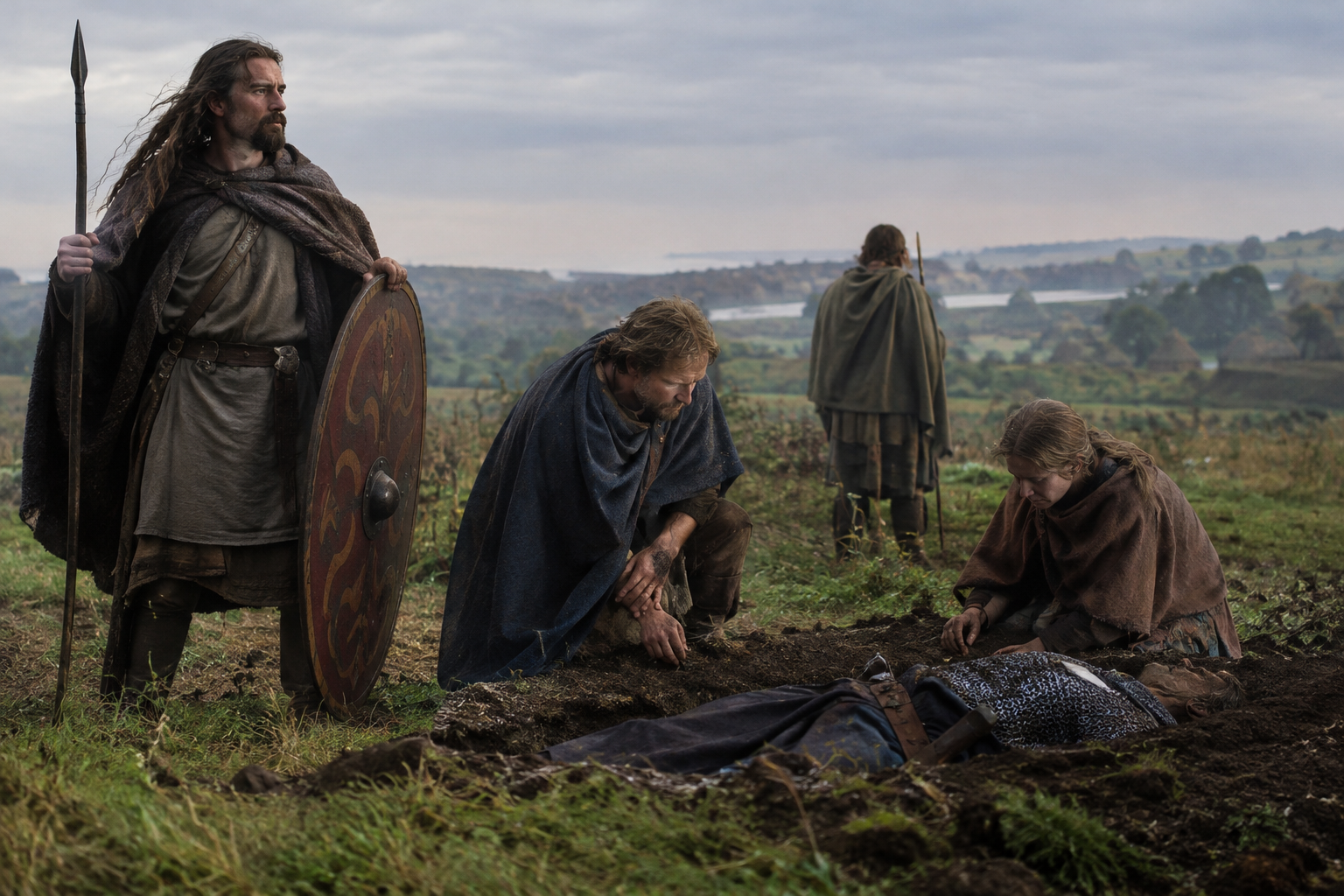
Haplogroups and Noble Lines Haplogroup R1b1a1b1a1a2d1a At Tomeide in Nesna, on the Norwegian coast, one Viking Age man dated to around AD 700 has been linked in MyTrueAncestry's ancient sample set to the Y-DNA haplogroup R1b1a1b1a1a2d1a. His identifier, CGG107023, is only a single data point, but it is an intriguing one. This is not By Caterina • 5 min read
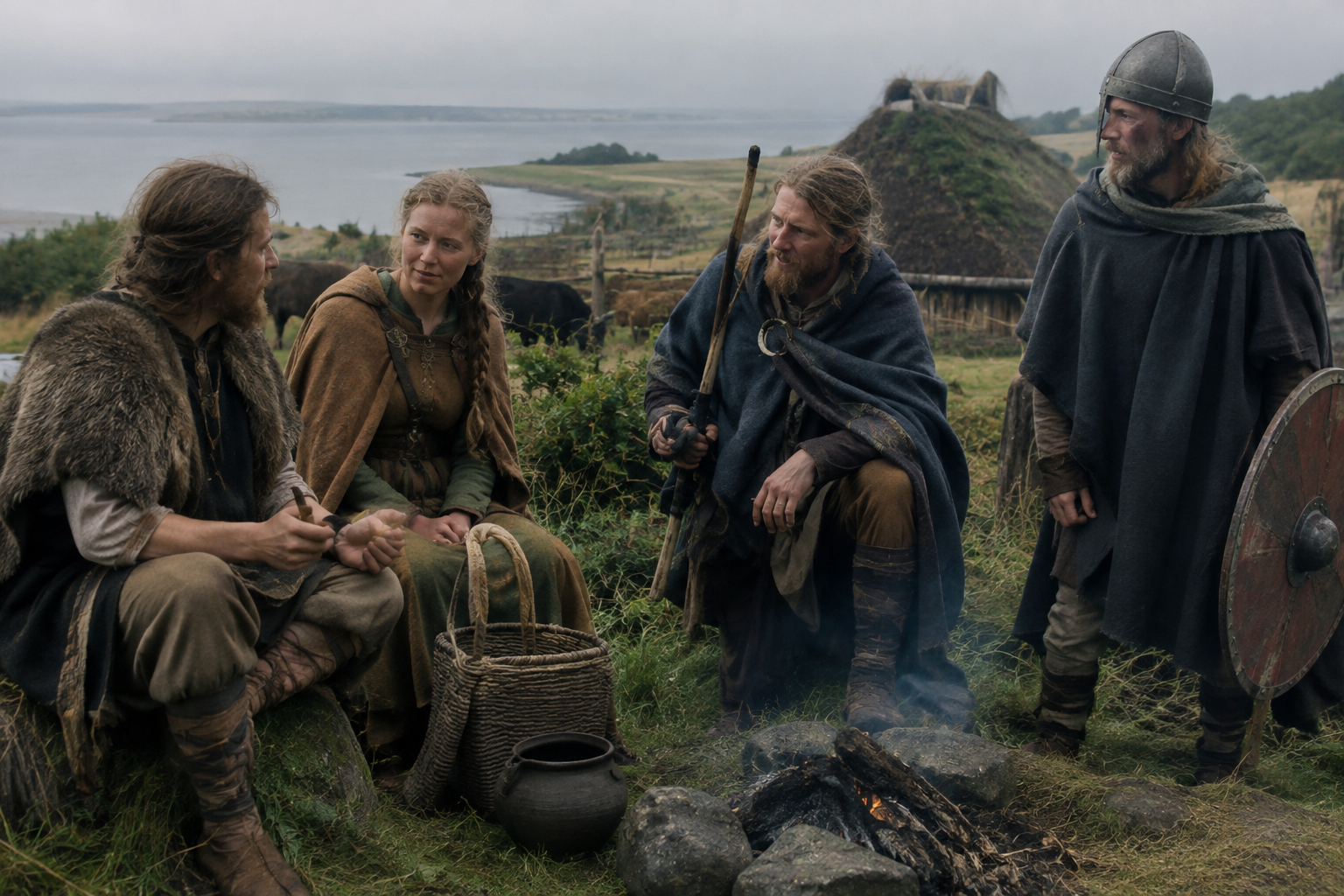
Haplogroups and Noble Lines Haplogroup I1a2a2 At Gevninge Overdrev on the Danish islands, one man dated to around AD 57, sample CGG107535, offers a useful starting point for thinking about Y-DNA haplogroup I1a2a2. The date places him in the Nordic Iron Age, well before the Viking Age, and the location matters just as much as the By Caterina • 6 min read
Haplogroups and Noble Lines Haplogroup R1b1a1b1a1a2a1a1a At Sedgeford in Norfolk, three men dated to around AD 760 - catalogued as SED018, SED020, and SED021 - place the Y-DNA haplogroup R1b1a1b1a1a2a1a1a in a very specific early medieval landscape: coastal eastern England, in the centuries after the Anglo-Saxon kingdoms had taken shape. One of them, SED020, is identified By Caterina • 5 min read
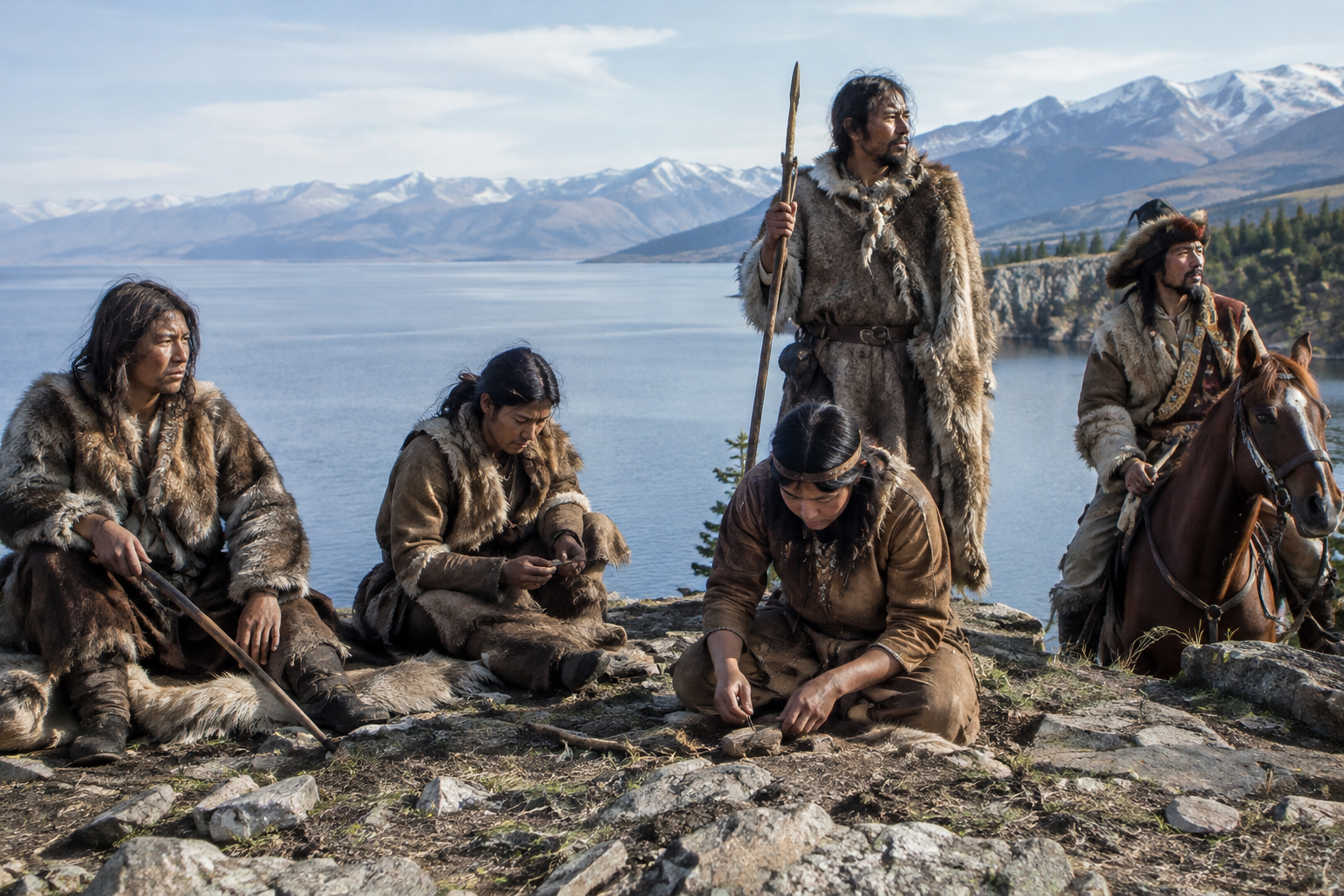
Haplogroups and Noble Lines Haplogroup Q1b1 At Lake Baikal in southern Siberia, one of the most revealing ancient paternal lineages turns up very early indeed. Sample I8501, dated to around 5725 BC and described as an East Siberian hunter-gatherer from Neolithic Russia, is associated here with Y-DNA haplogroup Q1b1. That matters because it places this paternal By Caterina • 5 min read
Haplogroups and Noble Lines Haplogroup R1b1a1b1a1a1b1a1 At Mosede Mose on Sjælland, an Iron Age man dated to around AD 175 appears in the ancient DNA record as sample CGG107489. On its own, that is only a single paternal line from a single life. But set beside other men from Sjælland - one from Sanddal around AD By Caterina • 5 min read
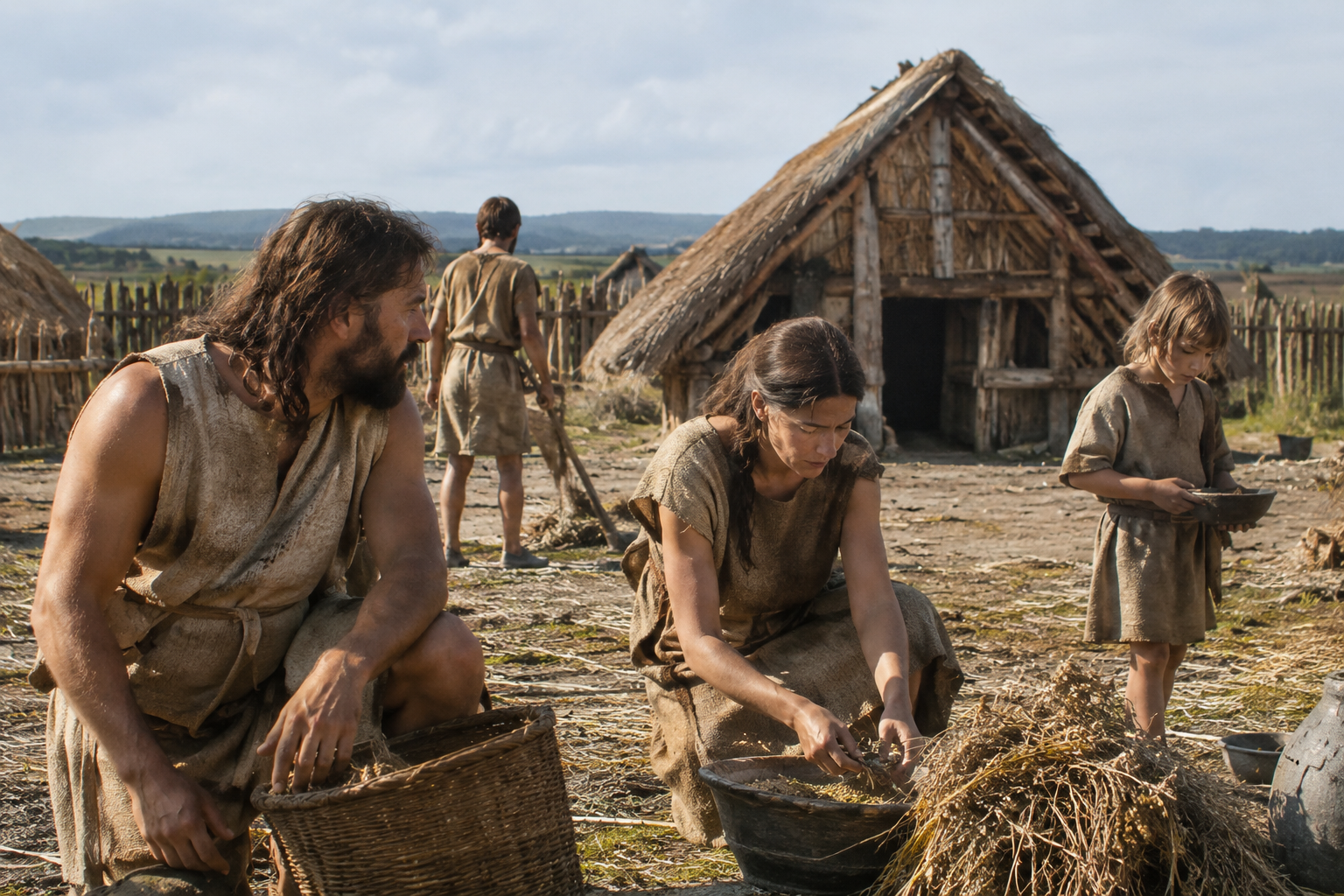
Haplogroups and Noble Lines Haplogroup R1b1a2a1a2b1 At Zwingendorf in Lower Austria, two men buried around 1900 BC, catalogued as ZWD001 and ZWD002, offer a useful starting point for thinking about the Y-DNA branch R1b1a2a1a2b1. They are not famous rulers or named warriors from a text. They matter for a simpler and, in some ways, more interesting By Caterina • 5 min read
Haplogroups and Noble Lines Haplogroup J2b2a1a1a1 At Karlovac in Roman Croatia, one ancient man dated to around AD 275 - sample BBC019 - offers a particularly sharp glimpse of haplogroup J2b2a1a1a1. He lived in the province of Pannonia Savia, in a part of the empire that sat between the Adriatic world, the Danube frontier, and the By Caterina • 5 min read
Haplogroups and Noble Lines Haplogroup E1b1b1b2a1a1a1a1f At Kerkouane on the Cap Bon peninsula of Tunisia, one ancient male dated to about 550 BC, sample I24194, places the Y-DNA haplogroup E1b1b1b2a1a1a1a1f in one of the most famous maritime worlds of the first millennium BC: Punic North Africa. Kerkouane is not just any site. It is one of By Caterina • 5 min read
Haplogroups and Noble Lines Haplogroup J2a1a2b2a2b2 At Selinunte on the southwest coast of Sicily, one ancient male from the Manuzza area, sample I21853, offers a neat little puzzle. He is dated to around 514 BC, in a city famous for being Greek in foundation yet deeply entangled with Phoenician and Punic worlds. In the MyTrueAncestry record, By Caterina • 4 min read
Haplogroups and Noble Lines Haplogroup E1b1b1b2b2 At Rigo Cave in Kenya, one ancient male known as I8923 has become a small but important signpost for tracing the paternal history of eastern Africa. Dated to around 400 BC and described here as PN Cushitic, he sits at an intriguing crossroads: pastoralism, regional mobility, and the long entanglement By Caterina • 5 min read
Haplogroups and Noble Lines Haplogroup G2a2b2a1a At Himera on the north coast of Sicily, one of the most famous battlefields of the ancient Greek world has also become a genetic archive. Among the burials linked to the First Sicilian War is an ancient warrior, sample I7219, dated to around 480 BC. For anyone tracing the Y-DNA By Caterina • 4 min read
Haplogroups and Noble Lines Haplogroup T1a In a cave on Crete, among the commingled remains from Hagios Charalambos, one Bronze Age man stands out for anyone interested in Y-DNA haplogroup T1a. The sample known as HGC010, dated around 1900 BC, links this paternal line to the Minoan world: an island society of palaces, seaborne exchange, and By Caterina • 5 min read
Haplogroups and Noble Lines Haplogroup G2b2 At Teishebaini in Armenia, ancient DNA has now put a paternal label on men who lived at the edge of a hard-driven Iron Age kingdom. Two individuals from the necropolis there, dated around 1030 BC and 985 BC and identified as I3938 and I3944, are associated here with Y-DNA haplogroup By Caterina • 5 min read
Haplogroups and Noble Lines Haplogroup J2b1a At Harjis in Armenia, an individual dated to around 1100 BC, sample I18237, brings J2b1a into sharp archaeological focus. This was the late Bronze Age world shading into the Urartian horizon: a highland zone of fortified places, shifting polities, and long-distance contacts linking the South Caucasus to Anatolia, northern Mesopotamia, By Caterina • 5 min read
Haplogroups and Noble Lines Haplogroup G2a2b2b1a1a2 At Viminacium in Serbia, a late Roman city on the Danube frontier, one man buried around AD 350 has become an unexpectedly useful guide to the history of Y-DNA haplogroup G2a2b2b1a1a2. The sample, VVG2706, belongs to a world that was unmistakably Roman in institutions and military geography, yet never neatly By Caterina • 5 min read
Haplogroups and Noble Lines Haplogroup I1a2a1a1d1 At Altheim in Bavaria, three men buried in the Merovingian period around AD 600 - Alh_117, Alh_132, and Alh_150 - have been associated with the Y-DNA haplogroup I1a2a1a1d1. That is already a striking pattern. One burial can be a curiosity; three men from the same early medieval By Caterina • 5 min read
Haplogroups and Noble Lines Haplogroup E1b1b1b2a1a1 At Arrabona-Menfocsanak in post-Roman Pannonia, one man dated to around AD 550, identified as MFC017, offers a striking starting point for thinking about Y-DNA haplogroup E1b1b1b2a1a1. He lived in the Little Hungarian Plain at a time when Roman administration had collapsed, new political groups were forming, and communities in the By Caterina • 5 min read
Haplogroups and Noble Lines Haplogroup R1b1a1a2a1a1c At Scarbantia Hegyko in Barbaricum, just beyond the old Roman frontier in what is now Hungary, several men buried in the Longobard period around AD 525 were found to share the Y-DNA haplogroup R1b1a1a2a1a1c. The individual IDs HMU050, HMU043, HMU019, and HMU062 do not give us a saga, a king By Caterina • 5 min read
Haplogroups and Noble Lines Haplogroup J2a1a1a2a1a2 In a Christian burial at Sant'Agata La Vetere in Catania, a man dated to around AD 1125 carries the Y-DNA line J2a1a1a2a1a2, identified in the sample record as SAVBN11b. That is an arresting place to begin, because medieval Sicily was not some tidy frontier between neat populations. It By Caterina • 5 min read
Haplogroups and Noble Lines Haplogroup S1a2a At Sigatoka on Viti Levu in Fiji, two men buried around AD 650, catalogued as SIG010 and SIG014, bring the Y-chromosome haplogroup S1a2a into unusually clear archaeological view. That matters because S lineages are closely associated with Island Southeast Asia and Oceania, yet ancient Y-DNA from this world is still By Caterina • 5 min read
Haplogroups and Noble Lines Haplogroup I2a1b2a2b1 At Wetwang Slack in East Yorkshire, four Iron Age men dated to around 225 BC carry the same reported Y-DNA branch: I2a1b2a2b1. Their sample IDs - I36987, I36864, I36812, and I37142 - come from burials associated with the Celtic Parisi of eastern Yorkshire, a group long known to archaeologists from By Caterina • 5 min read