The Glamorgan Family
– 3 min read


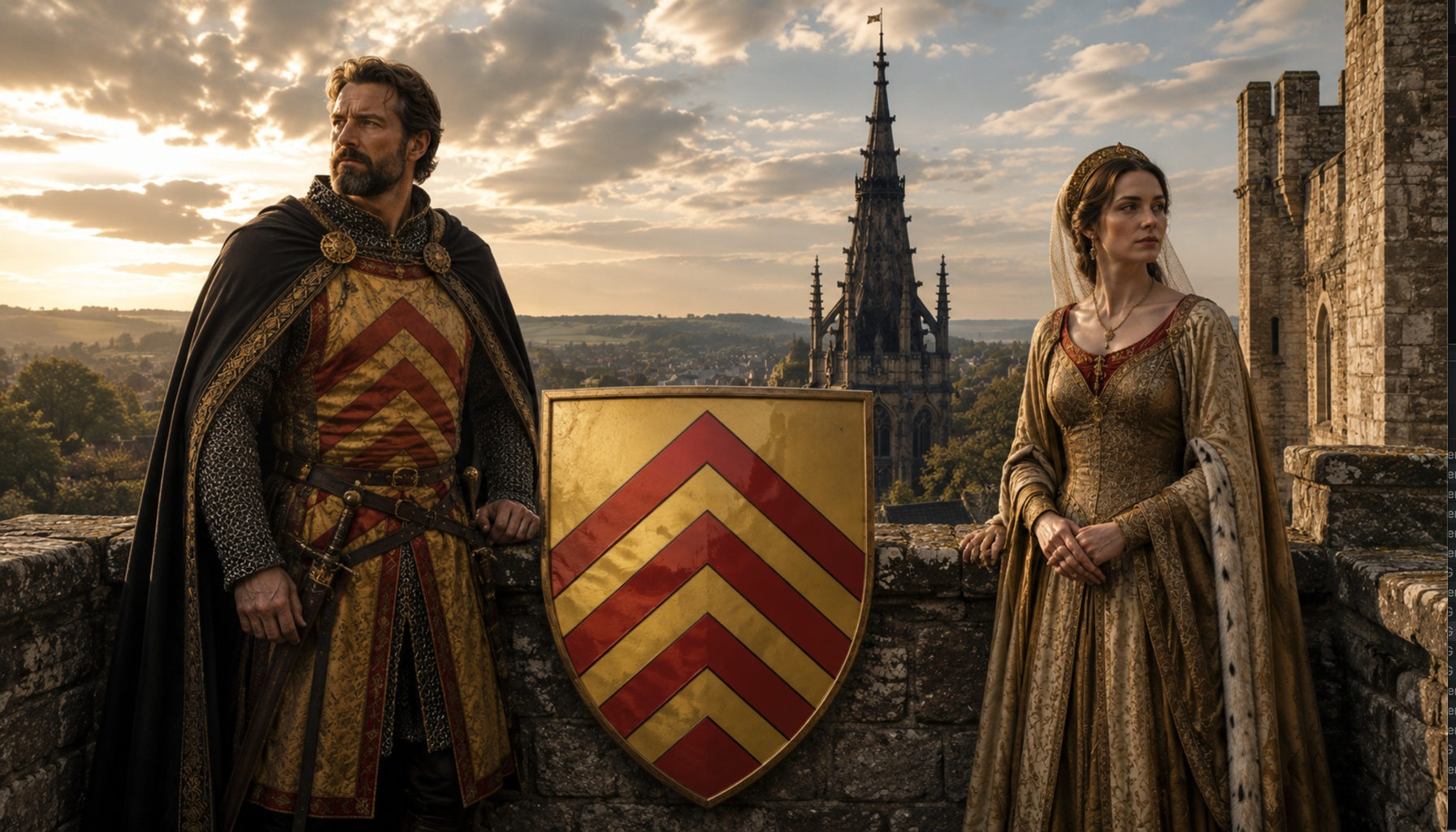
The Glamorgan family, in heritage terms, is less a single tidy surname line than a noble identity rooted in the historic county of Glamorgan in south Wales. This is a landscape where Welsh dynastic tradition met Norman conquest, Marcher lordship, ecclesiastical patronage, fortified manors, and a culture of regional aristocratic power. To speak of a House of Glamorgan is really to evoke that larger world: Welsh ancestry and memory, Anglo-Norman political structures, heraldic display, landed authority, and the social prestige attached to one of medieval Wales's most important regions. The primary haplogroup linked here is R1b1a1b1a1a2a, a lineage widely associated with western European populations and very much at home in the deep genetic story of Britain and Atlantic Europe.
Historically, one of the best-known gentry houses tied to this Glamorgan identity is the Stradling family, who became prominent in the Vale of Glamorgan and helped shape the region's later medieval and Tudor-era memory. Figures such as Sir Thomas Stradling (1495-1571) and Sir Edward Stradling (1528-1609) stand out as representatives of that world: wealthy, learned, regionally influential, and closely associated with the culture of lordship in south Wales. Their family history reflects exactly what makes Glamorgan so fascinating: not a simple "Welsh versus Norman" story, but a long entanglement of native inheritance, marcher politics, elite marriage networks, estate management, religious patronage, and the very practical business of holding land and status in a contested borderland society.
The great location anchor for this heritage is St Donat's Castle, near the Bristol Channel coast in the Vale of Glamorgan. The site began as a Norman castle after the conquest period, but what survives today is really a layered building, altered and expanded over centuries into a striking combination of medieval fortress, lordly residence, and later romantic restoration. The Stradlings were long associated with St Donat's, and under them it became not just a defensive place but a seat of family prestige, hospitality, scholarship, and regional influence. In later centuries the castle passed through further transformations, most famously its restoration by the newspaper magnate William Randolph Hearst in the 20th century. Today St Donat's Castle is still one of the most atmospheric buildings in south Wales, and it can still be visited in part through the St Donat's Arts Centre and public events, making it a very real and tangible gateway into the Glamorgan story.
From a DNA perspective, the Glamorgan family's tagged haplogroup R1b1a1b1a1a2a sits within a broad and very old western European pattern rather than pointing to one single medieval household. Related or linked ancient DNA samples with this haplogroup appear across a remarkably wide historical range: Celtic and elite Iron Age contexts such as Magdalenenberg Villingen-Schweningen (MBG013), Asperg-Grafenbuehl (APG001, APG003), and Hochdorf Biegel (HOC001); Roman and post-Roman Britain in samples like Eddington NWC009, Fenstanton FEN008, and Arbury Wooden Coffin ARB003; Celtic southern Britain through multiple Durotriges Duropolis Winterborne Kingston burials including WBK103, WBK106, WBK17, WBK36, WBK192, WBK10, WBK105, and WBK23; and early medieval to medieval western European contexts such as Las Gobas in northern Spain with samples ldo066, ldo037, ldo046, ldo048, ldo062, and ldo040. There are also linked finds from Pict-era Scotland such as Rosemarkie Cave KD001 and related individuals, plus medieval England examples including Cherry Hinton ATP_PSN_944 and St Johns Hospital Cambridge ATP_PSN_36. None of this proves direct descent from any named ancient individual, of course, but it does place the Glamorgan-associated paternal line in a genetic world stretching through Bronze Age, Celtic, Roman, and medieval populations across Britain and Atlantic-facing Europe.
If you want to see how your own DNA may connect with the deeper history of Wales, Britain, and ancient Europe, upload your results to MyTrueAncestry and explore the connections for yourself.
Comments