The Ferrers Family
– 3 min read


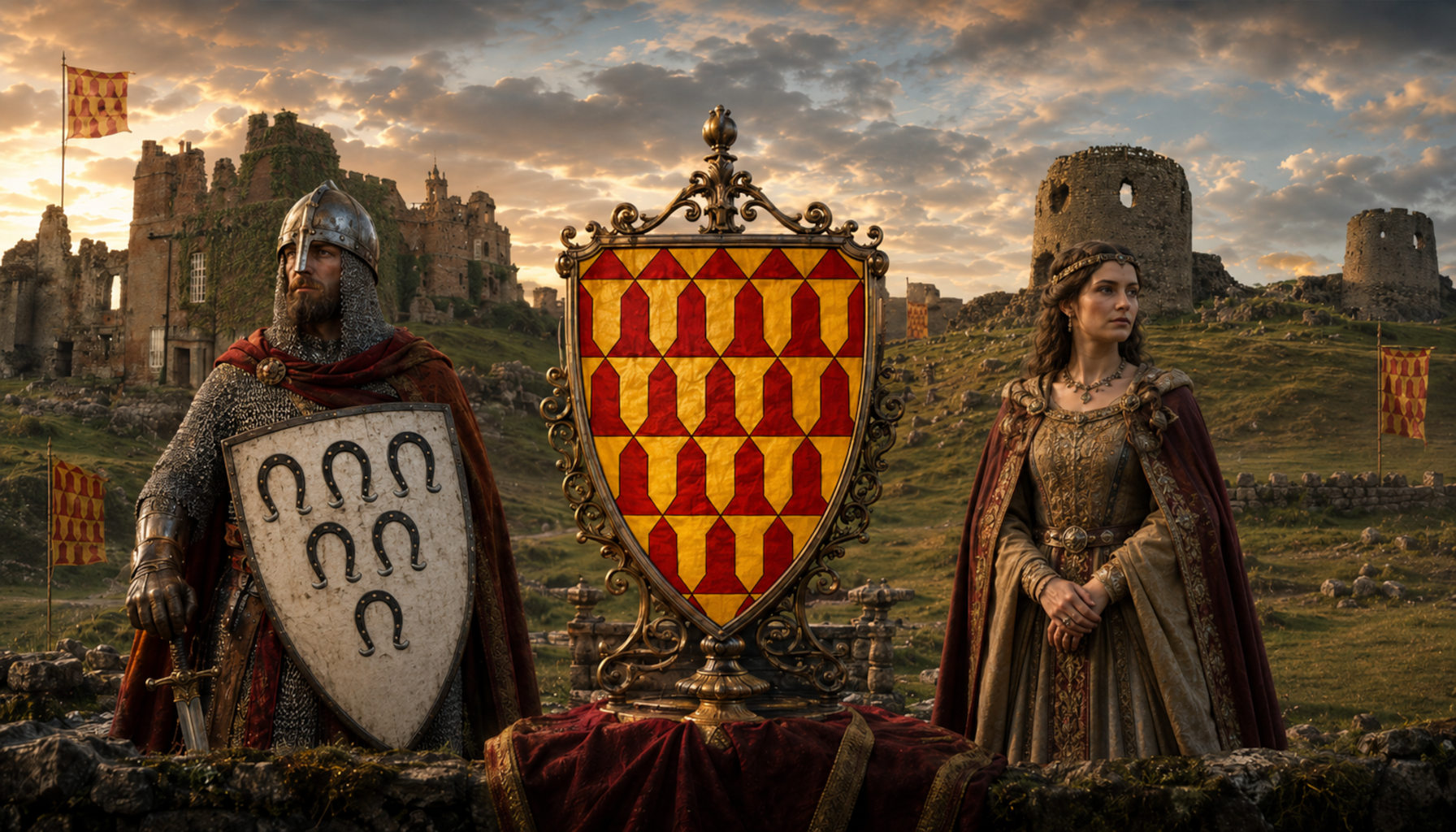
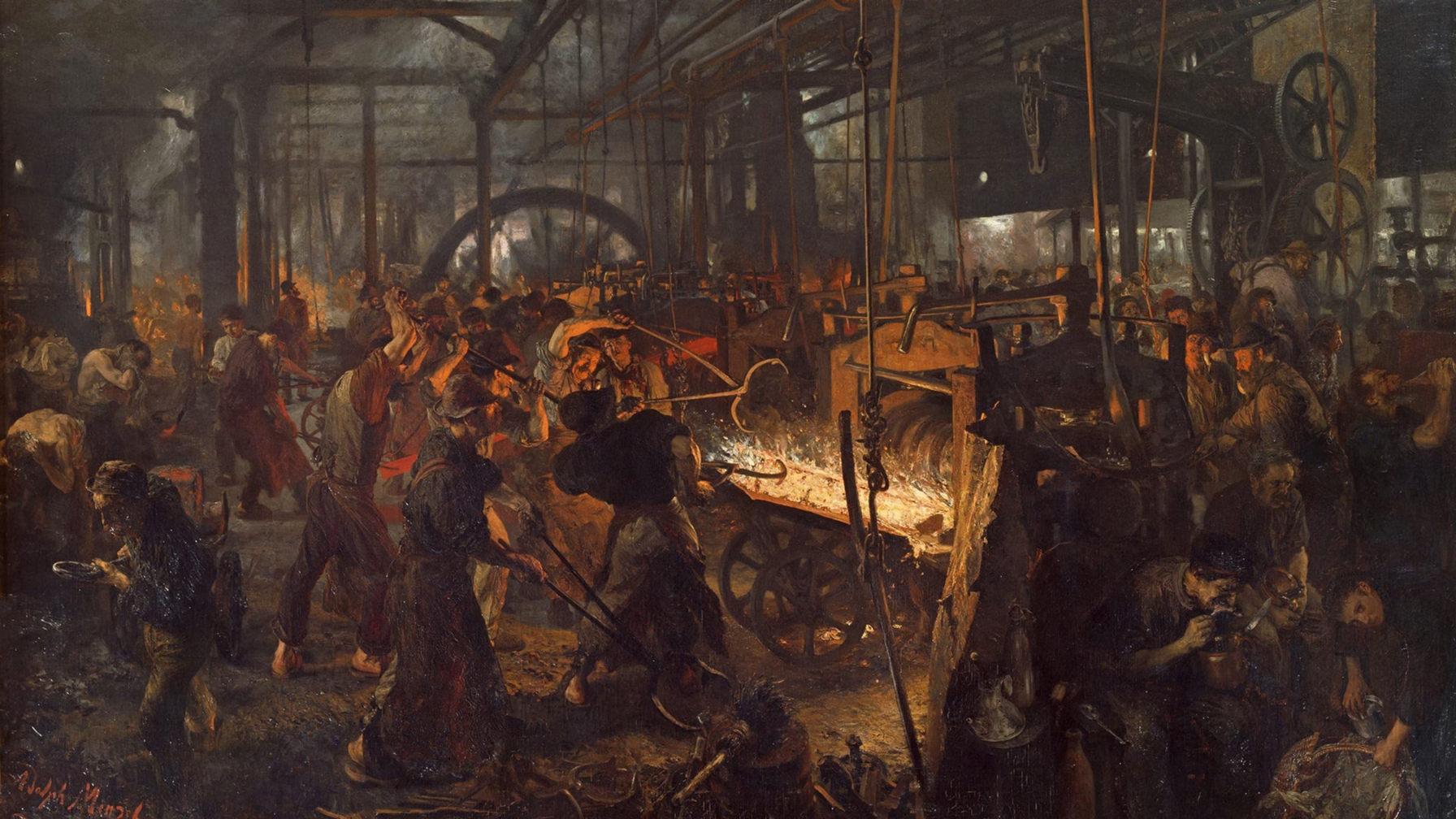
The Ferrers family were one of the great Anglo-Norman noble houses planted in England after 1066, and they look, in many ways, like a textbook example of how conquest turned into dynasty. Their name came from Ferrieres-Saint-Hilaire in Normandy, a place known in the medieval world for ironworking, which helps explain the old form de Ferrieres and later de Ferrers. That is not some decorative label: it ties the family to a real landscape, a real industry, and the practical world of metal, horses, and lordship. The primary haplogroup linked here is R1b1a1b1a1a1b1a, a paternal line found across a wide span of ancient and medieval European contexts.
The first clearly documented figure is Walkelin de Ferrieres, but it was his son Henry de Ferrers, arriving in the service of William the Conqueror, who made the family in England. Henry was rewarded on a grand scale with estates especially in Derbyshire and Leicestershire, and he established Tutbury Castle as his caput, the chief seat from which power, landholding, and patronage radiated outward. He also founded Tutbury Priory, which is exactly the sort of move Norman aristocrats made when they wanted to root conquest in stone, prayer, and memory. From there the family rose further through Robert de Ferrers, later Earl of Derby, a notable commander for King Stephen at the Battle of the Standard in 1138. Their heraldry, vairy or and gules, became one of the memorable visual signatures of medieval England, while the older horseshoe symbolism kept alive the family's ironworking associations. Like many great medieval houses, the Ferrers story also includes reversal: the 6th Earl of Derby was attainted after the Second Barons' War, and the earldom was lost, though branches such as Ferrers of Chartley and Ferrers of Groby endured.
Explore the House of de Warenne
If you want one place that captures the Ferrers in England, it is Tutbury Castle in Staffordshire. Founded soon after the Conquest, it occupied a commanding position above the River Dove and the crossing between regions that mattered politically and economically in the Midlands. It began as a Norman motte-and-bailey stronghold and developed over time into a major fortified residence associated first and foremost with the Ferrers earls. This was not just a military site but the administrative heart of a lordship, the place where tenants, retainers, clerics, and officials all met the reality of Norman rule. Later centuries layered other histories onto it, including royal and aristocratic use, sieges, decline, and romantic ruin. Today the remains still stand, and yes, it can be visited, which matters because places like Tutbury are often the best reminder that noble power was never abstract. It sat on hillsides, watched roads, controlled estates, and made itself visible.
Read more about the Stafford Family
The Ferrers family should not be treated as directly descended from any specific ancient sample unless proven by documentary and genetic evidence, but the haplogroup R1b1a1b1a1a1b1a is linked with a broad and fascinating spread of ancient individuals across Europe. Related or linked examples include Bronze Age Unetice Leubingen-Sommerda in Thuringia, Germany (LEU007), Late Neolithic Mienakker in the Netherlands (I12902), Nordic Bronze Age Denmark at Karlstrup (CGG106705_CGG106706 and CGG106708), Battle Axe Sweden at L Beddinge 56 (RISE98), Iron Age and Danii-associated Denmark samples from Sjaelland and nearby regions such as CGG107423, CGG106724, CGG106720, CGG106722, CGG019442, and CGG106730, Saxon and early Anglo-Saxon England from West Heslerton and Buckland Dover including I11583, I11584, I20652, BUK025, BUK060, BUK064, and BUK070, Frankish and Merovingian Germany such as Mln42 and BRC006x, Migration Period Lower Saxony samples HID003 and HID004, medieval Belgium at Sint-Truiden including ST0024, ST0323, ST0786, and ST2969, Viking Age Sigtuna in Sweden (urm160 and urm160x), and even Imperial Roman and post-Roman contexts such as I15527 from Viminacium in Serbia and OSIJ003 from Mursa in Croatia. What this gives us is not a family tree for the Ferrers, but a long archaeological horizon for the paternal lineage: from later prehistory through Germanic, Roman, Frankish, Anglo-Saxon, Viking, and medieval worlds, all of which fed into the making of the Europe from which the Normans emerged.
If the Ferrers story speaks to you, from Norman castles and earldoms to heraldry and deep-time DNA, the next step is to test your own link. Upload your DNA to MyTrueAncestry and see whether you match the Ferrers family profile or any of the related ancient DNA samples connected with haplogroup R1b1a1b1a1a1b1a.
Comments