The Clinton Family
– 3 min read


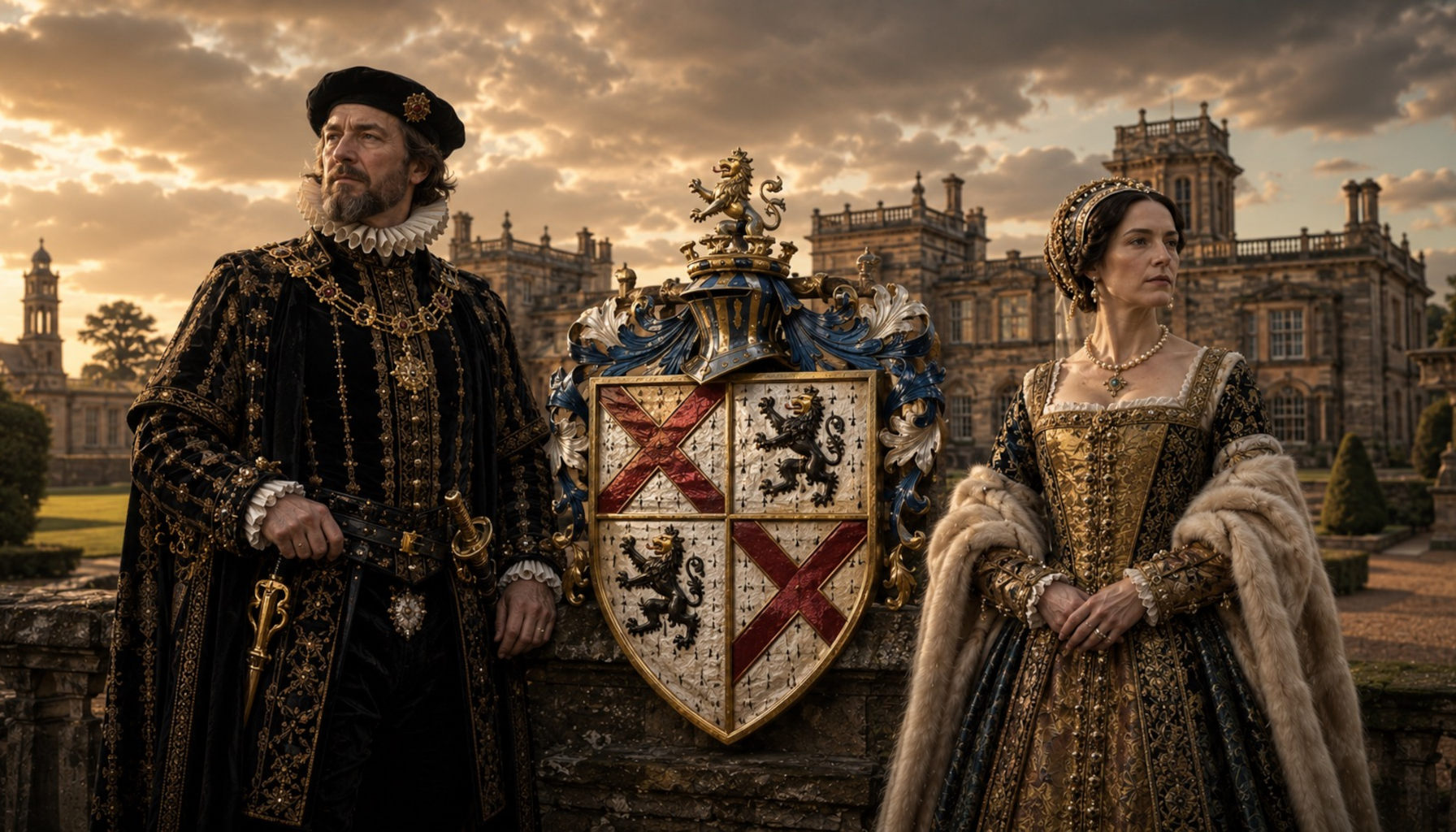
The Clinton family was one of those Anglo-Norman houses that began in the hard, practical world of conquest and royal service and ended up woven deeply into the fabric of English noble life. Their roots lie in the Norman world that followed the Conquest of 1066, when military followers, administrators, and landholders from across Normandy established themselves in England. Over time, the Clintons became particularly associated with Warwickshire, Lincolnshire, and other estates across the kingdom, building their position through landholding, marriage, crown service, and the patient inheritance of rank. In haplogroup terms, the primary family line here is linked with G2a2b2a1a1b1a1a2a5, a lineage with a long and rather fascinating European time depth.
The family story is not just about titles, though they had plenty of those, but about how a Norman military lineage became unmistakably English while still carrying the stamp of its continental beginnings. The Clintons appear in the world of castles, feudal obligations, heraldry, Parliament, and court politics, and they rose high enough to leave some very recognisable names in the record. John de Clinton, 1st Baron Clinton, who lived from 1258 to 1315, stands as an important early figure in the family's baronial ascent. Much later, Edward Clinton, 1st Earl of Lincoln, 1512 to 1585, carried the name into the Tudor age, serving as a major naval and political figure under Henry VIII and Elizabeth I. Across these centuries, the Clintons illustrate a larger English story: how Norman newcomers became hereditary peers, regional powers, and fixtures of the political nation.
If there is one place that anchors the Clinton story especially well, it is Maxstoke Castle in Warwickshire. This is not the fantasy castle of later romance, but a moated fortified manor house, very much a statement of aristocratic status in the 14th century. It was built in stone after an earlier manor on the site, and its form tells us a great deal about the age that produced it: noble households wanted defence, certainly, but also display, comfort, and a visible claim to local authority. The castle is closely associated with John de Clinton, 1st Baron Clinton, who obtained licence to crenellate in the 14th century. What survives today still gives a striking sense of enclosure, power, and carefully managed lordship, with its moat, gatehouse, curtain walls, and corner towers. It remains one of the most evocative medieval sites in the county, and yes, it can still be visited on limited open days and special access arrangements, which makes it a rare chance to see a genuine Clinton stronghold in the landscape rather than just on a pedigree chart.
Read more about the Stafford Family
The Clinton family's tagged paternal haplogroup, G2a2b2a1a1b1a1a2a5, also appears in a scattered but intriguing set of related ancient DNA samples across Europe. These include individuals from elite Celtic contexts such as Magdalenenberg at Villingen-Schweningen in Germany, Hochdorf in Germany, and Durotriges burials from Winterborne Kingston in England, as well as later samples from Roman Pannonia in Hungary, Iron Age and Gothic-associated burials in Poland, medieval Sint-Truiden in Belgium, Viking Age Trelleborg in Denmark, and post-Roman Britain at Randwick Long Barrow. Samples linked to this branch include MBG010, WBK02, WBK195, HOC002, HOC002b, GYS041, PCA0036, PCA0015, ST1039, CGG023724, CGG023644, CGG106833, CGG020724, PCA0063, PCA0027, PCA0062, R11391, I16327, and I25516. That does not mean direct descent from any one of them, and it is important not to pretend otherwise. What it does suggest is that the Clinton paternal line belongs to a much older European tapestry, one that runs through Iron Age, Roman, post-Roman, and medieval populations long before it appears under a Norman surname in England.
Explore Celtic origins through ancient DNA
If you are exploring the Clinton family, the real excitement lies in connecting the documentary record with the deeper human story underneath it: Norman settlement, medieval lordship, Tudor power, and the older genetic landscape of Europe. Upload your DNA to MyTrueAncestry to see whether you match the Clinton family or any of the related ancient DNA samples linked with haplogroup G2a2b2a1a1b1a1a2a5.
Comments