The Princely House of Powys
– 3 min read


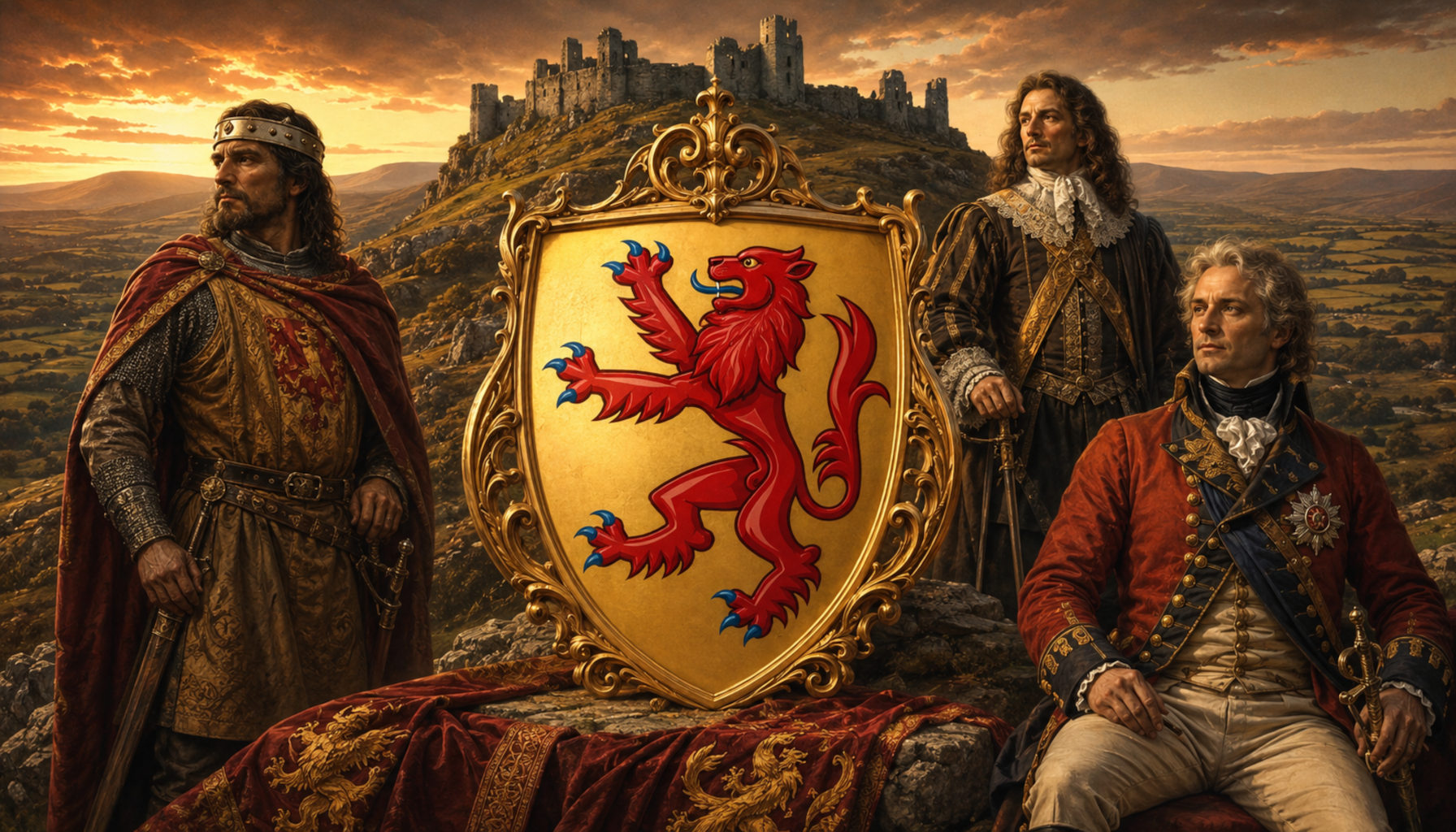
The House of Powys belongs to the dynastic history of the old Welsh kingdom of Powys, one of the great medieval realms of Wales, rooted in the border country between the central Welsh uplands and the Marches. In genealogical and heritage terms, this is a family tradition tied to native Welsh princely rule, later aristocratic memory, and a powerful regional identity that survived long after the independent kingdom itself was broken up. For haplogroup tagging, the primary family haplogroup linked here is R1b1a1b1a1a2c1a, a lineage with a broad ancient presence across Britain and western Europe.
What makes Powys so fascinating is that it was never a quiet backwater. It sat in a frontier world where Welsh princes, Marcher lords, and the English crown were constantly testing one another. After the earlier kingdom fragmented, branches such as Powys Wenwynwyn carried on that princely tradition in a harsher and more contested political landscape. Figures such as Gruffudd ap Gwenwynwyn (1220-1286) stand at the heart of that story: a ruler forced to manoeuvre through civil conflict, shifting loyalties, and the growing pressure of English royal power. The red lion on gold, later so strongly associated with Powys, is one of those unforgettable heraldic images that seems to capture the whole atmosphere: proud, embattled, and impossible to ignore.
Read more about the Royal House of Dinefwr
The House of Powys also has a long afterlife. Medieval Welsh princely memory did not simply vanish; it was absorbed, reshaped, and preserved in later noble titles. That is why the story eventually reaches people like William Herbert, 1st Baron Powis, later Marquess of Powis (1626-1696), and Edward Clive, 1st Earl of Powis (1754-1839). By then we are in a different political universe, of Restoration courts, Jacobite loyalties, parliamentary Britain, and landed aristocracy. Yet the old name Powys or Powis still carried weight. It kept alive the memory of a Welsh kingdom, a princely lineage, and a landscape of hill forts, valleys, and contested lordships stretching from the Dee valley to Montgomeryshire.
Powis Castle, near Welshpool in Powys, is one of the great physical anchors for this layered history. The site began as a medieval fortress, originally associated with the princes of Powys Wenwynwyn, before passing into the hands of the Charlton family and, later, the Herberts. Architecturally it is a wonderful historical palimpsest: part castle, part fortified residence, part grand aristocratic house, with later rebuilding and embellishment that turned a medieval stronghold into one of the most striking country houses in Wales. It is especially famous for its dramatic terraced gardens, descending in a series of formal Italianate layers that feel almost improbably theatrical against the Welsh landscape. Inside, the castle reflects centuries of elite collecting and reinvention, while outside it still commands the countryside in a way that reminds you why such places mattered in the first place. Happily, it can still be visited today, and that makes it more than a symbol. It is a rare chance to stand in a place where the memory of native princes, Marcher conflict, and later aristocratic Powis all meet.
From a DNA perspective, the Powys haplogroup tag here is R1b1a1b1a1a2c1a. That does not prove direct descent from any excavated ancient individual, and it is important not to pretend otherwise. What it does show is that this paternal line belongs to a wider western European story visible in related ancient DNA samples across many centuries and regions. Linked examples include Iron Age and Roman Britain samples such as Knobbs Farm Somersham (KNF006), Fenstanton Cambridgeshire (FEN008), Cambridge Vicars Farm (VIC016), Durotriges-associated Winterborne Kingston (WBK36), and later medieval English individuals from Cambridge St Johns Hospital (ATP_PSN_192 and ATP_PSN_68) and Augustinian Friars (ATP_PSN_512 and ATP_PSN_520). There are also related signals in Pict-era Orkney samples such as KD004, in elite Celtic burials from Germany including Asperg-Grafenbuehl (APG001 and APG003) and Ludwigsburg Roemerhuegel (LWB001), and in a notable cluster from northern Spain at Las Gobas, including ldo066, ldo037, ldo048, ldo062, ldo039, ldo052, and ldo242. Taken together, these linked samples sketch a lineage with deep roots in the Bell Beaker, Bronze Age, Celtic, Romano-British, and medieval worlds of Atlantic and western Europe, which makes it a particularly intriguing fit for a house so bound up with old Welsh identity and border history.
Explore ancient DNA and Celtic origins
If the story of Powys speaks to your own family history, the next step is to test it against the evidence. Upload your DNA to MyTrueAncestry and see whether you match the House of Powys, its haplogroup R1b1a1b1a1a2c1a, or related ancient DNA samples from Iron Age Britain, Roman Britain, medieval Wales, and the wider Celtic world.

Comments