The Herbert Family
– 2 min read


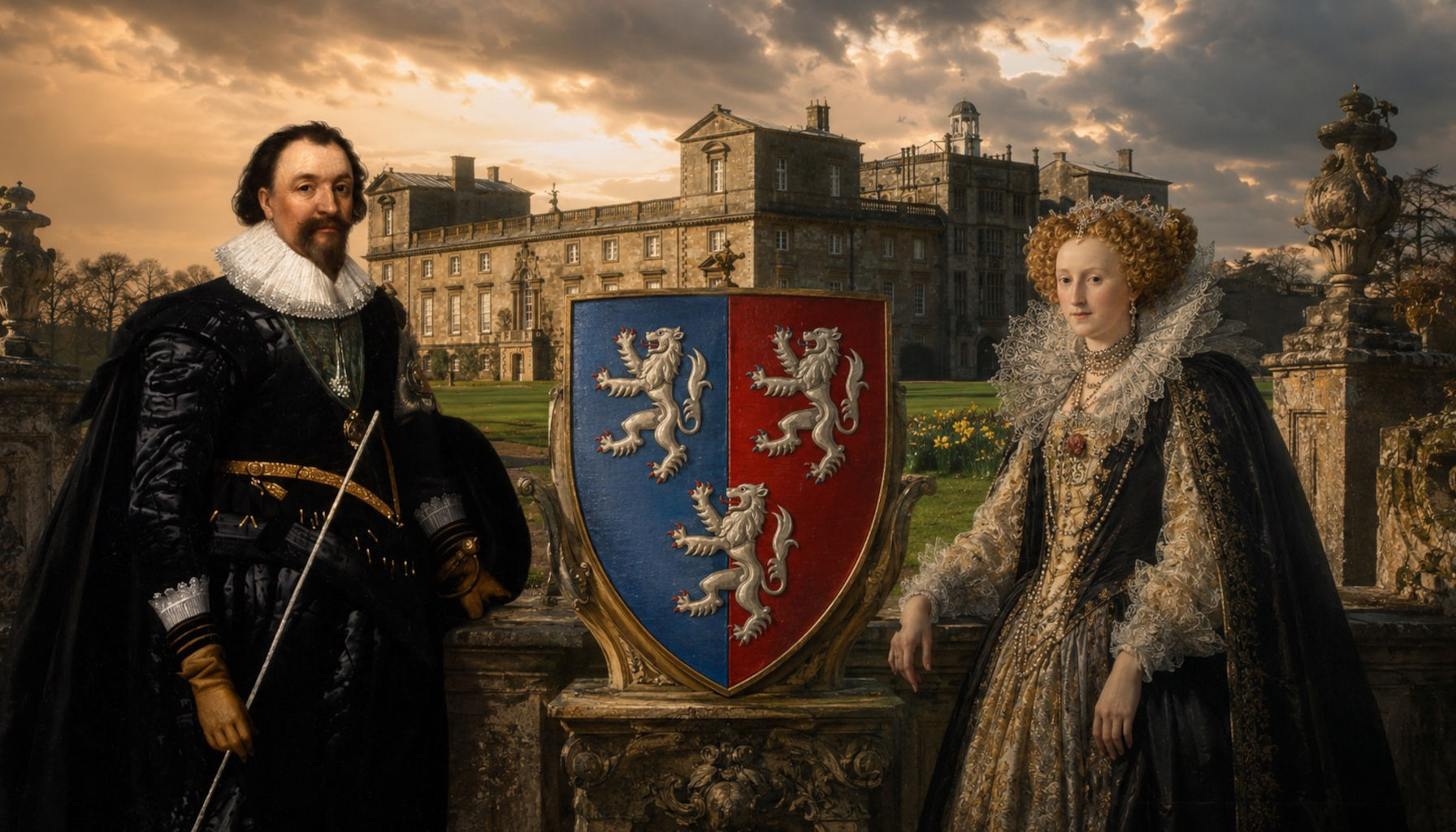
The Herbert family was one of the great Anglo-Welsh noble houses, rooted in the borderlands of Wales and closely tied to Monmouthshire, Glamorgan, and the wider political life of both Wales and England. In genetic tagging terms, the family is linked here with haplogroup I1a2a1a1a2a2a, treated as the primary Herbert family haplogroup for this profile. Historically, the Herberts are a fine example of how a family from the Welsh marches could rise by royal service, military talent, strategic marriage, and a sharp eye for opportunity, until they stood among the leading aristocratic names of the late medieval and early modern kingdoms.
Their story belongs to that complicated Anglo-Welsh world where loyalties were local, regional, and royal all at once. The family emerged from the marcher landscape, a zone where Welsh lineage, Norman lordship, and English crown power constantly overlapped. Over time the Herberts built estates, cultivated influence at court, and became especially associated with the earldom of Pembroke. Among their most famous figures was William Herbert, 1st Earl of Pembroke (1423-1469), a formidable Yorkist magnate whose career shows just how quickly ambition and royal favour could transform a regional family into a national power. Soldiers, courtiers, patrons, and statesmen followed in his wake, and the Herbert name became stitched into the political fabric of Tudor and Stuart Britain.
Read more about the Morgan Family
One of the strongest location anchors for the Herbert story is Powis Castle, near Welshpool in Powys. The site began as a medieval fortress of the princes of Powys, which already tells you something important: this was not merely an imported aristocratic landscape, but one with deep Welsh princely roots. Over the centuries the castle passed into the hands of the Herbert family and was reshaped from a defensive stronghold into a grand aristocratic residence. Its long red sandstone profile, dramatic terraces, and celebrated formal gardens make it one of the most visually distinctive great houses in Wales. Inside, the castle preserves the atmosphere of a family seat built up over generations, where politics, inheritance, taste, and display all left their mark. Powis Castle can still be visited today, which means the Herbert world is not just something in documents and pedigrees, but a place you can physically walk through.
Explore the Princely House of Powys
From an ancient DNA perspective, the Herbert-linked haplogroup I1a2a1a1a2a2a also appears in a wider northern and western European story rather than in any single family line we can prove directly. Related or linked samples include Migration Period Hungary Rakoczifalva (RKO002), a Merovingian Period Frankish individual from Buettelborn in Germany (Btb71), a medieval individual from Sint-Truiden Groenmarkt in Belgium (ST2819), a Saxon settler from Hogebeintum in the Frisii region of the Netherlands (CGG024694), and a Viking Age individual from Odense Norrebjerg in Denmark (CGG105541). These are not evidence of direct descent from the Herbert family, nor of the Herberts descending from any one of these named people. But they do show the broader historical landscape in which this paternal line moved: a world of Migration Period mobility, Frankish and Saxon expansion, medieval North Sea networks, and Scandinavian connections that fed into the making of Britain and its aristocratic houses.
If the Herbert family speaks to your own story, whether through Welsh border ancestry, aristocratic connections, or the haplogroup I1a2a1a1a2a2a, you can take the next step by exploring your DNA. Upload to MyTrueAncestry and see whether you match the Herbert family profile or any related ancient DNA samples from the wider world that shaped medieval Britain and Europe.

Comments