Clan OFlaherty
– 3 min read


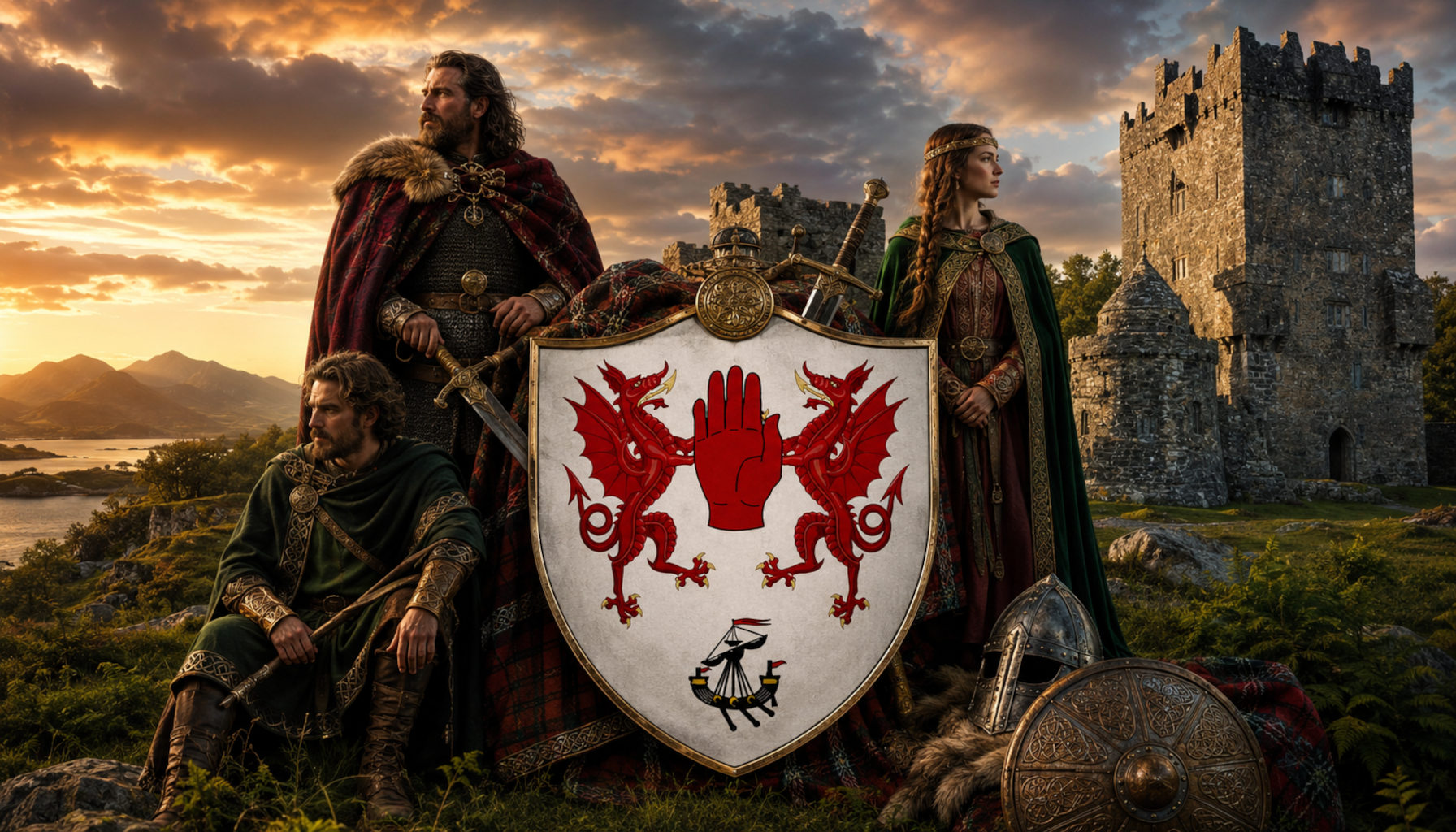
The O'Flaherty family, in Irish O Flaithbheartaigh, were one of the great Gaelic clans of western Ireland: a ruling kindred of Connacht whose story is bound up with lakes, cattle, lordship, warfare, and the Atlantic edge. Their name is usually connected with the sense of a bright prince or bright ruler, and they are traditionally descended from the Ui Briuin Seola. In haplogroup terms, the primary family association here is tagged to R1b1a1b1a1a2c1a1a1a1a1a1a3a, a lineage linked with a number of medieval Irish male samples and very much at home in the wider genetic landscape of Gaelic Ireland.
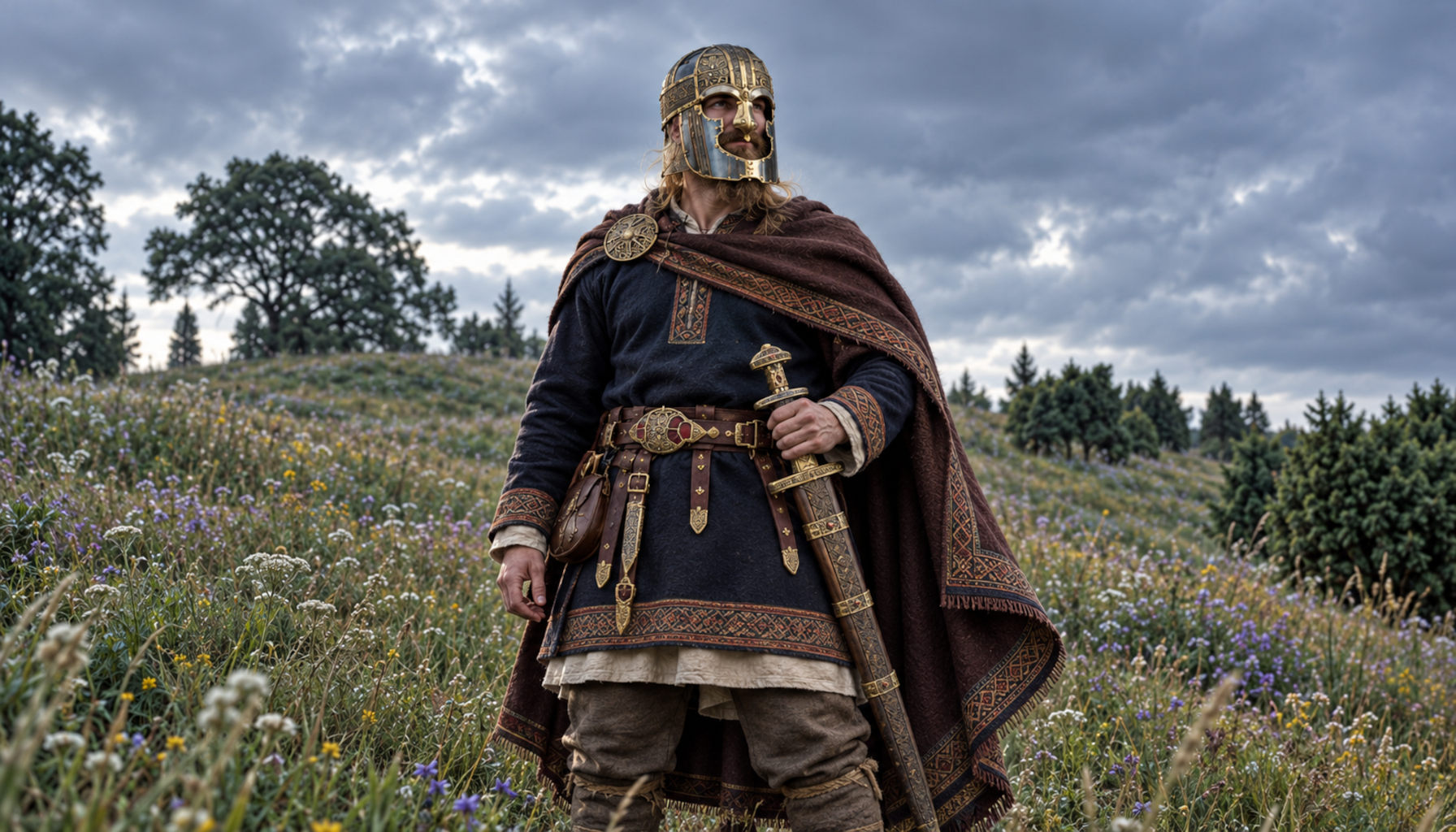
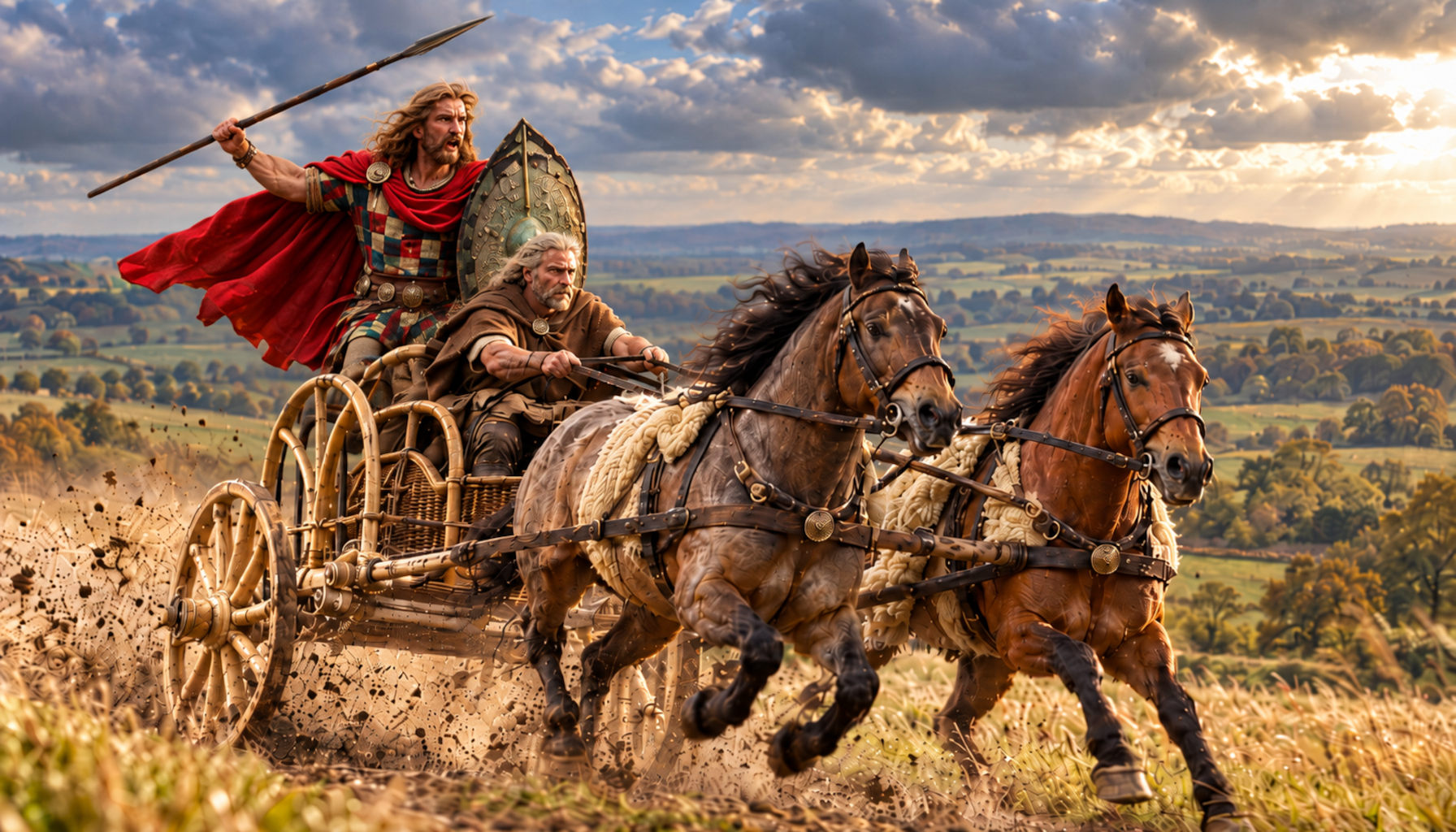
Originally, the O'Flahertys were associated with Maigh Seola, east of Lough Corrib, in a rich and contested zone of early medieval Connacht. But Irish history is rarely tidy. As power shifted, and as Anglo-Norman expansion and pressure from neighboring dynasties altered the political map, the O'Flahertys were pushed westward and reinvented themselves in Iar Connacht, the hard, beautiful country now identified with Connemara and County Galway. There they became the very image of the old Gaelic west: kings of local territories, seafaring lords, raiders, patrons, and survivors. One early named figure is Muireadhach ua Flaithbheartach, recorded in 1034, a reminder that this was already an established and notable family long before their later castle power became famous. To the walled merchants of Galway they were formidable neighbors indeed, remembered in the line, "From the ferocious O'Flahertys, good Lord deliver us" - which tells you as much about town-country rivalry as it does about clan reputation. Their heraldic themes of red dragons, a red hand, and a ship suit them perfectly: martial, maritime, and proudly noble in the Gaelic manner.
Read more about Clan MacDiarmada
The great surviving anchor of O'Flaherty memory is Aughnanure Castle, near Oughterard in County Galway, one of the most evocative tower houses in the west of Ireland. Built in the later Middle Ages and strongly associated with the O'Flahertys, it stands beside the Drimneen River in a landscape of water, woodland, and stone that feels entirely appropriate for a Connacht lordship. This was not merely a defensive shell but a residence, a statement of authority, and a working center of rule. The tower house rises several storeys, with defensive features, a banqueting hall, and a surrounding bawn, while the site also includes traces of a wider elite complex. It speaks to a period when Gaelic lords were not relics of some fading past, but active political players building in the same broad castle tradition as their rivals, though on their own western terms. Aughnanure is now a well-known heritage site and, yes, it can still be visited, which is one of the pleasures of Irish history: the landscape has not given up all its witnesses.
From an ancient DNA perspective, the O'Flaherty haplogroup tag R1b1a1b1a1a2c1a1a1a1a1a1a3a connects interestingly with a cluster of related or linked medieval Irish samples rather than proving direct descent from any one excavated individual. Among them are numerous Ballyhanna, County Donegal burials, including Sk197an, Sk197y, Sk197q, Sk197am, Sk197s, Sk197ab, Sk197u, Sk197t, Sk197r, Sk197ad, Sk197x, Sk197n, Sk197aa, Sk197z, Sk197ak, Sk197w, Sk197ai, Sk197m, Sk197ah, Sk197ag, Sk197v, Sk197ac, Sk197al, Sk197af, Sk197ae, Sk197o, Sk197aj, HAN197x, Sk197a, Sk197b, Sk197c, Sk197d, Sk197e, Sk197f, Sk197g, Sk197h, Sk197i, Sk197j, Sk197k, Sk197l, Sk197p, and HAN197, along with Kilteasheen, Roscommon samples KIL041, KIL044, KIL033, KIL037, KIL009, and KIL014. What these linked samples really give us is not a neat family tree for the O'Flahertys, but a vivid genetic backdrop for medieval Gaelic Ireland: interconnected regional populations, durable paternal lines, and the sort of deep local continuity one would expect in the worlds from which families like the O'Flahertys emerged.
If the O'Flahertys catch your imagination, that is quite understandable. They belong to that western Irish world where genealogy, landscape, warfare, and seafaring all meet. If you have O'Flaherty roots, or Galway and Connacht ancestry more broadly, you can upload your DNA to MyTrueAncestry and see whether you match this family story or any of the related ancient Irish DNA samples linked with haplogroup R1b1a1b1a1a2c1a1a1a1a1a1a3a.
Comments