Clan Burke

– 2 min read


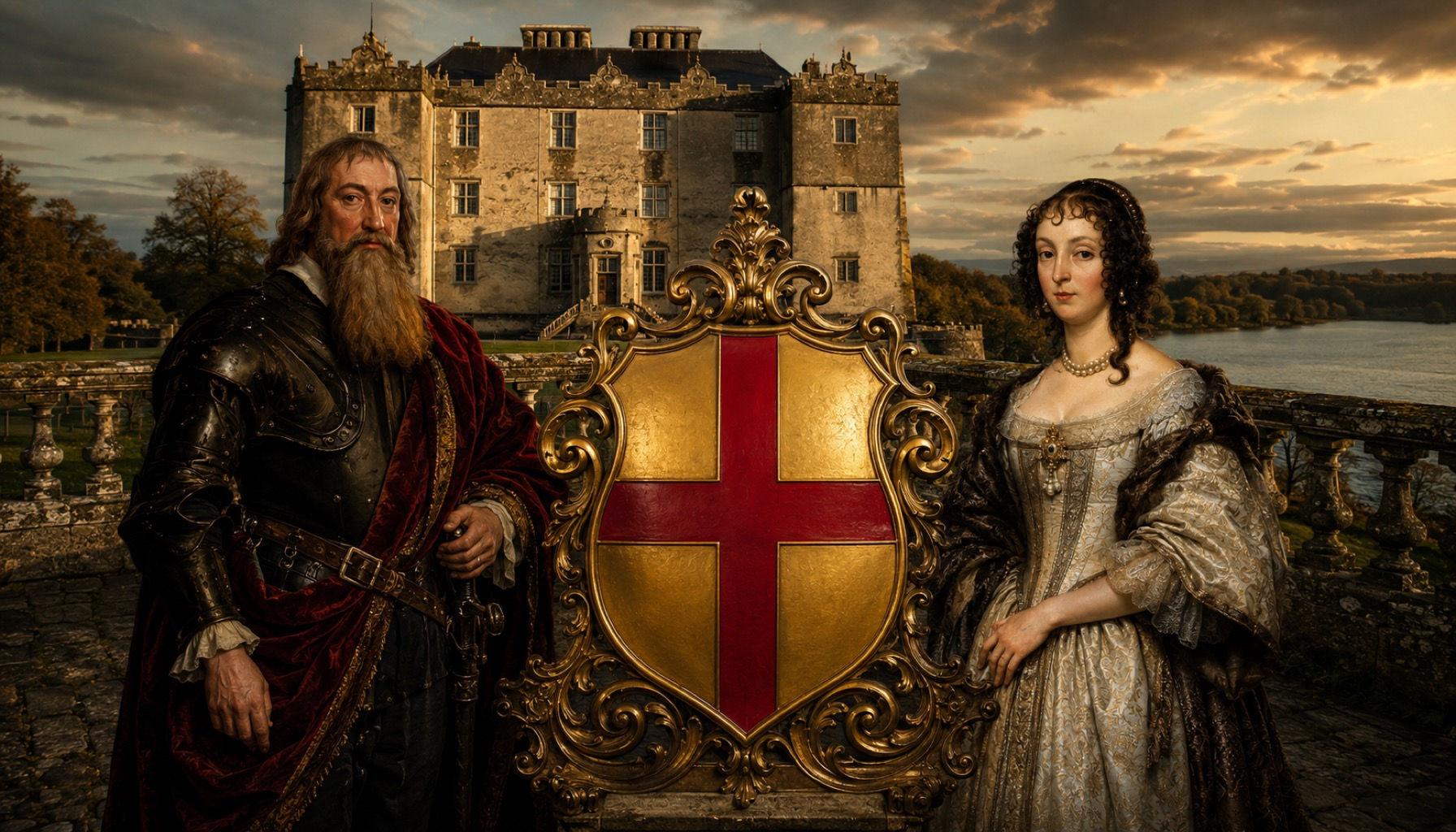
Clan Burke, historically the de Burgh family, was one of the great Anglo-Norman lineages to put down deep and lasting roots in Ireland. Their story begins not in Ireland but in the Norman world that spread out after 1066, with the family name tied to Burgh in Suffolk and to the wider aristocratic networks of England and Normandy. In genetic tagging terms, the primary family haplogroup linked here is R1a1a1b1a2b3a3a1a2c2a. What makes the Burkes so fascinating is that they were never simply foreign conquerors who stayed foreign. They arrived through the age of invasion, but over generations became one of the most powerful and unmistakably Irish lordly families in the country.
After the Norman invasion of Ireland, the de Burghs rose fast through landholding, military force, castle-building, and very shrewd marriage politics. William de Burgh (1160-1206) stands at the beginning of that Irish ascent, a figure who helped establish the family's position in Munster and beyond. Later branches spread especially into Connacht, where the Burkes became major regional rulers. And here is the delicious historical twist: like several of the most successful settler dynasties in medieval Ireland, they became deeply Gaelicized. They adopted Irish language, customs, alliances, and styles of lordship, even while preserving the memory of their Norman ancestry. In other words, the Burkes became both de Burgh and Burke, both aristocratic newcomers and thoroughly embedded Irish power-brokers.
Explore the Noble House of Burgh
One of the most evocative places associated with the family is Castleburke Castle on the shores of Lough Carra in County Mayo. The site is a wonderfully Burke sort of monument: strong, strategic, and slightly melancholy, standing in a landscape that seems made for power, memory, and local lordship. The surviving tower house rises near the water, and the setting matters as much as the masonry. From there, a ruling family could watch movement across the lake country, control nearby lands, and advertise status in stone to allies and rivals alike. The image record linked through Wikimedia Commons shows exactly that combination of ruin and command, the castle still striking against the Mayo landscape. As a historic ruin in a known and photographed location, it remains a place visitors can reasonably seek out today, though as with many Irish castle sites, access conditions may vary locally and it is wise to check before making a special trip.
Read more about Clan OFlaherty
For those interested in the deeper genetic backdrop, the Burke haplogroup tag here is R1a1a1b1a2b3a3a1a2c2a, and there are related or linked ancient DNA samples carrying that line in medieval Europe. These include AHPS187W from Medieval Hungary at Carolingian Szekesfehervar Sarkereszturi, PCA0167 from the Early Kingdom of Poland, PCA0302 from medieval Opole in Silesia, KRW008 from Korolivka in the Principality of Halych-Volhynia in Ukraine, and PCA0233 from medieval Poznan in Greater Poland. These samples do not prove direct descent from the Burkes, nor should they be used that way. What they do offer is a glimpse into the wider medieval paternal landscape connected to the same branch, reminding us that a family like the Burkes belonged not only to Irish history, but to a much broader European web of movement, warfare, and elite identity.
Read more about Clan Fitzgerald
If the Burke story speaks to you, that may be because it sits right at the meeting point of family legend, medieval politics, and the long memory carried in DNA. Upload your DNA to MyTrueAncestry to see whether you match Clan Burke or any of the related ancient DNA samples linked to haplogroup R1a1a1b1a2b3a3a1a2c2a, and to explore the wider world of Norman, Gaelic, and medieval ancestry.
Comments