Clan Fitzgerald

– 3 min read


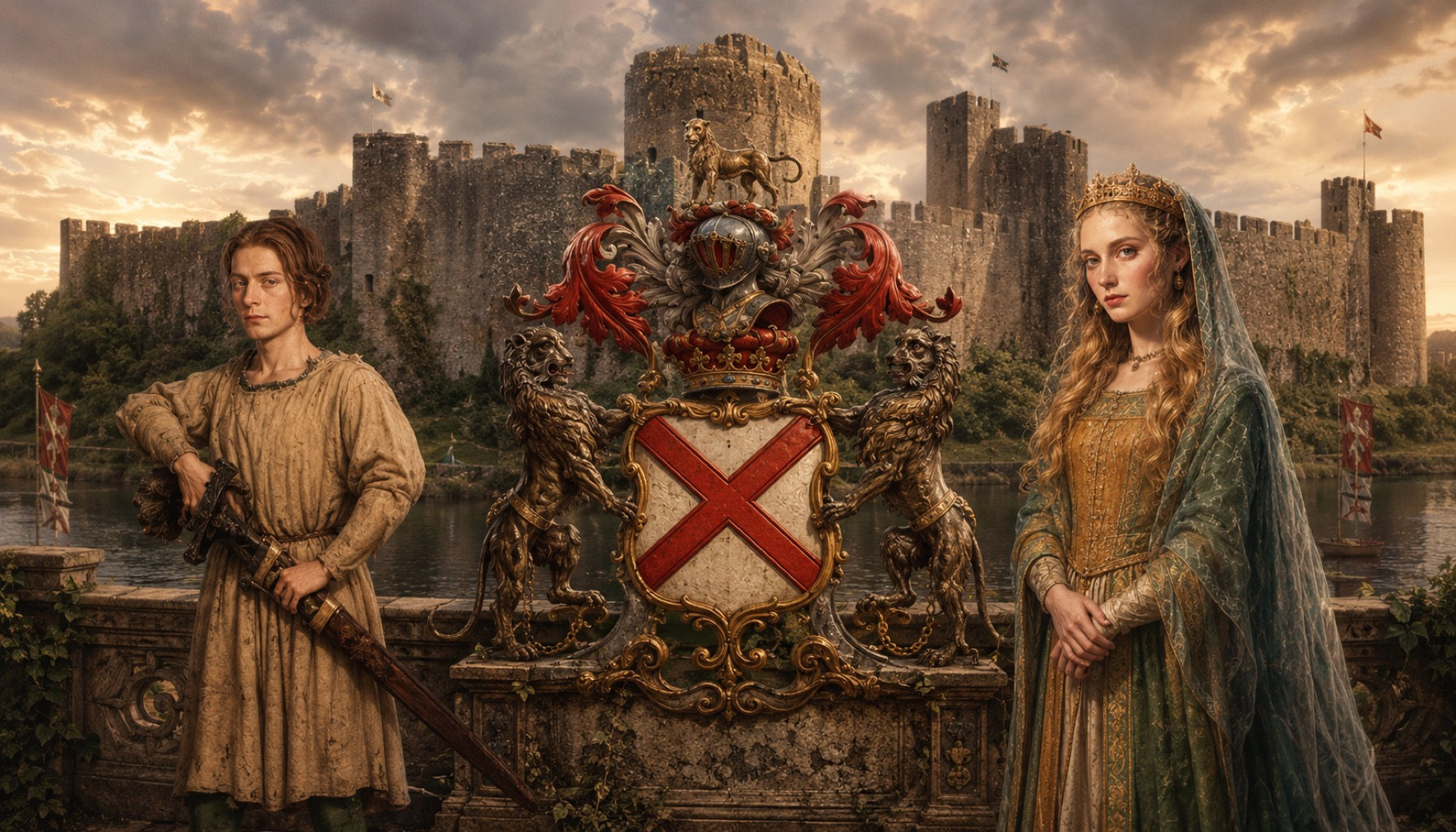
Clan Fitzgerald was one of the great Norman-Irish noble families: a dynasty of lords, earls, soldiers, courtiers, rebels, and patrons whose power ran across medieval Ireland, especially through Kildare and Desmond. Their deeper family story begins not in Ireland itself but in the Norman-Welsh world of the 11th and 12th centuries, where frontier warfare, castle-building, royal service, and opportunistic marriage created ambitious lineages that could move fast and rise high. The haplogroup most closely associated here is R1b1a1b1a1a2c1a3a2a1b1a2, a branch within one of the most widespread paternal lineages in western Europe.
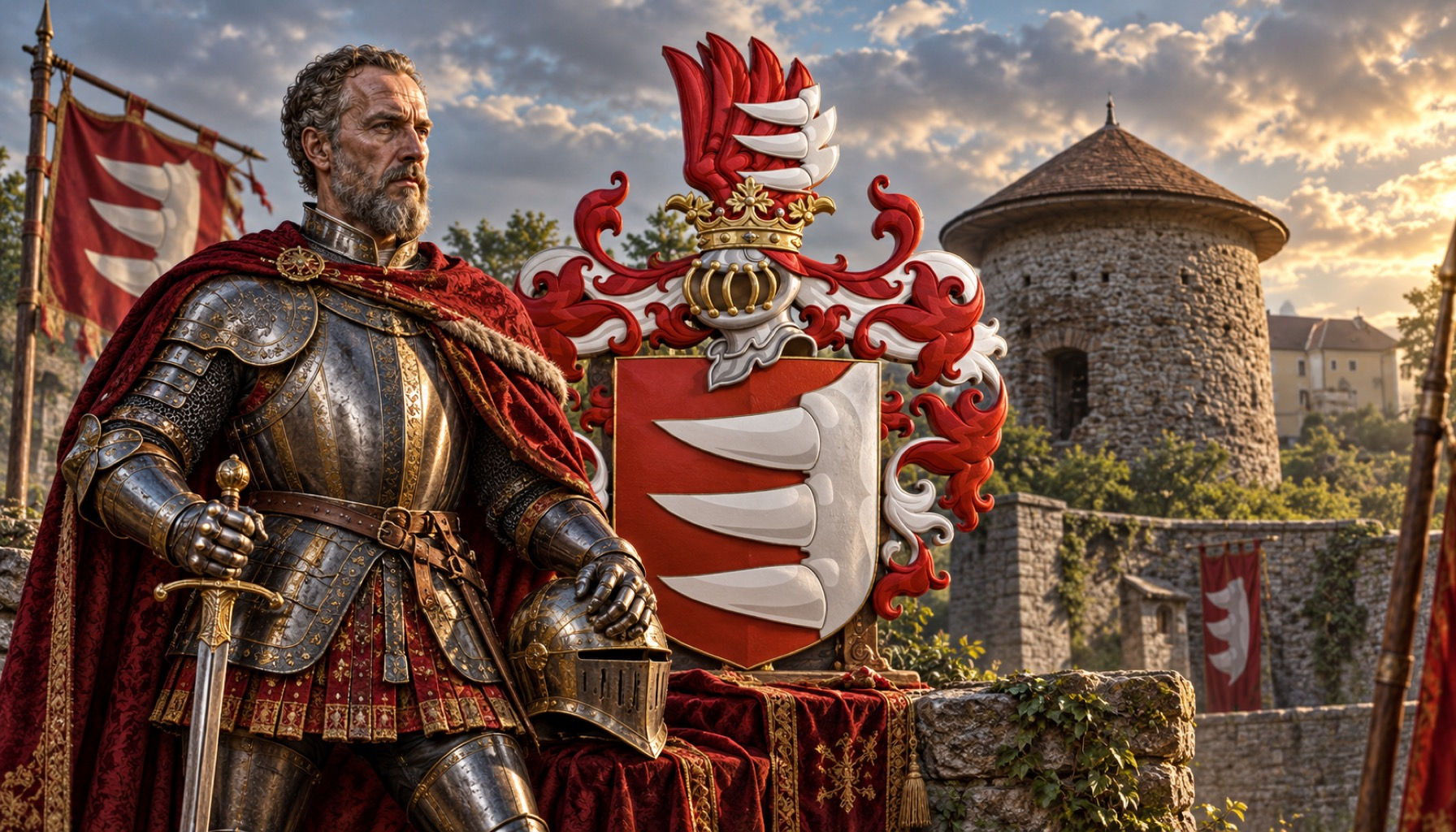
The name Fitzgerald quite literally means "son of Gerald", and that takes us back to Gerald of Windsor (1075-1135), one of the key early figures behind the dynasty. He was a powerful marcher lord in southwest Wales, closely tied to Norman expansion under the kings of England, and his descendants became central players in the conquest-era settlement of Ireland. From there the Fitzgeralds followed the classic Norman-Irish magnate pattern: land grants, military service, lordship over territories, strategic marriages, office at court, and then, over generations, a profound integration into Irish life. This is the family world that eventually produced the earls of Kildare and Desmond, major castle networks, regional influence, and that famous broader description of some Norman-Irish houses as becoming more Irish than the Irish themselves.
If you want a location that helps explain where the Fitzgerald story really starts to gather weight, Pembroke Castle in southwest Wales is an excellent anchor. This is not some decorative ruin politely fading into the grass; it is one of the great stone fortresses of Britain and Ireland's wider medieval world. First established after the Norman conquest of the region and later rebuilt in formidable stone, the castle occupies a striking position on a rocky promontory beside a tidal inlet, with strong natural defenses reinforced by massive walls, a great keep, gatehouses, and an impressive circuit of fortification. It was a major center of Norman and marcher power in a region where Welsh, Norman, and later Irish affairs were deeply entangled. The castle is also famously linked with Gerald of Windsor's world and with the aristocratic frontier society from which families like the Fitzgeralds emerged. In other words, before the Fitzgeralds became towering magnates in Ireland, they belonged to this tougher, more unstable borderland culture of military households, fortified seats, and personal loyalties. Pembroke Castle still stands and can be visited today, which rather wonderfully allows you to walk through the stone setting of the family's earliest historical stage.
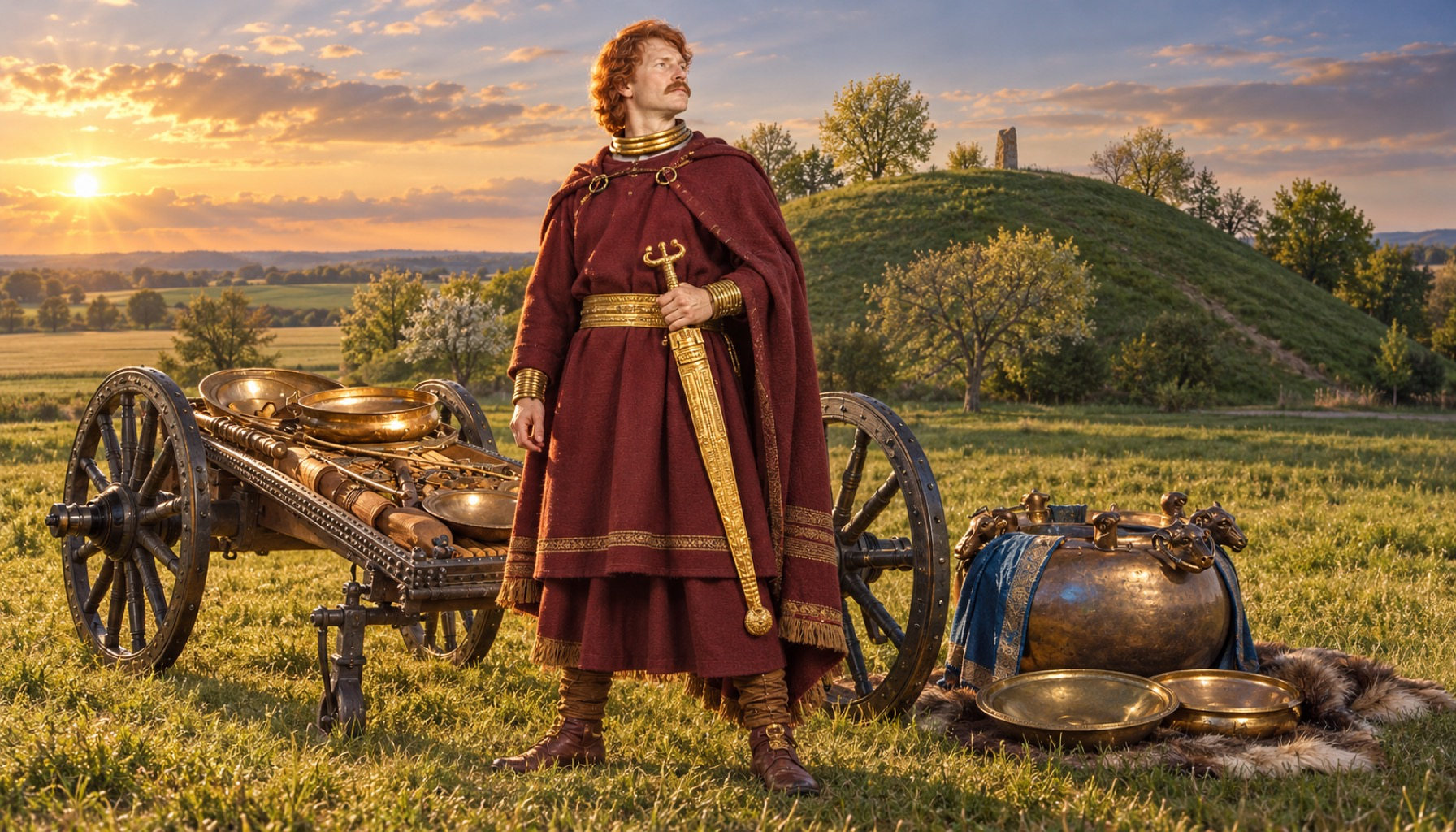
On the ancient-DNA side, the Fitzgerald-associated haplogroup R1b1a1b1a1a2c1a3a2a1b1a2 appears in a wide spread of related or linked ancient samples across Britain, Ireland, and parts of continental Europe. These include Celtic Durotriges burials from Duropolis at Winterborne Kingston in England such as WBK12, WBK20, WBK29, WBK41, WBK05, WBK30, WBK43, WBK06, WBK08, WBK18, and WBK191, as well as samples like Iron Age Worlebury Somerset England (I11991), Iron Age Hillfort Battlesbury Bowl England (I21309), Post Roman Era Worth Matravers Dorset England (I11580), Celt Hinxton Iron Age (HI2), Ireland Copper Age (Rathlin2B), Bronze Age Amesbury Down Wiltshire England (I2417), Bell Beaker Wiltshire Upavon England (I4950), Bronze Age Bedfordshire England (I7576, I7577), Bronze Age Trumpington Meadows Cambridge England (I3256), Bronze Age Boatbridge Quarry South Lanarkshire Scotland (I5473), Early Bronze Age England Thames (I5377), Scotland Late Bronze Age (I2859), and Bronze Age Orkney Westray Links of Noltland (KD061). Beyond the British Isles there are linked examples from Imperial Roman Era Zadar Croatia (I26776), Early Medieval Belgium Sint-Truiden Groenmarkt (ST2025), Medieval Belgium Outsider Sint-Truiden Onze-Lieve-Vrouwekerk (ST1308), Gallic France Parancot (CGG023699), Merovingian Grave North Rhine-Westphalia Germany Alt-Inden (IND013), Late Roman Era Klosterneuburg Lower Austria (R10656), Late Roman Conimbriga Portugal (R10488), and Bronze Age Calabria Cosenza Grotta della Monaca Sant Agata di Esaro (GMO015). These are not claims of direct descent from any one ancient individual to the Fitzgerald family. Rather, they show that the paternal line associated with the clan sits within a much older and far-reaching western European genetic landscape, one that long predates the Norman arrival in Ireland and reminds us how family history is usually a blend of documentary power and much deeper prehistoric ancestry.
If the Fitzgerald name appears in your family history, or if you are simply curious about how Norman, Welsh, and Irish strands may meet in your own ancestry, DNA can add an intriguing extra layer to the paper trail. Upload your DNA to MyTrueAncestry to see whether you match Clan Fitzgerald connections or any of the related ancient DNA samples linked with haplogroup R1b1a1b1a1a2c1a3a2a1b1a2.

Comments