Clan Pringle

– 3 min read


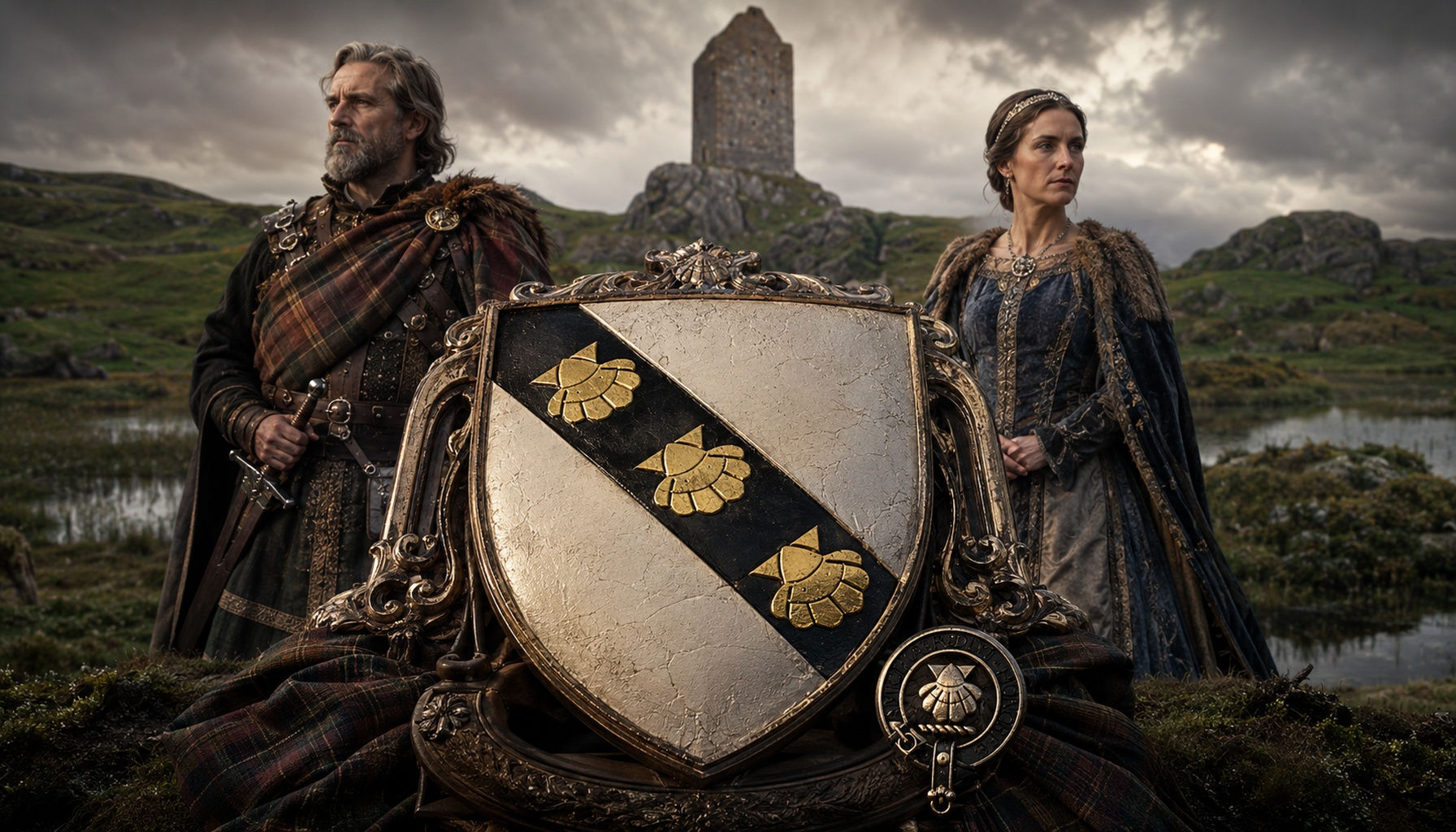
Clan Pringle was a Scottish Border family rooted in the Tweed valley of southern Scotland, remembered not as a great Highland clan with vast mountain territories, but as a Lowland and Border kindred shaped by land, service, heraldry, and long local memory. Their primary family haplogroup is tagged as R1b1a1b1a1a1c2f, a paternal line found across a wide spread of ancient and medieval European contexts. The Pringles belong to that distinctly Border world where identity was built through estates, charters, neighbouring alliances, and the stubborn continuity of a surname in a region where politics could change very quickly indeed.
The family is closely associated with the Berwickshire and Roxburghshire marches, especially the district around Smailholm and the middle Tweed. In historical terms, the Pringles emerged from a frontier society where Scotland and England were not neat blocks on a map but lived borderlands, full of riding, raiding, bargaining, wardenship, marriage networks, and local loyalties. Their story is less about tartan romance and more about the practical business of surviving and prospering in a contested landscape. Figures such as David Pringle, recorded in 1513, sit within that long tradition of Border service and family continuity, where name, land, and reputation mattered enormously.
Smailholm Tower is the great stone anchor of Pringle memory, standing west of Kelso on a crag with commanding views over the surrounding countryside. The tower itself is a classic Scottish peel tower, begun in the 15th century, built for defence in a land where defence was not a theoretical matter. It rises starkly from the rock, thick-walled and practical, exactly the sort of building a Borders family needed in a world of cross-border violence and shifting feuds. Over time it was associated with the Pringles of Smailholm, whose possession of the site helped fix the family into the local landscape in a very literal way. This is one of those places where architecture and family history meet beautifully: the tower is not just scenery, but evidence of how Border authority was established and defended.
Smailholm Tower also has a long afterlife in Scottish cultural memory, later linked with the childhood world of Sir Walter Scott and now preserved as an important historic monument. It can still be visited, which is a great advantage for anyone tracing Pringle heritage, because the place gives an immediate sense of what Border life looked and felt like: exposed, watchful, and deeply tied to landholding. The tower's setting explains a good deal about the family itself. The Pringles were not an abstract clan identity floating free of geography. They were rooted in a lookout landscape of roads, fields, burns, and horizons, where local standing came from enduring occupation and visible control.
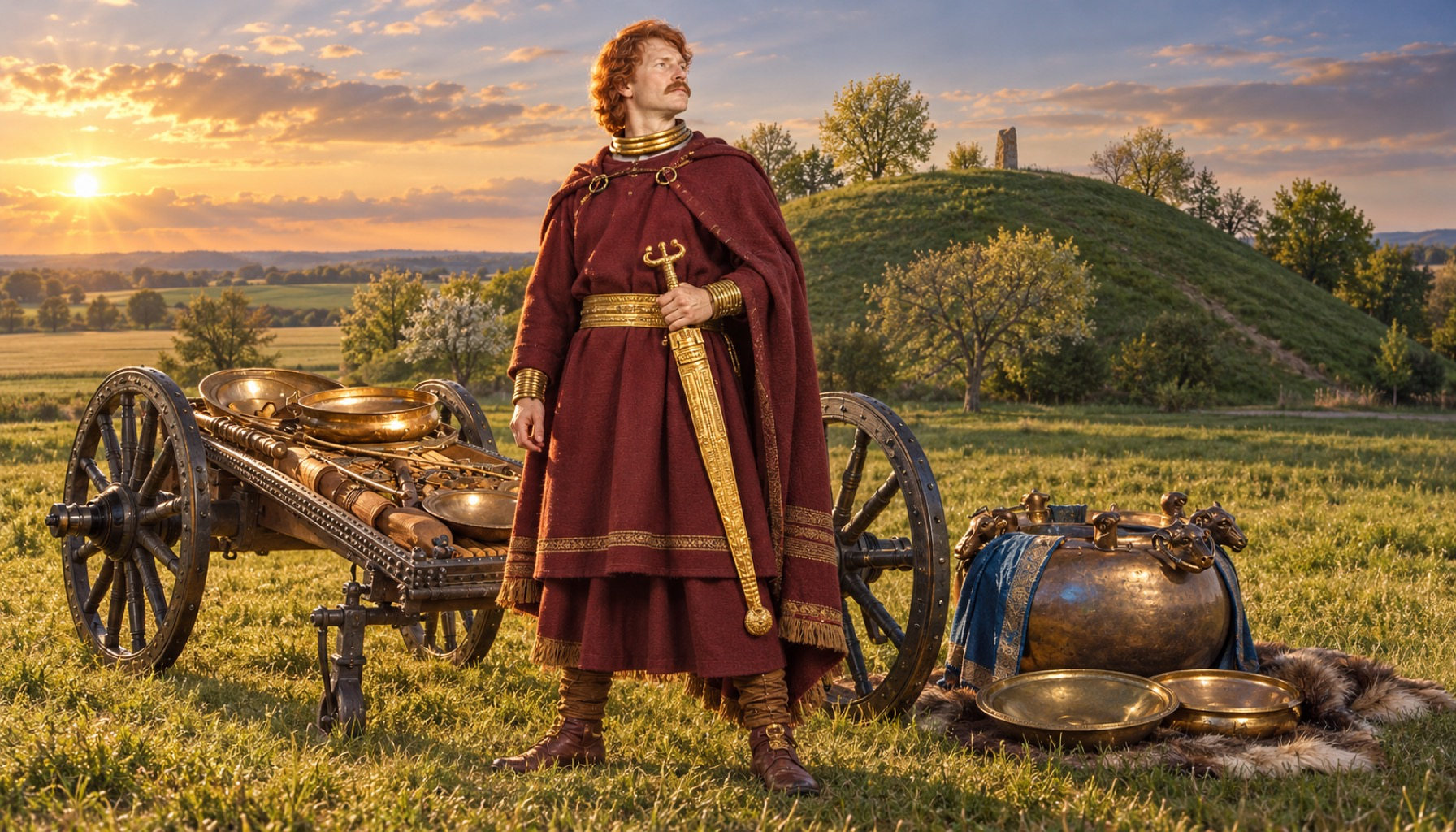
The Pringle haplogroup tag R1b1a1b1a1a1c2f connects, in a broad related sense, to an intriguing spread of ancient DNA samples across Europe. These include Lombard Warrior Elite Collegno Northern Italy samples COL_069, COL_069b, and COL_069x, Bronze Age Unetice Thuringia Leubingen Sommerda Germany LEU007, Imperial Roman Viminacium Serbia Pecine Necropolis I15527, Viking Age Sigtuna Sweden urm160 and urm160x, Late Neolithic Mienakker Netherlands I12902, Saxon England West Heslerton I11583 and I11584, Early Anglo-Saxon West Heslerton individuals I20644, I20671, I20677, and I20652, Buckland Dover individuals BUK012, BUK060, BUK064, BUK070, and BUK007, Oakington England OAI006 and OAI013, Norman Invasion Lincoln Castle S3044, Dunum and Lower Saxony Saxon samples DUN006, DUN009, DUN011, Hiddestorf HID003 and HID004, Rathewitz RTW012, Bruecken BRC006x, Haeven HVN003, HVN004, and HVN005, Sint-Truiden samples ST0024, ST0323, ST0786, and ST2969, Danii tribe Denmark CGG106724, Belgic and Gallic Bucy-le-Long samples CGG022456, CGG022425, and CGG022419, Battle Axe Sweden RISE98, Hallstatt Austria CGG101214, Roman-period Mursa Croatia OSIJ003, Hedeby SWG001, Isola Sacra R11121, Holt-Tisza-part I18184, Westwoud I11972, Tarquinii TAQ013, Ellwangen ELW003, Straubing STR393b and STR316b, Kecskemet HUNper2, Petersberg Upper Bavaria, Karos III K3per1_GE, K3per13_GE, and AED92b. None of this proves direct descent from any one ancient individual, of course. What it does show is that this paternal branch belongs to a deep and mobile European story, turning up among Bronze Age communities, Iron Age groups, Roman frontier populations, Migration Period elites, Viking Age townspeople, and medieval societies. That broad pattern sits rather well with a Border family such as the Pringles, whose own history belongs to a crossroads region shaped by movement, contact, and endurance.
If you carry the Pringle surname, have roots in the Scottish Borders, or are simply curious about how family history and ancient DNA can illuminate one another, this is exactly the sort of lineage worth exploring. Upload your DNA to MyTrueAncestry to see whether you match Clan Pringle, the R1b1a1b1a1a1c2f branch, or any of the related ancient samples linked to this wider European story.


Comments