Clan Paden
– 3 min read


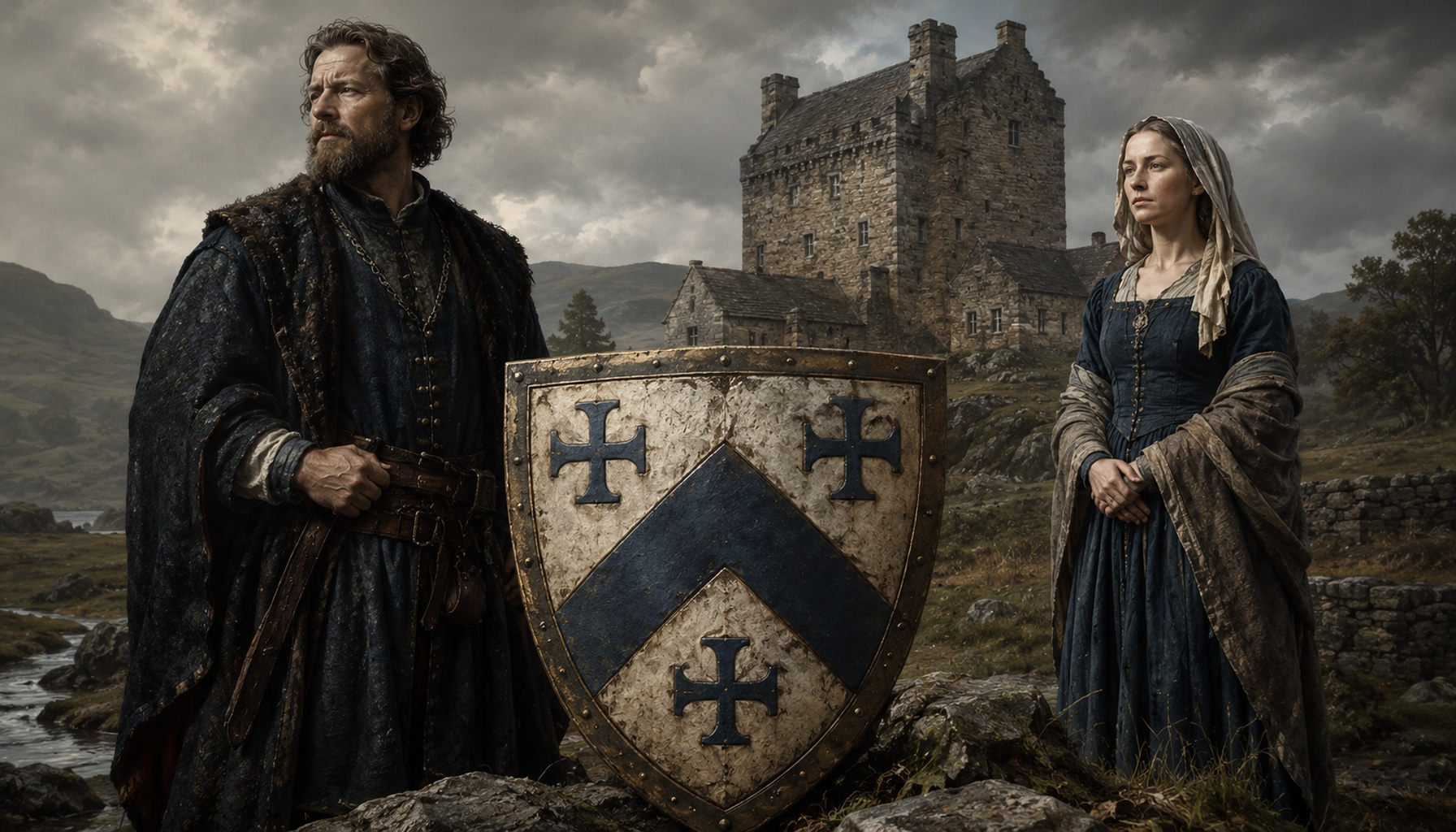
Clan Paden belongs to that broad and deeply familiar Scottish and Irish world in which a family name is less about princes and palaces and more about continuity, locality, and memory. The name sits within the old surname traditions of the British Isles, where identity was carried through kinship, service, parish life, and steady movement from one district to another. In that sense, the Padens are best understood as a rooted family tradition rather than a grand political dynasty: a line preserved because people kept the name, kept the stories, and kept their sense of belonging. The primary family haplogroup linked here is R1b1a1b1a1a1c2c1, a branch within the wider R1b landscape so often associated with western Europe and the long population histories of the Atlantic fringe.
The historical shape of the family is therefore one of endurance. Like many smaller clan-style surnames, Paden appears in the record through scattered but telling traces rather than through a single great lordship. The family background points to Gaelic and British Isles surname patterns formed in a world of local loyalties, farming communities, church jurisdictions, and regional travel between Scotland and Ireland. That mixture of rootedness and movement is exactly what makes such names interesting. They are not minor because they are obscure; they are important because they show how ordinary families survived political change, crossed water and county lines, and still passed down a recognisable inherited identity. A named early figure associated with the family is Hugh Pethin, recorded in 1611, a reminder that older spelling forms could shift before settling into later surname continuity.
The Paden family tradition is anchored in the shared historical zone of Scotland and Ireland, especially the cultural corridor created by Gaelic-speaking movement across the North Channel. This was never a sealed border. For centuries, western Scotland and northern Ireland exchanged people, language, military service, church connections, and surnames. Families like Paden could take shape in exactly that kind of setting, where a name might be local in one generation and cross-regional in the next. The historic context matters: medieval lordships, plantation-era upheavals, shifting tenancies, and migration within Ulster and southwestern Scotland all helped preserve some surnames while transforming their spelling and distribution. If the family has a specific local anchor in surviving records or landscape tradition, it should be read in that wider frame of regional belonging rather than isolated from it. In many cases, such places, whether churchyards, old settlements, or parish landscapes, can still be visited today, which is one of the pleasures of surname history: the ground itself often survives even when the paper trail is thin.
From the ancient DNA point of view, the Paden haplogroup tag R1b1a1b1a1a1c2c1 connects the family to a much wider web of related or linked ancient male lines across Europe. These are not claims of direct descent from any named ancient individual, but they do show the sort of deep population background into which a later British Isles surname might fit. Related samples include the Lombard Warrior Elite from Collegno in northern Italy such as COL_069, COL_069b, and COL_069x; Iron Age Belgic samples from Bucy-le-Long in France including CGG022456, CGG022425, and CGG022419; early Anglo-Saxon cemetery burials from West Heslerton in Yorkshire including I20644, I20671, and I20677; Longobard-era HVN005 from Mecklenburg-Vorpommern; the Norman invasion-era medieval sample S3044 from Lincoln Castle; Bronze Age I11972 from Westwoud-Binnenwijzend in the Netherlands; Viking Age VK102 from Hofstadir in Iceland; Bell Beaker I4070 from North Holland; and a medieval Upper Bavaria sample from Petersberg. Taken together, these linked samples paint a picture not of one tribe marching straight into one surname, but of a long northwestern European story of mobility, warrior networks, settlement, and continuity that eventually fed into the family landscapes of Britain and Ireland.
Explore Ancient DNA in Post-Roman Britain
If you carry the Paden name, or think your family may belong to this Scottish and Irish surname tradition, DNA can add an extra layer to the story. Uploading your results to MyTrueAncestry can help you see whether you match Clan Paden, its haplogroup background R1b1a1b1a1a1c2c1, or any of the related ancient DNA samples linked to this wider historical world. It is a fascinating way to place family memory alongside archaeology, migration history, and the deep ancestry of the British Isles.

Comments