Clan McQuillan
– 2 min read


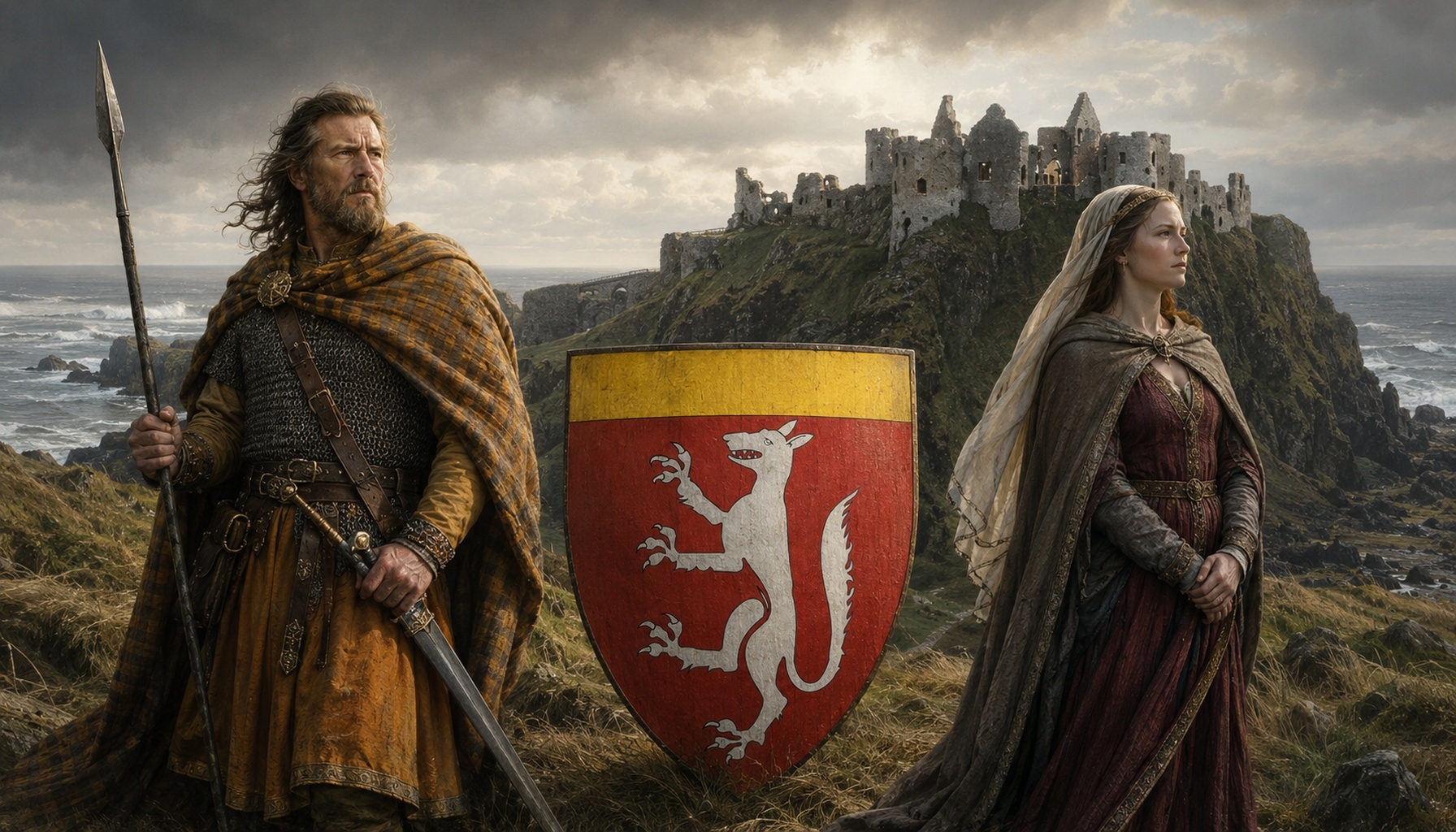
Clan McQuillan was one of the notable lordly families of Ulster, rooted above all in the north of Ireland and remembered for its role in the rough, shifting politics of medieval and early modern Antrim. The family is often placed in that fascinating borderland between Gaelic and Norman-Irish society, where names, loyalties, language, and customs could change over generations without anyone thinking this unusual. In that world, power rested on land, armed followings, marriages, and the ability to hold a strategic castle. The haplogroup linked here with the family tradition is R1b1a1b1a1a2c1a5d3a1a, a branch that fits neatly into the wider story of northwestern European paternal lineages and the mixed historical background so often seen in Irish regional lordships.
The McQuillans are commonly connected to the descendants of Hugelin de Mandeville, a figure associated with the Anglo-Norman penetration into Ireland, and over time the family became deeply woven into the local fabric of Ulster. That is really the point about them: not a simple tale of outsiders and natives, but a story of adaptation. Families like the McQuillans could begin in one political world and end in another, becoming thoroughly part of the Irish landscape while still carrying traces of earlier Norman lordship. Their history involves territorial authority, rivalry with other northern families, military conflict, and the stubborn preservation of kin identity in a region where fortunes could rise and fall very quickly indeed.
No place anchors the McQuillan story more vividly than Dunluce Castle on the dramatic north coast of County Antrim. Perched on a basalt outcrop with steep drops to the sea, it is one of those sites that seems almost too theatrical to be real, yet it was a practical stronghold as well as a symbol of authority. The castle is thought to have been first built by the MacQuillans in the late medieval period before passing later into the hands of the MacDonnells. Its position mattered enormously: this was a landscape of sea routes, rival lordships, and constant pressure between local and incoming powers. Dunluce was not just a residence but a statement that a family controlled territory, commanded defence, and belonged among the great players of the north. The ruins still stand today and can be visited, making it one of the most striking surviving reminders of the world the McQuillans inhabited.
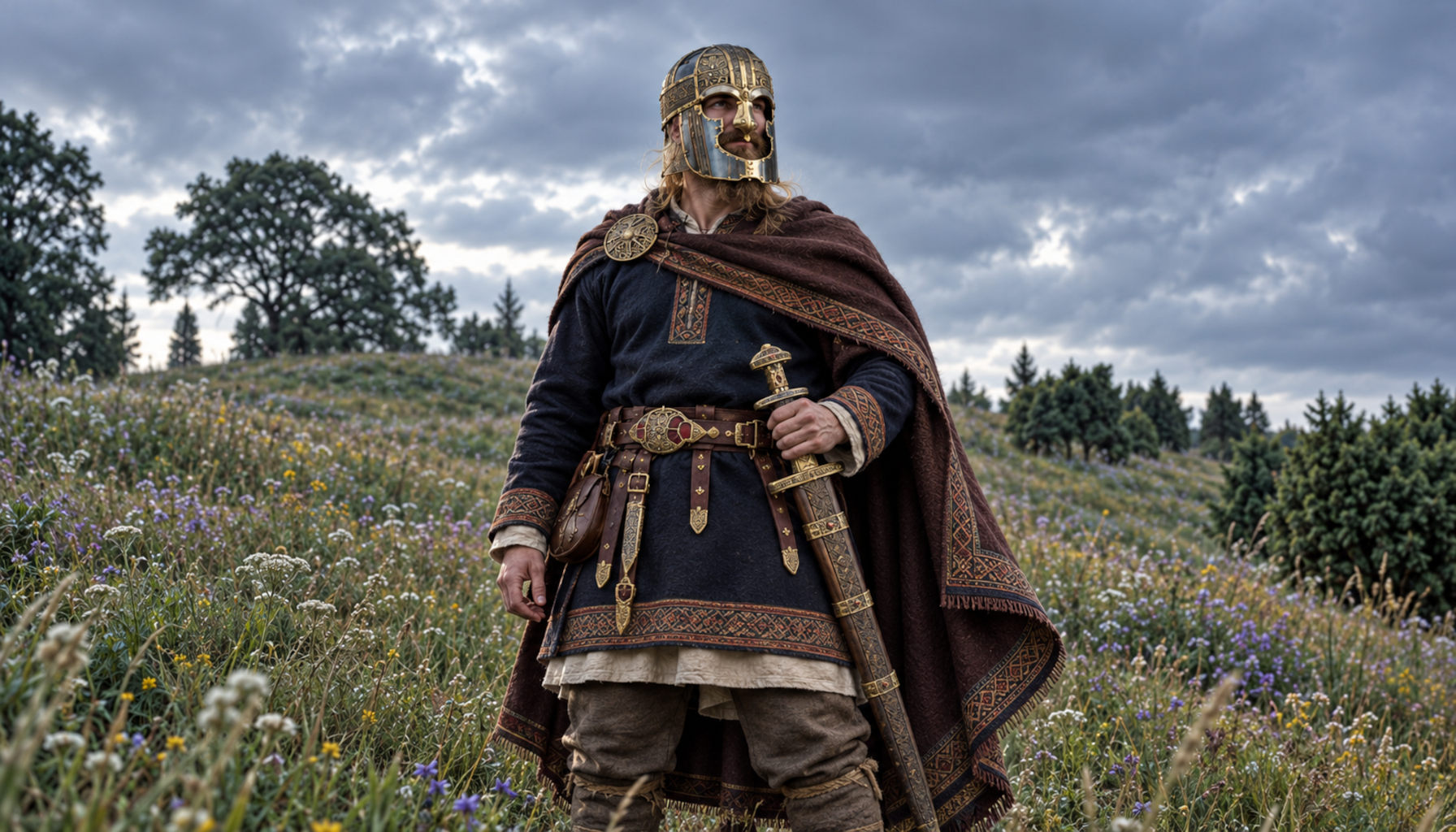
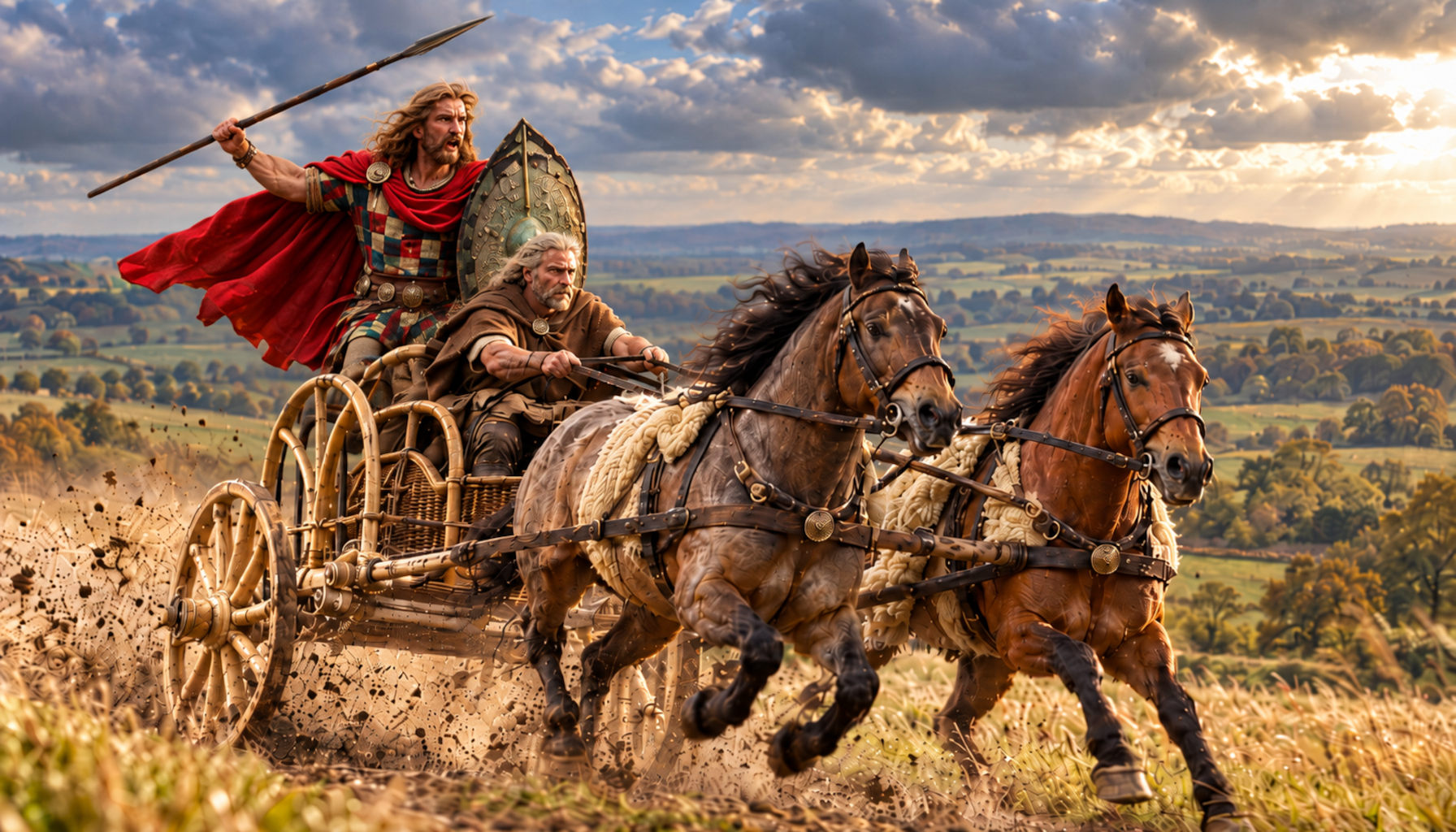
For deeper ancestry, the haplogroup R1b1a1b1a1a2c1a5d3a1a can be placed in a broader ancient-DNA frame using related or linked samples rather than any claim of direct descent. Examples include Early Anglo-Saxon Cemetery, West Heslerton, Yorkshire, England, sample I11586; Celtic Briton Carsington Pasture Cave, Derbyshire, England, sample I12775; Celtic Briton Lechlade-on-Thames, Gloucestershire, England, sample I12783; Celtic Briton Bradley Fen, Cambridgeshire, England, sample I11156; Iron Age Greystones Farm, Gloucestershire, England, sample I12785; and the well-known Ireland Copper Age sample Rathlin1B. Taken together, these linked finds show how this paternal line belongs to a deep northwestern European population history stretching across Britain and Ireland long before the documented McQuillans emerge in Ulster. That does not make those individuals ancestors in a proved genealogical sense, but it does place the family within a much older human story of migration, settlement, continuity, and change.
If the story of Clan McQuillan, Ulster lordship, and haplogroup R1b1a1b1a1a2c1a5d3a1a sparks your curiosity, you can explore your own past in more detail by uploading your DNA to MyTrueAncestry. It is a great way to connect family history with the wider archaeological world and see how your results may relate to ancient populations from Ireland and beyond.
Comments