Clan Preston
– 2 min read


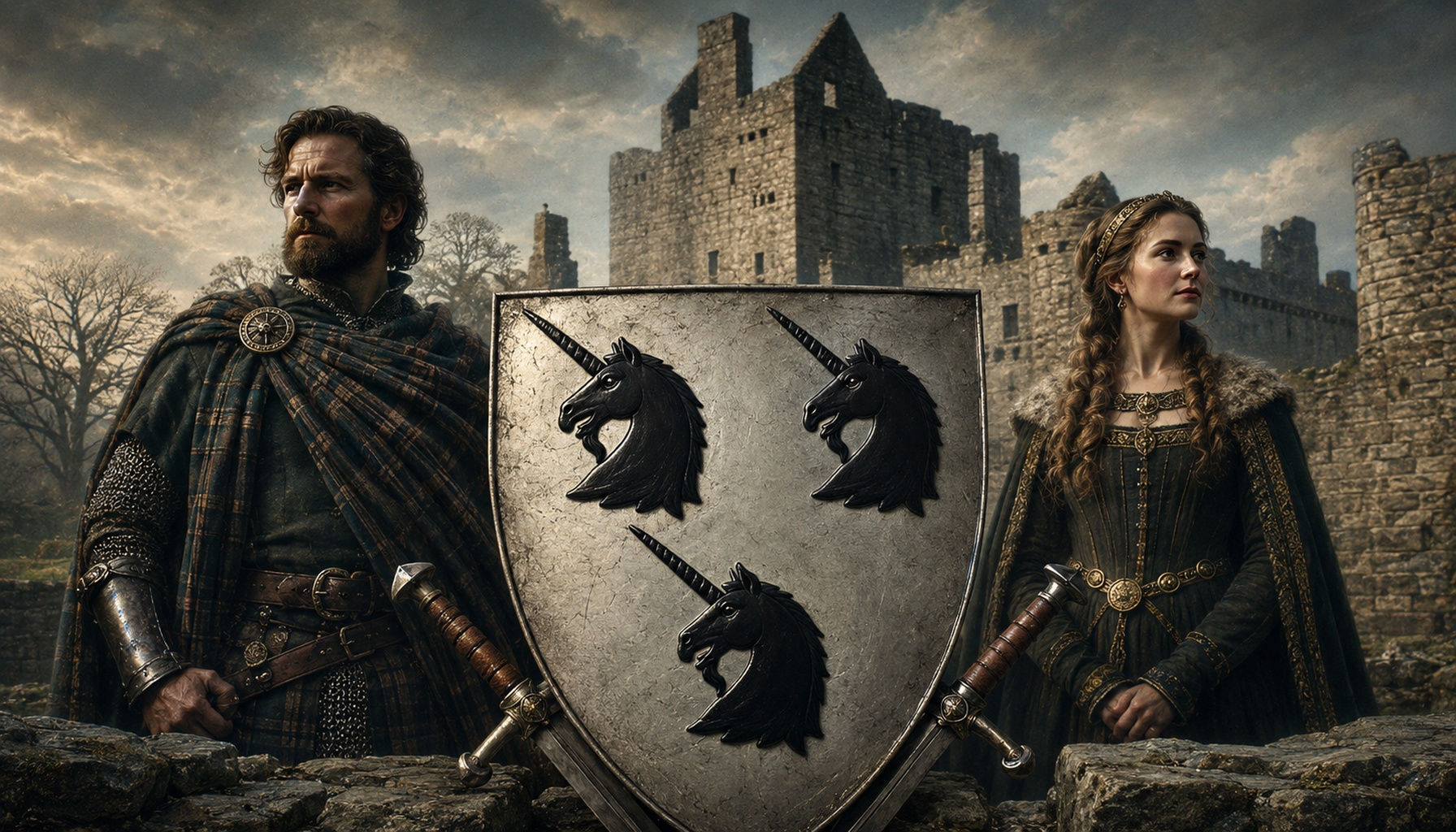
Clan Preston was a Scottish and English family tradition rooted in land, locality, and service, with a name that is unmistakably place-based in character. In Britain, Preston families emerged from the world of estates, settlement, and county standing, where a surname was often a map reference as much as a personal label. In Scotland especially, the name came to carry a clan-style identity shaped by heraldry, armorial memory, and long association with territorial influence. The primary haplogroup linked with this family tradition is R1b1a1b1a1a1b1a1a.
That matters because the Preston story is not simply one of a single dramatic founder, but of a pattern very familiar in medieval Britain: landholding families who built continuity through property, military obligation, civic office, and participation in regional society. The surname itself points back to settlement origins, and from there one sees the family appear in the record as people tied to place and public duty. Among the earlier named figures are Alured de Preston in 1222 and Nicol de Prestoun in 1296, both reminders that the family was already established in the documentary landscape of the High Middle Ages, when charters, fealty rolls, and local authority were the machinery of status.
A particularly evocative location anchor for the Preston story is Craigmillar Castle, on the south eastern side of Edinburgh, one of the best preserved medieval castles in Scotland. What survives there is not just a tower in isolation, but a layered stronghold: a central tower house begun in the late 14th century, later enclosed and expanded with curtain walls, towers, courtyard ranges, and gardens. It grew over generations rather than arriving all at once, which is exactly what gives such places their historical texture. Craigmillar is also famously associated with Mary, Queen of Scots, who stayed there in 1566 after the birth of James VI, and the castle became entangled in the dangerous political atmosphere surrounding Lord Darnley. In other words, this was not some sleepy pile of stone, but a residence close enough to Edinburgh to matter, and grand enough to host royal drama. It remains a striking site to visit today, and it is indeed open to the public as a major historic monument.
From the DNA angle, the Preston haplogroup tag R1b1a1b1a1a1b1a1a sits within a wider north west European paternal landscape that appears across a range of ancient and early medieval contexts. Related or linked samples carrying this branch include Merovingian Period Frankish Moemlingen, Germany (Mln27), Medieval Vasterhus, Sweden (mbv200), Viking Age Uppsala Gammelbyn Brstil, Sweden (gam872), Iron Age eastern Sjaelland samples from Denmark such as Varpelev (CGG107411), Hastrup (CGG107419), and Mosede Mose (CGG107489), as well as Danii-associated and Nordic Iron Age individuals from Sjaelland including Mosede Fort (CGG107495), Kalundborg Simonsborg (CGG106728), Sanddal (CGG019442), Engbjerg (CGG019091), and Allerslev (CGG107387). The same linked line also appears in Pre-Viking western and northern Norway, Anglo-Saxon England at Hatherdene Close, Viking Age Orkney, Balladoole on the Isle of Man, Ridgeway Hill in England, and even a Viking Gaelic boat burial in Iceland. None of that proves direct descent for any modern Preston line, and it should not be made to do so, but it does place the family haplogroup within a recognisable archaeological world of Iron Age, early medieval, Scandinavian, Frankish, and Insular British connections.
Explore Ancient DNA in Post-Roman Britain
If you carry the Preston name, or think your family may connect to this broader landed surname tradition, this is where history becomes deliciously personal. Upload your DNA to MyTrueAncestry and see whether you match Clan Preston, or related ancient DNA samples linked to the same wider haplogroup world of Britain, Scandinavia, and north west Europe.


Comments